
Carbide Inserts Wholesale: Where Unit Cost Gets Misleading
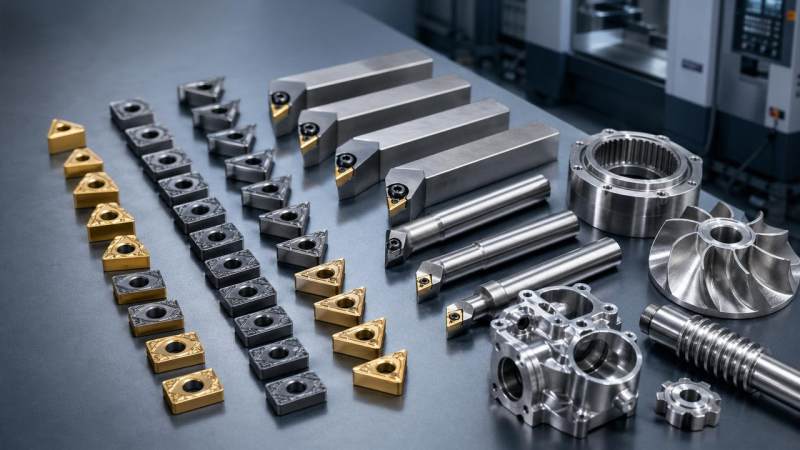
In carbide inserts wholesale, the lowest unit price rarely tells the full story. For business evaluators balancing tooling budgets, machining uptime, and supplier risk, a cheaper insert can quickly become a costly decision. This article examines why total value depends on consistency, wear life, technical support, and supply-chain reliability—not just the number on the quote.
Why scenario differences matter in carbide inserts wholesale
For procurement and commercial assessment teams, carbide inserts wholesale is not a single buying situation. The right decision for a high-volume automotive line may be wrong for a job shop handling mixed materials, and both may differ from an export-oriented subcontractor that values lead-time certainty over the last percentage point of unit savings. In other words, insert economics are always tied to application context.
This is where a structured industrial evaluation approach becomes useful. At G-PME, decision-makers often compare suppliers not only on quotation sheets, but also on repeatability, coating stability, batch consistency, geometry accuracy, technical response, and the ability to support production under changing market conditions. A low quote can look attractive in a spreadsheet while quietly increasing machine stoppage, scrap rates, rework, tool-setting time, and emergency purchasing costs.
The practical question is not “Which supplier offers the lowest insert price?” but “Which carbide inserts wholesale option creates the best operating result in this specific machining scenario?” That shift in perspective is essential for business evaluators who must justify sourcing decisions in financial, technical, and supply-chain terms.
Where carbide inserts wholesale decisions typically appear in business operations
Most evaluation projects involving carbide inserts wholesale fall into a few repeatable business scenarios. Each one changes what “good value” actually means.
- High-volume production lines where cycle time and predictable wear are critical.
- Contract machining environments with frequent material changes and variable order sizes.
- Precision parts manufacturing where surface finish and dimensional stability outweigh nominal insert cost.
- Export supply chains that require documentation, consistent grades, and stable replenishment.
- Cost-reduction programs where procurement is asked to lower spend without harming throughput.
These scenarios may all involve turning, milling, grooving, threading, or boring, but the evaluation model changes because the operational risks change. A cheaper insert that performs acceptably in one application can fail commercially in another if tool life variation triggers downtime or quality escapes.
A scenario comparison table for business evaluators
Before approving a carbide inserts wholesale supplier, it helps to map the purchase against the real production environment. The table below highlights what should receive the most attention in different scenarios.
This comparison shows why carbide inserts wholesale should be assessed as an operating system input rather than a simple consumable purchase. The more expensive insert may still deliver the lower total machining cost if it reduces interruption and variation.
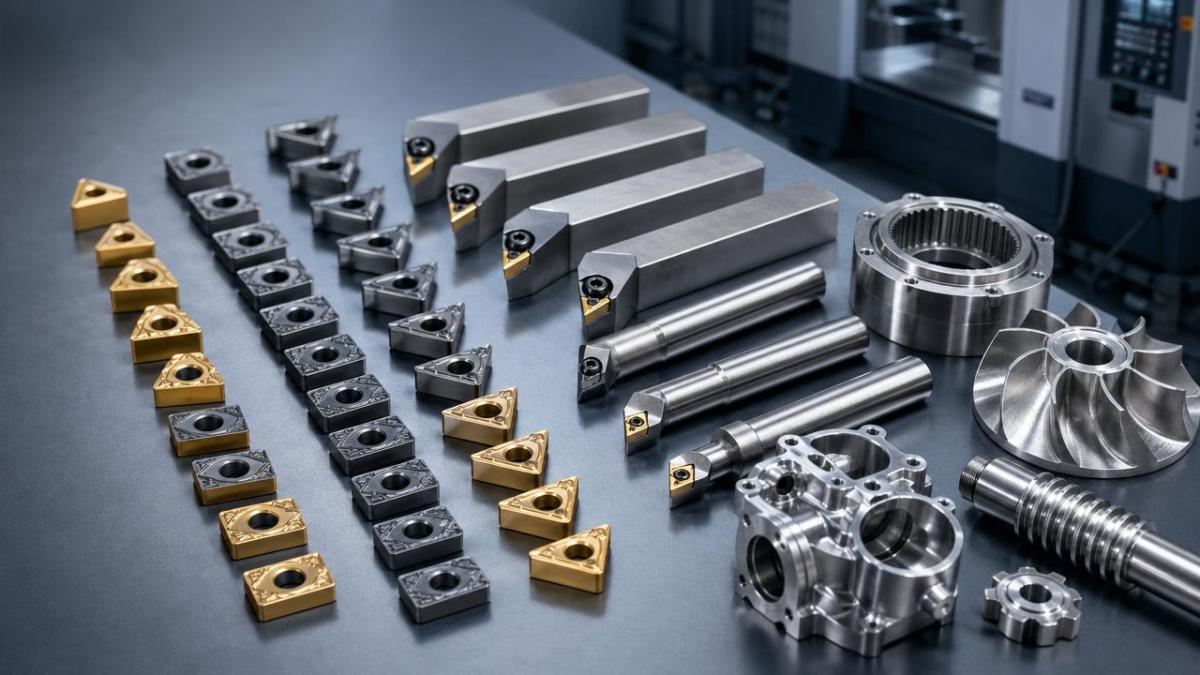
Scenario 1: High-volume production lines need predictable performance, not just low quotes
In automotive, appliance, pump, valve, and standard-component production, output targets are usually measured hourly or per shift. In this environment, carbide inserts wholesale decisions should prioritize predictable wear progression, edge reliability, and process repeatability. A small inconsistency multiplied across thousands of parts can produce a major financial impact.
A common mistake is comparing only the quoted insert price and expected average tool life. Business evaluators should instead ask how consistent the life is from batch to batch, whether the insert maintains dimensional control near the end of life, and how often operators need to stop for indexing, offsets, or problem-solving. A low-cost insert that varies heavily may damage the economics of an otherwise optimized line.
For this scenario, supplier capability matters almost as much as insert grade. Can the supplier support test data? Can they recommend geometry changes when chip control becomes unstable? Can they maintain the same product over long framework agreements? In mass production, the best carbide inserts wholesale program is usually the one that protects rhythm and output predictability.
Scenario 2: Job shops and contract manufacturers need flexibility across materials and order types
A different picture appears in job shops, subcontract machining companies, and project-driven engineering suppliers. Here, the challenge is not only cost. It is complexity. Operators may shift from carbon steel to stainless, cast iron, alloy steel, or non-ferrous materials within the same week. Small order quantities make over-specialized tooling difficult to justify.
In this setting, carbide inserts wholesale should be evaluated for portfolio efficiency. How many jobs can one grade family cover? Are common ISO insert shapes available from stock? Does the supplier have practical selection support when the workshop faces chatter, built-up edge, or tool breakage? A supplier with slightly higher prices may still offer better value if they reduce SKU complexity and avoid production delays.
Commercially, mixed-job shops also benefit from looking at reorder convenience, low minimum order barriers, and emergency fulfillment. The hidden cost here is not only premature wear but also idle spindle time while teams wait for the correct insert geometry to arrive.
Scenario 3: Precision parts manufacturing should treat insert consistency as a quality variable
For manufacturers producing precision shafts, sealing faces, molds, medical components, aerospace subparts, or tolerance-sensitive industrial parts, tooling affects more than cycle time. It influences final geometry, surface finish, burr formation, and even downstream assembly performance. In these cases, carbide inserts wholesale cannot be reduced to cost-per-piece without considering quality risk.
Business evaluators in this scenario should verify edge preparation quality, tolerance control, chipbreaker suitability, and coating behavior under stable finishing conditions. If a lower-cost insert generates sporadic finish defects or dimensional drift, the resulting inspection burden and rework costs can quickly erase the apparent savings. Precision environments usually reward consistency over aggressiveness.
Another often overlooked factor is technical responsiveness. When a precision process starts showing micro-chipping or finish instability, speed matters. Suppliers able to support trial optimization, application review, and replacement recommendations provide operational value beyond the purchase order.
Scenario 4: Global sourcing programs must weigh price against resilience and replacement risk
For multinational buyers and export-oriented manufacturers, carbide inserts wholesale decisions often sit inside larger sourcing strategies. Here, currency shifts, freight volatility, customs delays, and regional supply disruptions can change the economics of a low-priced source overnight. Unit cost looks favorable until replenishment becomes uncertain.
This scenario requires a wider sourcing lens. Can the supplier maintain acceptable lead times? Are there equivalent grades or backup part numbers? Is traceability available for quality-sensitive programs? Can the supplier provide consistent documentation for audits and customer approvals? These are not secondary details. They directly affect procurement continuity and customer delivery performance.
For business evaluators, the lesson is clear: carbide inserts wholesale should be reviewed against total supply-chain exposure. The cheapest source can become the most expensive if replacement cycles fail during a production surge or logistics disruption.
Key demand differences by buyer type
Not every organization evaluates inserts the same way. Internal stakeholders shape what matters most, so procurement teams should align the sourcing review with the real decision owners.
Common misjudgments in carbide inserts wholesale
Several patterns repeatedly distort buying decisions. First, buyers focus on unit price instead of cost per acceptable part. Second, they use trial results from one material or machine to approve a supplier for all applications. Third, they overlook insert consistency, assuming average tool life is enough. Fourth, they treat technical support as optional, even though troubleshooting speed has real economic value.
Another misjudgment is underestimating the carrying cost of fragmented tooling inventories. A very broad low-price purchase can create too many grades, geometries, and replacement paths. This increases stocking complexity and raises the chance of using the wrong insert in production. Good carbide inserts wholesale strategy often simplifies, rather than expands, the active tooling mix.
How to match carbide inserts wholesale options to your scenario
A practical evaluation process should begin with application mapping. Identify the dominant materials, operation types, tolerance demands, and production rhythm. Then compare suppliers on five dimensions: insert performance, consistency, service support, supply resilience, and total commercial impact. This produces a much stronger decision basis than price comparison alone.
Next, run controlled trials tied to business metrics. Instead of asking whether one insert “cuts well,” ask whether it reduces cost per part, extends uninterrupted machine time, or lowers the defect rate under real production conditions. For sourcing teams, it is also wise to check secondary sourcing options and verify whether a proposed grade has long-term availability.
Finally, document the decision in terms senior stakeholders understand. The best carbide inserts wholesale recommendation is one that connects technical performance to measurable financial and operational outcomes. That makes internal approval easier and reduces future disputes when market conditions change.
Final takeaway for business evaluators
Carbide inserts wholesale becomes misleading when buyers stop at the unit quote. In real machining environments, value depends on the scenario: mass production needs predictability, job shops need flexibility, precision manufacturing needs consistency, and global sourcing needs resilience. The right supplier is not simply the cheapest one, but the one whose inserts perform reliably within your commercial and operational reality.
If your organization is reviewing carbide inserts wholesale options, start by defining the application scenario clearly, then compare suppliers through total cost, technical fit, and supply continuity. That scenario-based approach creates stronger sourcing outcomes and supports the kind of evidence-based industrial decision-making that modern manufacturing requires.
Recommended News
 When solar inverters should be replaced instead of repairedSolar inverters: learn when recurring faults, obsolete parts, safety damage, and rising lifecycle costs make replacement smarter than repair.
 What to verify before choosing a first aid kits distributorFirst aid kits distributor checklist: verify compliance, traceability, expiry control, replenishment, and multi-site delivery before choosing a reliable supplier.
 How mold engineering design reduces warpage in thin-wall partsMold engineering design reduces thin-wall part warpage through balanced gating, cooling, packing, and ejection for stable, production-ready precision.
 What to audit at a CNC machine tools factory before approving a supplierCNC machine tools factory audit guide: verify machining accuracy, metrology, traceability, workforce skills, and capacity resilience before approving a precision supplier.
 When does a horizontal boring machine with ATC justify its cost?Discover when a horizontal boring machine with ATC delivers ROI through faster setups, higher uptime, lower labor costs, and reliable capacity growth.
 How office acoustics affect speech privacy in open-plan workspacesOffice acoustics shape speech privacy in open-plan workspaces. Discover practical strategies for reducing distractions, protecting sensitive conversations, and improving focus.
 Can AI in precision engineering for aerospace applications improve defect detection?AI in precision engineering for aerospace applications improves defect detection through smarter inspection, traceable workflows, and early process-drift alerts. Explore proven deployment strategies.
 Using a supplier capability evaluation framework to screen CNC suppliersSupplier capability evaluation framework for screening CNC suppliers: verify quality, traceability, capacity, and resilience to select reliable partners.
 When supplier capability evaluation services reduce tooling project riskSupplier capability evaluation services help reduce tooling project risk by verifying technical fit, quality controls, capacity, and delivery readiness before costly delays occur.
 How can a trade network help distributors enter new regional markets?Trade network strategies help distributors enter regional markets with verified partners, local insights, technical fit, and reliable logistics for faster, lower-risk growth.
 Does private label manufacturing contract assembly reduce launch risk?Private label manufacturing contract assembly can reduce launch risk with proven quality systems, traceability, supplier validation, and scalable production control.
 When do e-readers make sense for a distraction-free work library?E-readers for focused work libraries: discover when they improve deep reading, technical document review, security, and distraction-free research workflows.
 How a precision milling center factory controls part-to-part consistencyDiscover how a precision milling center factory achieves reliable part-to-part consistency through controlled tooling, workholding, traceability, and in-process inspection.
 Which CNC manufacturing investment drivers matter before capacity expansionCNC manufacturing investment drivers: evaluate demand, automation, workforce readiness, and lifecycle ROI before expanding capacity. Build resilient, profitable growth.
 When CNC turning is the right fit for precision machining servicesPrecision machining services: discover when CNC turning delivers superior concentricity, surface finish, and cost control for critical rotational parts.
 When ozone generators are suitable for odor control in commercial spacesOzone generators for commercial odor control: learn when controlled treatment is appropriate, how to protect people and materials, and why source removal comes first.
 How to select mechanical seals for mixers handling abrasive slurriesMechanical seals for mixers: learn how to select durable seal arrangements, face materials, and support systems for abrasive slurry service.
 How supply chain analysis supports risk management before disruptions occurSupply chain analysis risk management helps businesses detect hidden dependencies, assess recovery time, and act early to protect operations before disruptions occur.
 How to evaluate a smart switchable glass OEM before project approvalSmart switchable glass OEM evaluation guide: verify panel buildability, visual performance, controls integration, quality evidence, and delivery support before project approval.
 When should an interior design distributor expand into commercial projects?Interior design distributor guide: discover the key readiness signals, risks, and practical steps for expanding confidently into profitable commercial projects.
 Where to find industrial application guidance resources for process upgradesIndustrial application guidance resources help technical evaluators validate process upgrades with standards, supplier data, trials, and lifecycle insights.














Search News
Popular Tags