
Machine Tool Spindle Factory Claims That Need Proof
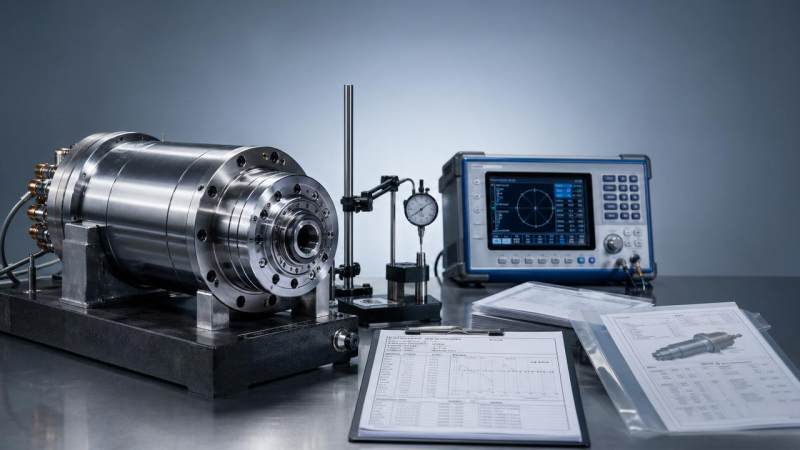
A machine tool spindle factory may promise micron-level accuracy, thermal stability, and long service life, but serious buyers need evidence before trust. This article examines which claims deserve scrutiny, what technical documents and test data matter most, and how procurement teams can separate verified manufacturing capability from marketing language.
Why machine tool spindle factory claims deserve technical verification
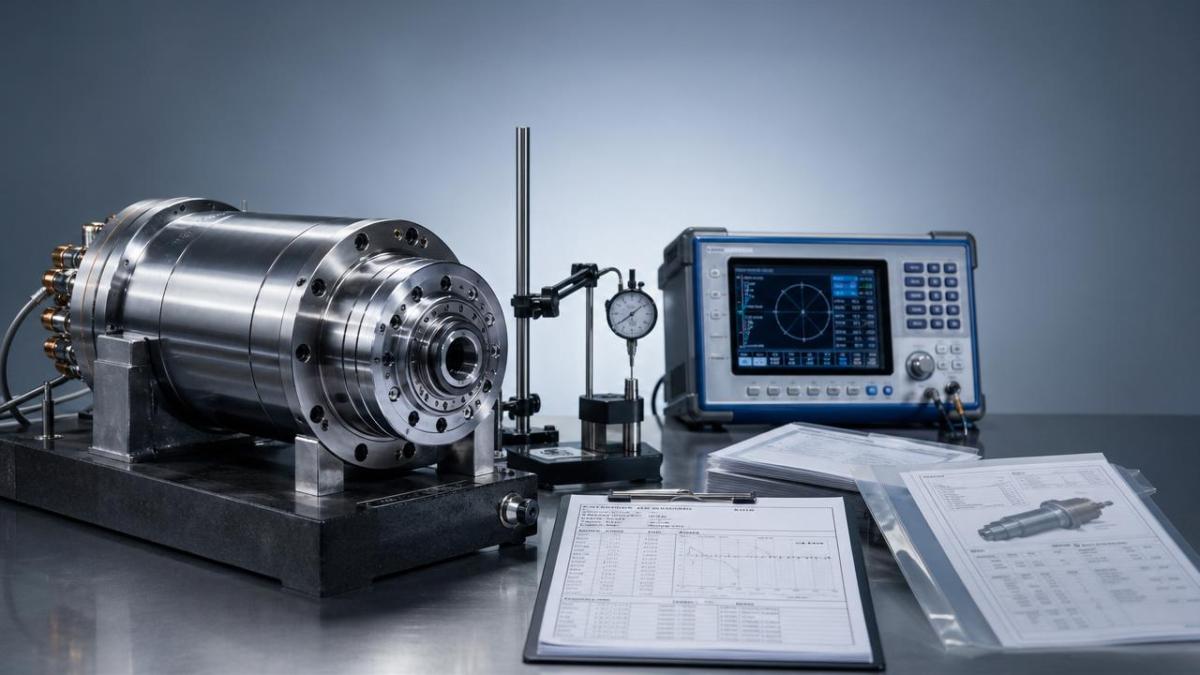
For information researchers, the problem is rarely a lack of supplier language. The problem is too much language and too little proof. A machine tool spindle factory can describe precision grinding, balanced assemblies, premium bearings, or strict inspection, yet those claims only become useful when tied to measurable outputs, traceable process records, and operating limits.
This matters across the broader industrial landscape because a spindle is not an isolated part. It influences machining accuracy, tool life, vibration behavior, energy use, surface finish, and unplanned downtime. In sectors where procurement teams must evaluate CNC assets, auxiliary systems, and line reliability together, weak spindle verification can distort the total risk picture.
At G-PME, that is where a data-driven review becomes valuable. Rather than accepting headline claims at face value, procurement and engineering teams should compare spindle evidence against known manufacturing standards, application conditions, maintenance requirements, and supply-chain resilience factors such as bearing source stability, raw material traceability, and service support response.
- A precision claim without test conditions is incomplete. Runout at the taper, nose, and test bar can differ significantly.
- A durability claim without bearing grade, lubrication method, and load profile is hard to evaluate.
- A thermal stability claim without warm-up data, speed range, and cooling system details should be questioned.
- A lead-time promise without process capacity and spare-parts planning may not survive production pressure.
What a credible machine tool spindle factory should be able to prove
When comparing suppliers, buyers should ask for evidence across design, manufacturing, testing, and field support. The goal is not to collect more PDFs. The goal is to confirm whether the machine tool spindle factory can repeatedly deliver performance in the user’s actual operating window.
Core proof categories
- Dimensional and geometric inspection records: taper accuracy, shaft concentricity, bearing seat tolerances, housing alignment, and assembly stack-up control.
- Dynamic balance data: balance grade, balancing speed, residual unbalance values, and whether balancing is performed at component level or final assembly level.
- Thermal test documentation: temperature rise at defined RPM, stabilized operating temperature, and thermal displacement trends over time.
- Vibration and noise records: displacement or velocity readings across speed bands, especially near critical speed zones.
- Material and component traceability: shaft material certificates, heat treatment records, bearing origin, lubrication specification, and drawbar or clamping component sources where applicable.
- Service documentation: recommended preload policy, lubrication interval, rebuild criteria, spare-parts availability, and failure analysis capability.
The table below helps information researchers identify which claims from a machine tool spindle factory require direct supporting evidence before being included in a sourcing shortlist.
A credible supplier should not resist these requests. In fact, a capable machine tool spindle factory usually understands that documented proof shortens technical review and reduces later disputes over acceptance, warranty, and rebuild responsibility.
Which technical documents matter most during supplier screening?
Not every document carries equal value. Information researchers often receive catalogs first, but catalogs are rarely enough for decision support. The more useful records are those linked to process control and acceptance criteria.
Priority document stack for early evaluation
- General technical datasheet with speed range, taper type, lubrication system, cooling method, bearing arrangement, and interface dimensions.
- Inspection template or sample report showing measured tolerances and acceptance standards.
- Test protocol explaining how the spindle is run in, balanced, heated, and released for shipment.
- Quality control flow describing incoming material checks, critical machining stages, assembly controls, and final verification.
- After-sales scope covering failure diagnosis, repair cycle, spare-parts supply, and technical communication path.
G-PME’s cross-sector perspective is useful here because spindle selection is often reviewed alongside tooling strategy, coolant delivery, lubrication compatibility, fastening reliability, and broader machine uptime targets. A document set that looks acceptable in isolation may still be weak when viewed against real production integration demands.
Signals that documentation may be too shallow
- Only marketing diagrams are supplied, with no measurement examples.
- Precision values are shown without tolerance bands or test conditions.
- Bearing, lubrication, and cooling details are hidden even after NDA-level technical discussion.
- Lead times are quoted, but no repair process or spare-parts framework is explained.
How to compare one machine tool spindle factory against another
Price alone is a poor filter because spindle value depends on application risk. A high-speed milling spindle for fine finishing, a heavy-cut spindle for mold work, and a replacement spindle for production restoration all deserve different weighting. The table below gives a practical comparison framework for procurement and engineering teams.
The strongest supplier is not automatically the one with the highest stated RPM or the broadest brochure. It is the one whose evidence, process controls, and response model align with your production priorities, compliance needs, and downtime tolerance.
Useful comparison questions
- Can the machine tool spindle factory share a sample final inspection report with actual values masked if needed?
- What speed, preload, and cooling assumptions were used when the claimed performance was established?
- What changes when the spindle is used for roughing, long cycles, or abrasive environments?
- Which components are sourced externally, and how is continuity managed if supply conditions change?
Procurement guide: what serious buyers should ask before issuing RFQ
A strong RFQ does more than request price. It defines the operating context so the machine tool spindle factory can respond with useful data. Poor RFQs create misleading quotations because suppliers fill the gaps with assumptions.
Minimum RFQ checklist
- Required speed range, power band, and torque expectations across the process, not just maximum RPM.
- Machine interface details including taper, mounting envelope, drawbar interface, lubrication connection, and cooling ports.
- Material and machining profile, such as aluminum finishing, hardened steel cutting, mold cavity work, or mixed-batch production.
- Expected run schedule, shift pattern, contamination conditions, and maintenance constraints.
- Required documents for approval, incoming inspection, and long-term service support.
For multinational procurement teams, this approach also improves cross-functional alignment. Engineering gets the technical detail it needs, sourcing gets comparable commercial input, and maintenance gets visibility on service burden. That integrated decision style reflects the broader G-PME method of linking technical integrity with commercial intelligence and line reliability.
Common mistakes during supplier research
- Using only maximum speed as the main selection criterion and ignoring thermal behavior under continuous duty.
- Comparing price quotes without standardizing document requirements and acceptance conditions.
- Assuming that a replacement spindle will match machine performance without checking interface tolerances and balancing strategy.
- Treating after-sales support as secondary, even when downtime cost is higher than initial purchase savings.
Standards, compliance, and traceability: what can be reasonably expected?
A machine tool spindle factory may operate within a quality management framework and use recognized measurement and manufacturing practices, but buyers should still verify how that framework is translated into spindle-specific controls. General compliance language is useful only when connected to actual process evidence.
Depending on the project, teams may review conformity to common industrial references such as ISO-based quality management practices, dimensional inspection discipline, bearing handling controls, material certification handling, and calibration records. For export or regulated supply chains, documentation consistency can matter almost as much as component performance.
- Ask how material certificates are linked to finished spindle assemblies.
- Confirm whether measuring instruments used for critical checks are calibrated and traceable.
- Check whether nonconformity handling and rework records are available for audit-level review when required.
- Verify whether packaging, preservation, and shipping controls are suitable for precision rotating assemblies.
FAQ: practical questions information researchers often ask
How do I know if a machine tool spindle factory really has precision manufacturing capability?
Look for repeatable proof, not isolated statements. Useful indicators include sample inspection reports, balancing records, thermal test results, and a clear explanation of how critical dimensions are controlled during grinding and assembly. A supplier that can explain process capability in practical terms is usually easier to evaluate than one that only repeats accuracy slogans.
Which matters more: a new spindle or a rebuilt spindle?
It depends on machine age, application criticality, downtime pressure, and budget. A new spindle may offer cleaner traceability and updated component configuration. A rebuilt spindle may be commercially sensible if the repair scope, replaced components, balancing process, and final test records are well defined. The real issue is verification quality, not only new versus rebuilt status.
What lead-time questions should be asked before approval?
Ask for production lead time, repair lead time, spare bearing availability, and the expected turnaround for technical troubleshooting. Also ask what factors can extend delivery, such as special bearings, nonstandard taper requirements, or additional acceptance testing. Lead time without constraints listed is not reliable planning data.
Are all high-speed spindle claims equally meaningful?
No. High speed is meaningful only when combined with acceptable vibration, temperature control, lubrication performance, and tool interface stability. A machine tool spindle factory should be able to explain the operating zone where the spindle remains stable, not just the top number printed on a datasheet.
Why choose us for machine tool spindle factory research and sourcing support
G-PME supports buyers who need more than catalog collection. Our strength is structured technical intelligence across machining systems, industrial components, regulatory references, and supply-chain conditions. That helps information researchers move from broad market scanning to evidence-based shortlist formation.
If you are assessing a machine tool spindle factory, we can help define the right technical questionnaire, compare supplier proof packages, and identify gaps that may affect precision, uptime, or lifecycle cost. We can also support parameter confirmation, spindle selection logic, document review, expected delivery-cycle discussions, service-scope comparison, and quotation alignment with actual process needs.
For teams managing new projects, replacement planning, or cross-border sourcing, contact us with your spindle interface details, operating conditions, target accuracy, service expectations, and documentation requirements. That allows a more focused discussion on technical suitability, compliance expectations, sample support possibilities, and commercial evaluation paths grounded in verifiable industrial data.
Recommended News
 Can AI in precision engineering for aerospace applications improve defect detection?AI in precision engineering for aerospace applications improves defect detection through smarter inspection, traceable workflows, and early process-drift alerts. Explore proven deployment strategies.
 Using a supplier capability evaluation framework to screen CNC suppliersSupplier capability evaluation framework for screening CNC suppliers: verify quality, traceability, capacity, and resilience to select reliable partners.
 When supplier capability evaluation services reduce tooling project riskSupplier capability evaluation services help reduce tooling project risk by verifying technical fit, quality controls, capacity, and delivery readiness before costly delays occur.
 How can a trade network help distributors enter new regional markets?Trade network strategies help distributors enter regional markets with verified partners, local insights, technical fit, and reliable logistics for faster, lower-risk growth.
 Does private label manufacturing contract assembly reduce launch risk?Private label manufacturing contract assembly can reduce launch risk with proven quality systems, traceability, supplier validation, and scalable production control.
 When do e-readers make sense for a distraction-free work library?E-readers for focused work libraries: discover when they improve deep reading, technical document review, security, and distraction-free research workflows.
 How a precision milling center factory controls part-to-part consistencyDiscover how a precision milling center factory achieves reliable part-to-part consistency through controlled tooling, workholding, traceability, and in-process inspection.
 Which CNC manufacturing investment drivers matter before capacity expansionCNC manufacturing investment drivers: evaluate demand, automation, workforce readiness, and lifecycle ROI before expanding capacity. Build resilient, profitable growth.
 When CNC turning is the right fit for precision machining servicesPrecision machining services: discover when CNC turning delivers superior concentricity, surface finish, and cost control for critical rotational parts.
 When ozone generators are suitable for odor control in commercial spacesOzone generators for commercial odor control: learn when controlled treatment is appropriate, how to protect people and materials, and why source removal comes first.
 How to select mechanical seals for mixers handling abrasive slurriesMechanical seals for mixers: learn how to select durable seal arrangements, face materials, and support systems for abrasive slurry service.
 How supply chain analysis supports risk management before disruptions occurSupply chain analysis risk management helps businesses detect hidden dependencies, assess recovery time, and act early to protect operations before disruptions occur.
 How to evaluate a smart switchable glass OEM before project approvalSmart switchable glass OEM evaluation guide: verify panel buildability, visual performance, controls integration, quality evidence, and delivery support before project approval.
 When should an interior design distributor expand into commercial projects?Interior design distributor guide: discover the key readiness signals, risks, and practical steps for expanding confidently into profitable commercial projects.
 Where to find industrial application guidance resources for process upgradesIndustrial application guidance resources help technical evaluators validate process upgrades with standards, supplier data, trials, and lifecycle insights.
 How to verify a chip conveyor is CE certified before purchaseChip conveyor CE certified? Learn how to verify declarations, safety documentation, integration duties, and supplier evidence before purchase.
 When smart machine tool integration reduces unplanned downtimeSmart machine tool integration helps manufacturers cut unplanned downtime by turning machine data into actionable maintenance, scheduling, and quality decisions.
 How to size portable solar generators for reliable jobsite powerPortable solar generators sized right deliver reliable jobsite power. Learn to match inverter output, battery capacity, surge demand, and solar recharge for every shift.
 When do synthetic gear lubricants justify their higher upfront cost?Synthetic gear lubricants can lower lifecycle costs in high-load, hot, or hard-to-service gearboxes. Learn when premium performance delivers real ROI.
 Which file setup errors most often delay offset printing services?Offsetprintingservices: discover the file setup errors that delay production, from bleed and color issues to fonts and overprint. Use this practical guide to submit press-ready PDFs faster.
 How accurate are fitness trackers for measuring calories burned?Fitness trackers can reveal useful activity trends, but how accurate are their calorie-burn estimates? Discover what affects results and how to use the data smarter.
















Search News
Popular Tags