
EDM machining specs that matter before you buy
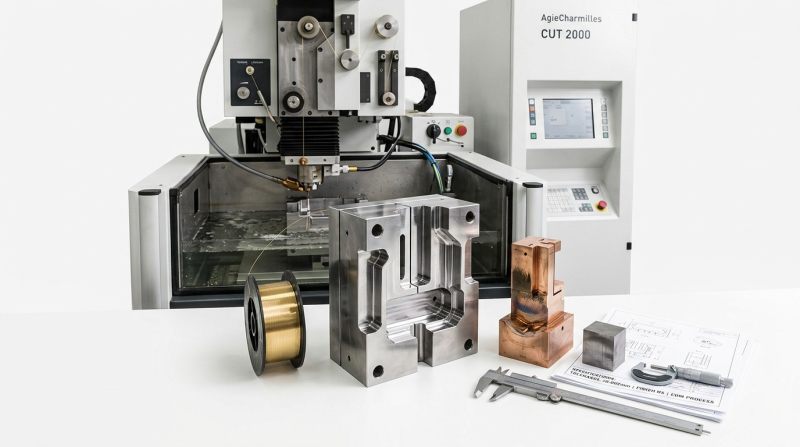
Before investing in EDM equipment or outsourced services, buyers need more than brochure claims—they need technical specifications that support manufacturing competitiveness, precision components quality, and production line optimization. This guide explains the EDM machining specs that matter most, using engineering intelligence and industrial benchmarking to help procurement teams, project managers, and quality leaders make confident decisions amid shifting raw material prices and supply chain analysis pressures.
Which EDM machining specs actually determine buying value?
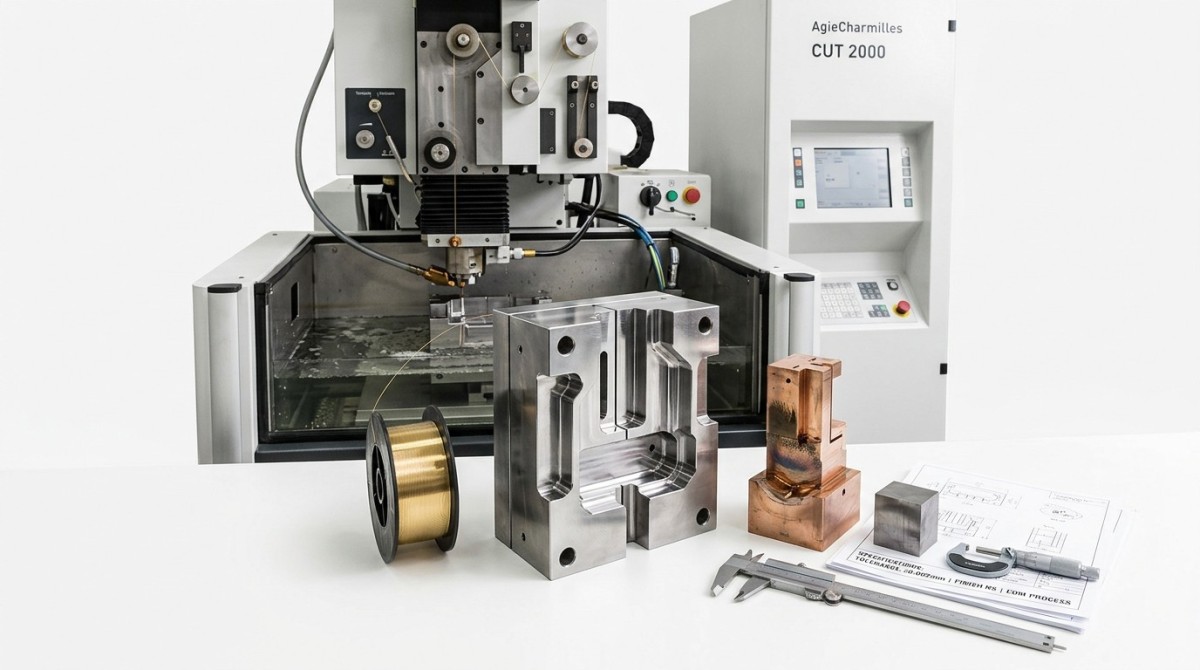
EDM machining is often purchased on headline promises such as “high precision” or “complex geometry capability,” but those phrases mean little without measurable specifications. For B2B buyers in mold engineering, aerospace support machining, medical components, energy systems, and industrial tooling, the decision should begin with 5 core indicators: achievable tolerance, surface finish, workpiece size range, material compatibility, and electrode or wire consumption behavior.
In practical procurement, EDM machining specs matter most when they influence three outcomes: part conformity, process stability, and total production cost. A machine or subcontractor that can hold tight dimensions on one sample but cannot repeat results over 20–50 parts creates hidden inspection load, schedule pressure, and downstream assembly risk. That is why technical review should always connect shop-floor capability with project delivery demands.
At G-PME, the advantage is not simply discussing EDM in isolation. We evaluate EDM machining specs within the larger manufacturing ecosystem: CNC finishing requirements, die-casting mold performance, fastening interfaces, sealing surfaces, pump components, and material price volatility. This allows procurement directors and engineering managers to compare technical capability against real operational constraints rather than brochure language.
For most buyers, the first screening should answer 4 questions within the first review cycle of 2–5 working days: what tolerance is truly needed, what material will be machined, what batch size is expected, and whether the part is a cavity, profile, micro-feature, or hard-to-machine detail. Those answers determine whether sinker EDM, wire EDM, or a hybrid CNC-plus-EDM process is the right route.
The 5 specifications buyers should rank first
- Dimensional tolerance: often discussed in microns, but should be tied to actual inspection method, production batch, and feature type.
- Surface finish: especially important for sealing faces, mold cavities, and components requiring reduced post-processing.
- Material and hardness range: EDM is valuable for hardened steels, carbides, titanium alloys, and conductive specialty materials.
- Cutting speed versus accuracy mode: roughing, semi-finishing, and finishing passes create different throughput and quality outcomes.
- Consumables and maintenance behavior: wire, electrodes, dielectric fluid condition, filters, and wear rates affect long-term cost.
These EDM machining specs should not be evaluated separately. A supplier offering very fine surface finish may require more passes, longer lead time, or higher electrode cost. Another may deliver faster throughput but leave a recast layer profile that is unsuitable for fatigue-sensitive or sealing-critical applications. The best buying decision comes from matching specifications to function, not choosing the most aggressive claim in every category.
How to read EDM parameters without being misled by generic claims
Many purchase teams receive quotations with attractive but incomplete wording such as “fine finish,” “high-speed machining,” or “precision EDM services.” These descriptions are too broad for sourcing decisions. A useful review separates machine capability from process capability. Machine capability refers to axis travel, generator control, flushing system, and thermal management. Process capability refers to what can be repeated on your material, geometry, and batch size under validated conditions.
For example, wire EDM may support very narrow kerf cutting and excellent profile accuracy, but actual results depend on wire diameter, tension control, dielectric stability, and number of skim cuts. Sinker EDM performance depends heavily on electrode design, orbit strategy, spark gap management, and flushing quality. In both cases, the advertised machine specification is only the starting point.
A disciplined parameter review usually includes 6 checks: axis travel, maximum workpiece weight, supported material conductivity, surface finish range, dimensional repeatability expectation, and recommended application type. For projects running across 2–4 production phases—sample, pilot, validation, and release—those checks help avoid costly process changes after tooling has already been approved.
The table below shows how buyers can translate common EDM machining specs into practical sourcing meaning. It is especially useful for decision-makers comparing multiple vendors or deciding whether to buy equipment in-house versus outsource machining services.
This comparison shows why a specification sheet should always be read as a process document, not just a machine catalog. If a vendor cannot define the relationship between tolerance, finish, material, and cycle time, the EDM machining specs may be incomplete for procurement use. In industrial sourcing, incomplete information often causes more risk than a slightly higher quoted price from a technically transparent supplier.
Common parameter ranges buyers should discuss
Tolerance and repeatability
Exact values depend on geometry, thickness, material, and inspection setup, so buyers should request a typical capability window rather than a single best-case number. A credible supplier will explain whether the requested result applies to a small contour, a deep cavity, or a full work envelope. This distinction becomes essential when parts move from prototype quantities of 1–5 pieces to recurring lots of 50 or more.
Surface integrity
Beyond roughness values, surface integrity includes recast layer behavior, heat-affected zone sensitivity, edge sharpness, and micro-crack risk in demanding applications. Quality teams should ask whether fine finishing passes or secondary processes are recommended for tooling, sealing surfaces, or fatigue-sensitive parts. This is often more important than chasing the fastest possible cycle time.
Part envelope and thickness
Large-axis travel is useful, but real buying value comes from knowing what the supplier can process reliably across thin sections, deep features, and varying material thickness. For many procurement teams, the more relevant question is not “what is the maximum size?” but “what size and geometry can be machined repeatedly within our drawing tolerance and delivery window?”
Wire EDM vs sinker EDM vs CNC finishing: which combination fits your project?
Buyers often compare EDM machining specs without first clarifying which EDM process they actually need. Wire EDM excels in cutting profiles, punches, dies, slots, and intricate contours through conductive materials. Sinker EDM is preferred for blind cavities, sharp internal forms, and mold details that cannot be reached efficiently by milling. CNC finishing often complements both processes where accessible surfaces or reference features require conventional machining.
In many industrial programs, the best solution is not a single technology but a staged route across 3 steps: rough machining by CNC, feature generation by EDM, and final inspection or polishing as required. This integrated approach reduces unnecessary EDM burn time while preserving the geometric freedom that makes EDM valuable for hardened or complex components.
The right comparison is therefore functional. If your project demands narrow internal corners, hardened steel processing after heat treatment, or complex cavity detail, EDM machining specs should take priority. If your part has open faces, generous tool access, and higher material removal volume, CNC may provide better economics. Quality leaders should focus on the feature mix rather than defaulting to one process category.
The following table helps engineering, sourcing, and project teams compare process fit across common industrial use cases. It is useful during RFQ review, process planning, and make-versus-buy discussions.
This process comparison is critical because many purchasing errors come from asking one supplier to fit all geometries into a single method. By benchmarking process routes against standards-based manufacturing logic, G-PME helps buyers reduce rework risk, estimate true delivery windows, and align EDM machining specs with plant-level production goals.
Application scenarios where EDM specs matter most
- Tooling and mold production, where cavity fidelity and surface condition directly influence part release, wear, and maintenance intervals.
- Pump, valve, and sealing components, where edge accuracy and mating surface quality affect leakage control and service life.
- High-hardness alloy components processed after heat treatment, where conventional cutting may struggle with tool wear or geometry access.
- Precision spare parts for industrial systems, where lead time can be as important as nominal machining performance.
In these scenarios, the wrong EDM buying decision rarely fails immediately. More often, problems appear later as unstable assembly fit, excessive bench work, higher scrap rate, or maintenance downtime. That is why experienced project managers evaluate EDM machining specs as part of lifecycle performance, not just first-piece acceptance.
What should procurement, quality, and project teams verify before placing the order?
The most effective EDM procurement process is cross-functional. Procurement focuses on price, lead time, and contractual clarity. Quality teams focus on tolerances, inspection evidence, and process control. Operators care about manufacturability and maintenance burden. Project managers must balance all of these within milestone pressure. A strong RFQ package should therefore include drawings, material grade, hardness condition, quantity range, acceptance points, and target delivery window such as 7–15 days or 2–4 weeks depending on complexity.
Before placing an order, ask for a structured capability confirmation. That may include sample feature review, proposed process route, estimated number of passes, expected inspection method, and known limitations. For outsourced EDM services, buyers should also ask what work is done in-house and what is subcontracted, because supply-chain layering can directly affect schedule control and nonconformance traceability.
This is where G-PME’s broader engineering intelligence adds value. Because EDM decisions often intersect with tool steel availability, titanium price movement, fixture planning, and production line uptime risk, a narrow machining-only evaluation may be insufficient. Buyers increasingly need integrated sourcing judgment that considers both technical capability and commercial resilience.
Use the checklist below to organize pre-purchase review across 5 decision areas. It helps teams avoid the common trap of approving a vendor based only on nominal unit price.
5-point EDM buying checklist
- Confirm feature-critical specs first: Identify which 2–3 dimensions or surfaces are function-critical so the supplier can prioritize process control where it matters most.
- Request process-route visibility: Ask whether the job will use wire EDM, sinker EDM, CNC pre-machining, polishing, or additional heat-treatment steps.
- Review lead-time assumptions: Separate queue time, machining time, inspection time, and any external finishing or material procurement steps.
- Clarify quality records: Define whether you need dimensional reports, material certificates from upstream supply, first article review, or in-process verification records.
- Evaluate supply continuity: For repeat jobs, ask about electrode strategy, spare consumables, machine availability, and contingency planning for urgent orders.
When procurement teams follow this structure, EDM machining specs become easier to compare across vendors. The conversation shifts from broad marketing claims to operationally relevant questions: Can this supplier hold the required geometry, within the required time, at the required repeatability level, with clear inspection accountability?
Standards and compliance points worth checking
EDM itself is a process, not a certification. However, buyers should still check how the supplier aligns with common quality and drawing interpretation systems. Depending on your sector, this may involve ISO-based quality management frameworks, material traceability practices, tolerance interpretation by drawing standard, and calibration discipline for measurement equipment. For parts entering regulated or safety-relevant assemblies, inspection planning is often as important as the burn process itself.
If your application involves tooling inserts, pressure-related components, precision mold features, or parts subject to customer audits, ask for documentation expectations at the quotation stage. Defining those requirements early avoids costly clarification cycles later, especially when project launch windows are tight and multi-site approvals are involved.
Common misconceptions, cost drivers, and practical FAQ for EDM buyers
A common misconception is that tighter EDM machining specs always mean a better purchasing decision. In reality, over-specifying surface finish or tolerance can increase cycle time, electrode use, and inspection burden without improving part function. Another misconception is that EDM is automatically slow and expensive. For hardened materials, blind cavities, and intricate contours, EDM can actually reduce total cost by avoiding difficult cutting, excessive tooling wear, or repeated manual finishing.
Cost is driven by more than machine hours. The main cost drivers are material condition, feature complexity, number of passes, electrode design effort, inspection level, and required delivery speed. An urgent job delivered in 3–7 days may be feasible, but buyers should expect trade-offs in queue priority, machine scheduling, and commercial terms. The better approach is to align actual performance needs with realistic production planning.
For buyers comparing outsourcing versus equipment investment, the break point often depends on annual part mix, internal engineering support, maintenance capability, and utilization rate. If your demand is irregular, technically diverse, or spread across multiple plants, external EDM services can preserve flexibility. If you have stable recurring work, predictable geometries, and dedicated operators, in-house equipment may become attractive over a longer horizon.
The FAQ below addresses the questions most often raised by information researchers, operators, quality leaders, and project owners evaluating EDM machining specs before purchase.
How do I choose EDM machining specs for a new part?
Start with function, not machine marketing. Define the critical features, material grade, hardness state, quantity, and whether the part needs cavity work, contour cutting, or post-heat-treatment processing. Then ask suppliers to map those needs to process route, finish level, and inspection method. In most cases, 3 priority filters—feature criticality, material condition, and lead time—will narrow the right option quickly.
What lead time is typical for EDM services?
Lead time varies with part complexity, quantity, and whether electrodes or fixtures must be prepared. For straightforward jobs, buyers may see indicative windows around 7–15 days. For complex cavities, multi-pass contour work, or projects involving inspection approval and additional finishing, 2–4 weeks is more realistic. Always separate quoted production time from queue time and material readiness.
Which applications benefit most from tight EDM control?
Mold inserts, dies, sealing interfaces, precision slots, sharp internal corners, and hard conductive alloys usually benefit the most. In these cases, EDM machining specs directly influence tool life, fit quality, leakage performance, and assembly consistency. Where features are open and tool access is easy, CNC may still be the more economical first choice.
What is the most overlooked buying risk?
The most overlooked risk is assuming that stated machine capability equals repeatable part capability. Buyers should verify how the supplier manages actual production conditions: dielectric control, electrode wear, skim passes, inspection points, and process stability over batch quantities. That distinction is especially important for companies sourcing components that feed directly into high-value assemblies or continuous production lines.
Why work with G-PME when evaluating EDM options?
G-PME supports EDM buying decisions with a wider technical and commercial lens. Instead of treating EDM as a standalone service, we connect EDM machining specs with upstream materials, downstream assembly requirements, tooling strategy, compliance expectations, and supply-chain resilience. That matters when a single sourcing decision affects quality, uptime, maintenance burden, and delivery commitments across an industrial program.
Our institutional strength comes from cross-sector benchmarking across advanced CNC machining, mold engineering, fastening and sealing systems, fluid control components, and industrial materials intelligence. This multidisciplinary perspective helps buyers judge not just whether an EDM process is possible, but whether it is the right decision for long-term manufacturing performance and commercial control.
If you are reviewing EDM machining specs before buying equipment or selecting an outsourcing partner, contact G-PME for targeted support on parameter confirmation, process selection, drawing review, quality documentation expectations, sample planning, lead-time assessment, and quotation comparison. We can also help you evaluate hybrid CNC-plus-EDM routes, material-driven cost implications, and sourcing risk across urgent or multi-site industrial projects.
The most useful next step is specific. Send your drawing set, material information, required quantity range, target tolerance zones, and expected delivery schedule. We can help you clarify which EDM machining specs truly matter, which ones are unnecessary cost drivers, what inspection checkpoints should be included, and how to structure a sourcing decision that supports both technical reliability and procurement efficiency.
Recommended News
 How to verify batch quality with an industrial lubricating oils exporterBuying from an industrial lubricating oils exporter? Learn how to verify batch test results, sampling, and traceability to reduce purchasing risks and protect equipment.
 How to set relubrication intervals for industrial maintenanceImprove industrial maintenance with smarter relubrication intervals. Learn how to balance bearing conditions, grease quantity, and monitoring to reduce downtime and avoid costly failures.
 How to spot misleading claims on eco-friendly baby productsShopping for ecofriendlybabyproducts? Learn to spot greenwashing, verify certifications, and assess material and disposal claims so you can choose with confidence.
 John Crane Signs Three-Year Agreement to Improve Phosphate Mine Seal ReliabilityJohn Crane's three-year agreement targets phosphate mine seal reliability with on-site expertise and mechanical seal solutions. Explore its potential to reduce downtime.
 Which Die Casting Defects Should You Check Before Supplier Approval?What die casting defects should be checked before supplier approval? Explore key defects, inspection methods, and acceptance limits to qualify suppliers confidently and reduce costly failures.
 Buying Industrial-Grade Sealing Materials: Which Supplier Data Matters?Searching for sealing materials industrial grade? Learn which supplier tests, batch records, and specifications matter to reduce leakage risks and buy with confidence.
 What tolerances can zinc precision die casting realistically hold?Can zinc precision die casting hold ±0.025 mm? Discover which features qualify, what affects accuracy, and when machining delivers better results for your parts.
 Which ISO standards apply to five-axis machine accuracy testing?Explore ISO machine accuracy standards for five-axis machining. Learn how ISO 230 and ISO 10791 guide geometry, positioning, and motion tests to define clearer acceptance criteria.
 How to test smart actuators during smart device manufacturingExplore smart device manufacturing solutions testing for smart actuators. Learn how to verify loaded motion, fault responses, and end-of-line performance to improve release confidence.
 Dormer Pramet Unveils Milling and Threading Solutions for Demanding ProductionExplore Dormer Pramet’s four new milling and threading solutions for demanding production, and discover what to check for tooling suitability, performance evidence and purchasing decisions.
 How to select low-friction industrial seals for centrifugal pumpsChoose industrial seals for low friction in centrifugal pumps. Compare face materials, lubrication and support systems to reduce wear and operating losses. Find the right fit.
 A supply chain analysis framework for spotting mold delivery risksUse a supply chain analysis framework to spot mold delivery risks, verify critical dependencies, and protect launch schedules. Discover practical steps to act early.
 How bearing prices shape machine tool spindle production cost trendsExplore how bearing prices shape spindle production cost trends, from assembly and testing to supply risks. Uncover hidden costs and make smarter sourcing decisions.
 Carrier Plans $600 Million Advanced Manufacturing Center With 5-Axis CNC EquipmentCarrier plans a $600M+ advanced manufacturing center with 5-axis CNC equipment in Texas. Explore potential opportunities for machining suppliers and commercial chiller buyers.
 Why do pH meters give unstable readings in metalworking coolants?Unstable pHmeters in metalworking coolants? Learn how to identify probe fouling, verify calibration, and improve sampling for reliable readings before costly coolant adjustments.
 Aluminum vs. titanium for lightweight parts with equal stiffnessEngineering materials comparison: lightweight alloys aluminum and titanium face off at equal stiffness. Discover how geometry, loading, and cost guide the best choice for lighter parts.
 Which engineering materials hold tight tolerances as temperatures change?Explore our engineering materials comparison by tolerance to learn how Invar, ceramics, steel, and aluminum handle temperature changes—and find the right fit for precision designs.
 John Crane to Showcase Emissions and Downtime Reduction Technologies at ADIPEC 2026John Crane at ADIPEC 2026: Explore technologies targeting lower emissions and compressor downtime, and discover what reported savings could mean for your operations.
 When does precision engineering machining need a 5-axis machine?Discover when precision engineering machining needs 5-axis capability. Compare 3+2 and simultaneous machining to improve tool access, control costs, and choose the right process.
 How to check clinical validation of wholesale blood pressure monitorsSourcing blood pressure monitors wholesale? Learn how to verify clinical studies, registry listings, cuff coverage, and model identity before approving your next bulk order.
 How much lithium battery storage do you need for solar energy?Lithium battery storage for solar energy: learn to calculate capacity, account for losses, and check backup power. Avoid costly sizing mistakes and find the right system for your needs.





Search News
Popular Tags