
Raw material prices and bolt sourcing risk in 2026
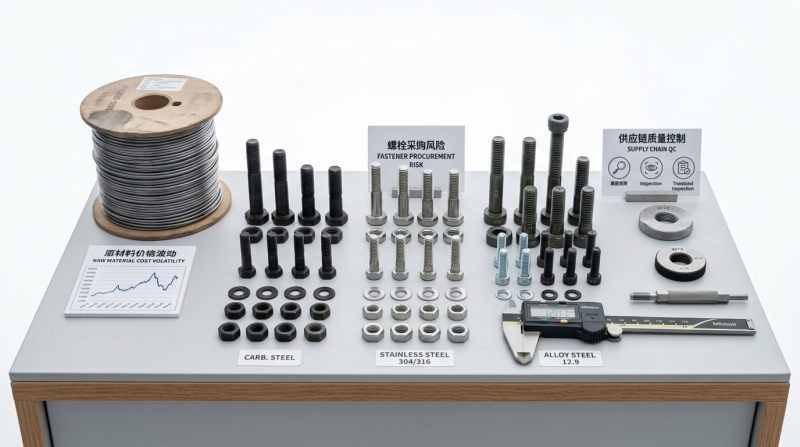
In 2026, volatile raw material prices and shifting sourcing dynamics are reshaping industrial procurement across global manufacturing. For companies focused on manufacturing competitiveness, precision components, and production line optimization, understanding technical specifications, engineering intelligence, industrial benchmarking, and supply chain analysis is essential to control bolt sourcing risk, respond to project tenders, and protect operational continuity.
The core search intent behind “Raw material prices and bolt sourcing risk in 2026” is practical, not academic: buyers, engineers, quality leaders, and project managers want to know how steel and alloy price movements will affect fastener cost, availability, quality consistency, lead times, and contractual risk. They are not simply looking for a market overview. They need a decision framework: which bolt categories are most exposed, where sourcing failures usually happen, how to evaluate supplier resilience, and what actions can reduce procurement and operational risk before shortages or nonconformity affect production.
For most target readers, the most urgent questions are straightforward. Will bolt prices rise further in 2026? Which raw materials are driving the risk? Are low-cost substitutions likely to create quality or safety problems? How should procurement teams balance price, compliance, delivery security, and total lifecycle cost? And what sourcing model is most reliable for industrial projects, OEM production, and maintenance operations?
The most valuable content, therefore, is not generic commentary on inflation or supply chains. It is actionable guidance on price drivers, technical risk points, supplier assessment, specification control, and sourcing strategy by application. The sections below focus on those decision-critical areas and minimize broad macroeconomic discussion that does not help buyers make better sourcing choices.
What matters most in 2026: bolt cost is no longer just a purchasing issue
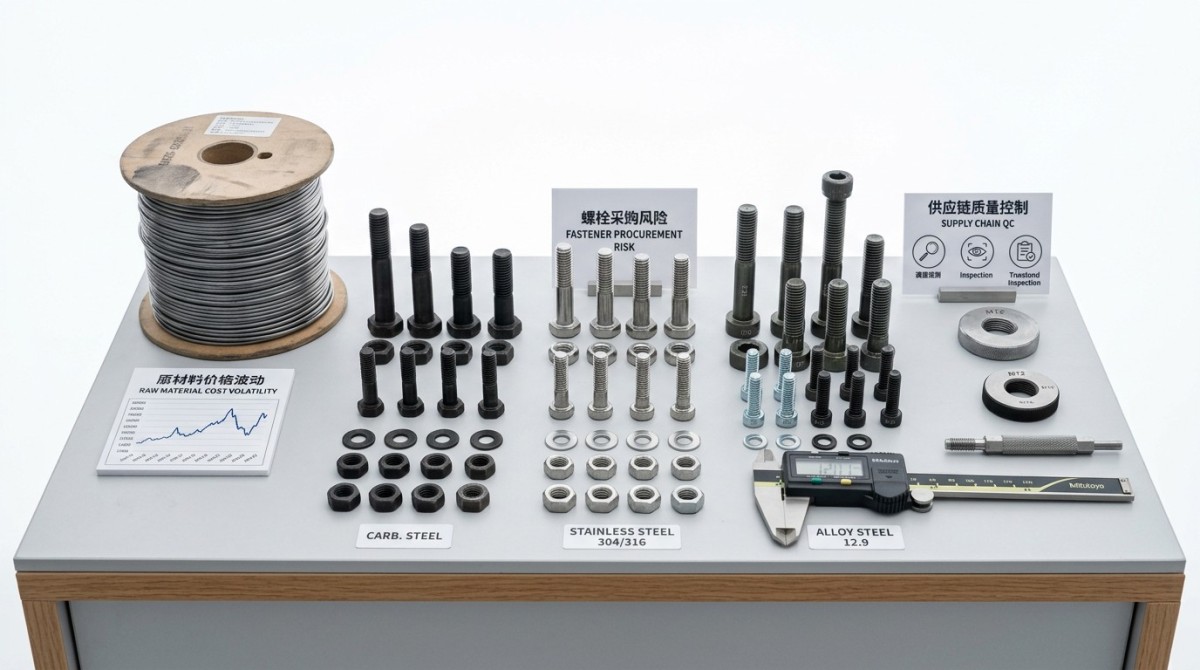
In 2026, bolt sourcing risk is shaped by two forces happening at the same time: raw material volatility and tighter performance expectations. For industrial users, this means bolt procurement must be treated as a cross-functional risk area involving procurement, engineering, quality, and project management.
The first major issue is raw material exposure. Carbon steel, alloy steel, stainless steel, and specialty grades remain directly affected by fluctuations in iron ore, scrap, ferroalloys, energy, and freight. Stainless fasteners are especially sensitive to nickel, chromium, and molybdenum movements. High-strength and heat-resistant bolts can also face additional pressure from alloy surcharges and stricter process requirements. As a result, the same bolt drawing may show significantly different total sourcing risk depending on grade, coating, heat treatment route, and region of origin.
The second issue is that industrial buyers are under more pressure to prove quality and traceability. EPC contractors, OEMs, and plant operators cannot afford fastener failures caused by unauthorized material substitution, poor thread tolerance, inadequate coating performance, hydrogen embrittlement risk, or weak lot control. In other words, a lower unit price may create a much higher total cost when downtime, rework, inspection failures, or liability are included.
The overall judgment for 2026 is clear: the companies that treat bolts as engineered components rather than commodity items will manage cost pressure better and reduce disruption more effectively.
Which raw material trends are driving bolt sourcing risk in 2026?
Not all fasteners carry the same market exposure. Buyers should separate bolt categories by material sensitivity and application criticality.
Carbon steel bolts are still the largest-volume category in many industrial sectors. Their pricing is strongly linked to steel feedstock, energy costs, galvanizing material input, and freight. Even when price volatility appears moderate, risk can emerge through lead time instability, coating bottlenecks, or inconsistent base material quality from lower-tier mills.
Alloy steel and high-tensile bolts are more vulnerable when alloying elements and heat treatment capacity become constrained. For grades used in structural, pressure-containing, rotating, or vibration-prone assemblies, the issue is not only higher cost but also the risk of suppliers cutting corners in mechanical property control.
Stainless steel bolts remain highly exposed to nickel and chromium dynamics. In corrosive environments, substitution from one stainless grade to a cheaper alternative may appear harmless on paper but can sharply reduce service life. This is particularly dangerous in marine, chemical, food processing, and outdoor infrastructure applications.
Specialty bolts made from duplex stainless, titanium, nickel alloys, or application-specific materials face the greatest sourcing complexity. These parts often involve low-volume production, long qualification cycles, and fewer approved suppliers. Here, raw material volatility can quickly become project delivery risk.
For procurement teams, the key takeaway is to stop using a single sourcing logic across all bolt families. Material class, application environment, certification level, and consequence of failure should determine the sourcing strategy.
Where bolt sourcing failures usually happen
Many sourcing failures in 2026 will not begin with a visible stockout. They start much earlier in the process, often at specification, quotation, or supplier qualification stage.
1. Over-standardized purchasing language with under-defined technical requirements.
If a purchase order states only size and strength class but does not clearly define material standard, coating system, hardness limits, testing requirements, lot traceability, packaging controls, and applicable industry codes, suppliers may quote non-equivalent products. This creates hidden comparison errors and post-delivery quality disputes.
2. Treating approved drawings as enough, without process verification.
A drawing does not guarantee process capability. Bolt performance depends on thread rolling, heat treatment consistency, decarburization control, plating quality, and inspection discipline. In 2026, process assurance matters as much as dimensional conformity.
3. Chasing the lowest price during unstable input markets.
When raw material prices rise sharply, low-price offers often imply thinner margins somewhere in the chain. That margin pressure can lead to downgraded feedstock, outsourced heat treatment, weaker coating quality, or reduced inspection intensity.
4. Ignoring regional and logistics concentration risk.
A supplier may look reliable commercially but still depend on a narrow upstream network for steel, coating chemicals, or subcontract processing. This becomes a serious issue during freight disruptions, export restrictions, or local power and environmental controls.
5. Failing to separate critical bolts from general-purpose inventory.
Not every fastener deserves the same qualification effort. But safety-critical, fatigue-loaded, pressure-boundary, corrosion-exposed, or code-regulated bolts should never be sourced with the same rules used for low-risk maintenance stock.
How procurement and engineering teams should evaluate bolt suppliers in 2026
A strong supplier assessment model in 2026 should combine commercial stability with engineering evidence. The most effective evaluations look beyond price sheets and focus on whether the supplier can sustain quality through material and market volatility.
Key evaluation points include:
- Material traceability: Can the supplier provide heat numbers, mill certificates, and lot-level documentation that remain consistent across repeated orders?
- Manufacturing control: Are thread forming, heat treatment, coating, and final inspection performed in-house or heavily outsourced?
- Standards alignment: Can the supplier work reliably to ISO, DIN, ASME, ASTM, or project-specific requirements without interpretation gaps?
- Testing capability: Is there evidence of tensile, hardness, coating thickness, salt spray, dimensional, metallurgical, or non-destructive testing where required?
- Change control: Does the supplier formally manage raw material source changes, subcontractor changes, or process deviations?
- Capacity resilience: Can they maintain lead time under demand spikes or upstream shortages?
- Application knowledge: Do they understand preload, fatigue, galvanic corrosion, sealing interfaces, and installation risks, or are they only acting as a trading intermediary?
For enterprise decision-makers, one practical rule is useful: choose suppliers that can explain failure modes, not just quote part numbers. That is usually a better predictor of long-term sourcing security than nominal price competitiveness.
What buyers should do differently when prices are unstable
In volatile markets, bolt sourcing should move from reactive purchasing to structured risk segmentation.
Build a bolt risk matrix.
Classify bolts by application criticality, spend, lead time sensitivity, material exposure, and substitution difficulty. A stainless bolt in a corrosive production line may deserve more attention than a higher-volume but lower-risk carbon steel item.
Lock technical baselines before price negotiation.
Procurement should align with engineering and quality on a non-negotiable technical specification set. This prevents commercial discussions from drifting into hidden quality reduction.
Use dual-source or regional balancing where justified.
For critical categories, approved multi-source strategies can reduce disruption risk. However, dual sourcing only works if technical equivalence and quality consistency are verified, not assumed.
Track total landed and lifecycle cost, not just ex-works price.
Cheaper bolts can become more expensive when inspection failures, repacking, delayed installation, corrosion rework, or maintenance intervals are considered.
Review contract structure.
For large projects or framework agreements, buyers should consider clauses for alloy surcharges, validity periods, approved substitutions, documentation requirements, and nonconformance handling. Clear contract language reduces disputes when raw material markets move quickly.
Increase visibility into upstream risk.
When possible, ask not only where the bolts are made, but where the steel, wire rod, coating, and heat treatment capacity come from. Upstream transparency matters more in 2026 than many purchasing teams previously assumed.
How different reader groups should use this information
Information researchers should use 2026 fastener market data to distinguish between price noise and structural sourcing risk. The best signals are not isolated price spikes but sustained pressure in alloy inputs, freight reliability, and regional compliance barriers.
Operators and end users should focus on fit-for-use reliability. If bolt quality becomes inconsistent, the consequences often appear during installation: torque scatter, thread seizure, coating damage, poor preload retention, or premature corrosion.
Business decision-makers should evaluate sourcing strategy as a continuity issue. Fastener failure rarely appears in board-level reporting until it affects uptime, warranty exposure, or project penalties. By then, the damage is already more expensive than preventive supplier management.
Quality and safety personnel should tighten incoming inspection logic for high-risk categories, especially when suppliers, countries of origin, or raw material routes have changed. Documentation review alone is not enough for critical applications.
Project managers and engineering leads should identify bolt packages that could threaten schedule if delayed or rejected. Long-lead, code-compliant, coated, or specialty-material bolts should be released early and tracked separately from general hardware.
A practical 2026 bolt sourcing checklist
To reduce exposure in 2026, industrial buyers can use this short checklist before placing or renewing orders:
- Confirm whether the bolt is truly commodity or application-critical.
- Verify exact material grade, mechanical requirements, coating, and standard.
- Check whether proposed alternatives are technically equivalent, not just dimensionally similar.
- Review lot traceability and raw material certification expectations.
- Assess whether the supplier controls key manufacturing processes.
- Identify upstream concentration in steel, alloy inputs, or subcontract processing.
- Compare total cost impact of failure, delay, and maintenance—not only purchase price.
- Use forecast planning for critical bolts instead of spot buying where possible.
- Align procurement, engineering, and quality before approving substitutions.
- Monitor market signals for steel, stainless inputs, freight, and energy because these will continue to affect bolt risk in 2026.
Conclusion: in 2026, the safest bolt sourcing strategy is informed, technical, and selective
Raw material prices in 2026 will continue to influence bolt cost, but the bigger issue for industrial buyers is sourcing risk hidden behind price movement. The real danger is not simply paying more. It is buying parts that arrive late, vary in quality, fail compliance checks, or shorten asset life.
The most effective response is to classify bolt categories by risk, strengthen technical specifications, evaluate suppliers on process and traceability, and make sourcing decisions based on total business impact. For global manufacturers, EPC teams, and plant operators, bolt procurement is no longer a routine transactional task. It is a technical risk management function tied directly to production continuity, safety, and project performance.
Companies that act early—before shortages, substitutions, or quality escapes occur—will be in a far stronger position to control cost and protect operations throughout 2026.
Recommended News
 Photovoltaic Panels Buying Guide: Efficiency Ratings, Panel Types, and Installation FitPhotovoltaic panels buying guide covering efficiency ratings, panel types, and installation fit. Learn how to choose the right system for better yield, durability, and ROI.
 Sheet Metal Price Breakdown: Material Grade, Thickness, Finish, and Fabrication CostsSheet metal price explained: compare how material grade, thickness, finish, and fabrication shape total cost, with practical tips to cut waste and approve quotes with confidence.
 How to Evaluate a Radiators Factory: Production Capacity, QC Standards, and Lead TimeRadiators factory evaluation made simple: learn how to assess production capacity, QC standards, and lead time to reduce sourcing risk and choose a reliable supplier.
 Lawn Mowers Cost Explained: Price Ranges, Ownership Costs, and What Affects ValueLawn mowers cost explained: compare real price ranges, maintenance, fuel or battery expenses, and value factors to choose the best mower for your yard and budget.
 What Drives Raw Material Prices in Manufacturing? Key Cost Factors and Buying SignalsRaw material prices shape sourcing, margins, and supplier strategy. Discover the key cost drivers, early buying signals, and practical steps to control risk before the next price jump.
![]() Wholesale 5-Axis CNC Machine Buying Guide: Travel, Spindle, Control, and After-SalesWholesale 5-axis CNC machine buying guide for enterprise buyers: compare travel, spindle, control, and after-sales support to reduce risk, improve ROI, and source with confidence.
Wholesale 5-Axis CNC Machine Buying Guide: Travel, Spindle, Control, and After-SalesWholesale 5-axis CNC machine buying guide for enterprise buyers: compare travel, spindle, control, and after-sales support to reduce risk, improve ROI, and source with confidence.![]() Copper Cathode Specifications: Purity, Grade, and Packaging for Bulk PurchasingCoppercathode specifications matter in bulk buying. Learn how purity, grade, and packaging affect compliance, cost, and supply reliability for smarter sourcing.
Copper Cathode Specifications: Purity, Grade, and Packaging for Bulk PurchasingCoppercathode specifications matter in bulk buying. Learn how purity, grade, and packaging affect compliance, cost, and supply reliability for smarter sourcing.![]() Industrial Fastening Methods Compared: Bolts, Rivets, and Weld Studs for Heavy LoadsIndustrial fastening for heavy loads compared: bolts, rivets, and weld studs explained by strength, vibration resistance, inspection, and lifecycle cost. Find the best fit fast.
Industrial Fastening Methods Compared: Bolts, Rivets, and Weld Studs for Heavy LoadsIndustrial fastening for heavy loads compared: bolts, rivets, and weld studs explained by strength, vibration resistance, inspection, and lifecycle cost. Find the best fit fast.![]() EPDM Rubber Roofing Wholesale: How to Compare Roll Thickness, Width, and MOQepdm rubber roofing wholesale guide: compare roll thickness, width, and MOQ to cut seam labor, reduce waste, improve logistics, and choose the most cost-effective roofing supply.
EPDM Rubber Roofing Wholesale: How to Compare Roll Thickness, Width, and MOQepdm rubber roofing wholesale guide: compare roll thickness, width, and MOQ to cut seam labor, reduce waste, improve logistics, and choose the most cost-effective roofing supply.![]() Lean Manufacturing Explained: Core Principles, Common Wastes, and Where to StartLean manufacturing explained clearly: discover core principles, the most common wastes, and practical first steps to improve flow, quality, and operational resilience.
Lean Manufacturing Explained: Core Principles, Common Wastes, and Where to StartLean manufacturing explained clearly: discover core principles, the most common wastes, and practical first steps to improve flow, quality, and operational resilience. Solar Power Bank Buying Guide: Capacity, Panels, Ports, and Use CasesSolar power bank buying guide: compare capacity, panel performance, USB-C ports, durability, and use cases to choose reliable backup power for travel, camping, and emergencies.
 Skincare Packaging Materials: How to Choose Bottles, Jars, and TubesSkincarepackaging choices shape formula stability, brand appeal, and cost. Learn how to select bottles, jars, and tubes with a practical material checklist.
 Lithium Battery Storage Safety: Temperature, Charging, and Fire RisksLithium battery storage safety guide: control temperature, charging, and fire risks to prevent thermal runaway, protect assets, and stay audit-ready.
 Sustainable Textile Manufacturing: Processes, Materials, and Cost FactorsSustainable textile manufacturing explained: compare materials, processes, compliance needs, and cost factors to reduce risk, improve efficiency, and build scalable supply chains.
 Trade Analytics for Cost-Effective Sourcing: Metrics That MatterTrade analytics for cost-effective sourcing helps reduce hidden costs, compare suppliers, manage risk, and make smarter industrial purchasing decisions.
 Accessory Design for Consumer Devices: Materials, Fit, and Durability ChecksAccessory design guide for consumer devices: compare materials, fit, fastening, durability checks, and supplier readiness to reduce launch risk and rework.
 E-Readers vs Tablets: Screen Comfort, Battery Life, and Use CasesE-readers vs tablets: compare screen comfort, battery life, portability, and best use cases to choose the right device for focused reading or flexible digital work.
 How to Evaluate an Online Trade Platform for Supplier Risk and CostsOnline trade platform evaluation made practical: learn how to compare supplier risk, hidden costs, verification depth, technical data, and dispute protection before sourcing.
 Foldable Screen Technology for Flexible Display: Hinge and Layer LimitsFoldable screen technology flexible display insights: learn how hinge precision, layer stack durability, and bend-cycle testing define reliability before scale-up.
 Precision Components Selection: Tolerances, Materials, and QC ChecksPrecision components selection guide: learn how to assess tolerances, materials, supplier capability, and QC evidence to reduce risk and secure reliable performance.
 When does industrial sewing beat manual stitching?Industrial sewing outperforms manual stitching when volume, seam strength, repeatability, and lifecycle cost matter. Learn when to switch and how to prove ROI.















Search News
Popular Tags