
Manufacturing competitiveness in precision casting
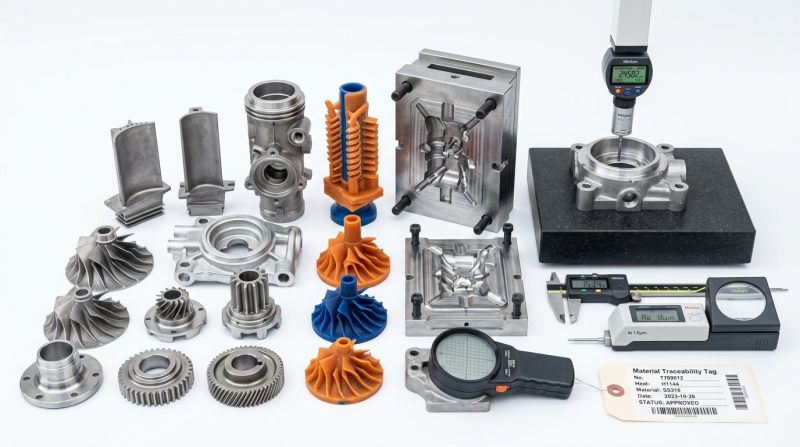
Manufacturing competitiveness in precision casting is driven by a simple reality: the most competitive producers are not merely the ones capable of making accurate parts, but the ones that can deliver repeatable quality, stable lead times, controlled costs, and documented compliance at scale. For procurement leaders, project managers, quality teams, and plant operators, the key question is not whether precision casting can achieve tight tolerances in theory, but whether a supplier or production system can do so consistently under real industrial conditions. In practice, competitiveness comes from a combination of process capability, material control, tooling quality, standards alignment, supply-chain resilience, and engineering responsiveness.
That is why precision casting should be evaluated as a manufacturing system rather than a standalone process. Companies that benchmark foundry performance, verify technical specifications, monitor raw material volatility, and connect casting quality to downstream machining and assembly outcomes are better positioned to reduce risk and improve total production value.
What actually determines manufacturing competitiveness in precision casting?
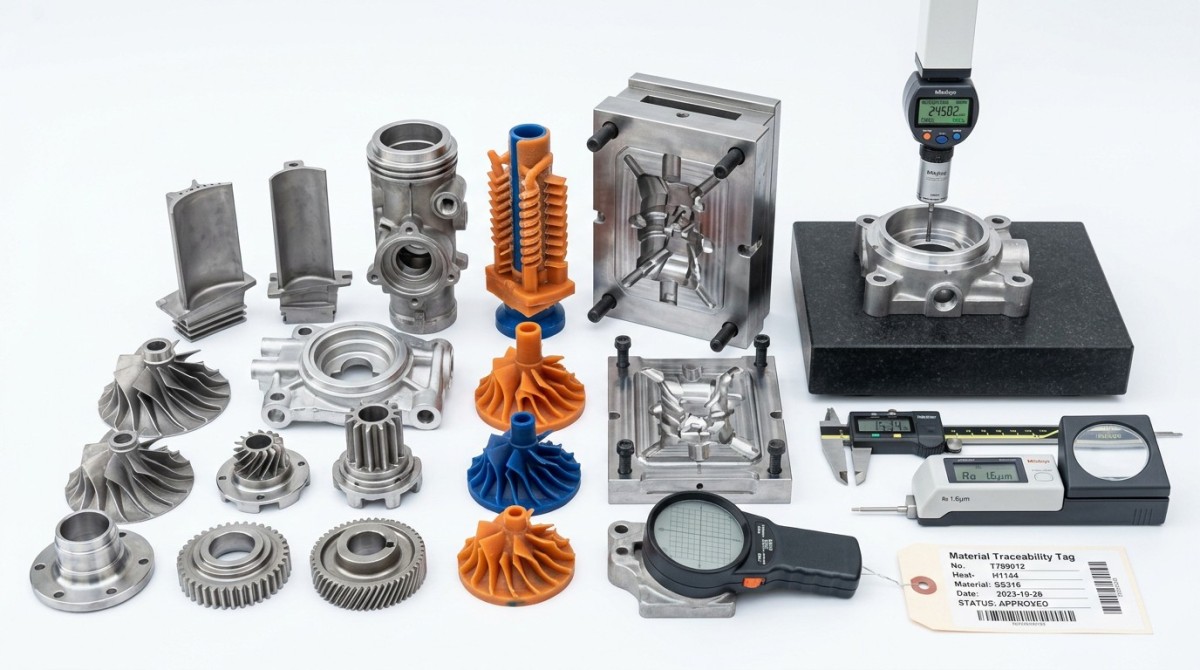
For most industrial buyers and technical stakeholders, the core search intent behind this topic is practical: how to judge whether a precision casting operation is truly competitive in terms of quality, cost, reliability, and long-term production performance. The answer lies in several measurable dimensions.
1. Dimensional repeatability and process stability.
A competitive precision casting manufacturer must hold tolerances consistently across batches, cavities, and production cycles. One excellent sample part means little if variation rises during full-volume production. Real competitiveness is demonstrated through process capability, controlled shrinkage behavior, stable mold performance, and low defect escape rates.
2. Material integrity, not just part geometry.
In many sectors, casting failure is less about external dimensions and more about internal soundness. Porosity, inclusions, microcracking, segregation, and inconsistent metallurgical properties can destroy performance in pressure-bearing, wear-critical, or safety-related components. Manufacturers with stronger competitiveness invest in melt control, alloy traceability, thermal analysis, and validated inspection routines.
3. Tooling and mold engineering capability.
Precision casting outcomes depend heavily on gating design, cooling strategy, mold consistency, and tool maintenance. A supplier with strong mold engineering can shorten development cycles, improve yield, and reduce recurring quality deviations. This is especially important in projects where complex geometry, thin walls, or high-value alloys leave little room for trial-and-error production.
4. Post-casting integration with machining and finishing.
Many users underestimate how much downstream manufacturability affects competitiveness. A casting that meets nominal shape requirements but creates excessive machining stock, unstable clamping, or difficult datum control can increase total production cost. The most capable manufacturers design castings with machining logic, assembly requirements, and end-use tolerances in mind.
5. Delivery reliability and supply-chain resilience.
A technically capable supplier that cannot maintain lead times during raw material fluctuations or logistics disruption is not fully competitive. For project-based buyers and enterprise decision-makers, responsiveness to schedule changes, material substitution risk, and procurement transparency are just as important as part accuracy.
What do buyers, engineers, and quality teams care about most?
Although different stakeholders view precision casting from different angles, their concerns converge around risk, usability, and lifecycle value.
Information researchers usually want a structured way to compare casting suppliers, technologies, and manufacturing claims. They are looking for decision criteria, not generic definitions.
Operators and end users care about whether the cast component performs reliably in service. They want to know if the part will crack, deform, leak, wear prematurely, or create maintenance issues.
Enterprise decision-makers focus on the business case. They ask whether precision casting reduces total cost, shortens procurement time, improves asset reliability, supports global compliance, and lowers operational risk.
Quality control and safety managers are primarily concerned with documentation, defect prevention, traceability, audit readiness, and the consequences of failure in regulated or high-duty environments.
Project managers and EPC-related stakeholders care about schedule certainty, qualification speed, engineering communication, change management, and whether the supplier can support project tender requirements with technical evidence.
For all of these audiences, the most useful content is not a broad introduction to casting principles. What helps most is a framework for evaluating competitiveness: how to compare suppliers, what to verify in technical documents, which quality indicators matter, and where hidden production risk typically appears.
How should precision casting competitiveness be evaluated in real procurement and production decisions?
A practical evaluation model should combine engineering, commercial, and operational factors. Looking only at unit price often leads to poor decisions, especially in high-specification industries.
Start with application requirements.
Not every precision casting project requires aerospace-level control, but every serious project requires clarity on function. Define the service environment, mechanical loads, temperature range, corrosion exposure, pressure conditions, and dimensional interfaces. Competitiveness depends on fitness for use, not on generic manufacturing claims.
Review the technical specification package in detail.
Check whether the supplier can clearly support standards, tolerances, alloy grades, heat treatment requirements, NDT expectations, surface finish, and critical-to-quality dimensions. Incomplete or vague specification alignment is often an early warning sign.
Assess process controls, not just finished-part inspection.
Strong manufacturers build quality into wax patterns, shell building, melting, pouring, cooling, knockout, heat treatment, and finishing. Weak manufacturers rely too heavily on final inspection to catch defects after they have already been created. Buyers should ask about in-process controls, SPC methods, first article validation, and corrective action systems.
Measure yield, scrap exposure, and rework burden.
A low quoted price may hide unstable production economics. High scrap rates, inconsistent mold life, or frequent rework can eventually affect delivery reliability and cost predictability. Competitive manufacturers usually have better control over process yield and can explain the trade-offs between cost and defect prevention.
Evaluate technical responsiveness.
When drawings change, tolerances tighten, or field issues emerge, the supplier’s engineering response matters. Competitive precision casting partners can support DFM feedback, propose feasible modifications, and communicate root causes with data rather than assumption.
Connect casting performance to total manufacturing cost.
The casting should be judged not only by foundry price but by its impact on machining time, assembly efficiency, rejection rates, warranty risk, and maintenance cost. In many cases, a slightly higher casting price reduces total system cost substantially.
Why standards, benchmarking, and verifiable data matter more than marketing claims
In precision casting, competitiveness is often overstated in brochures and underestimated in technical review. This is why industrial benchmarking and standards-based evaluation are essential.
Benchmarking allows manufacturers and buyers to compare actual capability against industry expectations in areas such as tolerance achievement, alloy compliance, leak integrity, mold repeatability, and defect rates. Without benchmarking, decision-making becomes too dependent on anecdotal experience or supplier self-description.
International standards also provide a common decision language. Alignment with ISO, DIN, ASME, or JIS is not simply a compliance exercise; it helps procurement teams, quality managers, and engineering departments verify whether material properties, dimensional definitions, and test methods are being interpreted consistently across regions and suppliers.
Verifiable data is especially important when projects involve high-value assets, long maintenance cycles, or contractual accountability. Examples include:
- Material certification and heat traceability
- Dimensional inspection records
- NDT reports and acceptance criteria
- Process qualification documentation
- Corrective action history and defect trend analysis
- On-time delivery performance
- Lot-level consistency metrics
For decision-makers, this documentation reduces uncertainty. For operators and quality teams, it increases confidence that the part will behave predictably in production and service.
Where do manufacturers lose competitiveness in precision casting?
Competitiveness often weakens not because the casting process itself is unsuitable, but because control breaks down in a few recurring areas.
Poor raw material control.
Volatile metal prices and sourcing pressure can lead some suppliers to compromise on input consistency. Even small deviations in chemistry, cleanliness, or feedstock handling can affect mechanical performance and defect behavior.
Weak mold and tooling maintenance.
Precision casting depends on repeatable tooling conditions. Worn tooling, unstable wax injection parameters, or inconsistent shell preparation quickly erode dimensional accuracy and process repeatability.
Insufficient coordination between casting and machining.
If casting allowances, datum strategies, or fixturing assumptions are not aligned with CNC machining requirements, downstream inefficiencies multiply. In competitive operations, casting and machining are engineered together.
Reactive quality management.
Plants that only respond after customer complaints or final inspection failures struggle to stay competitive. Preventive quality systems, root cause discipline, and feedback loops are what separate stable suppliers from unreliable ones.
Inadequate visibility into supply-chain risk.
Material shortages, long transport lead times, and energy cost changes all affect casting economics. Companies that monitor supply-chain resilience and commodity movement can protect project continuity better than those operating with limited market intelligence.
How can companies improve competitiveness through precision casting strategy?
Improving competitiveness does not always require radical capital investment. In many cases, it comes from better integration of engineering intelligence, supplier management, and process discipline.
First, companies should classify parts by functional criticality. High-risk or high-value castings deserve deeper supplier qualification, broader inspection plans, and more rigorous process review than low-risk commodity parts.
Second, procurement and engineering teams should collaborate earlier. When sourcing decisions are made without manufacturing input, cost may be optimized at the expense of tolerance, yield, or service reliability. Cross-functional review produces better outcomes.
Third, organizations should use supplier benchmarking scorecards. These should cover technical capability, certification status, response speed, quality performance, cost stability, and delivery resilience. A structured scorecard helps buyers move beyond quote comparison.
Fourth, manufacturers should connect casting data with downstream results. If machining rejects, leakage failures, or field returns are traced back to casting variability, that information should be fed into supplier management and process redesign.
Finally, businesses should pay closer attention to market signals such as alloy price trends, freight disruption, and regional capacity shifts. Precision casting competitiveness is increasingly shaped by external industrial conditions, not only by internal factory skill.
Conclusion: competitiveness in precision casting is built on control, evidence, and total-value thinking
Manufacturing competitiveness in precision casting is not defined by precision alone. It is defined by the ability to deliver technically sound components with reliable quality, efficient downstream processing, resilient supply support, and documented compliance. For buyers, engineers, and project leaders, the smartest decisions come from evaluating the full manufacturing system: materials, tooling, process control, inspection, standards alignment, and commercial stability.
Companies that treat precision casting as a strategic capability rather than a commodity purchase are better equipped to reduce operational risk, improve production line performance, and make stronger long-term procurement decisions. In a market shaped by tighter specifications, volatile raw material pricing, and rising accountability, competitiveness belongs to those who can prove performance with data and sustain it through disciplined engineering execution.
Recommended News
 How to Choose Synthetic Gear Lubricants for Load, Temperature, and Service LifeSynthetic gear lubricants selection guide: learn how to match load, temperature, and service life to the right formula for better gearbox protection, longer drains, and smarter maintenance decisions.
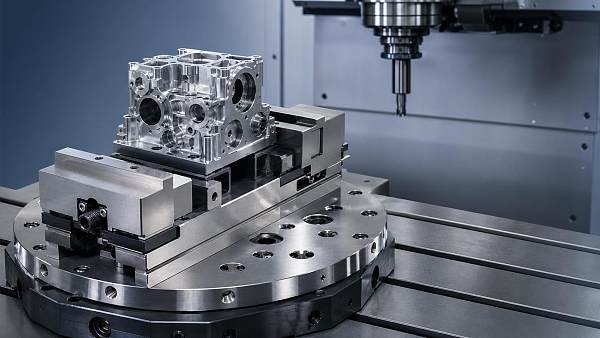
 How to Choose a Clamping System for a Machining Factory Based on Parts and CNC SetupClamping system for machining factory selection starts with part geometry, datum control, and CNC setup. Learn how to reduce setup errors, improve repeatability, and choose fixtures that fit real production needs.
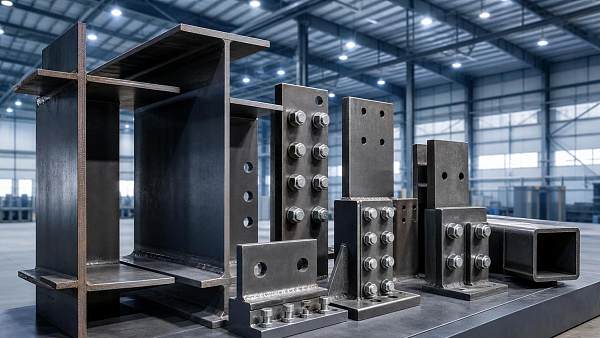
 How to Evaluate Structural Steel & Metals for Load-Bearing Industrial ProjectsStructural Steel & Metals selection can make or break industrial load-bearing projects. Learn how to assess strength, corrosion, fabrication, traceability, and lifecycle cost.
 Where CNC Machinery Investment Is Headed: 2025 Trends Shaping Capacity PlanningCNC machinery investment trends in 2025 are shifting toward flexible automation, uptime, and precision. Discover where budgets are moving and how smarter capacity planning can protect margins.
 How to Evaluate a Carbide Tool Wear Rate Supplier for Stable Machining PerformanceCarbide tool wear rate supplier selection affects machining stability, tool life, and scrap control. Learn how to compare wear data, consistency, and delivery reliability before you buy.
 How to Evaluate a Sheet Metal Prototype for Fit, Function, and ManufacturabilitySheet metal prototype evaluation made practical: learn how to verify fit, function, and manufacturability to reduce rework, control cost, and improve production readiness.
 Industrial Application Guidance for Electronics: How to Match Materials to Use CasesIndustrial application guidance for electronics made practical: learn how to match metals, polymers, sealants, and coatings to real use cases for better reliability, compliance, and lifecycle value.
 How to Evaluate an Aerospace Seals Manufacturer for Reliability and ComplianceAerospace seals manufacturer selection starts with reliability and compliance. Learn how to assess certifications, traceability, process control, and supply stability before you approve a supplier.
 Supplier Capability Evaluation Template: What Buyers Should Include and How to ScoreSupplier capability evaluation template guide for buyers: learn what criteria to include, how to score suppliers fairly, and how to reduce sourcing risk with a smarter vendor assessment process.
 How to Choose a Rotary Table for CNC Metalworking: Key Specs and Use CasesRotary table for CNC metalworking: learn how to compare torque, accuracy, load capacity, drive types, and real use cases to choose the right solution for better precision and productivity.
 Product Selection Guidance Checklist: How to Compare Specs, Cost, and Fit for UseProduct selection guidance checklist for comparing specs, total cost, compliance, and fit for use. Make smarter industrial buying decisions and reduce risk before approval.
 RoHS Manufacturing Standards Explained: Requirements, Scope, and Compliance ChecksManufacturing standards RoHS explained clearly: learn substance limits, scope, exemptions, and compliance checks to reduce audit risk, avoid shipment delays, and strengthen market access.
 Material Selection for Manufacturing Corrosion Resistance in Chemical and Wet EnvironmentsMaterial selection for manufacturing corrosion resistance starts with the real service environment. Learn how to reduce failures, control lifecycle cost, and choose durable materials for chemical and wet applications.
 Corrosion-Resistant Material Selection for Manufacturing: How to Balance Life and CostMaterial selection for manufacturing corrosion resistance: learn how to balance service life and total cost, compare material options, avoid failure risks, and make smarter, more reliable manufacturing decisions.
 CNC Machine Tools for Metalworking: Key Types, Axis Options, and Best-Fit UsesCNC machine tools for metalworking explained: compare key machine types, 3-, 4-, and 5-axis options, and best-fit industrial uses to choose smarter, faster, and more precise production solutions.
 How to Use ATC Tool Change Time Data to Compare CNC Cycle Cost AccuratelyATC (tool change) time data cost analysis helps you compare CNC cycle cost accurately, expose hidden quote gaps, and choose suppliers with more reliable, profitable machining economics.
 Machine Tool Standards Update: What Changed and How to Check ComplianceMachine tool standards update: learn what changed, which machines are affected, and how to check compliance fast with practical audit tips to reduce risk and avoid costly gaps.
 What Drives Cobalt Price and Tool Costs? Key Factors Buyers Should TrackCobalt price tool costs are rising fast—learn the key market, supply, and production signals buyers should track to forecast tool budgets, reduce risk, and make smarter sourcing decisions.
 How to Evaluate a Rotary Table for CNC with CE Certification for 4th-Axis MachiningRotary table for CNC CE certified: learn how to evaluate accuracy, backlash, control compatibility, and compliance for reliable 4th-axis machining.
 Semiconductor Chips vs ICs vs Microprocessors: What the Differences Mean in Real ApplicationsSemiconductor chips explained: learn how chips, ICs, and microprocessors differ in industrial systems, and make smarter sourcing, design, and reliability decisions.
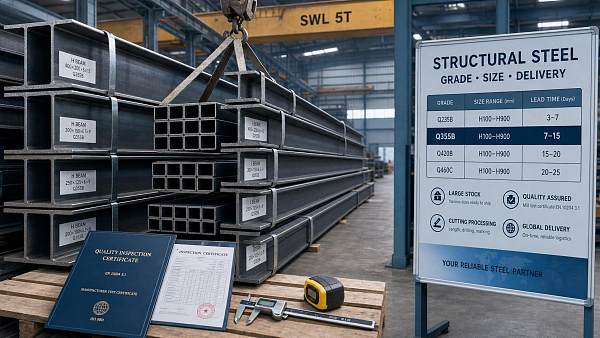
 Structural Steel Beams Wholesale: How Buyers Compare Grades, Sizes, and Lead TimesStructural steel beams wholesale buyers compare more than price—learn how grades, sizes, certifications, and lead times affect project cost, risk, and supply reliability.










Search News
Popular Tags