
Industrial procurement mistakes in cutting fluids
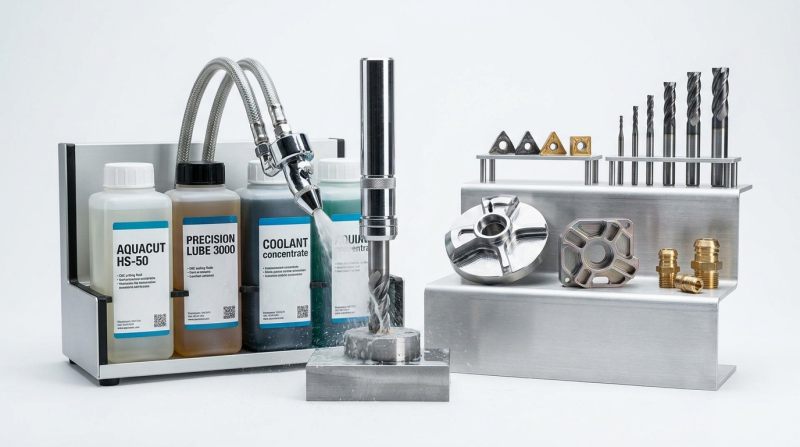
In industrial procurement, small mistakes in selecting cutting fluids can quietly erode manufacturing competitiveness, disrupt production line optimization, and raise hidden risks for precision components. For decision-makers, operators, and quality teams, understanding technical specifications, industrial benchmarking, engineering intelligence, raw material prices, and supply chain analysis is essential to avoid costly setbacks and make smarter choices in project tenders.
Why do cutting fluid procurement mistakes create outsized manufacturing risk?
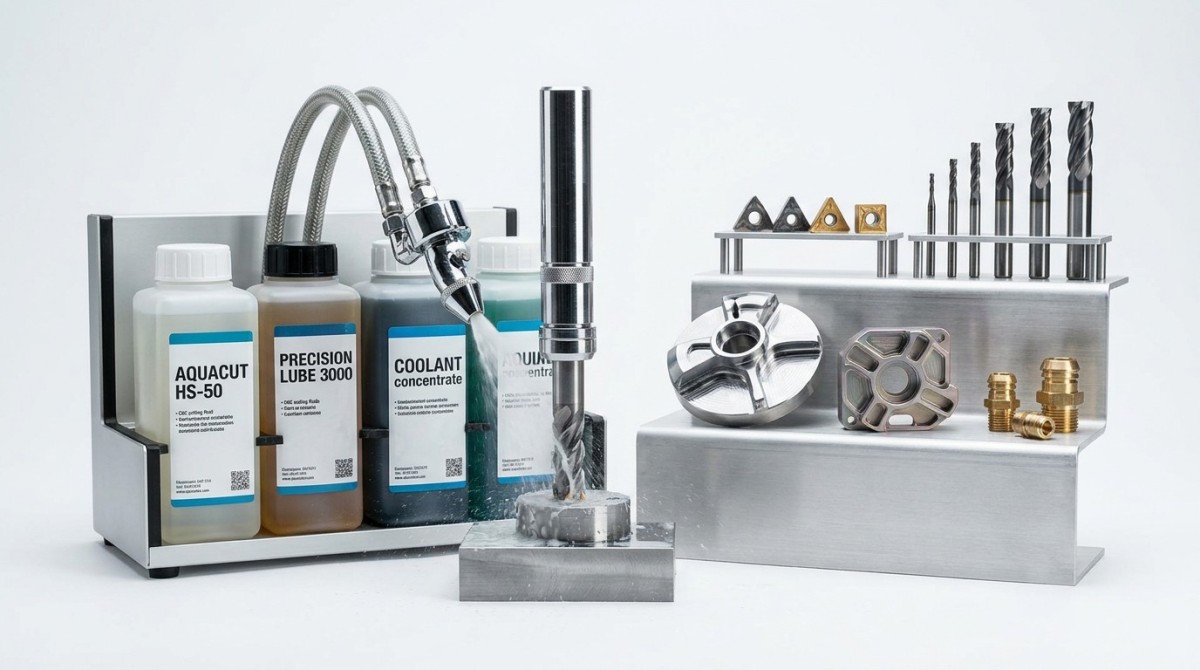
Cutting fluids are often treated as a consumable line item, yet in precision machining they directly affect tool life, surface finish, heat control, corrosion resistance, cleaning burden, and machine uptime. A poor purchasing decision may not fail immediately in the first 24 hours, but over 2–6 weeks it can appear as unstable dimensions, foam issues, operator complaints, sump odor, filter blockage, or inconsistent part quality across shifts.
This is why industrial procurement mistakes in cutting fluids are not only a lubrication problem. They are a cross-functional problem involving machining engineering, EHS review, quality control, maintenance planning, and supplier reliability. In mixed manufacturing environments handling steel, aluminum, cast iron, and difficult alloys, one fluid rarely performs equally well without careful validation against process loads, water quality, and downstream cleaning requirements.
For information researchers and project leaders, the first mistake is assuming that price per drum is the main benchmark. In practice, the more meaningful comparison usually includes 5 dimensions: dilution stability, tool wear impact, machine compatibility, disposal burden, and supply continuity. A fluid with a lower purchase price can still raise total operating cost if concentration must be kept at 8% instead of 5%, or if fluid life shortens from 12 weeks to 4 weeks.
G-PME approaches this issue from a broader industrial intelligence perspective. Because cutting fluids sit at the intersection of machining, pump circulation, seal compatibility, and synthetic base oil volatility, procurement should be benchmarked against ISO, DIN, ASME, and JIS aligned operating expectations, as well as raw material movement and supply chain resilience. That wider view helps procurement teams avoid decisions that look acceptable on paper but create hidden instability on the production floor.
The most common procurement mistakes seen across industrial programs
- Selecting a cutting fluid by unit price alone, without comparing dilution ratio, sump life, and disposal frequency over a 3–6 month operating period.
- Ignoring material-specific behavior, especially when one shop machines both ferrous and non-ferrous parts with different staining, lubricity, and corrosion risks.
- Overlooking water hardness, pH stability, and foam behavior, which can change significantly between facilities or even between two municipal supply zones.
- Failing to assess compatibility with pumps, filters, seals, tramp oil skimmers, and coolant delivery systems already installed on CNC lines.
- Skipping trial protocols, so the fluid enters production without a defined 2-stage validation covering machining performance and quality acceptance.
What different stakeholders usually care about
Operators care about smell, skin contact, foam, mist generation, and chip evacuation. Quality teams care about dimensional repeatability, stain prevention, and residue before assembly or coating. Procurement leaders focus on lead time, batch consistency, and commercial stability. Project managers want fewer disruptions during launch windows that may run only 7–15 days between equipment commissioning and production handover.
A good procurement review therefore needs to connect these priorities instead of separating them. When a cutting fluid is selected with only one department in mind, it often creates friction somewhere else. The better method is a structured evaluation that starts with process risk, not merely a product brochure.
A practical rule for early-stage screening
Before requesting formal quotations, many industrial teams benefit from checking 4 baseline questions: what materials are being machined, what operation severity is involved, what water quality range exists on site, and what downstream process follows machining. This 4-point screen reduces the chance of comparing fluids that were never suitable for the application in the first place.
Which technical factors should procurement teams verify before approving a cutting fluid?
Technical evaluation should move beyond generic labels such as soluble oil, semi-synthetic, or synthetic. Those categories are useful, but not sufficient for B2B decision-making. Procurement teams need to understand concentration window, lubricity profile, cooling capacity, foam tendency, corrosion inhibition, residue behavior, and compatibility with machine architecture. The same product can behave very differently in high-pressure through-tool delivery versus flood cooling.
In many shops, recommended concentration may sit within a 4%–10% range depending on material and operation. Light milling on aluminum may perform acceptably near the lower range, while tapping, broaching, or difficult alloy machining may demand a higher range. Procurement errors occur when buyers compare two fluids at equal purchase price but fail to calculate actual consumption at working concentration.
Water conditions also matter. Hardness, conductivity, and microbial load influence emulsion stability and sump life. If one plant receives relatively hard water and another uses softened or treated water, a cutting fluid that performs well in Plant A may show more foam or instability in Plant B. That is why multi-site procurement should not assume one specification sheet guarantees identical field behavior.
The table below outlines a practical technical review structure for industrial procurement teams comparing cutting fluids across mixed production environments.
This type of matrix helps convert broad technical claims into comparable procurement checkpoints. It also supports RFQ preparation, because teams can ask suppliers to respond to identical review items rather than relying on marketing language. For complex tenders, G-PME can align this evaluation with machining conditions, pump system behavior, and lubricant category benchmarking to improve comparability across vendors.
Three performance signals that should never be skipped
First, verify how the fluid behaves under your actual operation type: turning, milling, drilling, grinding, tapping, or mixed CNC cells. Second, review maintenance sensitivity, including topping-up discipline, tramp oil management, and concentration control intervals. Third, assess whether the fluid can support your quality targets over a full production cycle, not just during a short supplier demonstration.
In practical terms, a 1-day cutting trial is rarely enough. A more reliable approach is a 2-stage validation: initial machining confirmation over 1–3 days, followed by sump and quality stability observation over 2–4 weeks. This reveals issues such as odor development, emulsification weakness, or part appearance changes that short trials often miss.
Where G-PME adds value during technical review
Because G-PME tracks industrial lubricants, fluid control systems, and raw material movements together, procurement teams can assess more than fluid chemistry alone. They can also evaluate whether a candidate fluid fits installed circulation equipment, whether synthetic base oil volatility may affect future budgeting, and whether a supplier’s regional distribution model can sustain project continuity during procurement cycles.
How should buyers compare cutting fluid options on cost, application, and supply stability?
A sound comparison does not start with product category alone. Semi-synthetic and synthetic cutting fluids may both be suitable depending on operation severity, cleanliness targets, and water conditions. In some operations, a lower-cost option may be acceptable. In others, it creates hidden cost through shorter tool life, more frequent sump cleaning, or higher rejection during dimensional inspection and finishing.
For procurement leaders, total cost should be reviewed over at least a 3-part framework: purchase and dilution cost, operational impact, and support burden. Operational impact includes tool wear, machine stoppage, fluid replacement interval, and part quality drift. Support burden includes housekeeping, EHS controls, disposal frequency, supplier response time, and documentation quality for project approval.
The next table offers a practical comparison format that buyers, quality teams, and project managers can use when preparing tenders or narrowing a shortlist of cutting fluid suppliers.
The key insight is that “cheaper” and “more economical” are not the same. A fluid that lowers drum price but increases machine intervention frequency from weekly to every 2–3 days may not be the right fit for high-utilization lines. This is especially true when project launch milestones are tight or when one rejected batch has a larger financial impact than the fluid budget itself.
A procurement checklist for tender comparison
- Request operating concentration ranges by material and operation, not a single generic number.
- Ask suppliers to define expected service intervals, top-up practice, and monitoring method.
- Confirm packaging, lead time, and regional stocking model, especially if project demand can shift by month or quarter.
Recommended News
 How to select low-friction industrial seals for centrifugal pumpsChoose industrial seals for low friction in centrifugal pumps. Compare face materials, lubrication and support systems to reduce wear and operating losses. Find the right fit.
 A supply chain analysis framework for spotting mold delivery risksUse a supply chain analysis framework to spot mold delivery risks, verify critical dependencies, and protect launch schedules. Discover practical steps to act early.
 How bearing prices shape machine tool spindle production cost trendsExplore how bearing prices shape spindle production cost trends, from assembly and testing to supply risks. Uncover hidden costs and make smarter sourcing decisions.
 Carrier Plans $600 Million Advanced Manufacturing Center With 5-Axis CNC EquipmentCarrier plans a $600M+ advanced manufacturing center with 5-axis CNC equipment in Texas. Explore potential opportunities for machining suppliers and commercial chiller buyers.
 Why do pH meters give unstable readings in metalworking coolants?Unstable pHmeters in metalworking coolants? Learn how to identify probe fouling, verify calibration, and improve sampling for reliable readings before costly coolant adjustments.
 Aluminum vs. titanium for lightweight parts with equal stiffnessEngineering materials comparison: lightweight alloys aluminum and titanium face off at equal stiffness. Discover how geometry, loading, and cost guide the best choice for lighter parts.
 Which engineering materials hold tight tolerances as temperatures change?Explore our engineering materials comparison by tolerance to learn how Invar, ceramics, steel, and aluminum handle temperature changes—and find the right fit for precision designs.
 John Crane to Showcase Emissions and Downtime Reduction Technologies at ADIPEC 2026John Crane at ADIPEC 2026: Explore technologies targeting lower emissions and compressor downtime, and discover what reported savings could mean for your operations.
 When does precision engineering machining need a 5-axis machine?Discover when precision engineering machining needs 5-axis capability. Compare 3+2 and simultaneous machining to improve tool access, control costs, and choose the right process.
 How to check clinical validation of wholesale blood pressure monitorsSourcing blood pressure monitors wholesale? Learn how to verify clinical studies, registry listings, cuff coverage, and model identity before approving your next bulk order.
 How much lithium battery storage do you need for solar energy?Lithium battery storage for solar energy: learn to calculate capacity, account for losses, and check backup power. Avoid costly sizing mistakes and find the right system for your needs.
 11th CIMSS Conference in Wuxi to Focus on Metalworking Fluid Industry UpgradesExplore the 11th CIMSS Conference in Wuxi, October 22–23, 2026, for insights into metalworking fluid innovation, industrial cleaning and cost control to support industry upgrades.
 Can solid-state battery breakthroughs scale to mass-produced EVs?Solid-state battery breakthroughs for electric vehicles: can they scale? Explore manufacturing yield, pack costs, and real-world performance to uncover what stands between lab success and mass production.
 Can digital manufacturing improve competitiveness by cutting lead times?Explore digital manufacturing competitiveness: learn how shorter lead times, smarter scheduling, and connected quality data can help win orders and cut costs without compromising quality.
 How to size a hydraulic press for forging large steel componentsSize a hydraulic press for forging large steel components with confidence. Learn how to assess forming force, working speed, stroke, and capacity limits to avoid costly selection errors.
 Aerospace Actuator Maker 7958 Joins Emerging Stock Market on October 22Aerospace actuator maker 7958 joins the Emerging Stock Market on October 22, 2026. Explore its precision motor technology and growth plans for drones and robotics.
 How to calculate payload for industrial robots removing molded partsSize industrial robots for molded-part removal with confidence. Learn to calculate total payload, center of gravity, inertia, and extraction loads to avoid overloads and optimize cycle times.
 When do automated CNC cell systems pay off for 5-axis machining?When do automated cnc cell systems pay off for 5-axis machining? Discover how demand, unattended reliability, and total costs shape ROI—and build a stronger investment case.
 When is industrial procurement support worth the cost for tooling?When is industrial procurement support worth the cost for tooling? Discover how to compare total costs, assess supplier risk, and build a clear break-even case before you invest.
 How to assess a mold manufacturer's cooling design expertiseAssess a mold engineering manufacturer's cooling expertise with key checks for thermal simulations, circuit flow, and mold trials. Learn what evidence to demand before approving your supplier.
 How to vet OEM mold suppliers in a manufacturing directoryUsing a manufacturing directory with OEM suppliers? Learn how to vet mold makers, verify capabilities, compare quotes, and define acceptance criteria to reduce sourcing risk.












Search News
Popular Tags