
Project tenders: how to compare smart actuators fairly
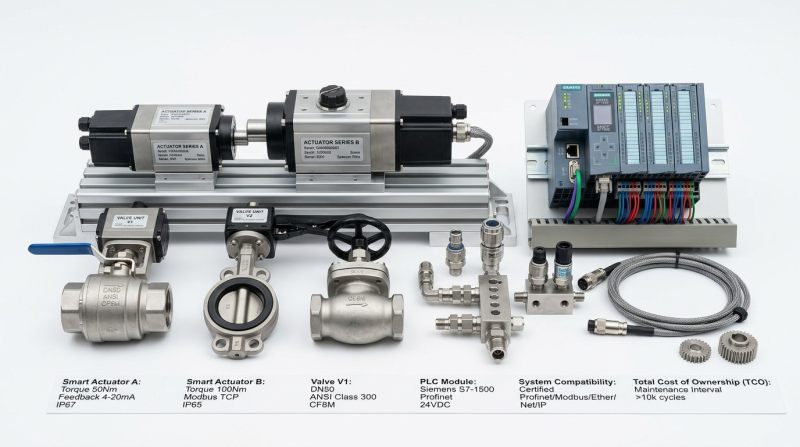
In project tenders, smart actuator comparisons often fail when technical specifications, lifecycle costs, and production line optimization goals are judged unevenly. For manufacturers focused on manufacturing competitiveness, fair evaluation depends on industrial benchmarking, engineering intelligence, and supply chain analysis—especially as raw material prices and industrial procurement risks continue to reshape precision components selection.
Why smart actuator tender evaluations become unfair in real projects
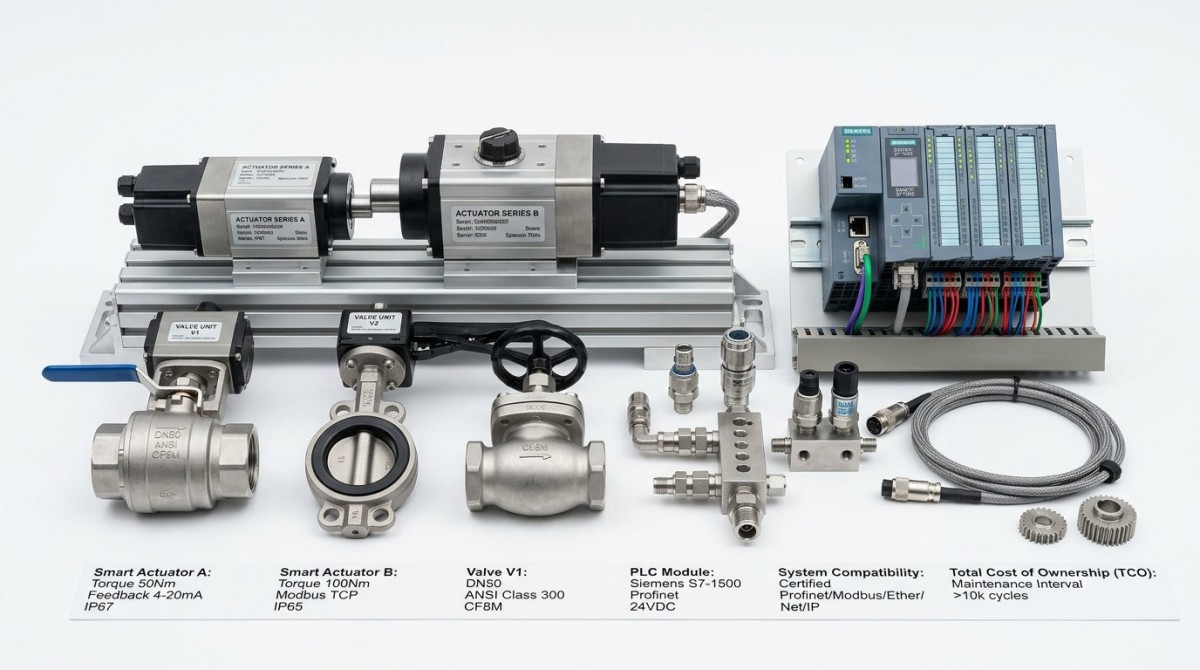
In many industrial tenders, a smart actuator is reduced to a short datasheet line: torque, voltage, communication protocol, and price. That approach may look efficient, but it distorts decision quality. A unit designed for intermittent valve positioning in a utility loop should not be scored the same way as an actuator expected to support 24/7 duty in a high-value production line where downtime costs can exceed the hardware price within a single shift.
The problem grows when procurement, engineering, operations, and quality teams use different decision lenses. Procurement may prioritize the lowest bid within a 2–4 week purchasing cycle. Operators may focus on interface simplicity and field maintainability. Quality and safety managers may prioritize traceability, fail-safe behavior, and compliance with site procedures. Project managers often need all of this aligned inside one tender package, yet many bid sheets still compare unlike conditions.
A fair comparison starts by separating mandatory requirements from weighted preferences. For example, ambient temperature range, ingress protection, torque margin, and control accuracy should be treated as gate criteria, while communication flexibility, predictive maintenance functions, and spare-part standardization can be scored separately. Without this structure, a lower-cost actuator may appear competitive even when it introduces longer commissioning time, more frequent maintenance checks, or integration delays across PLC, DCS, or SCADA systems.
This is where G-PME adds value. Because G-PME links project tender intelligence with standards benchmarking, raw material volatility, and industrial supply-chain resilience, decision-makers can evaluate smart actuators not only as components, but as risk-bearing assets within broader manufacturing systems. That matters in cross-sector applications tied to fluid control, precision machining support systems, mold cooling circuits, or chemical dosing lines.
- Define 3 layers of evaluation: compliance pass/fail, weighted technical performance, and commercial risk.
- Separate short-term purchase price from 3–5 year lifecycle cost.
- Score site fit by actual duty cycle, not only catalog capability.
- Include integration effort, maintenance accessibility, and lead-time stability in the tender model.
The most common distortions in actuator comparison sheets
Unfair evaluations usually come from four distortions. First, teams compare rated output without checking operating safety margin; an actuator sized too close to real load can underperform during pressure spikes, cold starts, or seal drag variation. Second, communication compatibility is treated as a minor feature, even though protocol mismatches can add days or weeks to commissioning.
Third, maintenance assumptions are often hidden. Two units can share similar torque output, yet one may require more frequent inspection, additional enclosure protection, or harder-to-source electronics. Fourth, supply risk is ignored. Components affected by steel, alloy, electronics, or synthetic lubrication supply fluctuations may show acceptable quoted cost today but unstable replenishment in the next production phase. A fair tender must make these variables visible before award.
What each stakeholder usually needs to verify
Information researchers need comparable data formats and terminology. Operators need clarity on local control, override functions, and alarm handling. Decision-makers want confidence that a selected actuator will support output continuity and not just pass a technical review. Quality and safety teams need documentation discipline, repeatability, and practical inspection checkpoints. Project leaders need a bid process that can be defended across technical and commercial meetings.
Which technical criteria should be weighted first in a smart actuator tender?
When comparing smart actuators fairly, the first step is to weight the criteria that most directly influence process reliability. In industrial environments, 5 groups usually matter most: output capability, control precision, environmental resistance, integration compatibility, and maintainability. These are stronger indicators than brochure claims because they affect whether the actuator can perform consistently during startup, continuous operation, scheduled shutdown, and abnormal events.
Output capability should never be read as a single nominal value. Reviewers should check torque or thrust range, duty cycle, start-stop frequency, and required safety margin. In many practical tenders, engineering teams use a margin such as 25%–50% above estimated operating requirement, depending on media condition, valve friction change, and line pressure variability. A fair comparison therefore aligns output data with the real process load envelope, not just the supplier’s headline figure.
Control performance also needs context. Positioning accuracy, repeatability, response speed, and signal stability must be reviewed alongside the process objective. For an on-off isolation service, ultra-fine modulation may not justify a premium. For dosing, flow adjustment, or critical utility balancing, control precision can affect scrap, energy use, or process deviation. The same actuator scorecard should not be applied across all applications.
Environmental suitability includes ingress protection, vibration resistance, temperature range, and corrosion exposure. Typical site checks often cover indoor utility rooms, outdoor skid installations, washdown areas, and zones exposed to dust, oil mist, or chemicals. If the tender spans multiple plants or geographies, comparing an actuator rated for 10°C–40°C against one qualified for broader conditions without adjusting the score creates an artificial price advantage.
The table below provides a practical scoring structure for technical evaluation. It helps procurement teams, EPC engineers, and plant stakeholders compare smart actuators on the same basis instead of mixing mandatory requirements with optional enhancements.
This structure improves fairness because it converts “smart actuator comparison” from a price contest into a use-condition comparison. In practice, teams often assign pass/fail status to essential requirements and then use weighted scoring for the remaining criteria. A 60/40 or 70/30 technical-commercial balance is common in many industrial tenders, but the exact split should reflect process criticality and shutdown risk.
How to keep parameter comparison relevant to production realities
A fair smart actuator tender should connect parameters to the equipment it serves. In a pump skid, actuator response may influence control stability and cavitation prevention. In a precision cooling or chemical dosing system, positioning quality may affect consistency and product integrity. In plant utilities, reliability and replacement ease may matter more than advanced analytics. Technical performance only becomes meaningful when tied to plant function.
G-PME’s multidisciplinary view is useful here because actuator selection rarely stands alone. It interacts with fasteners, seals, machining tolerances, fluid control behavior, and lubrication conditions. A benchmark that ignores these adjacent factors can approve a component that looks compliant in isolation but performs poorly within the full mechanical and process system.
How should procurement compare lifecycle cost instead of bid price alone?
Bid price is only the first visible number, but not the most decisive one. In project tenders, lifecycle cost usually includes acquisition, installation, commissioning support, routine inspection, spare parts, downtime exposure, and end-of-life replacement strategy. A lower initial quote can become more expensive if the actuator requires special mounting adaptation, extra control integration effort, or more frequent intervention over a 3–5 year operating horizon.
For enterprise decision-makers, the practical question is not “Which actuator is cheapest today?” but “Which option keeps process availability and maintenance burden within acceptable limits?” For operators and project managers, even a 6–12 hour startup delay caused by communication mismatches or incomplete commissioning tools can damage the economics of the award decision. Lifecycle analysis therefore protects both capital discipline and operational continuity.
Cost comparison should also include supply-chain resilience. Smart actuators depend on mechanical parts, electronics, sealing materials, and in some cases specialty alloys or lubricated drive elements. Price movements in steel, titanium-related upstream markets, and industrial chemicals may influence different suppliers in different ways. G-PME’s market intelligence perspective helps procurement teams judge whether a low bid is commercially stable or simply timed to short-term sourcing conditions.
A fair cost model should separate direct cost from risk-adjusted cost. Direct cost covers what appears on the quotation. Risk-adjusted cost covers likely effects of lead-time instability, spare-part dependency, integration effort, and maintenance interruptions. This is especially important in cross-border tenders where shipping windows, customs timing, and project milestone penalties may affect the true delivered cost.
The following table helps teams compare smart actuator options with a more realistic procurement lens by adding lifecycle and risk factors to standard commercial evaluation.
This table matters because many tender disputes appear after award, not before it. Once an actuator is approved, omitted accessories, undocumented software limitations, or sparse service support become change-order issues. By reviewing cost in stages, procurement teams can compare bids on delivered function rather than incomplete scope.
A practical 4-step procurement model
- Create a technical baseline with 5–7 non-negotiable requirements such as output margin, environmental fit, protocol compatibility, and documentation needs.
- Request a full scope quote that lists accessories, testing documents, startup support, and spare-part assumptions.
- Evaluate delivery exposure using supplier responsiveness, replenishment path, and material sensitivity.
- Review lifecycle cost with operations and maintenance teams before final award, not after commercial ranking is complete.
This method reduces the chance that a tender team chooses a smart actuator optimized for the spreadsheet rather than for plant performance. It also creates a cleaner audit trail for internal approvals, especially when capex, engineering, and plant reliability teams must sign off together.
What standards, documentation, and compliance checks should not be skipped?
A fair smart actuator comparison must include documentation quality, not only hardware capability. In industrial procurement, documentation affects commissioning speed, maintenance discipline, operator training, and audit readiness. Even when the actuator itself is technically suitable, weak documentation can slow installation, create alarm mapping errors, or complicate troubleshooting under production pressure.
For most general industrial projects, review teams commonly check alignment with applicable ISO, DIN, ASME, or JIS references where relevant to the mechanical interface, testing approach, or installation environment. The correct standard set depends on the full system, not only the actuator. That is why cross-functional review is important: the actuator, valve, mount, enclosure, and control system must be considered together.
Quality and safety managers should also confirm traceability expectations. At minimum, the tender should define the required document pack, such as datasheets, I/O descriptions, wiring details, inspection records if applicable, operating instructions, maintenance guidance, and spare-part identification. If the project requires hazardous-area consideration or specific site rules, those conditions should be stated explicitly at bid stage rather than assumed later.
G-PME’s strength in benchmarking against international standards is particularly useful for multinational or EPC-driven projects. When multiple bidders use different terminology, test references, or document formats, a standardized review matrix prevents confusion and supports defendable procurement decisions across engineering, compliance, and operations teams.
A compliance checklist that improves tender clarity
- Confirm mechanical and electrical interface requirements before commercial ranking, including mounting conditions and control signal compatibility.
- List 6 core document items required at submission or before shipment: datasheet, GA or interface drawing, wiring details, operation manual, maintenance guidance, and spare list.
- Clarify whether factory testing, functional checks, or witness points are required for the project.
- Define environmental and safety obligations such as enclosure level, ambient range, lockout procedures, and local override expectations.
Why document quality influences real operating cost
Poor documentation increases hidden cost in at least 3 ways. It extends commissioning time, because engineers must verify functions on site. It increases maintenance dependency on the original supplier, because plant teams lack practical instructions. It raises quality risk when replacement parts are ordered using incomplete or ambiguous identification. Fair tendering therefore requires bidders to be compared on documentation completeness as well as product features.
This is also where many enterprises underestimate long-tail risk. A smart actuator selected for a large project may remain in service for years, across multiple shutdown cycles. Clear records and standard terminology become part of the asset’s value. In regulated or safety-conscious operations, that administrative robustness is not optional; it supports repeatable control and faster root-cause response.
How do different application scenarios change the “best” smart actuator choice?
There is no single best smart actuator across all industrial use cases. The right choice depends on process criticality, control mode, operating environment, maintenance resources, and integration architecture. In one plant, a robust and easily serviceable actuator may be preferable. In another, fine control feedback and digital diagnostics may justify a higher upfront cost. A fair tender therefore compares options against the intended scenario, not against a generic ideal specification.
Consider 4 broad scenarios often seen across integrated manufacturing environments. Utility control loops typically value reliability, standardization, and straightforward maintenance. Chemical dosing or fluid metering services may require tighter control stability and repeatable positioning. Outdoor installations demand stronger environmental resilience. High-uptime production lines need stronger focus on diagnostics, replacement planning, and minimal unplanned stoppage.
These distinctions matter to every audience group. Information researchers need to map applications correctly. Operators need actuator behavior matched to field reality. Decision-makers need to avoid overpaying for features that add little value in simple services. Quality and project leaders need assurance that the selected actuator supports inspection, acceptance, and stable handover.
The scenario table below helps teams align use case, tender priority, and selection focus. It turns a broad smart actuator comparison into a targeted engineering decision.
The main lesson is simple: fair comparison depends on scenario weighting. If a tender uses the same score sheet for utility isolation service and precision process control, the result is likely to misallocate budget. Scenario-based evaluation protects both technical fit and capex efficiency.
Common mistakes that weaken scenario-based selection
A frequent mistake is over-specifying low-criticality services, which inflates cost without operational gain. Another is under-specifying critical services by treating all actuators as mechanically interchangeable. Teams also overlook maintenance capability: a feature-rich unit may be attractive in theory, but if site technicians cannot diagnose or reset it efficiently, ownership cost rises. Fair tendering asks not just what the actuator can do, but what the plant can support consistently.
This balanced view matches the broader G-PME approach: compare assets in the context of manufacturing integrity, production uptime, and supply certainty. Smart actuators influence system performance only when their selection logic reflects real plant constraints and the commercial environment surrounding industrial procurement.
FAQ and next-step guidance for buyers, engineers, and project teams
A strong smart actuator tender process should leave fewer unanswered questions before supplier nomination. The goal is not to create a longer evaluation, but a clearer one. Below are frequent questions raised by buyers, operators, quality teams, and project leaders when they need to compare smart actuators fairly across technical and commercial dimensions.
How many smart actuator suppliers should be compared in a tender?
In many industrial projects, 3 qualified bids provide a workable balance between competition and evaluation quality. Fewer than 3 may limit benchmark visibility. Too many may slow review and dilute technical discipline unless the project is very large. The key is not bidder count alone, but whether each bidder responds to the same scope, same load assumptions, and same documentation requirements.
What is the usual lead time to consider during evaluation?
Typical lead times vary by configuration, region, and supply conditions, but many standard industrial procurement reviews use reference windows such as 2–6 weeks for common configurations and longer for specialized or project-specific assemblies. Teams should ask suppliers to separate standard delivery from worst-case replenishment timing so that project schedules are not based on optimistic assumptions.
What are the top checks before final selection?
Use a 5-point final check: application-fit sizing, protocol compatibility, environmental suitability, document completeness, and spare-part strategy. If any of these remain unclear, the comparison is not yet fair. This final review is especially important when different internal teams have prioritized different decision criteria during earlier tender stages.
Why choose us when comparing smart actuator options for project tenders?
G-PME supports industrial buyers and engineering teams with a data-driven comparison framework that goes beyond product claims. We connect smart actuator evaluation to standards benchmarking, manufacturing-line priorities, raw material exposure, and supply-chain resilience across precision machining, fastening and sealing, fluid control, die-casting and mold engineering, and industrial lubricants. This wider view helps enterprises make actuator decisions that fit real operating systems, not isolated specification sheets.
If you are preparing a project tender, you can contact us for parameter confirmation, actuator sizing logic, protocol and integration review, delivery-cycle assessment, document checklist design, spare-part planning, and quotation comparison support. We can also help structure a tender matrix for 3–5 candidate solutions so your team can compare technical compliance, lifecycle cost, and procurement risk on a fair and defensible basis.
For projects under tight schedules, we can help identify which requirements must remain mandatory and which can be scored as optional to shorten the review cycle without weakening quality. That is often the fastest way to reduce bid confusion, protect commissioning milestones, and improve confidence before purchase approval.
Recommended News
 Are stainlesssteelrings durable enough for daily wear?stainlesssteelrings offer durable, low-maintenance shine for daily wear. Learn how they resist scratches, tarnish, and corrosion—and how to choose the right one.
 What matters most when upgrading audio equipment?Audio equipment upgrades work best when system fit comes first. Learn how to choose gear by room, source, specs, budget, and compatibility for better sound.
 Why office stationery quality affects daily workflowOffice stationery quality shapes daily workflow by reducing delays, errors, and rework. Learn how reliable supplies improve speed, comfort, organization, and productivity.
 Is skincarepackaging safer with airtight materials?skincarepackaging safety improves with airtight materials when seals, compatibility, and filling controls are validated. See the checklist to reduce risk and protect quality.
 How to choose electronic hardware without overspendingElectronic hardware buying guide: choose reliable, compliant parts for real operating needs, reduce lifecycle risk, and control costs without overpaying.
 When is an EDM machine OEM supplier the safer choiceedm machine oem supplier advantages become clear when accuracy, uptime, and traceability matter. Learn when OEM support is the safer choice for lower risk and faster response.
 Why carbide inserts wholesale costs vary more than expectedCarbide inserts wholesale costs vary for reasons beyond the quote. Learn how material grade, coating, consistency, and supply reliability affect real machining value and smarter buying.
 A good CNC lathe manufacturer should prove more than outputCNC lathe manufacturer selection should go beyond output. Learn how to verify precision, traceability, compliance, and delivery stability before choosing a reliable supplier.
 What makes a precision milling center factory truly reliablePrecision milling center factory selection starts with proven process control, traceability, and delivery consistency. Learn the key signs of a truly reliable partner.
 How to compare a wholesale 5-axis CNC machine beyond priceWholesale 5-axis CNC machine comparison goes beyond price—learn how to assess precision, thermal stability, controls, service, and lifetime cost for smarter buying.
 What to ask an EDM machine OEM supplier before signingEDM machine OEM supplier due diligence starts with the right questions. Learn what to ask about precision, service, lead times, spares, software, and risk before signing.
 Are carbide inserts wholesale prices worth the quality tradeoff?Carbide inserts wholesale can cut costs—if quality stays consistent. Learn how finance teams should assess tool life, scrap risk, uptime, and true cost per part before buying.
 What sets a reliable CNC lathe manufacturer apart today?CNC lathe manufacturer selection starts with more than price. Learn how to identify suppliers with stable quality, traceability, engineering support, and reliable delivery.
 Why a precision milling center factory matters for tight tolerancesPrecision milling center factory selection directly impacts tight tolerances, repeatability, and quality control. Learn what evaluators should verify to reduce risk and choose a reliable machining partner.
 How to judge a wholesale 5-axis CNC machine before buyingWholesale 5-axis CNC machine buying guide: learn how to judge accuracy, rigidity, software compatibility, and service support before ordering to reduce risk and improve long-term ROI.
 What to check before choosing an EDM machine OEM supplierEDM machine OEM supplier selection starts with accuracy, traceability, service, and lifecycle cost. Discover what to check before buying to reduce risk and improve production fit.
 When carbide inserts wholesale saves money and when it does notCarbide inserts wholesale can cut costs—or create waste. Learn when bulk buying truly saves money, how to assess risk, and the checklist that helps manufacturers buy smarter.
 Why CNC lathe manufacturer lead times vary so muchCNC lathe manufacturer lead times vary due to material risk, tooling, inspection, and supply-chain complexity. Learn how to compare quotes, reduce delays, and choose a more reliable supplier.
 What makes a precision milling center factory worth trustingPrecision milling center factory selection starts with proof, not promises. Learn how to judge quality control, repeatable accuracy, traceability, and delivery reliability before you buy.
 How to compare a wholesale 5-axis CNC machine before you buyWholesale 5-axis CNC machine comparison starts with application fit, accuracy, spindle, controls, and service. Learn how to avoid hidden costs and choose a supplier with confidence.
 How to vet an EDM machine OEM supplier before orderingedm machine oem supplier selection starts with a smart vetting process. Learn how to assess quality, customization, delivery, and support before ordering.







Search News
Popular Tags