
How to choose electronic hardware without overspending

How to choose electronic hardware without overspending

Choosing electronic hardware without overspending starts with separating what is technically necessary from what is merely over-specified.
The goal is not the lowest unit price. It is reliable performance, verified compliance, supply stability, and controlled total cost.
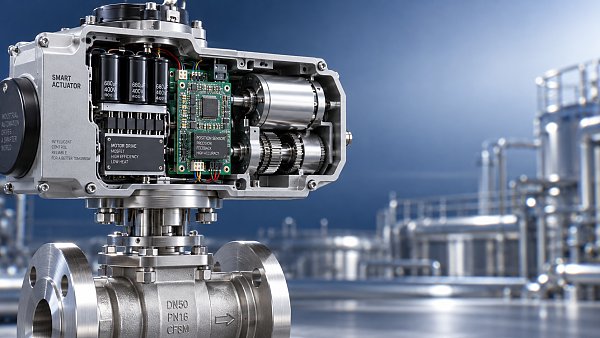
Connectors, enclosures, control modules, boards, sensors, and precision parts all affect uptime, safety, and maintenance exposure.
A disciplined electronic hardware decision links application needs, standards, supplier evidence, and lifecycle risk before price negotiation begins.
Start with the operating scenario, not the catalog specification
Electronic hardware is often overspent when selection begins with premium catalogs instead of operating conditions.
A connector used inside a clean cabinet faces different risks from one exposed to vibration, coolant, dust, or temperature cycling.
The same logic applies to housings, switches, terminals, control boards, relays, cable assemblies, and embedded modules.
Define voltage, current, signal integrity, duty cycle, mechanical stress, thermal load, and service environment first.
Then choose electronic hardware that matches the scenario with enough margin, not excessive margin.
This approach prevents paying for aerospace-grade performance in standard industrial installations.
It also prevents false savings from components that fail under predictable field conditions.
Match electronic hardware to production-critical environments
In production-critical lines, downtime costs usually exceed the price difference between acceptable and weak electronic hardware.
Selection should focus on continuity, replacement speed, fault tolerance, and compatibility with installed automation systems.
Control modules need stable firmware support, clear diagnostics, documented interfaces, and predictable lead times.
Connectors and terminals should withstand vibration, repeated maintenance, and realistic mating cycles.
For CNC cells, pump stations, die-casting lines, and fastening systems, signal reliability is a cost-control factor.
Overspending happens when every part is upgraded without identifying the true failure points.
A better method ranks electronic hardware by operational consequence, then assigns quality levels accordingly.
Core judgment points for critical production
- Use proven parts where stoppage creates high financial loss.
- Avoid exotic components unless they reduce measurable risk.
- Require lifecycle status, not only current availability.
- Confirm replacement interchangeability before volume commitment.
Avoid overbuying in non-critical monitoring and auxiliary systems
Not every electronic hardware application requires premium ratings, redundant architecture, or harsh-environment packaging.
Auxiliary indicators, basic monitoring points, panel accessories, and non-safety alarms often allow standardized alternatives.
The practical question is whether failure causes danger, shutdown, inaccurate production data, or only minor inconvenience.
If risk is low, cost savings can come from simpler designs, common footprints, and widely available materials.
However, low criticality does not mean accepting undocumented electronic hardware from unstable sources.
Basic compliance, traceability, and dimensional consistency still matter for installation efficiency and warranty control.
The best savings come from rational specification, not from uncontrolled substitution.
Compare scenario requirements before choosing components
A scenario matrix helps prevent emotional purchasing and excessive specification creep.
It also makes electronic hardware decisions easier to review across engineering, quality, maintenance, and commercial requirements.
This comparison keeps electronic hardware selection tied to real exposure, not assumptions.
Use standards as filters, not excuses for unnecessary upgrades
Standards help verify safety, performance, and compatibility, but they should be applied with context.
Relevant references may include IEC, UL, CE, RoHS, REACH, ISO, DIN, JIS, or industry-specific rules.
The key is identifying which standards are mandatory, which are customer-driven, and which are only preferred.
Electronic hardware with unnecessary certifications can increase price, lead time, and qualification complexity.
Electronic hardware without required certification can create shipment delays, audit failures, or redesign costs.
A balanced decision asks for certificates, test reports, revision history, and material declarations before approval.
Verification should be documented, especially when alternative suppliers are introduced.
Calculate total cost before comparing unit prices
Unit price is only one part of electronic hardware cost.
A low-cost relay, board, sensor, or connector can become expensive through failures, rework, stocking burden, or supplier instability.
Total cost includes installation time, testing effort, documentation, tooling, replacement frequency, and downtime probability.
It also includes qualification cost when changing parts after production has started.
For custom electronic hardware, non-recurring engineering charges and minimum order quantities must be included.
For standard parts, logistics risk and lifecycle availability may matter more than small price differences.
Useful cost questions
- How often will this part be replaced?
- What is the cost of one hour of downtime?
- Can a second source supply the same specification?
- Does the part require special tools or training?
- Is documentation complete enough for future audits?
Choose suppliers by evidence, not only quotation speed
Supplier evaluation strongly affects the real cost of electronic hardware.
Fast quotations are useful, but technical evidence and delivery discipline carry greater long-term value.
A reliable source should provide datasheets, drawings, compliance documents, batch traceability, and clear change notifications.
For precision assemblies, dimensional reports and process capability data can prevent hidden installation costs.
For electronic hardware used near pumps, CNC machines, lubricants, or die-casting equipment, environment evidence is important.
Material compatibility, sealing performance, thermal behavior, and vibration resistance should be supported by data.
Commercial strength also matters when markets face raw material fluctuation or logistics disruption.
Standardize where possible, customize only where necessary
Standardization is one of the strongest ways to reduce electronic hardware spending without lowering quality.
Using common connectors, enclosures, terminals, power supplies, and control modules simplifies stocking and maintenance.
It also improves interchangeability across production cells, test rigs, and field service kits.
Customization should be reserved for space constraints, special environments, proprietary interfaces, or clear performance advantages.
Custom electronic hardware can be justified when it reduces assembly steps, improves reliability, or protects critical intellectual property.
It is harder to justify when it only reflects preference, habit, or aesthetic alignment.
A controlled parts library reduces duplicate specifications and prevents unnecessary supplier fragmentation.
Recognize common misjudgments that increase spending
Overspending often comes from small repeated mistakes rather than one large bad decision.
The most common mistake is assuming the highest rating always means the safest choice.
Another mistake is treating electronic hardware as a commodity when failure affects production continuity.
Ignoring lifecycle status can also create expensive redesigns when a component becomes obsolete.
Poor documentation causes repeated verification work, especially during audits, upgrades, or supplier changes.
Underspecified cable management, grounding, and thermal control can make good electronic hardware perform poorly.
- Do not buy premium ratings without matching exposure.
- Do not accept vague alternatives without drawings.
- Do not ignore firmware and revision control.
- Do not separate price review from failure impact.
Build a practical selection workflow
A repeatable workflow makes electronic hardware selection faster and more defensible.
- Define the operating scenario and failure consequence.
- List mandatory electrical, mechanical, and environmental requirements.
- Separate required standards from optional preferences.
- Shortlist approved standard parts before considering custom designs.
- Request compliance evidence, drawings, and lifecycle information.
- Compare total cost, not only quoted unit price.
- Validate samples under realistic installation conditions.
This workflow supports balanced electronic hardware decisions across general industry, precision machining, fluid systems, and automation environments.
Next step for cost-controlled electronic hardware decisions
The next step is to audit current specifications against actual operating scenarios.
Identify parts that are over-rated, under-documented, difficult to replace, or tied to fragile supply channels.
Then create a qualified electronic hardware shortlist based on performance evidence, standards, lifecycle data, and total cost.
G-PME supports this process with technical intelligence, standards benchmarking, supplier analysis, and industrial risk evaluation.
A structured approach turns electronic hardware purchasing from reactive spending into measurable engineering control.
Recommended News
 How to size extrusion equipment for a target production outputSize extrusion equipment to meet your production targets. Learn how to calculate throughput, identify line bottlenecks, and verify capacity to avoid costly sizing mistakes.
 How to assess 5-axis demand in machining center market analysisStrengthen your machining center market analysis: learn how to assess 5-axis workloads, buyer readiness, and investment costs to build credible demand forecasts and avoid costly overestimates.
 Can procurement support reduce contract manufacturing tooling delays?Discover industrial procurement support contract manufacturing teams can use to cut avoidable tooling delays, secure materials, and keep production launches on track.
 Which export insights matter when entering a new market?Export insights for new-market entry: assess demand, standards, delivered costs, supply resilience, and buyer approval paths to build a profitable expansion plan.
 How industrial technology solutions in Southeast Asia handle humid sitesIndustrial technology solutions Southeast Asia: learn how site-adapted materials, sealing, condensation control, and maintenance strategies improve reliability in humid, coastal, and high-corrosion industrial environments.
 How hospitals can size telemedicine hardware for peak virtual visitsTelemedicine hardware for hospitals: learn how to size reliable endpoints for peak virtual visits, optimize reserves, workflows, network readiness, and uptime.
 Which electronic components most affect smart actuator reliability?Electronic components that shape smart actuator reliability: evaluate power supplies, motor drives, sensors, control boards, and connectors for demanding industrial performance.
 When do reshoring CNC investment opportunities justify 5-axis capacity?Explore when reshoring CNC investment opportunities justify 5-axis capacity—reduce setups, strengthen quality control, cut supply-chain risk, and build a resilient local machining strategy.
 What compliance documents should an industrial chemicals exporter provide?Industrial chemicals exporter compliance guide: learn which SDS, CoA, transport, customs, and market-access documents help prevent delays and risks.
 How to assess a smart device manufacturing solutions factoryAssess a smart device manufacturing solutions factory with practical insights on engineering, quality, testing, supply-chain resilience, and pilot builds.
 What CE certification means for a CNC controller systemCNC controller system CE certified: learn what CE marking covers, how to verify safety, EMC, documentation, and retrofit compliance for EU machinery.
 When industrial sewing is the right fit for high-volume productionIndustrial sewing for high-volume production: learn how seam design, material control, automation, and quality planning drive reliable output and lower risk.
 How ATC tool change time data reveals hidden cycle-time lossesATC tool change time data reveals hidden cycle-time losses, separates mechanical delays from program motion, and helps manufacturers improve uptime, capacity, and delivery confidence.
 What to verify before selecting a sinker EDM machine supplierChoose a reliable sinker EDM machine supplier with confidence. Verify machining trials, electrode compatibility, automation, service support, and total ownership risk.
 How brass alloy choice affects industrial machining part tolerancesIndustrial machining brass parts: discover how alloy selection influences tolerance stability, tool wear, bore accuracy, threads, and reliable high-volume production.
 What to verify before selecting an electronics contract manufacturerElectronics manufacturing solutions: learn what to verify before choosing a contract manufacturing partner, from quality systems and testing to sourcing, traceability, and change control.
 How to check color accuracy before approving custom enamel pinsCustom enamel pins color accuracy starts before approval. Learn how to review Pantone references, proofs, plating, and samples for confident results.
 When do multilayer carbide coatings extend tool life in dry machining?Multilayer carbide coatings extend tool life in dry machining when heat, adhesion, abrasion, and edge loading are controlled. Learn how to match layers, substrates, and parameters for reliable performance.
 When occupancy controls reduce warehouse lighting energy wasteWarehouse lighting occupancy controls cut energy waste through smarter zoning, sensor placement, dimming, and commissioning. Discover practical strategies for safer, lower-cost operations.
 How to size an ESS for reducing peak-demand chargesESS sizing for peak-demand charge reduction: learn how to match power, usable energy, tariff rules, controls, and recharge strategy to lower billed demand reliably.
 How textile chemicals affect dye-house wastewater treatment costsTextile chemicals can raise dye-house wastewater treatment costs through COD, color, sludge, salt, and fouling. Discover practical ways to assess total chemical cost.


















Search News
Popular Tags