
Precision tooling costs: what actually drives price
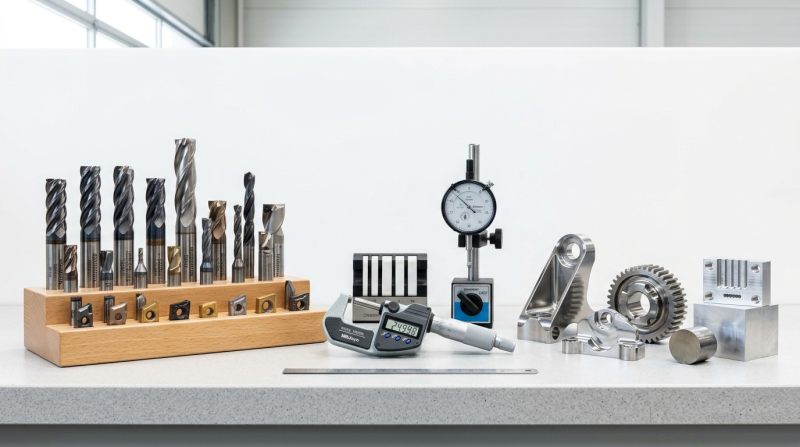
Precision tooling costs are shaped by far more than quoted unit prices. From raw material prices and technical specifications to industrial procurement strategies, supply chain analysis, and industrial benchmarking, every variable affects manufacturing competitiveness. This article explains what buyers, engineers, and project leaders should evaluate to control tooling spend, protect precision component quality, and support smarter production line optimization.
For most buyers and engineering teams, the short answer is this: precision tooling price is mainly driven by tolerance requirements, material selection, tooling geometry, process complexity, production volume, quality assurance demands, and supplier capability. A low quote may reduce immediate spend, but if it increases scrap, downtime, lead time risk, or tool replacement frequency, the real cost can become much higher. That is why understanding what actually drives price is more useful than comparing quotes line by line.
What really makes precision tooling expensive or cost-effective?
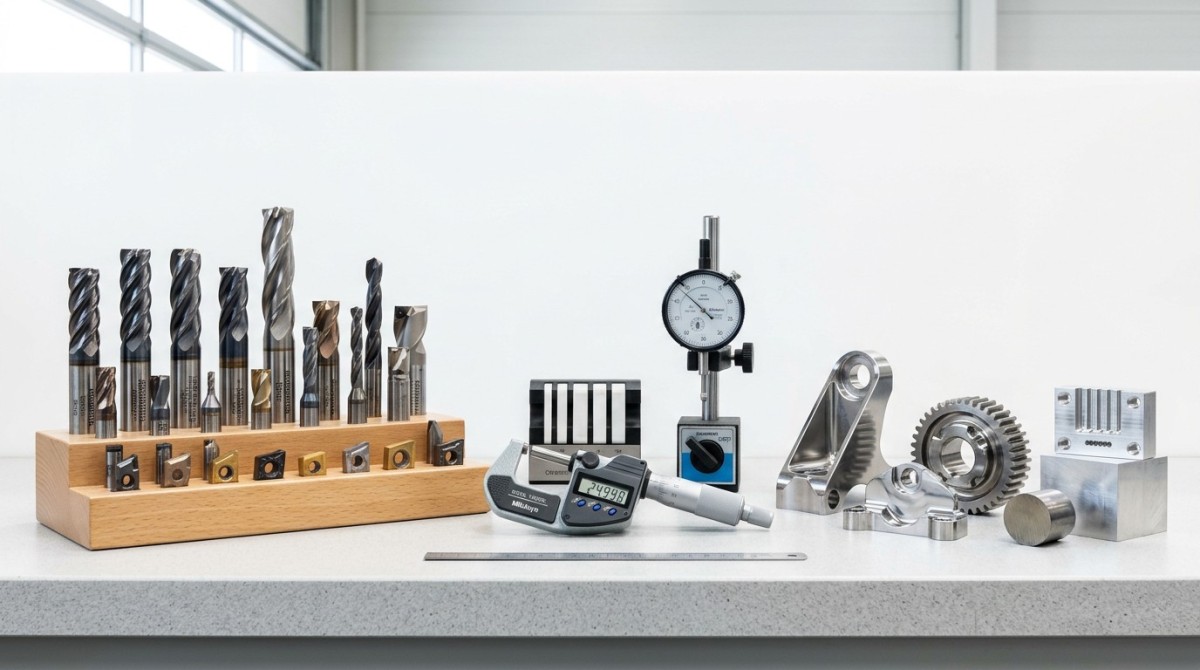
The biggest mistake in tooling procurement is assuming price is determined mainly by size or supplier margin. In reality, precision tooling costs reflect a stack of technical and commercial variables that directly affect manufacturing difficulty and risk.
The most important cost drivers include:
- Tolerance and precision level: Sub-micron or very tight dimensional requirements increase machining time, inspection effort, and rejection risk.
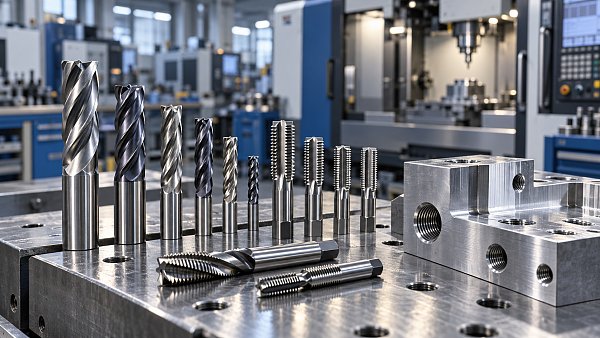
- Material grade: Carbide, high-speed steel, PCD, CBN, specialty alloys, and coated materials differ significantly in machining difficulty, wear resistance, and raw material cost.
- Tool geometry and customization: Standard tools are cheaper. Custom profiles, special cutting edges, micro-features, and multi-function designs cost more to engineer and produce.
- Surface finish requirements: Tighter Ra values often require additional grinding, polishing, coating, or process control.
- Heat treatment and coatings: TiAlN, DLC, diamond coating, and other treatments improve performance but add process cost and lead time.
- Batch size: Small runs or one-off tools carry higher setup and programming cost per piece.
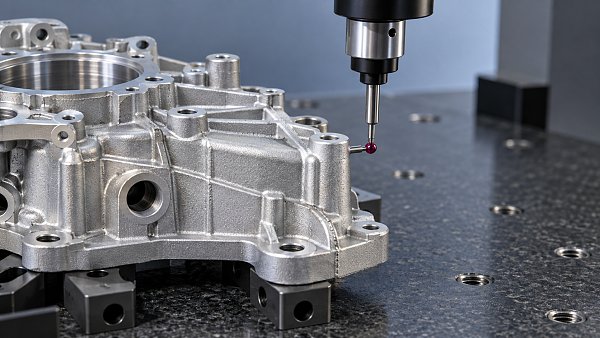
- Inspection and traceability: CMM reports, batch records, material certificates, and compliance documentation raise cost but reduce operational risk.
- Supplier capability: Shops with advanced CNC grinding, 5-axis machining, in-house metrology, and stable process control may quote higher, but often deliver better total value.
For enterprise decision-makers, the key issue is not whether a tool is “expensive” in isolation, but whether the price matches the performance requirement and production objective.
Why tolerance, geometry, and material have the biggest impact on price
If a precision tool must hold extremely tight tolerances, the manufacturer needs more controlled equipment, slower machining parameters, more frequent in-process checks, and stricter final inspection. Every one of these steps adds labor, machine time, and quality control cost.
Geometry is another major factor. A simple end mill or standard insert is easier to produce than a custom step drill, profile cutter, form tool, or micro-tool with complex chip evacuation features. As geometry becomes more specialized, design time increases, manufacturing becomes less standardized, and yield risk rises.
Material choice also changes both direct and indirect costs. For example:
- Carbide tools usually cost more than HSS, but often deliver better wear resistance and longer service life in demanding applications.
- PCD and CBN tools can be significantly more expensive upfront, yet may lower cost per part in high-volume or hard-material machining.
- Special alloy substrates may be necessary for thermal stability, corrosion resistance, or mechanical strength.
For operators and project engineers, this means tooling cost should always be assessed against tool life, cycle time, dimensional stability, and defect rate—not just purchase price.
How production volume changes precision tooling economics
Production volume is one of the clearest reasons why two buyers can receive very different pricing for what appears to be the same tool. Tooling suppliers spread engineering, setup, programming, and qualification costs across the order quantity. The fewer parts ordered, the higher the effective cost per unit.
This is especially important in:
- Prototype development
- Low-volume aerospace or medical applications
- Custom maintenance tooling
- Short product life-cycle programs
In contrast, high-volume production can justify more advanced tooling because the cost is amortized over many parts. A more expensive tool may produce lower total cost if it improves uptime, extends maintenance intervals, or shortens machining cycles.
For managers responsible for cost control, the right question is: What is the cost per acceptable part over the full production run? That metric is usually more meaningful than the quoted tooling price alone.
What hidden costs buyers often miss in tooling quotations
Many procurement teams compare visible pricing but overlook downstream costs that can materially affect profitability and production reliability. These hidden cost drivers often include:
- Tool failure risk: A cheaper tool that chips or wears unpredictably can damage workpieces and interrupt schedules.
- Downtime: Unexpected tool changes, machine stoppages, and troubleshooting increase operational losses.
- Scrap and rework: Poor edge consistency or dimensional instability can raise rejection rates.
- Long lead times: Delayed delivery can disrupt production line planning and emergency procurement budgets.
- Inconsistent batches: Supplier variation may force additional incoming inspection or process adjustment.
- Limited technical support: If application engineering is weak, optimization opportunities may be missed.
For quality control personnel and safety-focused teams, tooling consistency is not just a cost issue. It directly affects process capability, compliance confidence, and safe machine operation.
How to evaluate tooling cost from a total-cost-of-ownership perspective
The most effective way to understand precision tooling cost is to move from unit-price comparison to total cost of ownership. This approach gives a more realistic basis for supplier selection and internal approval.
Key evaluation criteria include:
- Tool life: How many parts can the tool produce before performance drops below specification?
- Cycle time impact: Does the tool support higher feeds, speeds, or fewer passes?
- Part quality stability: Does it consistently hold dimensional and surface requirements?
- Changeover frequency: How often does the tool need replacement, regrinding, or adjustment?
- Inventory and sourcing risk: Can the supplier deliver reliably across projects and regions?
- Maintenance compatibility: Is the tool practical for existing machines, holders, coolant systems, and operator skill levels?
For B2B buyers in industrial environments, this framework supports more defensible sourcing decisions, especially when internal stakeholders from engineering, operations, procurement, and finance all influence approval.
When a higher tooling price is justified
A higher tooling cost is often justified when it produces measurable operational advantages. Paying more can make sense if the tool:
- Extends service life significantly
- Reduces scrap in high-value materials
- Improves process capability in critical-tolerance parts
- Supports unattended or lights-out machining
- Reduces machine wear or spindle load
- Minimizes emergency replacement events
- Helps meet regulatory, aerospace, automotive, or medical quality standards
For example, if a premium tool costs 20% more but improves output by 10%, cuts scrap by 30%, and lasts twice as long, the business case can be very strong. In this sense, precision tooling should be viewed as a productivity asset, not just a consumable purchase.
How buyers and engineers can control precision tooling spend without sacrificing quality
Cost reduction does not always require choosing cheaper tools. In many cases, better planning and specification discipline create larger savings than aggressive quote negotiation.
Practical ways to control tooling spend include:
- Standardize where possible: Use standard tool families unless a custom design delivers a clear process benefit.
- Avoid over-specification: Do not request tighter tolerances, coatings, or finishes than the application truly needs.
- Share application data early: Material, machine platform, coolant type, target cycle time, and expected annual volume help suppliers quote more accurately.
- Benchmark multiple suppliers: Compare not only price, but lead time, quality systems, technical support, and field performance.
- Track cost per part: Build procurement decisions around production results, not invoice values alone.
- Use supplier collaboration: Good suppliers can recommend geometry changes, coating upgrades, or tool consolidation opportunities.
Project leaders should also align tooling decisions with broader production goals such as throughput, quality assurance, preventive maintenance, and supply-chain resilience.
A practical checklist before approving a tooling quote
Before accepting a quotation, buyers and technical teams should confirm several points:
- Are the tolerance and finish requirements necessary for the actual application?
- Is the proposed tool material appropriate for the workpiece and cutting conditions?
- Does the quote include coating, inspection, certification, and traceability details?
- What is the expected tool life under real operating conditions?
- Has lead time been validated against production schedules?
- Can the supplier support repeat orders with consistent quality?
- What is the risk of switching to a lower-cost alternative?
- How will this tool affect total manufacturing cost, not just procurement cost?
This checklist helps information researchers, end users, quality teams, and decision-makers turn tooling procurement into a structured technical decision rather than a simple price negotiation exercise.
Conclusion: the true driver of tooling price is manufacturing risk and performance expectation
Precision tooling costs are not random, and they are rarely explained by material price alone. The real price drivers are the difficulty of making the tool, the performance expected from it, the quality assurance level required, and the commercial risk the supplier must absorb.
For buyers, engineers, and industrial project managers, the best decision is usually not the lowest quote. It is the option that delivers the most reliable balance of precision, durability, throughput, lead time, and total cost of ownership. When tooling is evaluated through that lens, pricing becomes easier to understand—and much easier to justify.
Recommended News
 What tolerances can zinc precision die casting realistically hold?Can zinc precision die casting hold ±0.025 mm? Discover which features qualify, what affects accuracy, and when machining delivers better results for your parts.
 Which ISO standards apply to five-axis machine accuracy testing?Explore ISO machine accuracy standards for five-axis machining. Learn how ISO 230 and ISO 10791 guide geometry, positioning, and motion tests to define clearer acceptance criteria.
 How to test smart actuators during smart device manufacturingExplore smart device manufacturing solutions testing for smart actuators. Learn how to verify loaded motion, fault responses, and end-of-line performance to improve release confidence.
 Dormer Pramet Unveils Milling and Threading Solutions for Demanding ProductionExplore Dormer Pramet’s four new milling and threading solutions for demanding production, and discover what to check for tooling suitability, performance evidence and purchasing decisions.
 How to select low-friction industrial seals for centrifugal pumpsChoose industrial seals for low friction in centrifugal pumps. Compare face materials, lubrication and support systems to reduce wear and operating losses. Find the right fit.
 A supply chain analysis framework for spotting mold delivery risksUse a supply chain analysis framework to spot mold delivery risks, verify critical dependencies, and protect launch schedules. Discover practical steps to act early.
 How bearing prices shape machine tool spindle production cost trendsExplore how bearing prices shape spindle production cost trends, from assembly and testing to supply risks. Uncover hidden costs and make smarter sourcing decisions.
 Carrier Plans $600 Million Advanced Manufacturing Center With 5-Axis CNC EquipmentCarrier plans a $600M+ advanced manufacturing center with 5-axis CNC equipment in Texas. Explore potential opportunities for machining suppliers and commercial chiller buyers.
 Why do pH meters give unstable readings in metalworking coolants?Unstable pHmeters in metalworking coolants? Learn how to identify probe fouling, verify calibration, and improve sampling for reliable readings before costly coolant adjustments.
 Aluminum vs. titanium for lightweight parts with equal stiffnessEngineering materials comparison: lightweight alloys aluminum and titanium face off at equal stiffness. Discover how geometry, loading, and cost guide the best choice for lighter parts.
 Which engineering materials hold tight tolerances as temperatures change?Explore our engineering materials comparison by tolerance to learn how Invar, ceramics, steel, and aluminum handle temperature changes—and find the right fit for precision designs.
 John Crane to Showcase Emissions and Downtime Reduction Technologies at ADIPEC 2026John Crane at ADIPEC 2026: Explore technologies targeting lower emissions and compressor downtime, and discover what reported savings could mean for your operations.
 When does precision engineering machining need a 5-axis machine?Discover when precision engineering machining needs 5-axis capability. Compare 3+2 and simultaneous machining to improve tool access, control costs, and choose the right process.
 How to check clinical validation of wholesale blood pressure monitorsSourcing blood pressure monitors wholesale? Learn how to verify clinical studies, registry listings, cuff coverage, and model identity before approving your next bulk order.
 How much lithium battery storage do you need for solar energy?Lithium battery storage for solar energy: learn to calculate capacity, account for losses, and check backup power. Avoid costly sizing mistakes and find the right system for your needs.
 11th CIMSS Conference in Wuxi to Focus on Metalworking Fluid Industry UpgradesExplore the 11th CIMSS Conference in Wuxi, October 22–23, 2026, for insights into metalworking fluid innovation, industrial cleaning and cost control to support industry upgrades.
 Can solid-state battery breakthroughs scale to mass-produced EVs?Solid-state battery breakthroughs for electric vehicles: can they scale? Explore manufacturing yield, pack costs, and real-world performance to uncover what stands between lab success and mass production.
 Can digital manufacturing improve competitiveness by cutting lead times?Explore digital manufacturing competitiveness: learn how shorter lead times, smarter scheduling, and connected quality data can help win orders and cut costs without compromising quality.
 How to size a hydraulic press for forging large steel componentsSize a hydraulic press for forging large steel components with confidence. Learn how to assess forming force, working speed, stroke, and capacity limits to avoid costly selection errors.
 Aerospace Actuator Maker 7958 Joins Emerging Stock Market on October 22Aerospace actuator maker 7958 joins the Emerging Stock Market on October 22, 2026. Explore its precision motor technology and growth plans for drones and robotics.
 How to calculate payload for industrial robots removing molded partsSize industrial robots for molded-part removal with confidence. Learn to calculate total payload, center of gravity, inertia, and extraction loads to avoid overloads and optimize cycle times.





Search News
Popular Tags