Which flow metrics help catch dosing problems early
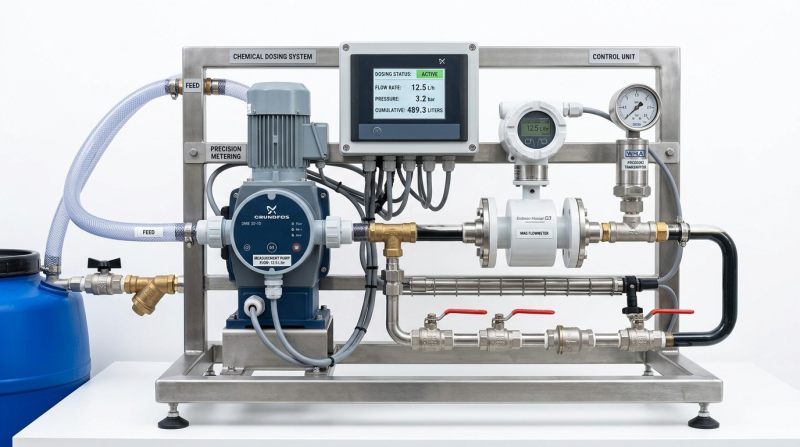
Early dosing errors can quietly undermine manufacturing competitiveness, precision components quality, and production line optimization. By tracking the right flow metrics alongside technical specifications and engineering intelligence, teams can detect instability before it becomes waste, downtime, or compliance risk. This guide helps industrial procurement leaders, operators, and project managers connect industrial benchmarking, supply chain analysis, raw material prices, and project tenders to smarter dosing control.
In precision-driven industries, dosing performance affects far more than a single pump or chemical line. It influences lubrication consistency, sealing reliability, coating thickness, additive ratios, curing behavior, and downstream inspection results. A deviation of 1% to 3% may look minor on a dashboard, yet in high-pressure metering, die-casting support chemistry, or functional fluid delivery, that same drift can create scrap, rework, or hidden warranty exposure.
For information researchers, plant operators, quality teams, and enterprise decision-makers, the practical question is not simply whether flow is moving, but which flow metrics reveal instability early enough to act. The answer usually combines real-time process data, equipment condition indicators, material behavior, and procurement-grade engineering benchmarks. When these metrics are interpreted together, dosing problems can be caught in hours instead of after a 2-week batch review or a failed customer audit.
Core flow metrics that expose dosing instability before failure
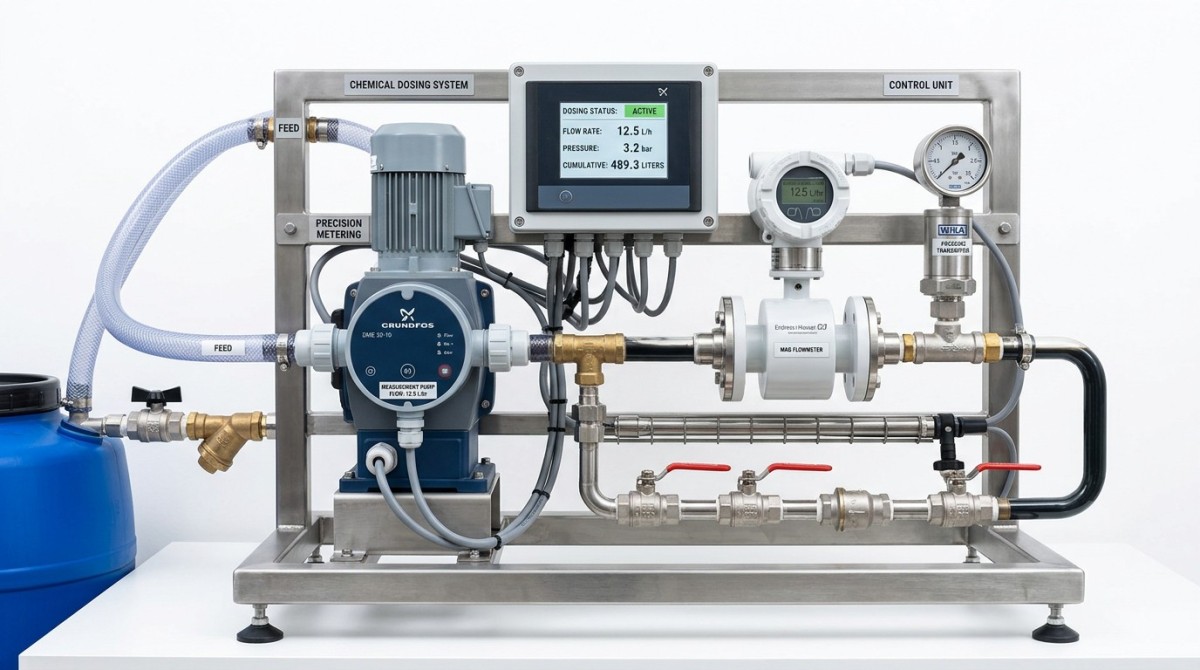
The most useful flow metrics are the ones that move ahead of visible defects. In most industrial dosing systems, the first warning signs appear in flow rate deviation, pulse consistency, pressure-flow correlation, and totalized volume mismatch. These indicators matter whether the application involves lubricants, sealants, additives, coolants, or specialty chemicals. A monitoring strategy that tracks only average hourly output will often miss short-cycle dosing errors lasting 10 to 30 seconds.
A practical baseline starts with actual flow rate versus setpoint. Many production teams use acceptable bands of ±1% for critical precision dosing and ±2% to ±5% for general utility dosing, depending on viscosity, temperature sensitivity, and product tolerance. If actual flow repeatedly oscillates outside the control band, even while daily totals appear acceptable, the line may already be operating with unstable dosing behavior.
The second metric is flow repeatability over defined cycles. Instead of relying on one average number, engineers should compare 10-cycle, 30-cycle, and 60-minute repeatability. A dosing skid that delivers 500 mL/min on average may still produce unacceptable quality if the pulse profile varies by 6% to 8% during every machine start, mold change, or valve transition. This is especially relevant for systems tied to CNC coolant management, die lubricant application, or metering pump feeds.
A third metric is cumulative dosing error, which compares commanded volume to actual dispensed volume over a shift, batch, or production lot. If the cumulative difference reaches 2 liters over 1,000 liters, the error may seem small. However, in concentrated additive dosing or catalyst feed systems, a 0.2% totalized mismatch can still alter product performance, curing time, or corrosion resistance. For compliance-sensitive operations, cumulative error is often more meaningful than instantaneous flow alone.
Priority metrics to monitor in real time
The table below summarizes the flow metrics most often used to catch dosing problems early across fluid control and manufacturing support systems.
The key lesson is that no single metric is enough. Teams that combine rate, repeatability, and cumulative volume detect problems earlier than teams looking only at total daily consumption. This multi-metric view is especially valuable for procurement and project teams comparing metering technologies, seal designs, and maintenance intervals across suppliers.
Metrics that are often overlooked
Many plants monitor liters per minute but ignore response time to setpoint changes. If a pump requires 8 to 15 seconds to stabilize after a command change, a short production cycle may spend a large portion of each run in an inaccurate dosing state. Another overlooked factor is low-flow cut-in performance. Some systems behave well above 20% capacity but become erratic below 10%, where slip, air entrainment, or valve chatter becomes more visible.
- Setpoint tracking delay after startup, speed change, or recipe switch.
- Minimum stable flow range, especially below 10% to 20% of rated capacity.
- Totalized volume reconciliation against tank depletion or mass balance.
- Alarm frequency per shift, including nuisance alarms that signal hidden instability.
When these supporting metrics are added, operators gain a fuller picture of whether dosing is truly stable or simply looks stable during normal-speed operation.
How pressure, pulsation, and material behavior reveal the root cause
Flow metrics become more useful when interpreted with physical process conditions. In many industrial systems, dosing drift is not caused by the flow meter itself but by viscosity changes, suction issues, worn seals, gas entrainment, or pressure fluctuations downstream. That is why pressure-flow correlation is one of the strongest diagnostic tools. A stable setpoint with unstable discharge pressure often signals a mechanical or fluid-property problem rather than a control logic issue.
For example, lubricant viscosity can shift significantly when temperature changes by 10°C to 15°C. In sealants or functional chemicals, higher viscosity may reduce actual flow while pressure rises, causing the control system to work harder without reaching target delivery. Conversely, a pressure drop with rising flow may indicate internal wear, bypass leakage, or incorrect valve seating. Operators who review pressure and flow together can usually narrow root causes much faster than with flow trends alone.
Pulsation is another early signal. Metering pumps and certain diaphragm or reciprocating designs naturally generate pulses, but pulse amplitude should remain within a predictable range. If pulsation increases from a normal 2% to 3% band to 7% or higher, the change may point to suction starvation, worn check valves, trapped air, or changing fluid density. On precision dosing lines, pulsation can translate into coating inconsistency, lubrication excess at one point and shortage at another, or uneven additive blending.
Material behavior also matters at transfer points. Foaming, entrained air, settling solids, and temperature-sensitive rheology can all distort flow readings. In practical terms, a pump may be healthy while the process still doses inaccurately because the fluid entering it is no longer consistent. This is why quality teams should align flow monitoring with storage tank agitation, drum change procedures, line flushing intervals, and ambient control where required.
Common cause-and-effect patterns
The following comparison helps teams link flow symptoms with likely mechanical or process causes before downtime escalates.
This type of diagnostic table is useful for both operators and sourcing teams. It helps define whether the next action should be recalibration, spare parts replacement, a piping change, or a pump redesign during a tender or upgrade project.
A practical troubleshooting sequence
- Verify sensor accuracy and recent calibration date, ideally within the last 6 to 12 months.
- Compare actual flow, discharge pressure, and suction condition over the same 15-minute window.
- Check fluid temperature, viscosity trend, and container change history.
- Inspect valves, seals, filters, and pulsation dampening hardware.
- Reconcile batch totalizer data with tank depletion or measured consumption.
Following a sequence like this reduces guesswork and limits unnecessary part replacement, which is especially important when supply-chain lead times for precision pump components stretch to 2 to 6 weeks.
Building an early-warning dashboard for operators, quality teams, and managers
An effective dosing dashboard should serve different users at once. Operators need immediate alarms and clear corrective steps. Quality teams need traceable trends linked to lot numbers, inspection results, and process capability. Managers and procurement leaders need evidence that supports maintenance planning, spare-parts strategy, and investment decisions. A well-structured dashboard usually combines 5 to 8 core metrics rather than dozens of disconnected numbers.
The first layer is live process visibility. This should include current flow rate, setpoint deviation, pressure, cumulative dispensed volume, and alarm status updated every 1 to 5 seconds where the process is critical. The second layer is trend interpretation, such as 8-hour drift, batch total error, repeated startup deviation, and the number of manual interventions per shift. The third layer is business context, including material cost impact, downtime minutes, and rejected part counts tied to dosing events.
For a B2B manufacturing environment, alarm design matters as much as data collection. If the system triggers 30 nuisance alarms per day, operators stop trusting it. A better practice is tiered warning logic: advisory at 1% deviation, operator action at 2%, and quality hold or escalation at 3% or when the condition persists beyond 60 to 120 seconds. The exact thresholds depend on process criticality, but the principle is universal: warn early, escalate selectively, and document consistently.
Dashboards should also reflect maintenance reality. If a pump normally runs 2,000 to 4,000 hours before service, trend lines should show whether flow stability is degrading long before the service interval arrives. This prevents a common error: waiting for fixed calendar maintenance while the process is already losing repeatability due to valve wear or seal fatigue.
Recommended dashboard structure
- Real-time panel: actual flow, setpoint, deviation %, discharge pressure, alarm condition.
- Shift panel: cumulative volume error, manual override count, average response time, startup instability events.
- Quality panel: rejected parts by lot, correlation to dosing excursions, hold-and-release status.
- Asset panel: run hours since maintenance, seal replacement age, valve cycle count, calibration due date.
This layered structure helps each department work from the same operating truth. It also supports project tenders and capital planning because it turns dosing performance into measurable business evidence rather than anecdotal operator feedback.
Three dashboard design mistakes to avoid
First, avoid using only hourly or batch averages. They hide short instability events that matter in precision manufacturing. Second, do not isolate flow from pressure, temperature, and maintenance history. Third, avoid alarm settings that are copied from another process without validating local fluid properties, pipe lengths, and line speed. Even a 5-meter suction layout difference can change pump behavior enough to invalidate inherited settings.
When teams correct these three issues, they usually identify dosing problems earlier and reduce the cycle from symptom to root-cause action from several days to a few hours.
Procurement, benchmarking, and implementation decisions that improve dosing control
Early detection depends partly on instrumentation, but long-term dosing performance depends on engineering choices made during specification and procurement. Decision-makers evaluating pumps, flow meters, seals, hoses, and control packages should compare not only nominal capacity but also turndown ratio, material compatibility, repeatability, serviceability, and data integration. A lower initial equipment price can become expensive if the system cannot maintain stable flow at 15% capacity or requires weekly recalibration.
Benchmarking against international standards and practical plant conditions is essential. For example, procurement teams should ask whether wetted materials match the chemical profile, whether the selected meter tolerates viscosity variation, and whether spare seals or check valves are available within the required lead time. In a volatile market, raw material price fluctuations in steel, titanium, and synthetic base oils can influence both equipment cost and maintenance planning, making lifecycle evaluation more useful than simple unit-price comparison.
Implementation planning should include a staged validation approach. Stage 1 covers factory acceptance of flow range and repeatability. Stage 2 covers installation checks such as piping geometry, venting, and suction configuration. Stage 3 covers production validation using actual media over at least 3 operating scenarios, such as startup, normal load, and reduced-rate operation. Without this three-stage approach, many dosing systems appear compliant during handover but drift during live production.
This is where technical intelligence platforms such as G-PME add value. By connecting equipment benchmarking, supply-chain resilience, tender timing, and cross-sector engineering requirements, organizations can make better-informed choices about whether to repair, upgrade, or re-specify a dosing line. That matters for EPC contractors, procurement directors, and plant managers responsible for uptime, traceability, and cost control at the same time.
Key procurement criteria for dosing-related assets
The table below highlights selection criteria that support both early problem detection and stable dosing performance over time.
These criteria help translate flow monitoring into procurement decisions that hold up under real operating conditions. They are also useful in bid comparisons, retrofit studies, and CAPEX reviews where decision quality matters as much as technical detail.
Implementation checklist for new or upgraded dosing systems
- Define critical flow metrics and acceptable thresholds before procurement approval.
- Specify calibration intervals, data resolution, and alarm hierarchy in the control scope.
- Validate performance using actual media, not water-only trials, when viscosity differs materially.
- Train operators on 3 to 5 root-cause patterns so alarms lead to action, not confusion.
- Review spare-part strategy against project schedules and supplier lead-time risk.
In complex plants, this checklist often determines whether the system becomes a stable production asset or a recurring source of hidden variation.
FAQ: practical questions about spotting dosing problems early
Which single metric should teams start with if instrumentation is limited?
If only one metric can be implemented immediately, start with actual flow versus setpoint at a meaningful sampling interval. For many lines, 1-second to 5-second updates are far more useful than minute-level averages. Even so, this should be expanded quickly with pressure and cumulative volume because flow alone rarely explains root cause with enough confidence.
How often should dosing systems be recalibrated?
Calibration frequency depends on process criticality, fluid behavior, and equipment type. A common industrial range is every 6 to 12 months for stable applications, with shorter intervals for abrasive, viscous, or compliance-sensitive media. Recalibration should also be triggered after seal replacement, major maintenance, or unexplained cumulative volume drift.
What is a common mistake in quality investigations?
A common mistake is reviewing only final part defects without matching them to high-resolution process data. If the team looks only at end-of-shift averages, the investigation may miss repeated 20-second underdosing events during startup or container changeover. Linking lot records to second-by-second flow and pressure data usually shortens investigation time and improves corrective action quality.
When does it make sense to upgrade instead of repair?
Upgrade should be considered when the process has changed beyond the original design window, when low-flow stability is now critical, or when spare parts lead times repeatedly threaten production. If repeated repairs still leave setpoint deviation above acceptable limits or create more than 2 to 3 unplanned interventions per month, a redesign or technology change may offer better lifecycle value.
Catching dosing problems early is ultimately about reading the right signals in the right context. Flow rate deviation, repeatability, cumulative volume error, pressure-flow correlation, and pulsation trends provide the earliest practical view of instability. When these metrics are combined with material behavior, maintenance history, and procurement-grade benchmarking, teams can protect quality, reduce waste, and improve uptime across precision manufacturing environments.
For organizations evaluating fluid control assets, metering upgrades, or cross-plant standardization, a structured engineering view delivers better results than reactive troubleshooting alone. G-PME supports this approach by connecting technical specifications, industrial benchmarking, supply-chain visibility, and project intelligence into actionable decision support. To discuss your application, compare solution paths, or obtain a tailored dosing control strategy, contact us to get a customized recommendation and learn more solutions.
Recommended News
 How to select low-friction industrial seals for centrifugal pumpsChoose industrial seals for low friction in centrifugal pumps. Compare face materials, lubrication and support systems to reduce wear and operating losses. Find the right fit.
 A supply chain analysis framework for spotting mold delivery risksUse a supply chain analysis framework to spot mold delivery risks, verify critical dependencies, and protect launch schedules. Discover practical steps to act early.
 How bearing prices shape machine tool spindle production cost trendsExplore how bearing prices shape spindle production cost trends, from assembly and testing to supply risks. Uncover hidden costs and make smarter sourcing decisions.
 Carrier Plans $600 Million Advanced Manufacturing Center With 5-Axis CNC EquipmentCarrier plans a $600M+ advanced manufacturing center with 5-axis CNC equipment in Texas. Explore potential opportunities for machining suppliers and commercial chiller buyers.
 Why do pH meters give unstable readings in metalworking coolants?Unstable pHmeters in metalworking coolants? Learn how to identify probe fouling, verify calibration, and improve sampling for reliable readings before costly coolant adjustments.
 Aluminum vs. titanium for lightweight parts with equal stiffnessEngineering materials comparison: lightweight alloys aluminum and titanium face off at equal stiffness. Discover how geometry, loading, and cost guide the best choice for lighter parts.
 Which engineering materials hold tight tolerances as temperatures change?Explore our engineering materials comparison by tolerance to learn how Invar, ceramics, steel, and aluminum handle temperature changes—and find the right fit for precision designs.
 John Crane to Showcase Emissions and Downtime Reduction Technologies at ADIPEC 2026John Crane at ADIPEC 2026: Explore technologies targeting lower emissions and compressor downtime, and discover what reported savings could mean for your operations.
 When does precision engineering machining need a 5-axis machine?Discover when precision engineering machining needs 5-axis capability. Compare 3+2 and simultaneous machining to improve tool access, control costs, and choose the right process.
 How to check clinical validation of wholesale blood pressure monitorsSourcing blood pressure monitors wholesale? Learn how to verify clinical studies, registry listings, cuff coverage, and model identity before approving your next bulk order.
 How much lithium battery storage do you need for solar energy?Lithium battery storage for solar energy: learn to calculate capacity, account for losses, and check backup power. Avoid costly sizing mistakes and find the right system for your needs.
 11th CIMSS Conference in Wuxi to Focus on Metalworking Fluid Industry UpgradesExplore the 11th CIMSS Conference in Wuxi, October 22–23, 2026, for insights into metalworking fluid innovation, industrial cleaning and cost control to support industry upgrades.
 Can solid-state battery breakthroughs scale to mass-produced EVs?Solid-state battery breakthroughs for electric vehicles: can they scale? Explore manufacturing yield, pack costs, and real-world performance to uncover what stands between lab success and mass production.
 Can digital manufacturing improve competitiveness by cutting lead times?Explore digital manufacturing competitiveness: learn how shorter lead times, smarter scheduling, and connected quality data can help win orders and cut costs without compromising quality.
 How to size a hydraulic press for forging large steel componentsSize a hydraulic press for forging large steel components with confidence. Learn how to assess forming force, working speed, stroke, and capacity limits to avoid costly selection errors.
 Aerospace Actuator Maker 7958 Joins Emerging Stock Market on October 22Aerospace actuator maker 7958 joins the Emerging Stock Market on October 22, 2026. Explore its precision motor technology and growth plans for drones and robotics.
 How to calculate payload for industrial robots removing molded partsSize industrial robots for molded-part removal with confidence. Learn to calculate total payload, center of gravity, inertia, and extraction loads to avoid overloads and optimize cycle times.
 When do automated CNC cell systems pay off for 5-axis machining?When do automated cnc cell systems pay off for 5-axis machining? Discover how demand, unattended reliability, and total costs shape ROI—and build a stronger investment case.
 When is industrial procurement support worth the cost for tooling?When is industrial procurement support worth the cost for tooling? Discover how to compare total costs, assess supplier risk, and build a clear break-even case before you invest.
 How to assess a mold manufacturer's cooling design expertiseAssess a mold engineering manufacturer's cooling expertise with key checks for thermal simulations, circuit flow, and mold trials. Learn what evidence to demand before approving your supplier.
 How to vet OEM mold suppliers in a manufacturing directoryUsing a manufacturing directory with OEM suppliers? Learn how to vet mold makers, verify capabilities, compare quotes, and define acceptance criteria to reduce sourcing risk.











Search News
Popular Tags