What to check before choosing an EDM machine OEM supplier
Choosing the right edm machine oem supplier can directly affect machining accuracy, delivery reliability, compliance, and long-term operating cost. For business evaluation, price alone is never enough. A dependable edm machine oem supplier should prove process capability, quality discipline, engineering responsiveness, and supply continuity before any order is confirmed.
What should an edm machine oem supplier be able to prove first?
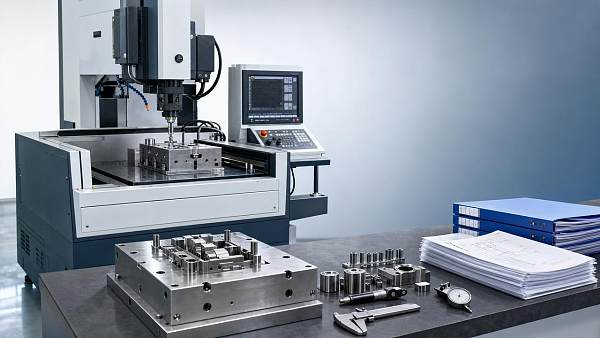
The first checkpoint is technical credibility. Any edm machine oem supplier should clearly explain machine type, machining range, control system, discharge stability, and accuracy tolerance.
Ask whether the supplier produces wire EDM, sinker EDM, hole drilling EDM, or hybrid solutions. Product fit matters more than a broad catalog.
Capability claims should be backed by measurable data. Look for repeatability figures, surface finish records, electrode wear control, and sample workpiece validation.
A reliable edm machine oem supplier should also present testing methods. Inspection standards, calibration routines, and machine acceptance protocols reveal engineering seriousness.
Useful proof points include:
- Positioning accuracy and repeat positioning reports
- Surface roughness performance on typical materials
- Machine run-off records before shipment
- Control system brand and software update policy
- Spare parts traceability and component sourcing list
If an edm machine oem supplier avoids data and only offers general promises, risk rises immediately. Technical transparency is the minimum entry requirement.
How can quality systems reveal whether the supplier is dependable?
Quality systems show whether consistency can survive beyond one demonstration machine. A strong edm machine oem supplier should operate with documented procedures, not informal habits.
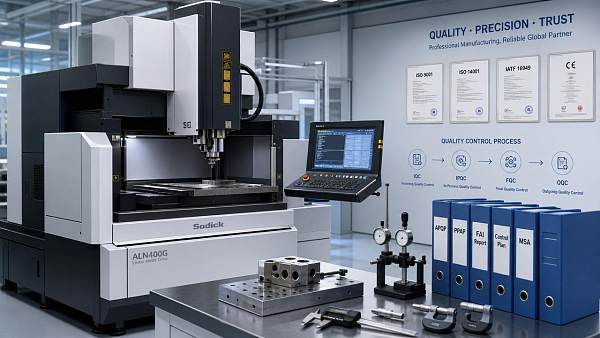
Check certifications such as ISO 9001 and ask how they are applied in production. Certification alone is not enough without real process control.
Review incoming inspection rules for castings, guide rails, ballscrews, power supply units, servo systems, and dielectric filtration components. EDM performance depends on subsystem stability.
Good suppliers document assembly checkpoints, electrical testing, geometric accuracy verification, thermal stability checks, and final no-load and loaded trial operations.
Another useful signal is change control. If the edm machine oem supplier replaces a critical component, it should record the reason, risk, and validation result.
Ask practical questions:
- How are nonconforming parts isolated and corrected?
- How often are measuring instruments calibrated?
- What final acceptance checklist is used?
- Can the supplier share sample inspection records?
A mature edm machine oem supplier treats quality as a system that reduces downtime, protects machining results, and lowers total ownership cost.
Why do customization and application support matter so much?
Many EDM projects fail because the machine was chosen from a brochure instead of from an application requirement. This is where the right edm machine oem supplier stands out.
Different industries need different machine behavior. Mold making, aerospace alloys, medical components, carbide tooling, and precision electronics all create distinct demands.
Ask whether the supplier can adjust power parameters, flushing design, axis travel, automation interfaces, tooling fixtures, and software functions for target workpieces.
A capable edm machine oem supplier should discuss materials, required tolerance, cavity depth, corner accuracy, expected throughput, and finishing expectations before quoting.
Customization also includes compliance needs. Voltage configuration, guarding standards, CE-related documentation, and local safety requirements should be considered early.
The best sign is application engineering involvement. When a supplier reviews drawings, machining strategy, and maintenance implications, the proposal becomes much more credible.
Warning signs include fixed package selling, vague answers on material performance, and no willingness to run a sample part under agreed conditions.
How do delivery, service, and spare parts affect the real buying decision?
A machine can look excellent on paper but still become a costly problem if delivery discipline and service support are weak. This is a major edm machine oem supplier checkpoint.
Start with lead time realism. Ask what parts are made in-house, what parts are outsourced, and which items create the longest procurement risk.
Delivery reliability is stronger when the supplier manages vendor qualification, inventory planning, and production scheduling through a documented system.
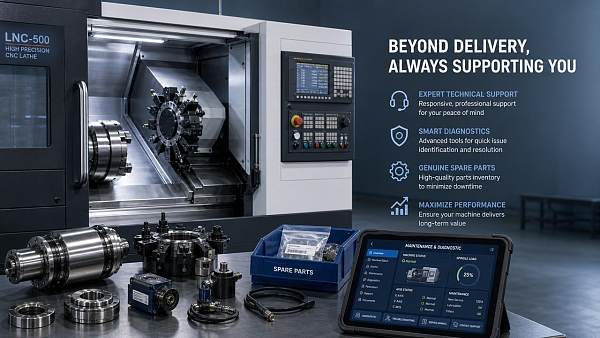
After-sales support should cover installation, commissioning, operator training, maintenance manuals, troubleshooting response, and spare parts availability for several years.
For a cross-border purchase, ask whether the edm machine oem supplier offers remote diagnosis, local service partners, multilingual documentation, and response-time commitments.
Consumables and wear parts deserve attention too. Wire guides, filters, seals, pumps, nozzles, belts, and electrical modules should be easy to identify and reorder.
Use this quick comparison table before approval:
What hidden risks are often missed when comparing suppliers?
One common mistake is comparing only quotation totals. A cheaper offer from an edm machine oem supplier may exclude training, software licenses, accessories, or freight protections.
Another hidden risk is overreliance on marketing language. Terms like high precision or stable performance mean little without tested benchmarks and acceptance criteria.
Some buyers ignore financial and supply-chain resilience. A technically capable edm machine oem supplier still becomes risky if cash flow, subcontractor control, or export support is unstable.
Intellectual property handling matters too. Drawings, process details, control parameters, and custom fixtures should be managed under clear confidentiality terms.
Do not forget lifecycle economics. Energy use, dielectric management, maintenance intervals, and software update costs influence long-term value far more than initial discounting.
A structured review can reduce these blind spots:
- Request a full scope list, not only a machine price
- Define acceptance criteria before order placement
- Audit support capability for at least three years
- Confirm export, packaging, and installation responsibility
- Review warranty exclusions in writing
How can you compare an edm machine oem supplier more objectively?
An objective comparison works better than impression-based selection. Build a weighted checklist and score each edm machine oem supplier on the same decision factors.
Include technical fit, verified quality systems, customization depth, lead time credibility, service structure, compliance readiness, and lifecycle cost transparency.
Shortlisted suppliers should complete the same question set. This reduces bias and exposes who can answer with evidence instead of broad claims.
A practical FAQ-style decision table helps:
This method makes it easier to identify the edm machine oem supplier that balances precision, support, and operational resilience.
What is the best next step before making a final choice?
Before issuing a purchase order, request a final technical and commercial clarification round. Every edm machine oem supplier should confirm exact scope, performance target, and acceptance terms.
If possible, arrange a factory audit or live machine review. Observe assembly discipline, testing routine, documentation control, and how engineers answer detailed questions.
A sample machining trial is highly valuable. It reveals whether the edm machine oem supplier can match the intended application, not just sell a general-purpose machine.
The safest decision usually comes from verified evidence across capability, quality, customization, service, and supply-chain stability. That is how procurement risk becomes manageable.
Use the checkpoints above to narrow choices, document findings, and compare offers on long-term value. A qualified edm machine oem supplier should welcome this level of scrutiny.
Recommended News
 What to check before choosing an EDM machine OEM supplierEDM machine OEM supplier selection starts with accuracy, traceability, service, and lifecycle cost. Discover what to check before buying to reduce risk and improve production fit.
 When carbide inserts wholesale saves money and when it does notCarbide inserts wholesale can cut costs—or create waste. Learn when bulk buying truly saves money, how to assess risk, and the checklist that helps manufacturers buy smarter.
 Why CNC lathe manufacturer lead times vary so muchCNC lathe manufacturer lead times vary due to material risk, tooling, inspection, and supply-chain complexity. Learn how to compare quotes, reduce delays, and choose a more reliable supplier.
 What makes a precision milling center factory worth trustingPrecision milling center factory selection starts with proof, not promises. Learn how to judge quality control, repeatable accuracy, traceability, and delivery reliability before you buy.
 How to compare a wholesale 5-axis CNC machine before you buyWholesale 5-axis CNC machine comparison starts with application fit, accuracy, spindle, controls, and service. Learn how to avoid hidden costs and choose a supplier with confidence.
 How to vet an EDM machine OEM supplier before orderingedm machine oem supplier selection starts with a smart vetting process. Learn how to assess quality, customization, delivery, and support before ordering.
 Is carbide inserts wholesale really cheaper in the long runCarbide inserts wholesale can lower long-term machining costs—but only with stable demand, consistent tool life, and smart inventory control. Learn when bulk buying truly saves more.
 Why CNC lathe manufacturer support matters after deliveryCNC lathe manufacturer support matters after delivery. Learn how fast service, spare parts, and expert troubleshooting reduce downtime, protect uptime, and extend machine life.
 What defines a reliable precision milling center factoryPrecision milling center factory selection now depends on traceability, stable accuracy, and delivery control. Learn what proves real reliability and reduces project risk.
![]() How to compare a wholesale 5-axis CNC machine wiselyWholesale 5-axis CNC machine comparison starts with accuracy, rigidity, software fit, and lifecycle cost. Learn the smart checklist to reduce sourcing risk and choose with confidence.
How to compare a wholesale 5-axis CNC machine wiselyWholesale 5-axis CNC machine comparison starts with accuracy, rigidity, software fit, and lifecycle cost. Learn the smart checklist to reduce sourcing risk and choose with confidence. Is an EDM machine OEM supplier worth the lead timeedm machine oem supplier lead time can be worth it when precision, uptime, and long-term support matter. Learn when OEM sourcing reduces risk and improves ROI.
 Why carbide inserts wholesale prices vary so muchCarbide inserts wholesale prices vary due to grade, coating, precision, and supply risk. Learn how to compare real value, cut sourcing costs, and choose reliable suppliers.
 Choosing a CNC lathe manufacturer without costly mistakesCNC lathe manufacturer selection made easier: learn how to compare quality, service, compliance, and lifecycle cost to avoid expensive mistakes and choose with confidence.
 What defines a reliable precision milling center factoryPrecision milling center factory selection now depends on traceable quality, process control, and repeatable accuracy. Learn what truly defines a reliable partner before you buy.
 How to compare wholesale 5-axis CNC machine costs wiselyWholesale 5-axis CNC machine cost comparisons should go beyond price. Learn how to evaluate total ownership, precision, uptime, and sourcing risks to choose the best-value machine.
 Is an automatic tool changer OEM ready for custom needsAutomatic tool changer OEM solutions can be custom-ready when engineering, integration, and after-sales support are strong. Learn how to evaluate the right partner before you commit.
 A machine tool spindle factory can make or break uptimeA machine tool spindle factory directly impacts uptime, precision, and risk control. Learn how to evaluate capability, reduce failures, and protect long-term production performance.
 How cnc cutting tools wholesale affects tool life and costcnc cutting tools wholesale affects more than price—it shapes tool life, uptime, surface quality, and cost per part. Discover how better sourcing cuts hidden losses.
 What to check before choosing a horizontal boring machine OEMHorizontal boring machine OEM selection starts with application fit, quality control, and service support. Learn the key checks to reduce downtime, protect accuracy, and choose with confidence.
 When a vertical machining center factory is worth switchingVertical machining center factory selection starts with precision, lead time, and service. Learn the key signs it’s worth switching and how to reduce sourcing risk.
 How to vet an EDM machine OEM supplier with less riskedm machine oem supplier selection starts with the right checks. Learn how to vet quality, compliance, delivery, and service risk before you buy with confidence.

Search News
Popular Tags