
Why CNC lathe manufacturer support matters after delivery

A reliable cnc lathe manufacturer proves its value long after installation. For after-sales maintenance teams, responsive technical support, fast spare-parts access, and accurate troubleshooting directly affect uptime, repair efficiency, and customer trust. Understanding why post-delivery service matters helps reduce recurring faults, extend machine life, and keep production running with fewer disruptions.
In complex industrial environments, machine performance is never defined by spindle speed alone. It is shaped by how quickly alarms are diagnosed, how precisely wear parts are replaced, and how consistently service knowledge is transferred. That is why post-delivery support from a cnc lathe manufacturer should be evaluated with the same rigor as initial machine specifications.
Why a checklist-based review improves post-delivery support decisions

After delivery, problems rarely appear in a predictable order. Servo alarms, turret indexing errors, coolant contamination, and control software issues may emerge at different stages of machine use. A checklist creates a repeatable method for verifying whether a cnc lathe manufacturer can support real operating conditions.
This matters across the broader industrial sector, where CNC turning equipment supports automotive parts, valve bodies, medical fittings, energy components, tooling hardware, and general engineered assemblies. Downtime in one lathe can disrupt inspection plans, assembly schedules, and delivery commitments across several linked processes.
Core checklist: what to verify from a cnc lathe manufacturer after delivery
- Confirm response-time commitments for remote diagnosis, on-site visits, and escalation paths, including weekend coverage, holiday support, and the exact trigger conditions for emergency service dispatch.
- Check spare-parts availability for spindle units, drive modules, lubrication pumps, encoders, hydraulic seals, belts, sensors, and turret components with documented lead times.
- Request a complete service documentation pack, including wiring diagrams, PLC logic references, alarm code lists, mechanical exploded views, and preventive maintenance intervals.
- Verify whether the cnc lathe manufacturer provides structured troubleshooting support through phone, video, remote access, and digital case tracking for recurring faults.
- Review training quality for maintenance tasks such as backlash checking, lubrication inspection, turret alignment, chuck pressure validation, and servo parameter backup procedures.
- Inspect software support scope, including CNC control updates, parameter restoration, ladder troubleshooting, and compatibility checks after replacing electronic modules or drives.
- Ask how root-cause analysis is handled when failures repeat, and whether the cnc lathe manufacturer issues corrective-action reports instead of temporary fixes.
- Measure parts logistics performance by region, warehousing strategy, export documentation speed, and the ability to ship urgent items without avoidable customs delays.
- Evaluate calibration and accuracy recovery support for tailstock alignment, spindle runout, tool offset stability, and thermal drift after transport or heavy use.
- Review consumable guidance for lubricants, coolant concentration, filters, wipers, and seals so maintenance actions do not unintentionally shorten machine life.
How post-delivery support affects different operating scenarios
High-mix, low-volume machining
In high-mix production, setup changes are frequent and machine parameters are adjusted often. Support from the cnc lathe manufacturer becomes critical when offsets drift, tool libraries become inconsistent, or cycle changes produce unstable surface finishes.
Fast technical clarification reduces trial-and-error. It also limits scrap when new materials, tighter tolerances, or special jaws are introduced into the process.
Continuous production lines
When a CNC lathe feeds downstream assembly, coating, grinding, or inspection stations, every hour of downtime has a multiplied effect. In these cases, the value of a cnc lathe manufacturer is measured by recovery speed, not brochure specifications.
Reliable after-sales support helps isolate whether the true cause lies in spindle load, hydraulic pressure instability, chip evacuation, or external utility conditions such as air quality and voltage fluctuation.
Regulated or high-precision applications
For medical, aerospace, fluid-control, and sealing components, machine recovery cannot rely on guesswork. Post-delivery support must include traceable adjustments, documented parameter changes, and accuracy checks after repairs.
A capable cnc lathe manufacturer supports verification routines that align with internal quality systems and recognized industrial standards.
Commonly overlooked gaps that create long-term support risk
Incomplete alarm interpretation
An alarm code alone rarely identifies the failed component. Without detailed interpretation, teams may replace sensors, drives, or cables unnecessarily. Strong support from the cnc lathe manufacturer should connect alarms to probable causes, inspection steps, and confirmation tests.
Poor spare-parts standardization
Machines with non-standard electrical or hydraulic parts often create long delays. If a cnc lathe manufacturer cannot map substitute parts, approved equivalents, or retrofit pathways, minor failures can become extended shutdowns.
Weak documentation control
Support quality drops sharply when parameter backups, ladder revisions, or maintenance logs are missing. Every intervention should update records, especially after board replacement, alignment correction, or software patching.
No feedback loop after recurring failures
Repeated faults indicate unresolved root causes. If the cnc lathe manufacturer keeps issuing isolated fixes without trend analysis, the same issue may return under load, temperature change, or different workholding conditions.
Practical execution steps for stronger after-delivery results
- Build a machine support file containing serial numbers, control versions, critical parameters, wiring snapshots, lubrication points, and approved spare-parts references.
- Log every fault by date, alarm, operating condition, replaced part, and final resolution to reveal repeat patterns that basic maintenance records miss.
- Schedule quarterly reviews with the cnc lathe manufacturer to discuss breakdown history, update recommendations, and pending wear-part risks.
- Validate critical spare inventory locally for high-failure or long-lead items instead of relying only on overseas shipment promises.
- Standardize remote-support procedures so video checks, measurement points, and alarm screenshots are captured before escalation begins.
These actions improve communication quality and shorten repair cycles. They also make the relationship with a cnc lathe manufacturer more data-driven, which is essential in modern industrial support systems.
Summary and next action
The real performance of a cnc lathe manufacturer is proven after delivery, when machines face wear, process variation, and unexpected faults. Strong support protects uptime, preserves accuracy, and reduces the cost of repeated repairs.
Use a structured checklist to review service responsiveness, spare-parts access, troubleshooting depth, documentation quality, and root-cause discipline. Then convert that review into a support file, a recurring audit routine, and a clear escalation process.
When post-delivery support is treated as a technical asset rather than an afterthought, CNC turning operations become more stable, more predictable, and easier to sustain across demanding industrial applications.
Recommended News
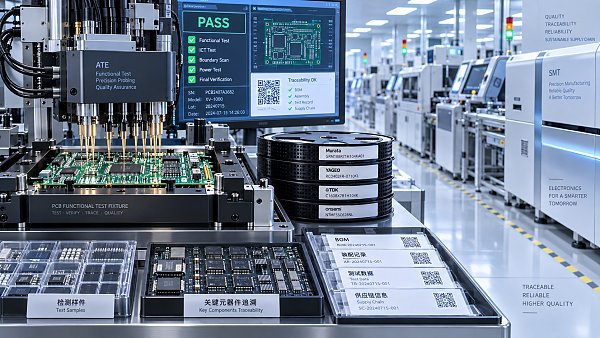
 What to verify before selecting an electronics contract manufacturerElectronics manufacturing solutions: learn what to verify before choosing a contract manufacturing partner, from quality systems and testing to sourcing, traceability, and change control.
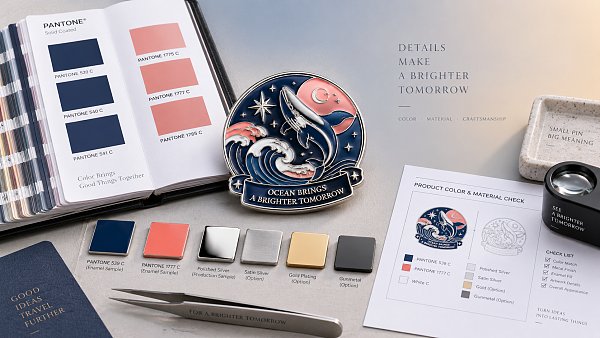
 How to check color accuracy before approving custom enamel pinsCustom enamel pins color accuracy starts before approval. Learn how to review Pantone references, proofs, plating, and samples for confident results.
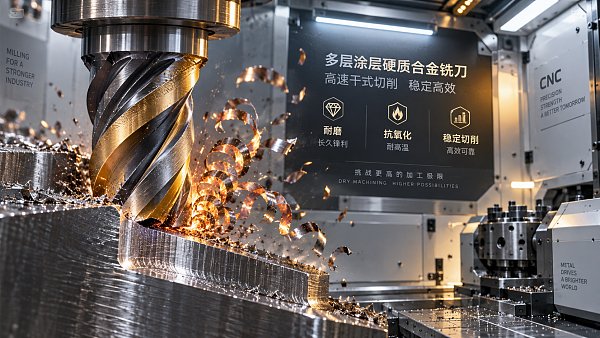
 When do multilayer carbide coatings extend tool life in dry machining?Multilayer carbide coatings extend tool life in dry machining when heat, adhesion, abrasion, and edge loading are controlled. Learn how to match layers, substrates, and parameters for reliable performance.
 When occupancy controls reduce warehouse lighting energy wasteWarehouse lighting occupancy controls cut energy waste through smarter zoning, sensor placement, dimming, and commissioning. Discover practical strategies for safer, lower-cost operations.
 How to size an ESS for reducing peak-demand chargesESS sizing for peak-demand charge reduction: learn how to match power, usable energy, tariff rules, controls, and recharge strategy to lower billed demand reliably.
 How textile chemicals affect dye-house wastewater treatment costsTextile chemicals can raise dye-house wastewater treatment costs through COD, color, sludge, salt, and fouling. Discover practical ways to assess total chemical cost.
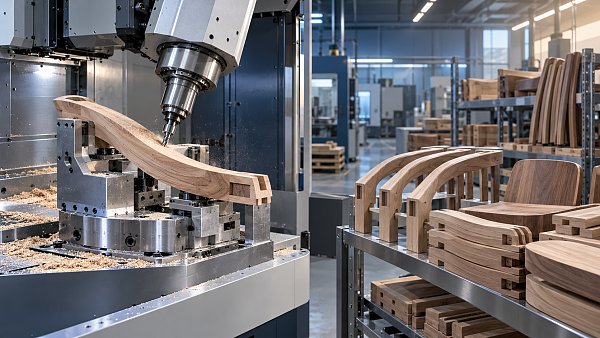
 When does 5-axis machining make sense for furniture manufacturing?Furniture manufacturing leaders: discover when 5-axis machining delivers real value through complex geometry, fewer setups, better joinery, and premium finishes.
 How to read a 5-axis positioning accuracy chart before machine acceptance5 axis positioning accuracy chart guide for machine acceptance: learn to assess error, repeatability, backlash, and rotary-axis risks before production sign-off.
 When do sludge dewatering machines lower hauling costs?Sludge dewatering machines cut hauling costs when higher cake solids reduce loads, weight, and collection frequency. Explore thresholds, savings, and selection factors.
 How to verify CE certification for industrial pumps before installationIndustrial pumps CE certified? Learn how to verify declarations, documentation, hazardous-area suitability, and installation compliance before commissioning.
 How to compare a plasma cutting machine supplier before placing an orderCompare a plasma cutting machine supplier with confidence—evaluate cut quality, total cost, consumables, and after-sales support before you order.
 Which factory upgrade projects benefit most from industrial technology solutions?Industrial technology solutions factory upgrade projects deliver the most value when they remove bottlenecks, cut downtime, improve quality, and strengthen resilience. Explore high-impact priorities.
 When a high precision CNC grinding machine justifies its costDiscover when a high precision CNC grinding machine delivers real ROI through repeatable quality, lower scrap, faster verification, and controlled production.
 When do industrial lubricants for compressors need oil analysis?Industrial lubricants for compressors need oil analysis at baseline, under harsh operating conditions, and after warning signs. Learn how testing prevents downtime and protects equipment.
 How CNC controller processing speed affects cycle times in EuropeCNC controller processing speed Europe: discover how look-ahead, interpolation and CAM optimisation can cut cycle times while protecting precision and surface quality.
 What to verify before using supplier sourcing solutions in EuropeSupplier sourcing solutions Europe: verify capabilities, compliance, traceability, total cost, and supply resilience before choosing reliable industrial partners.
 When smart fabrics are reliable enough for industrial wearablesSmart fabrics for industrial wearables: learn how to validate durability, signal quality, cleaning resilience, and safe failure performance before deployment.
 How supply chain management for exporters reduces customs delaysSupply chain management for exporters helps prevent customs delays with accurate data, origin checks, importer readiness, and proactive shipment controls. Explore practical strategies now.
 What to verify before approving an OEM electronics supplierOEM electronics supplier approval checklist: verify BOM control, traceability, testing, sourcing risk, capacity, and commercial terms before committing to volume production.
 When do CNC-machined precision components require five-axis milling?Precision components CNC machined with five-axis milling deliver better access, tighter datum control, and lower setup risk. Learn when five-axis machining is the smart choice.
 What should a restaurant POS system handle during a lunch rush?restaurantPOSsystems keep lunch rushes moving with fast ordering, smart kitchen routing, flexible payments, live inventory, and reliable service controls.







Search News
Popular Tags