
Why carbide inserts wholesale prices vary so much
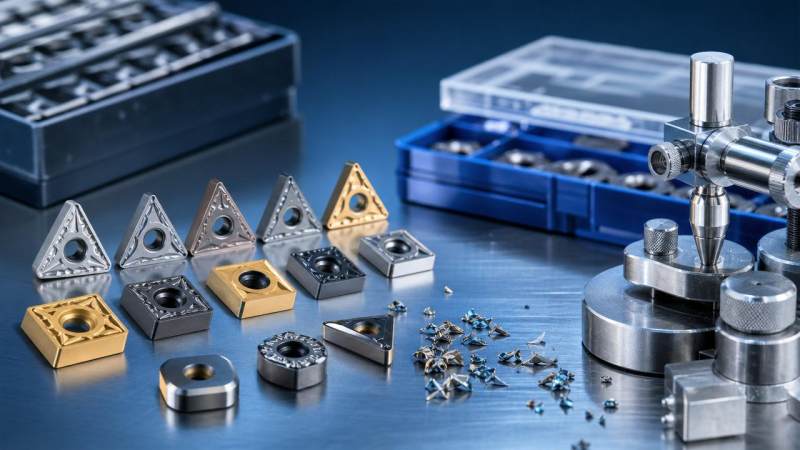
For business evaluators, understanding why carbide inserts wholesale prices differ so widely is essential to making cost-effective sourcing decisions. Price gaps are rarely random—they reflect material grade, coating technology, production precision, supplier scale, and supply-chain stability. This article explores the real factors behind carbide inserts wholesale pricing to help buyers assess value, reduce procurement risk, and negotiate with greater confidence.
In industrial sourcing, a carbide insert is rarely just a cutting consumable. It affects cycle time, tool life, surface finish, machine utilization, and even downstream inspection costs. For procurement teams working across CNC machining, tooling, and engineering supply chains, a lower unit price can easily turn into a higher total operating cost within 30 to 90 days.
That is why evaluating carbide inserts wholesale offers requires more than comparing quotations line by line. Buyers need to understand how substrate quality, coating consistency, tolerance control, chipbreaker design, order volume, and logistics exposure combine to shape price. A disciplined comparison model helps separate genuinely competitive suppliers from offers that only appear inexpensive on paper.
The core reasons carbide inserts wholesale prices differ
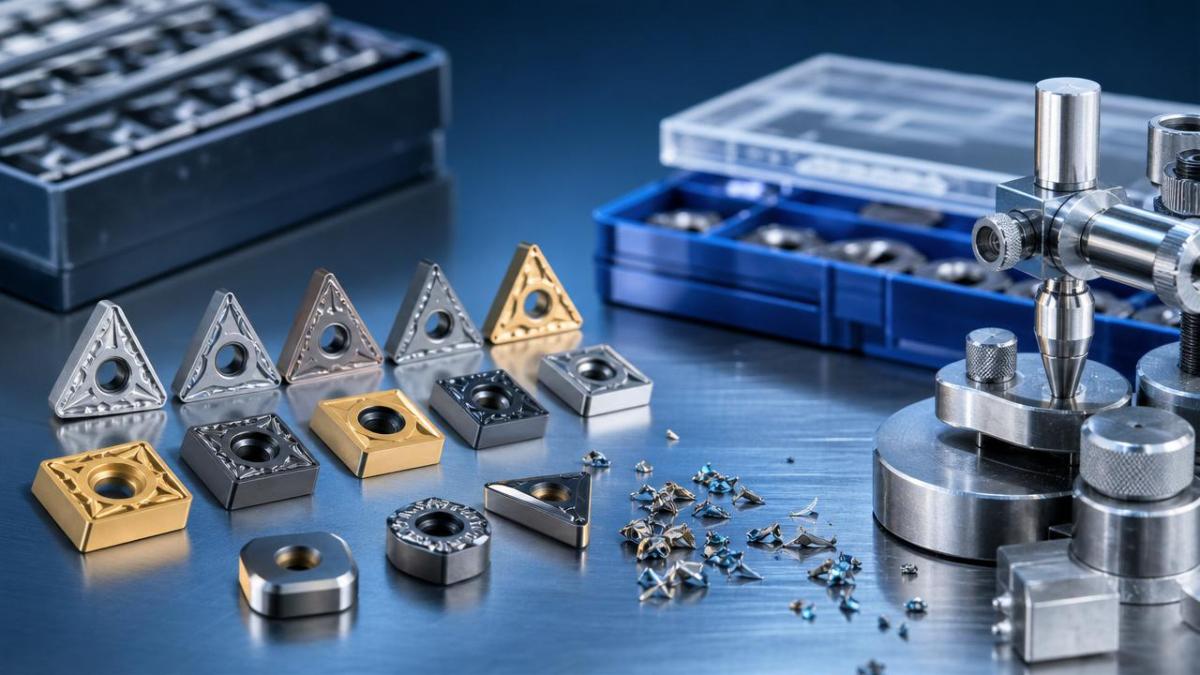
The first pricing layer is material composition. Tungsten carbide inserts are made from carbide powder and a metallic binder, commonly cobalt. Even small changes in grain size, binder ratio, and sintering control can shift wear resistance and toughness. In practical sourcing, micrograin or submicron grades often cost 10% to 35% more than standard grades because they demand tighter powder control and more stable processing conditions.
The second layer is coating technology. Uncoated inserts may suit softer materials or interrupted applications, but coated inserts dominate most volume demand. CVD and PVD coatings vary in thickness, adhesion, heat resistance, and edge sharpness. A multilayer TiAlN or Al2O3-based coating usually carries a premium, yet it can extend tool life by 20% to 80% in selected steel or cast-iron operations when conditions are stable.
Raw materials and powder processing
Wholesale buyers often underestimate how much raw material volatility influences carbide inserts wholesale pricing. Tungsten, cobalt, and energy costs can move sharply within 4 to 12 weeks. A supplier quoting aggressively during a low-cost window may not maintain the same level on the next batch, especially if contract terms do not lock in powder costs or lead-time commitments.
Powder preparation also matters. Consistent particle distribution supports predictable hardness and fracture resistance. Lower-tier production may use less refined powder blending or broader grain variation, reducing cost but increasing batch-to-batch inconsistency. For business evaluators, this is a hidden risk because the impact may only appear after 500 to 2,000 pieces enter production.
Geometry, tolerance, and application complexity
Not all inserts are equally simple to manufacture. Standard ISO turning inserts with common chipbreakers are typically cheaper than complex grooving, threading, milling, or high-feed geometries. Specialized edge preparation, wiper profiles, or tight indexing tolerances add manufacturing steps, inspection time, and scrap risk. As a result, two inserts of similar size can differ in wholesale price by 15% to 50%.
Tolerance stability is especially important in automated production lines. An insert with better seat consistency and edge repeatability can reduce adjustment frequency, lower setup scrap, and support unattended machining windows of 2 to 6 hours. That operational value is often reflected in the supplier’s pricing, even if the insert looks similar to a budget option in a catalog image.
Why dimensional consistency changes commercial value
If insert thickness, corner radius, or hole accuracy drifts outside expected limits, users may lose tool position repeatability. In multi-machine environments, that can increase offsets, shorten tool-setting cycles, and create more frequent quality checks. A difference of only a few microns in edge consistency may translate into measurable labor and downtime costs over a monthly procurement cycle.
The comparison below shows how common pricing drivers affect sourcing outcomes beyond the visible unit price.
The key takeaway is that carbide inserts wholesale prices usually mirror a supplier’s cost structure and process discipline. Lower prices are not automatically a problem, but they should trigger verification of grade consistency, coating repeatability, and field performance under your actual cutting parameters.
Supplier-side factors that shape wholesale quotations
A second major reason for price variation is supplier structure. Large manufacturers with integrated pressing, sintering, coating, and grinding capacity may offer stable pricing across 6- to 12-month procurement plans. Smaller traders or mixed-source distributors can sometimes quote lower on a single lot, but consistency, traceability, and replenishment speed may vary significantly.
Production scale also affects unit economics. A supplier producing high volumes of common CNMG, VNMG, or WNMG inserts can distribute tooling and coating costs across larger batches. On the other hand, low-volume custom inserts or niche grades may carry higher setup costs, especially when MOQ starts at 500 to 1,000 pieces or when special packaging and labeling are required.
Brand positioning and channel structure
Brand premium is real in carbide inserts wholesale markets. Established global brands often price higher because buyers are paying for process validation, broad application data, technical support, and lower switching risk. That premium may be justified when a production line values uninterrupted output over headline savings, particularly in aerospace, energy, mold, or automotive components.
Channel structure creates another spread. Direct factory purchase, authorized distribution, regional stockists, and third-party traders all add different margins. A direct quote may look lower by 8% to 20%, but total landed cost can change after freight, import duties, quality claims handling, and emergency replenishment lead time are added.
Lead time, inventory strategy, and supply risk
Short lead times usually cost more. Suppliers holding safety stock for common inserts absorb warehousing and capital costs, and that is reflected in pricing. However, for production sites where downtime can cost far more than insert price, a 48-hour replenishment promise may be worth a meaningful premium compared with a 4- to 8-week imported batch.
Business evaluators should also examine whether a quotation is based on spot supply or planned supply. Spot offers can be attractive in the short term, but contract pricing with quarterly review mechanisms often supports better budgeting and lower disruption. In a volatile raw-material market, predictability can be as valuable as a low initial quote.
- Check whether pricing covers only the insert or also packaging, labeling, and technical documentation.
- Confirm MOQ, safety stock policy, and reorder lead time, ideally in writing.
- Ask if the supplier controls coating in-house or outsources it to a third party.
- Review claim-handling timelines, such as 3-day response and 14-day batch review windows.
The table below helps compare supplier types from a commercial and operational standpoint.
In many cases, price variation comes from different business models rather than different honesty levels. The best sourcing decision depends on whether your priority is immediate cost reduction, line stability, technical support, or contract-level supply resilience.
How business evaluators should compare value, not just price
A sound evaluation framework should compare total machining economics. If one insert costs 18% more but delivers 35% longer tool life, fewer tool changes, and better surface repeatability, its real operating cost may be lower. This is especially relevant in multi-shift machining environments where labor, spindle uptime, and scrap exposure are more expensive than the insert itself.
For procurement reviews, it is helpful to score suppliers across at least 4 dimensions: technical suitability, commercial terms, delivery reliability, and claim response. Each dimension can be weighted differently depending on whether the inserts serve roughing, finishing, high-volume production, or critical-tolerance machining.
A practical 5-step assessment method
- Define the application clearly: workpiece material, cutting speed, feed, depth of cut, coolant condition, and machine type.
- Group quotations by equivalent grade and geometry instead of comparing unrelated insert models.
- Request trial quantities, such as 50 to 200 pieces, before annualizing a bulk decision.
- Measure tool life, changeover frequency, surface consistency, and rejection rate over at least 2 production runs.
- Review landed cost, lead time, and replacement support before approving the final supplier panel.
Metrics that reveal hidden cost
Useful metrics include cost per edge, parts produced per insert, minutes lost per tool change, and scrap rate per 1,000 parts. These indicators reveal whether a lower carbide inserts wholesale quote supports real savings or simply shifts cost into the production floor. For many buyers, the most meaningful comparison is not price per box, but cost per acceptable component.
Common mistakes in wholesale insert sourcing
One frequent mistake is assuming all ISO-designated inserts are interchangeable in performance. Similar shape codes do not guarantee the same substrate, edge treatment, or coating quality. Another is ignoring packaging traceability. If lot marking is unclear, quality incidents become harder to isolate, and claims may take 2 to 3 times longer to resolve.
A third mistake is buying too much before validation. Large orders can improve unit price, but if the insert underperforms, the inventory risk becomes expensive. For new suppliers, a phased approach often works better: sample testing, pilot batch, then scheduled wholesale release over 3 to 6 months.
What to ask suppliers before approving a carbide inserts wholesale order
Before approval, business evaluators should move beyond the quote sheet and ask commercially relevant technical questions. The objective is not to make sourcing complicated, but to confirm whether the price is supported by a reliable production and service system. A short supplier checklist can prevent quality drift, delayed shipments, and difficult warranty discussions later.
Recommended supplier questions
- Which workpiece groups is the grade designed for: steel, stainless, cast iron, or nonferrous alloys?
- What is the usual production lead time: 7 days, 15 days, or 4 weeks for standard and non-standard items?
- Is there a stable batch-control method for powder, sintering, coating, and final inspection?
- Can the supplier support test data from actual cutting trials rather than only catalog recommendations?
- What is the process for nonconformance claims, replacement, and root-cause review?
When the answers are detailed and consistent, the quotation is easier to trust. When answers remain vague, the lower price may be compensating for uncertainty somewhere in the process. In precision machining supply chains, lack of clarity is itself a cost factor.
For organizations that manage strategic machining and engineering procurement, a structured market view is essential. G-PME supports decision-makers by connecting tooling evaluation with broader industrial realities such as raw-material movement, manufacturing standards, supply continuity, and application-specific performance expectations across complex production environments.
Carbide inserts wholesale prices vary because the products, suppliers, and operating conditions behind those prices vary in equally significant ways. Material quality, coating depth, geometry precision, supplier integration, order volume, and replenishment reliability all shape the real cost of ownership. Buyers who evaluate tool life, process stability, traceability, and delivery performance alongside price are far more likely to make resilient sourcing decisions.
If you are reviewing tooling suppliers, benchmarking machining consumables, or building a lower-risk procurement strategy, now is the right time to compare offers with a more technical and commercial lens. Contact us to discuss your carbide inserts wholesale requirements, request a tailored evaluation framework, or learn more about precision-oriented sourcing solutions.
Recommended News
 When occupancy controls reduce warehouse lighting energy wasteWarehouse lighting occupancy controls cut energy waste through smarter zoning, sensor placement, dimming, and commissioning. Discover practical strategies for safer, lower-cost operations.
 How to size an ESS for reducing peak-demand chargesESS sizing for peak-demand charge reduction: learn how to match power, usable energy, tariff rules, controls, and recharge strategy to lower billed demand reliably.
 How textile chemicals affect dye-house wastewater treatment costsTextile chemicals can raise dye-house wastewater treatment costs through COD, color, sludge, salt, and fouling. Discover practical ways to assess total chemical cost.
 When does 5-axis machining make sense for furniture manufacturing?Furniture manufacturing leaders: discover when 5-axis machining delivers real value through complex geometry, fewer setups, better joinery, and premium finishes.
 How to read a 5-axis positioning accuracy chart before machine acceptance5 axis positioning accuracy chart guide for machine acceptance: learn to assess error, repeatability, backlash, and rotary-axis risks before production sign-off.
 When do sludge dewatering machines lower hauling costs?Sludge dewatering machines cut hauling costs when higher cake solids reduce loads, weight, and collection frequency. Explore thresholds, savings, and selection factors.
 How to verify CE certification for industrial pumps before installationIndustrial pumps CE certified? Learn how to verify declarations, documentation, hazardous-area suitability, and installation compliance before commissioning.
 How to compare a plasma cutting machine supplier before placing an orderCompare a plasma cutting machine supplier with confidence—evaluate cut quality, total cost, consumables, and after-sales support before you order.
 Which factory upgrade projects benefit most from industrial technology solutions?Industrial technology solutions factory upgrade projects deliver the most value when they remove bottlenecks, cut downtime, improve quality, and strengthen resilience. Explore high-impact priorities.
 When a high precision CNC grinding machine justifies its costDiscover when a high precision CNC grinding machine delivers real ROI through repeatable quality, lower scrap, faster verification, and controlled production.
 When do industrial lubricants for compressors need oil analysis?Industrial lubricants for compressors need oil analysis at baseline, under harsh operating conditions, and after warning signs. Learn how testing prevents downtime and protects equipment.
 How CNC controller processing speed affects cycle times in EuropeCNC controller processing speed Europe: discover how look-ahead, interpolation and CAM optimisation can cut cycle times while protecting precision and surface quality.
 What to verify before using supplier sourcing solutions in EuropeSupplier sourcing solutions Europe: verify capabilities, compliance, traceability, total cost, and supply resilience before choosing reliable industrial partners.
 When smart fabrics are reliable enough for industrial wearablesSmart fabrics for industrial wearables: learn how to validate durability, signal quality, cleaning resilience, and safe failure performance before deployment.
 How supply chain management for exporters reduces customs delaysSupply chain management for exporters helps prevent customs delays with accurate data, origin checks, importer readiness, and proactive shipment controls. Explore practical strategies now.
 What to verify before approving an OEM electronics supplierOEM electronics supplier approval checklist: verify BOM control, traceability, testing, sourcing risk, capacity, and commercial terms before committing to volume production.
 When do CNC-machined precision components require five-axis milling?Precision components CNC machined with five-axis milling deliver better access, tighter datum control, and lower setup risk. Learn when five-axis machining is the smart choice.
 What should a restaurant POS system handle during a lunch rush?restaurantPOSsystems keep lunch rushes moving with fast ordering, smart kitchen routing, flexible payments, live inventory, and reliable service controls.
 How CNC controller cycle time speed affects machining throughputCNC controller cycle time speed can raise machining throughput by sustaining feed rates on complex toolpaths. Learn how to optimize CAM, look-ahead, and machine dynamics.
 When a 4 axis vertical machining center is the better fit than 3-axisDiscover when a 4 axis vertical machining center outperforms 3-axis machining—reduce setups, improve datum control, and boost efficiency for complex multi-face parts.
 When industrial fasteners bolts need traceable material certificationIndustrial fasteners bolts need traceable material certification for critical applications. Learn what QA teams should verify to reduce risk and ensure compliance.








Search News
Popular Tags