
When carbide inserts wholesale pricing stops saving money
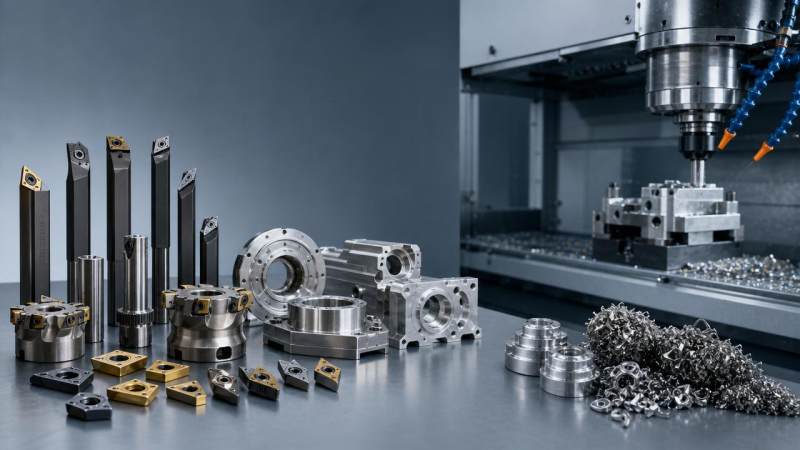
At first glance, carbide inserts wholesale purchasing looks like a straightforward way to cut tooling costs. But for finance approvers, the real question is whether lower unit prices still translate into lower total spend once tool life, machine downtime, scrap rates, and supplier risk are included. This article examines when bulk buying stops delivering savings and starts eroding operational and financial performance.
In precision machining, the insert price on a purchase order is only one line in a much larger cost stack. A 6% to 12% unit-price reduction can be wiped out by one extra setup interruption, a 2% scrap increase, or an unplanned line stop that delays delivery by 24 to 48 hours.
For financial approvers working across CNC machining, die-casting support operations, pump component manufacturing, fastening production, and industrial maintenance supply chains, the better question is not “How cheap is the insert?” but “What is the cost per acceptable part over a full operating cycle?”
Why lower carbide insert prices can raise total machining cost
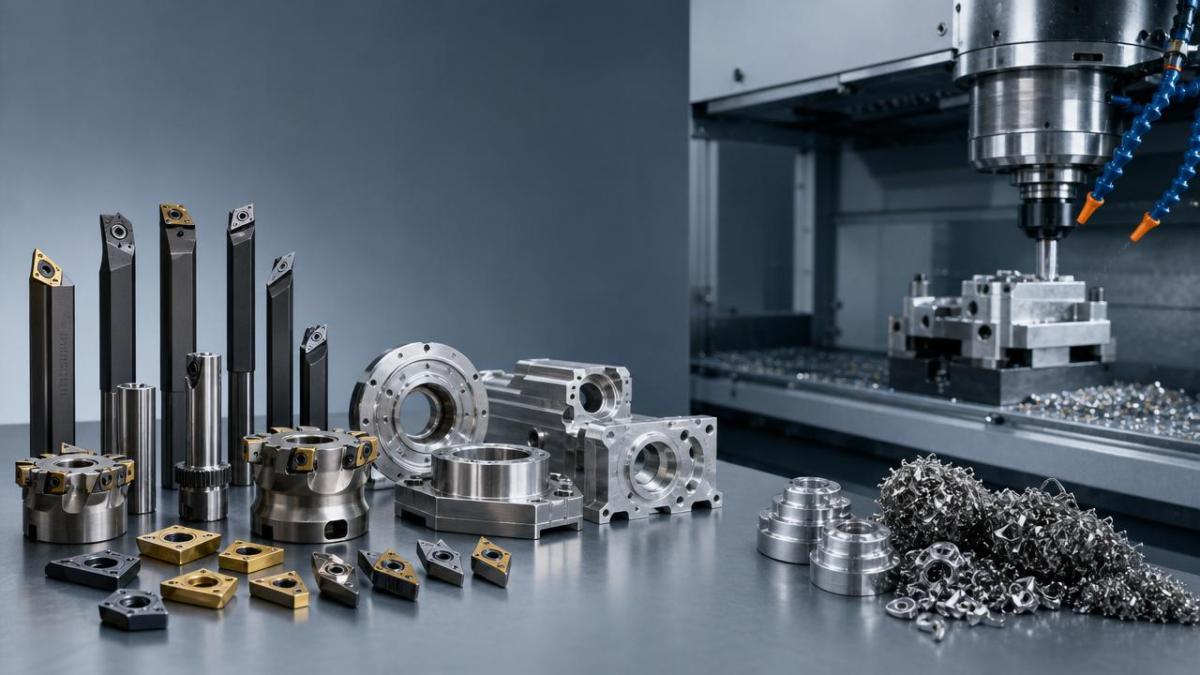
Bulk procurement works when process variation is low, demand is predictable, and insert performance is stable across machines, materials, and operators. It fails when wholesale buying locks the business into tooling that does not match the real cutting conditions of production.
In most plants, insert economics are driven by 5 variables: tool life, cycle time, changeover frequency, scrap exposure, and supply continuity. If even 2 of these drift outside normal ranges, carbide inserts wholesale savings can turn negative within one quarter.
The hidden cost areas finance teams often inherit
When purchasing focuses too heavily on piece price, operations absorb the consequences elsewhere. A lower-cost insert may require more frequent indexing, create inconsistent chip control, or generate higher spindle load under hardened steel or stainless machining conditions.
That matters because a 90-second tool change repeated 20 times per shift equals 30 minutes of lost machining capacity. On a loaded machining center, that can cost more than the entire discount gained from a wholesale batch order.
Typical breakpoints where savings disappear
- Tool life drops by more than 10% to 15% compared with the approved baseline.
- Scrap or rework rises above 1% on close-tolerance parts.
- Insert consistency varies between batches, affecting surface finish or dimensional stability.
- Lead time stretches from 7 days to 4 weeks, forcing emergency buys or excess stock.
- Too many SKUs are purchased in bulk without verified monthly consumption.
The table below shows how a seemingly cheaper insert can become more expensive once full production impact is measured. These are common industrial evaluation ranges rather than fixed universal results, but they reflect how finance should frame the approval decision.
The key lesson is simple: insert cost must be normalized against output. If a cheaper insert raises the cost per finished component by even a small amount, the apparent savings from carbide inserts wholesale procurement are not real savings.
Where this risk is highest across industrial operations
The risk is greatest in mixed-material environments and tolerance-sensitive work. Aerospace-grade alloys, stainless pump housings, hardened die components, and precision sealing surfaces all react differently to edge geometry and substrate stability.
If one wholesale lot is expected to cover multiple applications, the mismatch can be expensive. A general-purpose insert may function adequately in carbon steel, yet underperform in cast iron, duplex stainless, or interrupted cutting on forged parts.
- High-mix machining cells with 10 or more part numbers per week.
- Lines running 2 to 3 shifts where downtime multiplies quickly.
- Projects with strict Ra, flatness, or concentricity requirements.
- Programs with volatile demand where six months of stock becomes obsolete.
How finance approvers should evaluate carbide inserts wholesale decisions
A disciplined approval process should compare landed cost, performance consistency, and inventory risk together. Finance teams do not need to become tooling engineers, but they do need a structured review model that turns machining variables into decision-ready numbers.
A practical method is to evaluate inserts across a 90-day operating window rather than a single purchase event. That period is long enough to reveal batch variability, reorder performance, operator feedback, and actual consumption by machine family.
A four-part approval framework
1. Verify the cost per usable edge
Do not compare only price per insert. Compare price per cutting edge, expected minutes in cut, and cost per accepted part. An insert with 8 edges but unstable wear can still be more expensive than one with 6 edges and predictable life.
2. Measure downtime exposure
Ask operations for average change time, machine hourly burden, and restart loss. If each insert change costs 3 to 5 minutes in a constrained cell, frequent replacement creates a measurable throughput penalty.
3. Test supplier resilience
Evaluate whether the supplier can maintain consistent grades, coatings, and delivery windows across 2 to 4 replenishment cycles. Wholesale pricing is less attractive when a second batch performs differently from the first.
4. Control inventory concentration
Avoid loading too much cash into one insert family unless monthly demand is stable. For many plants, 6 to 10 weeks of validated demand is safer than stocking 6 months of mixed inserts based on a one-time price offer.
The following table gives finance approvers a concise screen for tooling purchases. It helps connect technical performance to balance-sheet and operating outcomes before approving a carbide inserts wholesale order.
This framework is especially useful in organizations where procurement, production, and finance operate with different KPIs. It turns a tooling decision into a measurable operating-cost review instead of a narrow price negotiation.
Questions finance should ask before approving bulk orders
- Was the insert tested on the exact material family, not just a similar alloy?
- How many parts per edge were achieved over at least 2 production runs?
- What is the average variance between lots or coating batches?
- What percentage of the order will be consumed within 60 to 90 days?
- Is there a backup source if freight disruption extends lead time by 2 weeks?
- Will the lower-priced insert increase load on operators, quality checks, or setup staff?
When carbide inserts wholesale makes sense and when it does not
Wholesale purchasing is not inherently flawed. It can be highly effective in repeatable production environments where the insert has already been qualified, demand is visible, and supply risk is actively managed.
The problem begins when companies treat all inserts as interchangeable commodities. In reality, carbide grade, coating behavior, edge preparation, breaker design, and workpiece material interaction can change cost outcomes dramatically.
Good-fit scenarios for bulk buying
- Long-running parts with stable monthly demand above 500 to 1,000 pieces.
- Approved inserts already validated across 2 or more reorder cycles.
- Machines with predictable spindle utilization and controlled operator methods.
- Suppliers able to hold safety stock or release deliveries in staged lots.
Poor-fit scenarios for bulk buying
- Prototype, service, or repair shops with irregular part mixes.
- Plants switching often between cast iron, alloy steel, stainless, and nonferrous work.
- Projects exposed to engineering changes every 30 to 60 days.
- Suppliers offering aggressive price cuts but weak technical support or uncertain replenishment.
A practical implementation model
A balanced strategy is to split procurement into 3 layers. First, wholesale-buy only the top 20% of insert SKUs that drive roughly 70% to 80% of usage. Second, keep moderate stock for secondary items. Third, buy specialty inserts on demand or with short framework releases.
This approach reduces inventory lock-in while preserving volume leverage where it truly matters. It is particularly useful for diversified industrial groups managing tooling across multiple product families and regional plants.
The role of technical-commercial intelligence
For institutional buyers, the strongest decisions come from combining shop-floor evidence with supply-chain visibility. Raw material volatility, freight instability, and demand shifts can all change the economics of carbide inserts wholesale within a single budgeting cycle.
That is why finance teams increasingly rely on cross-functional reviews involving procurement, process engineering, quality, and supplier management. A price break only has value when it protects throughput, preserves part quality, and supports working-capital discipline.
Common approval mistakes to avoid
- Approving large orders based on catalog specifications without live-cut trial evidence.
- Using annual volume assumptions when actual monthly consumption is volatile.
- Ignoring the cost of machine stoppage during insert changes and wear-related instability.
- Assuming one insert geometry can cover all operations from roughing to finishing.
- Failing to review return terms for obsolete or slow-moving stock.
When finance approvers assess inserts through total operating impact rather than unit price alone, the decision becomes clearer. The right carbide inserts wholesale strategy lowers cost per finished part, protects uptime, and avoids turning inventory into frozen cash.
For organizations sourcing across advanced machining and broader industrial production systems, disciplined tooling approval supports both short-term savings and long-term manufacturing resilience. If you need a structured evaluation framework, supplier screening support, or a tailored procurement review for carbide inserts wholesale programs, contact us to discuss the next step and explore a more reliable sourcing strategy.
Recommended News
 Can AI for multi axis machining reduce errors in complex toolpaths?AI for multi axis machining helps reduce complex toolpath errors through smarter collision detection, kinematic analysis, post validation, and machine-data insights. Learn how to improve precision.
 How seamless steel pipes are checked for wall-thickness consistencySeamlesssteelpipes wall-thickness checks explained: learn how ultrasonic scanning, calibration, and tolerance control ensure reliable, pressure-ready pipe quality.
 When a horizontal boring machine for metalworking improves large-part setupHorizontal boring machine for metalworking: learn how stable datums, rotary indexing, and rigid fixturing improve large-part accuracy and setup efficiency.
 What the MTTF standard for CNC means for machine reliabilityMTTF standard for CNC explained: learn how failure definitions, duty cycles, MTTR, and real-world data shape machine reliability and uptime.
 When does company formation offshore reduce cross-border tax risk?Companyformationoffshore can reduce cross-border tax risk when substance, governance, transfer pricing, and supply-chain roles align. Learn the key tests.
 How to read a measuring tape accurately for repeatable cutsMeasuringtape guide for accurate, repeatable cuts: master markings, hook movement, reference edges, kerf control, and stop-block setup.
 How to assess a CNC cutting tools manufacturer before orderingAssess a CNC cutting tools manufacturer with confidence: compare quality control, application support, trial results, supply reliability, and total machining cost before ordering.
 How often should scaffolding be inspected on active job sites?Scaffolding inspection guidance for active job sites: learn when to inspect, key safety triggers, compliance intervals, and practical controls to prevent incidents.
 What to verify when sourcing precision machining tools in EuropePrecision machining tools Europe sourcing guide: verify accuracy, ISO compliance, traceability, service coverage, and delivery resilience to reduce risk and lifecycle costs.
 When electronics require precision manufacturing at micron tolerancesPrecision manufacturing solutions for electronics deliver micron-level control, reliable inspection, and scalable quality for critical housings, thermal parts, and complex assemblies.
 When do cabletrays need corrosion protection in industrial facilities?Cabletrays need corrosion protection when exposed to moisture, chemicals, salt, washdown, or condensation. Learn how to select durable materials and protect critical industrial routes.
 What suppliers must prove for manufacturing standards compliance in Southeast AsiaManufacturing standards compliance Southeast Asia: learn what suppliers must prove, from traceable materials and calibrated tools to controlled processes, safety, and shipment records.
 What to verify in a fluid control manufacturer's quality systemFluid control manufacturer quality checks: verify traceability, testing, calibration, document control, and corrective actions to reduce risk.
 When do smart device manufacturing solutions reduce assembly errors?Smart device manufacturing solutions reduce assembly errors with closed-loop controls, vision inspection, torque verification, and traceable process data. Learn what drives reliable production.
 Import trends reshaping precision tooling supply in 2026Import trends in 2026 are reshaping precision tooling supply. Discover how to reduce landed risk, strengthen sourcing resilience, and protect production performance.
 Choosing carbide end mills for stainless steel without edge chippingCarbide end mills for stainless steel: learn how to prevent edge chipping with the right substrate, geometry, coating, coolant, and stable milling parameters.
 What contract manufacturing support should cover before sourcingIndustrial procurement support for contract manufacturing: learn what to verify before sourcing, from DFM and traceability to quality, capacity, cost control, and compliance.
 When integrated precision manufacturing solutions reduce launch delaysIntegrated precision manufacturing solutions help industrial teams prevent launch delays by aligning design, sourcing, machining, sealing, testing, and supply-chain readiness.
 How tooling cost calculation changes with EDM electrode complexityTooling cost calculation for EDM electrodes: learn how geometry, electrode count, tolerances, wear, and inspection drive accurate mold cost estimates.
 Tooling cost meaning in precision casting project quotationsTooling cost meaning explained for precision casting quotations: compare scope, quality risks, lifecycle costs, and supplier assumptions to make smarter sourcing decisions.
 What is tooling cost in manufacturing for a low-volume CNC part?What is tooling cost in manufacturing? Learn how setup, fixtures, programming, and inspection affect low-volume CNC pricing—and control costs without risking quality.











Search News
Popular Tags