
When a Precision Milling Center Factory Becomes a Bottleneck
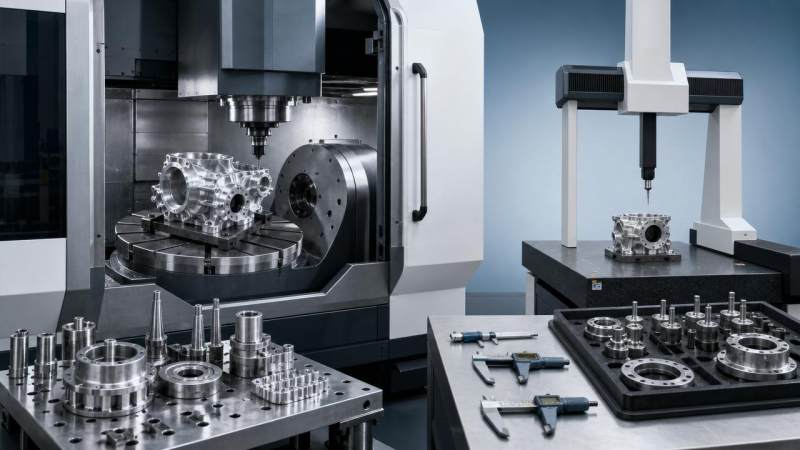
When a precision milling center factory becomes the slowest point in your production chain, project timelines, tolerance control, and cost predictability all come under pressure. For project managers and engineering leads, identifying this bottleneck is not just an operational issue—it is a strategic decision that affects delivery performance, supplier stability, and long-term manufacturing resilience.
Why does a precision milling center factory become a project bottleneck?

A precision milling center factory usually enters the critical path when part complexity, tolerance requirements, and delivery urgency rise at the same time. In multi-industry projects, that pressure is common. Tooling components, sealing interfaces, pump housings, die inserts, fixture plates, and custom machined subassemblies often depend on the same machining capacity. Once capacity tightens, everything downstream slows.
For project leaders, the issue is rarely just machine utilization. The real bottleneck often sits in a combination of process planning, fixture design, material readiness, inspection throughput, rework rate, and supplier communication. A factory may own advanced 5-axis equipment, yet still miss schedules because programming queues are overloaded or incoming material certificates are incomplete.
In the broader industrial environment, this matters because precision-machined parts are not isolated purchases. They affect assembly timing, validation testing, maintenance planning, and compliance review. G-PME approaches this problem from a data-driven engineering perspective, linking machining capability with standards alignment, raw material volatility, and supply-chain resilience rather than judging a supplier by equipment lists alone.
- Long setup times for mixed low-volume, high-precision jobs reduce actual spindle productivity.
- Inspection backlogs delay release even when machining itself is complete.
- Material substitutions or late mill certificates can stop approval workflows.
- Frequent engineering revisions create scrap, reprogramming, and schedule instability.
- Single-source dependency magnifies every delay into a project-level risk.
What signals show your precision milling center factory is limiting delivery?
Many organizations react too late because the bottleneck is hidden behind partial progress. A supplier may confirm that machining has started, while metrology, deburring, or final documentation remains delayed. Project teams need practical signals that link shop-floor reality to project exposure.
The table below helps project managers identify early warning signs before a precision milling center factory begins affecting milestone commitments, commissioning windows, or customer delivery dates.
These signals are useful because they reveal hidden constraints. A precision milling center factory is not healthy simply because spindles are running. If release documents, CMM capacity, traceability records, or revision handling are weak, the project still experiences the factory as a bottleneck.
How should project managers evaluate a precision milling center factory before it affects execution?
A capable evaluation model should move beyond price, machine count, and generic quality claims. In mixed industrial programs, you need to know whether the supplier can repeatedly hold your required geometry, document compliance, and absorb change without destabilizing the schedule.
Core evaluation criteria
- Process capability: Ask which operations are done in one setup, which require secondary handling, and where tolerance stack-up becomes most sensitive.
- Material control: Verify how the factory manages heat numbers, mill test reports, hardness condition, and special alloy sourcing.
- Inspection readiness: Confirm in-process measurement methods, final dimensional reporting, and whether critical features require CMM, surface roughness, or geometric tolerance validation.
- Engineering responsiveness: Review how the team handles drawing revisions, deviation requests, and manufacturability feedback before production starts.
- Delivery discipline: Look at planning logic, batch release strategy, packaging standards, and the supplier’s ability to communicate realistic dates.
G-PME’s value in this stage is that it connects technical review with commercial intelligence. A precision milling center factory should not be assessed in isolation from steel and titanium market movement, tooling availability, lubrication strategy, related fastening interfaces, or the final assembly environment. This broader view reduces the chance of selecting a supplier that looks efficient on paper but fails under real project conditions.
Comparison analysis: which supplier model reduces bottleneck risk?
Not every sourcing strategy fits every project. Some teams prefer a single precision milling center factory for control. Others split work by part family or criticality. The right choice depends on tolerance sensitivity, project phase, and the cost of delay.
The comparison below outlines common supplier models used in industrial programs and how each one performs when schedule pressure and dimensional risk increase.
For many project managers, the most resilient model is not the cheapest one. It is the one that preserves tolerance integrity while reducing dependence on one overloaded precision milling center factory. The best sourcing decision balances engineering control with capacity flexibility.
Technical performance and compliance: what should you verify?
A precision milling center factory serving critical industrial components should be evaluated against measurable technical factors. These may vary by application, but the logic is consistent: geometry, repeatability, surface condition, traceability, and documentation must support the intended function of the part in service.
Key technical checkpoints
- Tolerance strategy: Confirm whether critical dimensions require positional accuracy, flatness, concentricity, or profile control, and whether the process route supports those requirements without excessive re-clamping.
- Surface finish relevance: Surface roughness matters differently for sealing faces, flow channels, sliding interfaces, and structural parts. Do not treat Ra values as a generic quality symbol.
- Material integrity: Heat treatment condition, residual stress behavior, and machining response are often as important as nominal alloy grade.
- Standards alignment: Depending on the end-use environment, drawings and acceptance may need reference to ISO, DIN, ASME, or JIS conventions.
- Documentation package: Inspection reports, material traceability, deviation records, and revision history should be part of the release expectation, not optional extras.
Because G-PME works across machining, fastening, fluid systems, molds, and industrial lubricants, its perspective is useful when the machined part is only one element of a larger engineered system. A housing may pass dimensions yet still perform poorly if sealing interface finish, lubricant compatibility, or fastener loading assumptions were not reviewed together.
Procurement guide: how to prevent a precision milling center factory from delaying your project
A strong procurement process reduces bottleneck risk before production begins. The goal is not only to buy machining hours, but to secure a predictable execution pathway from drawing release to accepted delivery.
Recommended sourcing workflow
- Segment parts by criticality, not just by price. Separate parts that control fit, sealing, alignment, or fatigue from those with wider manufacturing tolerance.
- Issue RFQs with full manufacturing data. Include revision level, material state, tolerance notes, inspection expectations, and any special packaging or cleanliness requirement.
- Request lead time by operation stage. A realistic supplier should distinguish material procurement, setup, machining, finishing, inspection, and release timing.
- Validate manufacturability before PO award. Encourage questions early so they do not appear after the schedule is locked.
- Define escalation points. If the precision milling center factory misses agreed milestones, specify when recovery planning, alternate sourcing, or partial release should be triggered.
This workflow is especially important in cross-functional projects where machining lead time influences assembly, test rigs, field service spares, or EPC handover. Procurement discipline is often the difference between a manageable queue issue and a full delivery crisis.
Cost, alternatives, and the hidden price of the bottleneck
The visible quote from a precision milling center factory is only one part of total project cost. Managers frequently underestimate the financial impact of delays, design concessions, inspection repetition, emergency logistics, and assembly downtime caused by late machined components.
The table below compares common response options when a precision milling center factory becomes overloaded or unreliable.
The lowest quoted source may become the most expensive if it creates commissioning delays or repeated quality containment. Project teams should model cost at the program level, not just at the PO level. That is where a broader intelligence platform like G-PME provides value by connecting supplier decisions with market conditions and industrial system dependencies.
FAQ: practical questions about choosing a precision milling center factory
How do I know whether a precision milling center factory can handle my tolerance requirements?
Start by reviewing the drawing’s true critical features, not just the smallest tolerance on the page. Ask how the supplier machines those features, how many setups are involved, what inspection method is used, and whether the part has similar historical process risk. Capability is demonstrated through process logic and measurement control, not just machine brand names.
What lead time should I expect from a precision milling center factory?
Lead time depends on material type, part geometry, inspection scope, and current queue load. For project control, request a breakdown by procurement, machining, finishing, inspection, and packing. A single total lead time number is too weak for risk management because delays often emerge in only one of those stages.
Is dual sourcing always better than relying on one factory?
Not always. For highly integrated or tolerance-sensitive parts, dual sourcing can create revision drift or inspection inconsistency. It works best when drawings are mature, acceptance criteria are clear, and part families can be segmented by criticality. The objective is resilience, not unnecessary supplier complexity.
Which documents should be confirmed before purchase order release?
At minimum, confirm drawing revision, material specification, heat treatment condition where relevant, dimensional inspection requirements, traceability expectations, packaging instructions, and any standards references such as ISO, DIN, ASME, or JIS. If the part interfaces with fluid control, sealing, or fastening systems, include those functional notes as well.
Why choose us when a precision milling center factory becomes a strategic risk?
G-PME supports project managers and engineering leaders who need more than a supplier list. We provide a technical intelligence perspective that links machining capability, standards alignment, raw material movement, and cross-system compatibility across CNC machining, fastening and sealing, pump systems, die-casting and mold engineering, and industrial lubricants.
If your precision milling center factory is becoming a bottleneck, you can consult us on concrete issues that affect execution: parameter confirmation for critical features, supplier selection logic, delivery-cycle evaluation, alternate sourcing pathways, manufacturability review, traceability expectations, standards-related questions, sample support planning, and quotation comparison from a project-risk perspective.
- Need to validate whether a quoted machining route matches your tolerance and assembly function?
- Need help comparing suppliers beyond unit price and nominal lead time?
- Need to assess delivery risk under steel, titanium, or specialty input volatility?
- Need a structured review of documentation, compliance references, or inspection scope before PO release?
Contact us when you need a clearer decision framework around a precision milling center factory. Early technical review and procurement alignment can prevent late-stage schedule erosion, protect tolerance outcomes, and build a more resilient manufacturing plan for your project.
Recommended News
 Autoclaved Aerated Concrete Blocks vs Red Bricks: Which Fits Modern Building Projects?Autoclaved aerated concrete blocks vs red bricks: compare cost, speed, insulation, and lifecycle value to choose the best fit for modern building projects.
 Foldable Screen Technology for Tablets: How It Works and What Limits DurabilityFoldable screen technology for tablets explained: learn how OLED layers, hinges, and materials work together, what causes wear, and what truly limits long-term durability.
 Air Compressors Factory Audit Checklist: 8 Points to Verify Before You Place an OrderAir compressors factory audit checklist: verify 8 key points on capacity, quality control, compliance, and delivery risk before placing an order with confidence.
 Lubricants Price Explained: What Drives Cost Differences in Industrial Oils?Lubricants price explained: discover what drives industrial oil cost differences, from base oils and additives to approvals and downtime risk, so you can buy smarter with confidence.
 How to Choose Solar Inverters for Commercial Projects: Power, Efficiency, and Grid TypeSolar inverters for commercial projects: learn how to compare power, efficiency, and grid type to improve energy yield, compliance, and long-term ROI.
 Smart Grid vs Traditional Grid: Where Utilities Gain Visibility, Control, and EfficiencySmart grid vs traditional grid: discover where utilities gain better visibility, faster control, and higher efficiency, and learn why a phased smart grid strategy delivers measurable results.
 Agrochemicals Explained: Main Types, Field Uses, and Common Handling RisksAgrochemicals explained clearly: explore main types, field uses, application best practices, and common handling risks to improve safety, compliance, and crop performance.
 Treadmill Motor Replacement: How to Match Voltage, HP, RPM, and Controller Typetreadmillmotorreplacement made simple: learn how to match voltage, HP, RPM, and controller type correctly to avoid board damage, restore stable performance, and choose the right motor with confidence.
 Trade Analytics for Risk Management: Key Metrics for Supplier and Market ExposureTrade analytics for risk management helps identify supplier concentration, market dependency, and shipment risk with key metrics that improve sourcing resilience and decision-making.
 How to Choose Offset Printing Services for Packaging, Labels, and High-Volume Insertsoffsetprintingservices guide for packaging, labels, and high-volume inserts. Learn how to compare quality, color control, lead times, and compliance to choose a reliable print partner.
 Vertical Farming Technology in Urban Food Production: Systems, Limits, and ROIVertical farming technology explained for urban food production: compare systems, key limits, maintenance risks, and ROI drivers to choose a scalable, profitable setup.
 How to Choose an LMS for Employee Training: Features, Integration, and CostLMS selection made practical: learn how to compare features, integration options, and total cost to choose the best LMS for employee training, compliance, and scalable growth.
 Solar Inverters for Commercial Systems: String vs Micro vs Hybrid ComparedSolar inverters compared for commercial systems: string vs micro vs hybrid. Discover the best fit for shading, monitoring, storage, ROI, and long-term energy flexibility.
 Refractory Bricks Explained: Types, Temperature Ratings, and How to Chooserefractorybricks explained: compare types, temperature ratings, and failure risks to choose the right lining for furnaces, kilns, and high-heat processes with more confidence.
 What Is a Logistics Network? Key Nodes, Flow Design, and Common BottlenecksLogistics network explained: learn key nodes, flow design, and common bottlenecks that affect cost, lead time, resilience, and industrial supply performance.
 Software as a Service Pricing Models Compared: Per User, Usage-Based, or Flat Rate?Software as a service pricing compared: learn when per-user, usage-based, or flat-rate models deliver better cost control, forecasting, and long-term value before you approve.
 Outdoor Survival Gear Checklist: What to Pack for Cold, Rain, and No-Signal Areasoutdoorsurvivalgear checklist for cold, rain, and no-signal routes. Learn what to pack for warmth, shelter, navigation, and safe self-reliance in harsh conditions.
 WMS Selection Guide: 9 Features to Compare Before Replacing SpreadsheetsWMS selection starts with the right features. Compare 9 must-have capabilities—from real-time inventory visibility to integration and scalability—before replacing spreadsheets.
 How to Choose a Breast Pump: Wearable vs Electric vs Manual for Daily UseBreastpumps compared: wearable, electric, and manual options for daily use. Discover which pump fits your routine, comfort needs, and budget before you buy.
 Cross Border Logistics Explained: Key Shipping Modes, Costs, and Customs RisksCross border logistics explained: compare air, ocean, rail, and express shipping, uncover real landed costs, and reduce customs risks to protect timelines and margins.
 Industrial Sourcing for Aerospace Industry: Supplier Qualification and Risk ChecklistIndustrial sourcing for aerospace industry guide: learn supplier qualification, traceability checks, hidden risk signals, and a practical checklist to reduce compliance failures.




















Search News
Popular Tags