
CNC lathe manufacturer selection mistakes that raise lifetime cost
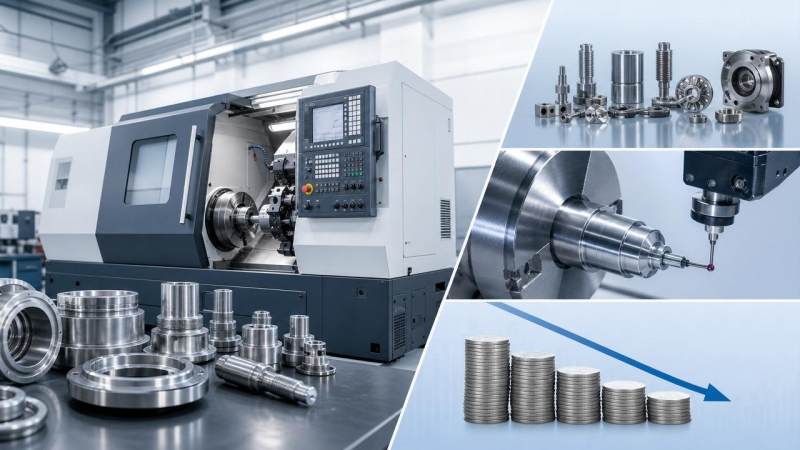
Choosing the wrong cnc lathe manufacturer can quietly inflate total ownership cost through poor tolerance control, delayed delivery, weak technical support, and limited upgrade flexibility. For enterprise decision-makers, avoiding these selection mistakes is not just about purchase price—it is about protecting uptime, quality consistency, and long-term supply-chain resilience in precision manufacturing.
In capital equipment sourcing, the visible machine price is only one layer of cost. The hidden layers appear over 3 to 10 years through scrap, rework, emergency maintenance, operator inefficiency, delayed commissioning, and unstable spare-parts availability.
For procurement directors, plant managers, and engineering leaders, selecting a cnc lathe manufacturer should therefore be treated as a lifecycle decision. The right partner supports process capability, documentation discipline, aftermarket responsiveness, and long-term upgrade paths across changing production volumes.
This article examines the most common selection mistakes, explains why they raise total cost of ownership, and outlines a practical evaluation framework suited to enterprise-level precision manufacturing environments.
Why manufacturer selection affects lifetime cost more than initial quotation
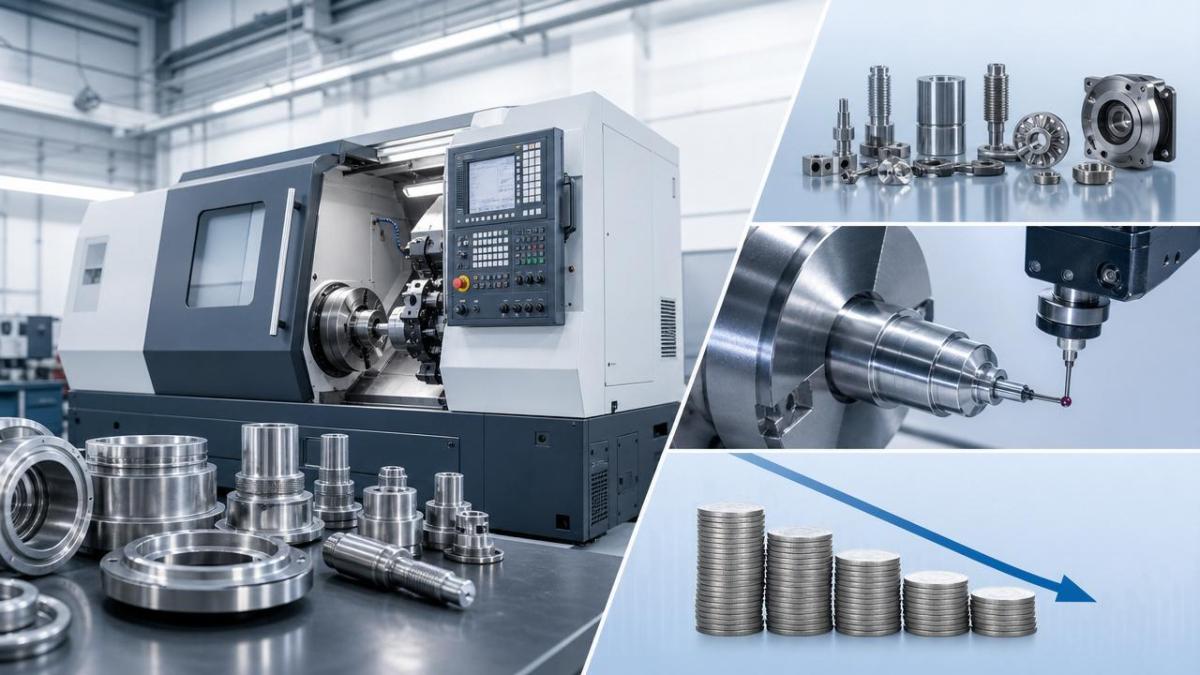
A cnc lathe manufacturer influences far more than machine delivery. It shapes machining stability, maintenance intervals, spindle utilization, software compatibility, inspection repeatability, and the speed at which production issues are resolved during the first 6 to 18 months.
In many factories, a 5% lower purchase price can be erased within one year if tolerance drift increases scrap by 2% to 4%, or if unplanned downtime exceeds 8 to 12 hours per month. Enterprise buyers should look beyond CapEx and quantify long-run operating exposure.
The major cost buckets most buyers underestimate
When evaluating a cnc lathe manufacturer, buyers often compare bed size, spindle power, and control brand. Those are important, but lifetime cost is also shaped by installation quality, thermal stability, training depth, and mean time to service response.
- Scrap and rework from unstable concentricity, runout, or repeatability
- Downtime caused by late spare-parts supply or weak remote diagnostics
- Longer cycle time due to poor rigidity, chip evacuation, or control tuning
- Operator learning losses when HMI logic and manuals are incomplete
- Higher retrofit cost if automation or software expansion is not planned early
A practical view of cost exposure
The table below shows how one sourcing mistake can trigger downstream cost in multiple departments, including production, quality, maintenance, and procurement.
The key lesson is simple: a cnc lathe manufacturer should be evaluated as an operational partner, not only as a machine vendor. Cost control becomes stronger when sourcing teams connect technical capability with service continuity and supply resilience.
Seven selection mistakes that raise total ownership cost
Most costly buying errors happen before the purchase order is issued. They begin with incomplete specifications, weak technical due diligence, or overreliance on brochures rather than process validation. The following mistakes are especially common in multi-site industrial procurement.
1. Focusing on purchase price instead of process capability
A low quote can look attractive in a competitive tender, but enterprise performance depends on Cp/Cpk stability, repeatability, thermal control, and machine rigidity under actual load. If the cnc lathe manufacturer cannot demonstrate stable output across 8-hour or 12-hour shifts, price loses meaning.
What to check
- Repeatability data under continuous production, not only no-load testing
- Tolerance performance for your target material groups such as alloy steel, stainless steel, or titanium
- Thermal compensation logic and warm-up requirements, often 20–40 minutes
2. Ignoring application fit and part-family complexity
Not every cnc lathe manufacturer is equally strong in shafts, valve bodies, hydraulic fittings, thin-wall parts, or hard-turning applications. A machine optimized for medium-volume general turning may perform poorly in high-mix, tight-tolerance, or unattended production cells.
Decision-makers should classify part families by diameter range, length-to-diameter ratio, material hardness, required surface finish, and annual volume. Even a 15-second cycle-time gap becomes significant when annual output reaches 80,000 to 120,000 pieces.
3. Overlooking support infrastructure after installation
Some buyers assume support quality can be fixed later. In practice, a weak support system causes the highest frustration after machine acceptance. A capable cnc lathe manufacturer should define spare-parts policy, remote diagnosis method, escalation steps, and on-site response windows before contract award.
Minimum support questions
- What is the normal remote response time: 2 hours, 8 hours, or 24 hours?
- Which critical parts are stocked locally, regionally, or only at origin?
- How long is the recommended preventive maintenance interval: 1 month, 3 months, or 6 months?
- Is training offered for operators, programmers, and maintenance technicians separately?
4. Failing to verify documentation and standards alignment
For regulated or audit-sensitive sectors, missing documents can delay acceptance and create compliance risk. A cnc lathe manufacturer should provide clear electrical diagrams, foundation requirements, maintenance schedules, calibration guidance, and relevant references to ISO, DIN, ASME, or JIS where applicable.
5. Underestimating integration and future expansion needs
Many plants buy for today’s workload and forget tomorrow’s integration demands. If the cnc lathe manufacturer cannot support bar feeders, gantry loaders, probing, MES connectivity, or in-process monitoring, future automation may require expensive retrofits or complete replacement.
6. Skipping reference validation for similar duty cycles
A showroom demonstration is not enough. Enterprise buyers should ask for references using similar materials, part geometries, uptime expectations, and shift patterns. A machine that performs well in 1-shift operation may behave differently under 24/6 production conditions.
7. Accepting vague acceptance criteria
If FAT and SAT criteria are not clearly defined, disputes emerge after delivery. The contract should specify test pieces, dimensional checkpoints, cycle-time targets, surface finish thresholds, and training deliverables. A disciplined cnc lathe manufacturer will welcome measurable acceptance gates.
How enterprise buyers should evaluate a cnc lathe manufacturer
A robust sourcing process combines engineering review, commercial assessment, and service-risk control. For strategic production lines, the evaluation should move through at least 4 stages: requirement definition, technical clarification, factory validation, and contract risk alignment.
Core evaluation framework
The table below can be used as a practical scorecard when comparing suppliers across different regions. It helps decision-makers prioritize operational fit instead of relying on list price alone.
This scorecard works best when procurement, manufacturing engineering, and maintenance each contribute weighted input. In many industrial organizations, a 40/30/30 weighting across technical, commercial, and service criteria creates a more balanced decision than price-only sourcing.
Questions that reveal real supplier maturity
A mature cnc lathe manufacturer should be able to answer operational questions with specifics, not generic promises. Buyers should look for evidence, process discipline, and willingness to define boundaries upfront.
- What part accuracy can be sustained after 6 hours of continuous cutting?
- What is the recommended lubrication, alignment, and inspection schedule?
- Which components typically require replacement within the first 24 months?
- How is software backup handled during control updates or parameter recovery?
- Can the platform support future automation without major cabinet redesign?
Contract, delivery, and service terms that protect long-term value
Even strong machine capability can lose value if commercial terms are weak. Decision-makers should convert technical expectations into enforceable delivery and support clauses. This is especially important when equipment is being deployed across multiple plants or regional subsidiaries.
Key clauses to define before placing the order
A professional cnc lathe manufacturer should accept a structured agreement covering acceptance, training, documentation, and support. Ambiguity usually benefits no one and often raises total project cost later.
- Define FAT and SAT with measurable dimensional and cycle-time criteria
- Specify spare-parts list for the first 12 months of operation
- Confirm training hours, trainee roles, and language of manuals
- Set response windows for remote support and on-site intervention
- Agree software, electrical, and mechanical documentation handover scope
Recommended service checkpoints
The first 180 days are critical. Plants should schedule at least 3 structured checkpoints: commissioning review, process stability review, and preventive maintenance review. This allows early correction before recurring losses become normalized.
For multinational sourcing teams, using a technical intelligence platform such as G-PME can strengthen this evaluation process by aligning machine capability, standards benchmarking, supply-chain resilience, and service assumptions under one decision framework.
Common buyer FAQs before shortlisting suppliers
Shortlisting a cnc lathe manufacturer often raises similar questions across procurement and engineering teams. The answers below can help reduce avoidable risk during RFQ and technical clarification.
Is the lowest-cost machine ever the right choice?
It can be, but only when process capability, support coverage, and integration needs are fully matched to the application. For strategic lines, a machine that saves 5% upfront but loses 3% in annual productivity is rarely the stronger business case.
How many suppliers should be compared?
For most enterprise purchases, 3 to 5 qualified suppliers provide enough range for technical and commercial comparison. Fewer than 3 can limit visibility; more than 5 often slows evaluation without improving decision quality.
What lead times are typical?
Depending on configuration complexity, standard cnc lathe delivery can range from 8 to 16 weeks, while customized automation-ready systems may require 16 to 24 weeks. Buyers should also account for installation, training, and process proving time.
What should be requested during technical review?
Ask for machine layout, utility requirements, test-cut scope, control configuration, maintenance checklist, recommended consumables, and documentation package. A serious cnc lathe manufacturer should provide these before final commercial closure.
The most expensive selection mistake is not necessarily choosing a poor machine. It is choosing a cnc lathe manufacturer without proving lifecycle fit, support readiness, and future scalability. Enterprise buyers that combine process validation, standards awareness, and service diligence usually achieve stronger uptime and lower ownership cost over 5 to 10 years.
If your team is reviewing new turning capacity, supplier replacement, or multi-site sourcing strategy, G-PME can help structure the decision with technical benchmarks, procurement intelligence, and risk-focused evaluation logic. Contact us to get a tailored assessment, discuss supplier screening criteria, or learn more solutions for precision manufacturing investment planning.
Recommended News
 Can AI for multi axis machining reduce errors in complex toolpaths?AI for multi axis machining helps reduce complex toolpath errors through smarter collision detection, kinematic analysis, post validation, and machine-data insights. Learn how to improve precision.
 How seamless steel pipes are checked for wall-thickness consistencySeamlesssteelpipes wall-thickness checks explained: learn how ultrasonic scanning, calibration, and tolerance control ensure reliable, pressure-ready pipe quality.
 When a horizontal boring machine for metalworking improves large-part setupHorizontal boring machine for metalworking: learn how stable datums, rotary indexing, and rigid fixturing improve large-part accuracy and setup efficiency.
 What the MTTF standard for CNC means for machine reliabilityMTTF standard for CNC explained: learn how failure definitions, duty cycles, MTTR, and real-world data shape machine reliability and uptime.
 When does company formation offshore reduce cross-border tax risk?Companyformationoffshore can reduce cross-border tax risk when substance, governance, transfer pricing, and supply-chain roles align. Learn the key tests.
 How to read a measuring tape accurately for repeatable cutsMeasuringtape guide for accurate, repeatable cuts: master markings, hook movement, reference edges, kerf control, and stop-block setup.
 How to assess a CNC cutting tools manufacturer before orderingAssess a CNC cutting tools manufacturer with confidence: compare quality control, application support, trial results, supply reliability, and total machining cost before ordering.
 How often should scaffolding be inspected on active job sites?Scaffolding inspection guidance for active job sites: learn when to inspect, key safety triggers, compliance intervals, and practical controls to prevent incidents.
 What to verify when sourcing precision machining tools in EuropePrecision machining tools Europe sourcing guide: verify accuracy, ISO compliance, traceability, service coverage, and delivery resilience to reduce risk and lifecycle costs.
 When electronics require precision manufacturing at micron tolerancesPrecision manufacturing solutions for electronics deliver micron-level control, reliable inspection, and scalable quality for critical housings, thermal parts, and complex assemblies.
 When do cabletrays need corrosion protection in industrial facilities?Cabletrays need corrosion protection when exposed to moisture, chemicals, salt, washdown, or condensation. Learn how to select durable materials and protect critical industrial routes.
 What suppliers must prove for manufacturing standards compliance in Southeast AsiaManufacturing standards compliance Southeast Asia: learn what suppliers must prove, from traceable materials and calibrated tools to controlled processes, safety, and shipment records.
 What to verify in a fluid control manufacturer's quality systemFluid control manufacturer quality checks: verify traceability, testing, calibration, document control, and corrective actions to reduce risk.
 When do smart device manufacturing solutions reduce assembly errors?Smart device manufacturing solutions reduce assembly errors with closed-loop controls, vision inspection, torque verification, and traceable process data. Learn what drives reliable production.
 Import trends reshaping precision tooling supply in 2026Import trends in 2026 are reshaping precision tooling supply. Discover how to reduce landed risk, strengthen sourcing resilience, and protect production performance.
 Choosing carbide end mills for stainless steel without edge chippingCarbide end mills for stainless steel: learn how to prevent edge chipping with the right substrate, geometry, coating, coolant, and stable milling parameters.
 What contract manufacturing support should cover before sourcingIndustrial procurement support for contract manufacturing: learn what to verify before sourcing, from DFM and traceability to quality, capacity, cost control, and compliance.
 When integrated precision manufacturing solutions reduce launch delaysIntegrated precision manufacturing solutions help industrial teams prevent launch delays by aligning design, sourcing, machining, sealing, testing, and supply-chain readiness.
 How tooling cost calculation changes with EDM electrode complexityTooling cost calculation for EDM electrodes: learn how geometry, electrode count, tolerances, wear, and inspection drive accurate mold cost estimates.
 Tooling cost meaning in precision casting project quotationsTooling cost meaning explained for precision casting quotations: compare scope, quality risks, lifecycle costs, and supplier assumptions to make smarter sourcing decisions.
 What is tooling cost in manufacturing for a low-volume CNC part?What is tooling cost in manufacturing? Learn how setup, fixtures, programming, and inspection affect low-volume CNC pricing—and control costs without risking quality.















Search News
Popular Tags