
Vertical Machining Center Factory Lead Times Are Shifting
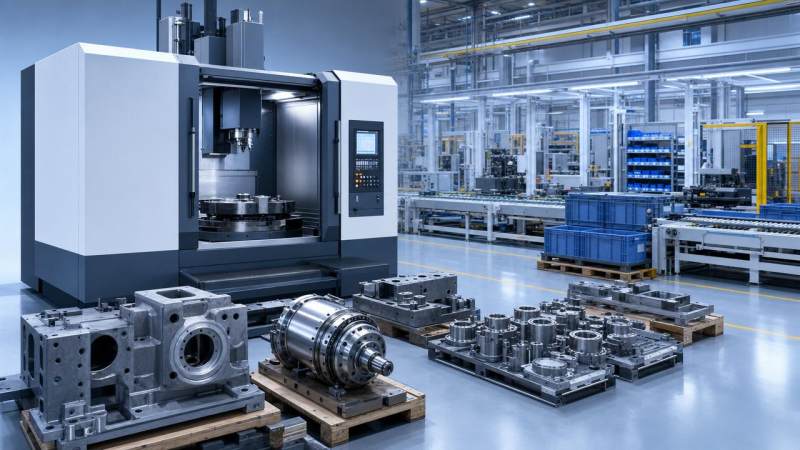
Lead times at every vertical machining center factory are shifting under pressure from raw material volatility, automation upgrades, and tighter global delivery expectations. For information researchers evaluating suppliers, understanding why schedules are changing is now essential to comparing capacity, risk, and long-term procurement reliability across the manufacturing landscape. In the broader industrial environment, the delivery window quoted by a vertical machining center factory is no longer just a timing metric. It has become a signal of supply-chain resilience, engineering maturity, labor strategy, and capital discipline.
Why lead-time changes at the vertical machining center factory level now matter more
Across integrated manufacturing sectors, the vertical machining center factory has moved from a relatively stable production model to a more dynamic and risk-sensitive one. Delivery schedules that were once predictable within a narrow range are now fluctuating based on machine casting availability, spindle sourcing, control system allocation, freight congestion, and commissioning workloads. This is especially relevant where machining centers support aerospace parts, automotive fixtures, industrial equipment, die and mold work, energy components, and general precision engineering.
A modern vertical machining center factory operates inside an ecosystem influenced by steel prices, electronic component lead times, CNC controller supply, and regional policy changes affecting energy, labor, and export compliance. As a result, buyers and market researchers can no longer treat quoted lead time as a simple commercial promise. It should be read as a technical and operational indicator that reveals how deeply a supplier controls its bill of materials, assembly sequencing, test protocols, and downstream logistics.
The clearest trend signals behind shifting schedules
Several industry signals show why lead times are becoming more variable. First, production planning cycles are widening because the vertical machining center factory increasingly depends on imported or multi-source subsystems such as linear guides, ball screws, spindle bearings, tool magazines, servo drives, and CNC controls. Second, factories are investing in automation and digital inspection, which can improve long-term output but often creates short-term installation and validation delays. Third, customers are requesting more customized configurations, from spindle taper and table size to coolant systems, probing packages, and enclosure layouts.
Another visible signal is the divergence between standard-model lead times and configured-machine lead times. A vertical machining center factory may still promise relatively fast shipment for baseline models, yet much longer windows for machines requiring higher spindle speed, larger travels, fourth-axis readiness, chip conveyor adaptation, or regional electrical compliance. This split indicates that supply pressure is no longer evenly distributed across the product range.
What is driving the shift inside a vertical machining center factory
The underlying causes are operational rather than rhetorical. The table below summarizes the most common drivers reshaping lead times in a vertical machining center factory environment.
How these shifts affect industrial evaluation and planning
When lead times move, the impact extends far beyond machine delivery dates. A delayed vertical machining center factory shipment can disrupt pilot runs, fixture validation, mold qualification, process capability studies, and line balancing. In sectors where machining centers are foundational assets, such delays may also affect part approval, maintenance windows, and capacity expansion schedules. This makes lead-time analysis an essential part of broader industrial decision-making, not a secondary procurement detail.
There is also a strategic implication. A vertical machining center factory with unusually short lead times is not automatically lower risk, and one with longer lead times is not automatically weaker. Short schedules may indicate stock-based readiness, but they can also hide simplified testing or selective model availability. Longer schedules may reflect constrained sourcing, but they may also indicate disciplined assembly flow, higher inspection standards, or heavy demand from technically qualified markets. The key is to interpret the timing within the supplier’s manufacturing logic.
- Capacity planning becomes less reliable if quoted lead times are not tied to real component availability.
- Project budgeting becomes more exposed when steel, electronics, and freight volatility are embedded in delivery revisions.
- Technical comparison becomes more meaningful when researchers separate standard machines from configured builds.
- Supplier scoring improves when lead time is assessed together with testing scope, documentation quality, and installation support.
What deserves closer attention when reviewing a vertical machining center factory
Because lead-time shifts now reflect structural realities, the most useful evaluation approach is evidence-based. The following checkpoints help determine whether a vertical machining center factory is resilient or simply reactive.
- Bill-of-material visibility: Ask whether core items such as spindle units, guideways, and CNC systems are secured through stock, annual contracts, or spot purchase.
- Production segmentation: Verify if standard vertical machining center models run on dedicated lines separate from custom configurations.
- Assembly-to-test ratio: Review how much of the schedule is consumed by mechanical build, geometric calibration, dry run, load testing, and final inspection.
- Foundry and structural sourcing: Determine whether castings are captive, contracted, or brokered, since this often drives schedule stability.
- Change-order discipline: Understand how specification revisions affect lead time after order confirmation.
- Export readiness: Check packaging standards, compliance documentation, and logistics coordination for international shipments.
A practical way to judge future lead-time reliability
Rather than relying on a single quotation, compare a vertical machining center factory using a structured forecast lens. That means assessing both current lead time and the probability of schedule deviation. A simple framework can help.
This approach is especially useful in a composite industrial market such as the one covered by G-PME, where machine tools interact with tooling systems, fluid control equipment, die and mold platforms, fastening solutions, and industrial lubricants. A vertical machining center factory should therefore be evaluated not only as a standalone equipment source, but as part of a connected manufacturing performance chain.
What to do next as lead times continue to evolve
The most effective next step is to build a comparison model that tracks lead time together with component origin, configuration complexity, testing depth, and shipment readiness. Doing so turns a basic delivery quote into actionable industrial intelligence. When reviewing any vertical machining center factory, document the difference between nominal lead time and verified production readiness, then monitor whether schedule confidence is supported by sourcing structure and factory execution.
For organizations mapping future capacity, the current shift is not merely a timing issue. It is a filter for identifying which vertical machining center factory partners can sustain precision, consistency, and delivery under changing market conditions. Use that filter early, compare evidence rather than promises, and align machine selection with the real operational demands of the full production chain.
Recommended News
 When electronics require precision manufacturing at micron tolerancesPrecision manufacturing solutions for electronics deliver micron-level control, reliable inspection, and scalable quality for critical housings, thermal parts, and complex assemblies.
 When do cabletrays need corrosion protection in industrial facilities?Cabletrays need corrosion protection when exposed to moisture, chemicals, salt, washdown, or condensation. Learn how to select durable materials and protect critical industrial routes.
 What suppliers must prove for manufacturing standards compliance in Southeast AsiaManufacturing standards compliance Southeast Asia: learn what suppliers must prove, from traceable materials and calibrated tools to controlled processes, safety, and shipment records.
 What to verify in a fluid control manufacturer's quality systemFluid control manufacturer quality checks: verify traceability, testing, calibration, document control, and corrective actions to reduce risk.
 When do smart device manufacturing solutions reduce assembly errors?Smart device manufacturing solutions reduce assembly errors with closed-loop controls, vision inspection, torque verification, and traceable process data. Learn what drives reliable production.
 Import trends reshaping precision tooling supply in 2026Import trends in 2026 are reshaping precision tooling supply. Discover how to reduce landed risk, strengthen sourcing resilience, and protect production performance.
 Choosing carbide end mills for stainless steel without edge chippingCarbide end mills for stainless steel: learn how to prevent edge chipping with the right substrate, geometry, coating, coolant, and stable milling parameters.
 What contract manufacturing support should cover before sourcingIndustrial procurement support for contract manufacturing: learn what to verify before sourcing, from DFM and traceability to quality, capacity, cost control, and compliance.
 When integrated precision manufacturing solutions reduce launch delaysIntegrated precision manufacturing solutions help industrial teams prevent launch delays by aligning design, sourcing, machining, sealing, testing, and supply-chain readiness.
 When a higher tooling price reduces long-run mold maintenance costsTooling price can reduce long-term mold maintenance costs when premium materials, precision machining, and serviceable design prevent downtime, scrap, and costly repairs.
 What a tooling fee covers before an injection mold is builtTooling fee explained: discover what it covers before an injection mold is built, from DFM and mold design to validation, ownership, and cost control.
 When a horizontal boring machine improves accuracy in large metal partsDiscover when a horizontal boring machine for metalworking improves accuracy in large parts, protecting critical bore alignment, stable datums, and assembly-ready results.
 What to verify before choosing a fluid control supplier for critical flowChoose a fluid control supplier with confidence: verify pressure cycling, material compatibility, flow validation, traceability, sealing, and long-term support for critical applications.
 Cleanroom equipment application guidance to reduce contamination riskIndustrial application guidance for cleanroom equipment: reduce contamination risk with practical airflow, material flow, maintenance, and process protection strategies.
 When should wind turbine parts be replaced instead of repaired?Wind turbine parts: learn when replacement is safer than repair, how to reduce repeat failures, protect uptime, and make smarter maintenance decisions.
 What to verify before choosing a coolant flow rate and pressure supplierCoolant flow rate and pressure supplier selection guide: verify duty points, pump curves, filtration, controls and service support for reliable machining performance.
 How mold design choices affect cooling time in injection moldingDiscover how mold design affects injection molding cooling time, part stability, cycle efficiency, and long-term production quality with practical engineering insights.
 Machine tool standards alerts that require 5-axis safety procedure updatesMachine tool standards alerts can trigger critical 5-axis safety procedure updates. Learn which changes demand action to protect operators, equipment, and production uptime.
 Does manufacturing standards compliance for semiconductors affect EDM tool approval?Manufacturing standards compliance for semiconductors shapes EDM tool approval through traceability, validation, contamination control, and inspection. Learn what proves reliable capability.
 Which medical grade materials withstand repeated sterilization in pumps?Medical grade materials for sterilizable pumps: compare 316L, PEEK, PPSU, PTFE, silicone, and EPDM for steam, radiation, and chemical resistance.
 What G-code compatibility issues arise when moving to 5-axis centers?G code compatibility issues in 5-axis centers can affect TCP, rotary limits, feeds, and safety. Learn how to validate programs before production.




Search News
Popular Tags