
Carbide Inserts Wholesale: What Drives Cost Beyond Unit Price
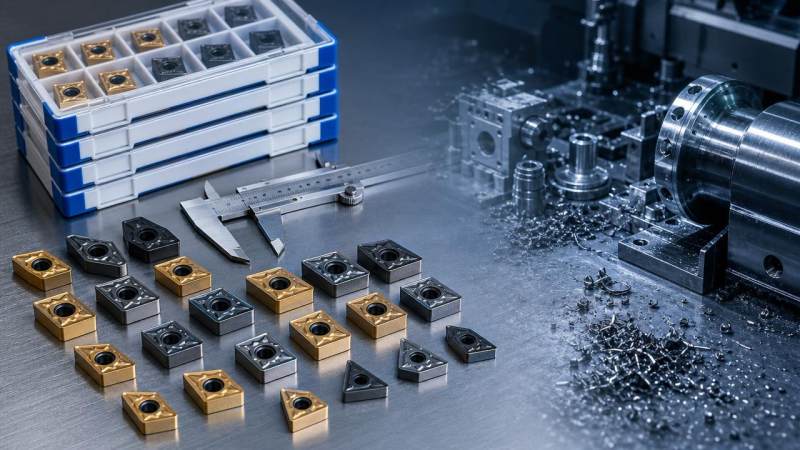
In carbide inserts wholesale, the lowest unit price rarely tells the full procurement story. For buyers responsible for machining performance, delivery stability, and total cost control, real value depends on tool life, substrate consistency, coating quality, lead times, and supplier reliability. Understanding these cost drivers helps procurement teams reduce hidden risks and make more profitable sourcing decisions.
For procurement teams, the core search intent behind “carbide inserts wholesale” is rarely just finding the cheapest catalog quote. It is usually about understanding how to compare suppliers, control hidden costs, and avoid quality or delivery failures that disrupt machining operations. In practice, buyers want to know why two inserts with similar dimensions can differ sharply in price, and which differences actually matter to production results.
The most useful answer is straightforward: wholesale carbide insert cost is driven by total performance economics, not only piece price. A lower-priced insert can become the more expensive option if it wears faster, causes unstable cutting, increases machine downtime, or creates scrap. For purchasing professionals, the correct question is not “What is the cheapest insert?” but “What is the most reliable and cost-effective insert for the application, supply plan, and production risk profile?”
Why unit price alone is a poor buying metric in carbide inserts wholesale
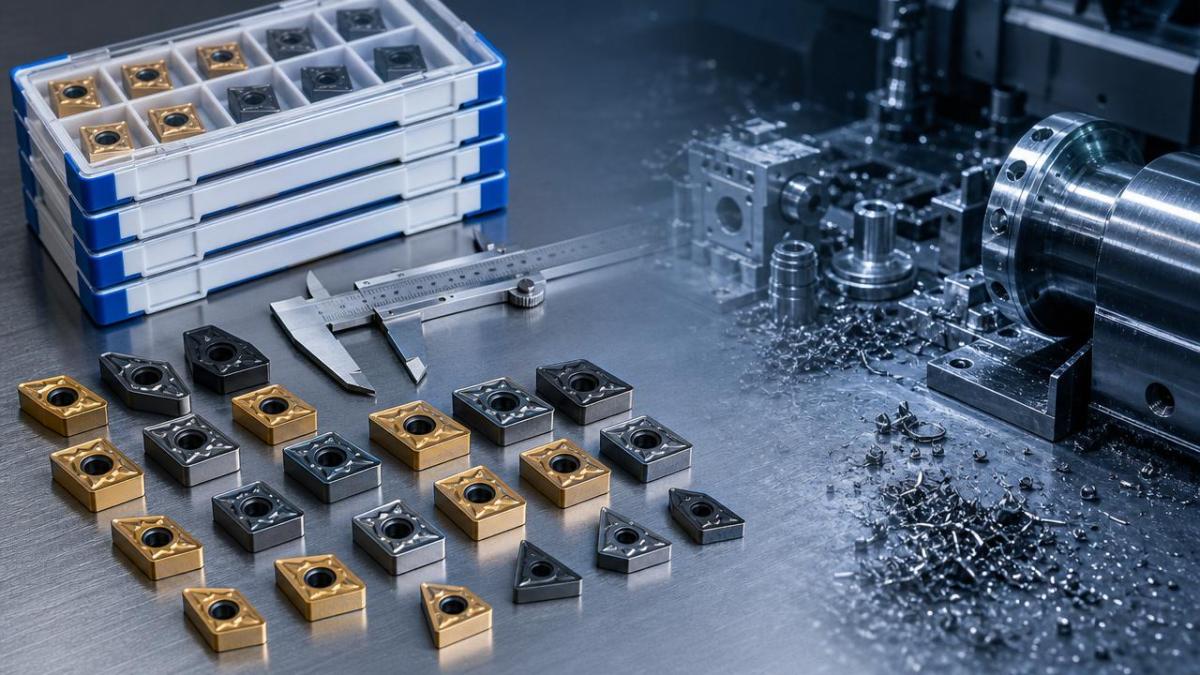
In many industrial categories, bulk purchasing creates a strong temptation to compare offers almost entirely on ex-works or landed unit price. That approach is understandable, but it is incomplete for cutting tools. Carbide inserts directly affect cycle time, surface finish, tool change frequency, machine utilization, and part acceptance rates. These downstream effects often outweigh the purchase price difference between suppliers.
Consider two wholesale offers for the same insert geometry. Supplier A is 12% cheaper per piece, but the insert delivers shorter tool life and less consistent edge preparation. If operators need more frequent indexing, if spindle load fluctuates, or if dimensional drift appears earlier in the run, the actual cost per machined component rises. The savings on purchase order value can disappear within a single production batch.
For procurement personnel, this means cost evaluation should move from “price per insert” to “cost per effective cutting hour” or “cost per acceptable part produced.” In high-volume manufacturing, even small differences in insert reliability can have major financial consequences. This is especially true in automotive, aerospace, energy, die and mold, and heavy equipment machining environments where downtime is expensive and process repeatability matters.
What buyers are really paying for: the main cost drivers behind wholesale carbide inserts
When analyzing carbide inserts wholesale pricing, buyers should understand what is embedded inside the quote. Price differences are often tied to a combination of materials science, manufacturing precision, quality control, logistics capability, and supplier commercial structure. The following cost drivers usually explain most quote variation.
1. Carbide substrate composition and grain quality
The tungsten carbide substrate is one of the biggest determinants of both cost and performance. Powder purity, grain size control, cobalt binder ratio, and sintering consistency all influence hardness, toughness, wear resistance, and thermal stability. Premium substrates are more expensive because they require tighter raw material control and more advanced process discipline.
For buyers, the key issue is consistency. A supplier may offer a competitive wholesale price, but if substrate quality varies by batch, cutting performance becomes unpredictable. That inconsistency creates hidden costs through setup adjustments, operator complaints, and unstable process capability. In long-term sourcing, uniformity is often more valuable than an aggressive introductory price.
2. Coating technology and coating adhesion
CVD and PVD coatings are major differentiators in insert pricing. High-performance coatings improve wear resistance, heat management, oxidation resistance, and friction behavior. However, coating value is not just about thickness or advertised hardness. Adhesion quality, coating uniformity, and match between coating and substrate are what determine actual field performance.
For procurement teams, this matters because poor coating integrity can lead to premature flank wear, crater wear, chipping, or built-up edge. A cheaper insert that fails early in stainless steel, cast iron, or high-temperature alloy applications can create far higher per-part cost than a premium-coated insert purchased at a higher wholesale rate.
3. Precision of geometry and edge preparation
Insert geometry affects chip control, cutting forces, heat generation, and dimensional stability. Tight tolerances in chipbreaker design, nose radius, thickness, and edge honing require more advanced manufacturing and inspection. These capabilities increase production cost, but they also improve repeatability in demanding machining operations.
Procurement buyers should be cautious when comparing inserts that look equivalent on paper. Similar ISO designation does not guarantee equivalent performance. Small geometric variations can significantly affect tool pressure, chip evacuation, and vibration behavior. For production teams chasing stable throughput, those differences are commercially important.
4. Grade specialization for specific materials
General-purpose inserts are usually more economical than highly specialized grades, but they may not provide the best economics in real cutting conditions. Inserts optimized for hardened steel, titanium, nickel alloys, interrupted cuts, or high-speed finishing often cost more because they are engineered for narrower but more demanding performance windows.
A procurement team buying for mixed applications should evaluate whether standardization saves money or creates inefficiency. Sometimes a lower inventory count is valuable. In other cases, using the wrong “universal” grade increases wear and scrap. The right wholesale strategy depends on application diversity and the cost of process instability.
5. Quality assurance, traceability, and batch control
Industrial buyers are not only paying for the insert itself; they are also paying for process assurance. Reliable suppliers invest in incoming material inspection, in-process control, final dimensional checks, coating validation, and lot traceability. These systems raise cost, but they reduce the risk of receiving mixed-grade, out-of-tolerance, or unstable-performance inserts.
For procurement professionals supporting regulated or high-value sectors, traceability can be critical. If a supplier cannot clearly document batch history, material control, and inspection methods, a low price may reflect weak process discipline rather than genuine efficiency.
6. Packaging, storage, and logistics protection
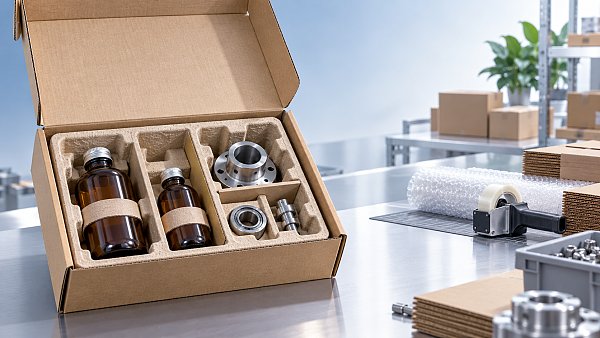
In carbide inserts wholesale, damage prevention also matters. Poor packaging can lead to chipped edges, mixed labels, moisture exposure, or handling confusion before inserts even reach the machine. Better packaging and warehouse control add cost, but they protect usable inventory and reduce line-side waste.
This factor becomes more important for international procurement, where longer transit times and multiple handling stages increase the risk of packaging-related loss. Landed cost should include not only freight but also the probability of concealed damage, relabeling errors, or replenishment delays.
How hidden costs usually appear after the purchase order is placed
Many of the most expensive problems in carbide inserts wholesale do not appear on the supplier quotation. They appear later in production. That is why experienced buyers work closely with manufacturing engineers, tooling specialists, and plant managers before finalizing a sourcing decision.
The first hidden cost is reduced tool life. If an insert wears out earlier than expected, machine stoppages increase and labor time is consumed by tool changes. In high-throughput environments, that loss of uptime can quickly outweigh any procurement savings. The second hidden cost is unstable quality. Variability in insert performance can result in dimensional deviations, poor finish, burr formation, or rejected parts.
The third hidden cost is process revalidation. When a new supplier is introduced, production teams often need to retest parameters, offsets, coolant settings, and cutting speeds. If the insert does not behave like the incumbent product, the engineering time required to stabilize the process becomes part of the sourcing cost. Fourth, inconsistent deliveries can force safety stock expansion, raising inventory carrying cost.
There is also the cost of supplier management itself. A supplier with frequent complaints, unclear technical support, or slow corrective action consumes internal purchasing and quality resources. In contrast, a more expensive but technically responsive supplier can reduce organizational friction and improve supply reliability over time.
How procurement teams should compare wholesale offers more intelligently
To make better decisions, procurement should use a comparison framework that combines commercial, technical, and operational criteria. The goal is not to ignore price, but to place price inside a broader value model. A practical supplier evaluation matrix usually leads to better sourcing outcomes than a pure lowest-bid approach.
Start with application fit. Ask what materials are being machined, what operations are involved, what cutting data is used, and whether the insert is for roughing, finishing, interrupted cuts, or high-speed continuous cutting. An insert that performs well in one environment may fail in another. Without application context, quote comparison is misleading.
Next, evaluate performance evidence. Request documented test results, customer references in similar industries, trial reports, and consistency data across multiple batches. Serious suppliers should be able to discuss wear patterns, recommended feeds and speeds, and failure modes with technical clarity. If the conversation stays limited to price and discount tiers, that is a warning sign.
Then examine supply capability. Buyers should verify production capacity, lead times, minimum order quantities, buffer inventory policy, shipment accuracy, and responsiveness during demand spikes. In carbide inserts wholesale, a low-cost source is not a low-cost source if it cannot support urgent replenishment or stable monthly scheduling.
Finally, compare total commercial terms. Payment terms, warranty handling, replacement policy, customization options, technical support, and Incoterms all affect the real cost of procurement. A slightly higher unit price may still produce better total value if the supplier offers stronger after-sales support and lower operational risk.
Questions buyers should ask suppliers before committing to a wholesale carbide insert program
Strong sourcing decisions often come from asking better questions. For procurement teams, the right supplier discussion should go beyond catalog numbers and discount brackets. The objective is to test whether a supplier can deliver repeatable performance, transparent support, and commercial reliability.
Useful questions include: What is the substrate specification and how is batch consistency controlled? Which coating process is used, and for which workpiece materials is this grade optimized? What tolerance standards are maintained for geometry and edge preparation? Can the supplier provide lot traceability and inspection records if quality issues arise?
Buyers should also ask operational questions: What is the average lead time for standard and custom inserts? What safety stock is held for recurring accounts? How are claims handled if field performance fails to match specification? What technical assistance is available during line trials or process conversion? These questions reveal whether a supplier is operating as a long-term industrial partner or simply a low-price trader.
When a higher wholesale price is actually the better commercial decision
Not every purchasing scenario justifies premium inserts. In low-value, non-critical, low-volume applications, a lower-cost option may be perfectly reasonable. But in many production environments, paying more is the rational choice because the consequences of poor performance are severe.
If the machined part has high material value, tight tolerance requirements, or expensive downstream processing, insert stability matters more than initial price. If machine downtime creates bottlenecks or delivery penalties, tool life consistency becomes commercially critical. If the operation runs unattended or in lights-out manufacturing, reliability often has a higher financial value than nominal purchasing savings.
Similarly, when a company is standardizing tooling across multiple plants, the value of technical consistency can exceed unit price differences. Standardization reduces training time, simplifies stocking logic, and supports more predictable production planning. In such cases, a supplier that offers robust quality and global support may be worth a meaningful price premium.
Building a smarter carbide inserts wholesale strategy for long-term savings
The most effective procurement strategy is usually neither “always buy premium” nor “always buy cheapest.” It is to segment applications by risk and value. Critical operations should be sourced with heavier emphasis on consistency, technical support, and traceability. Less critical operations can be more price-sensitive, provided quality thresholds are still maintained.
Procurement teams can improve outcomes by aligning with production and engineering on a shared scorecard. That scorecard may include tool life, cost per part, defect rate, setup time, lead time, on-time delivery, complaint frequency, and responsiveness to corrective action. With these metrics in place, supplier comparison becomes data-driven rather than anecdotal.
It is also wise to run controlled supplier trials before large-volume conversion. Short-term testing should measure not only average tool life but also variance between inserts, operator feedback, and effect on part quality. A supplier that performs well in a sample but cannot maintain consistency at scale may not be the right wholesale partner.
Over time, the best carbide inserts wholesale programs are built on transparency. Procurement gains more leverage when suppliers understand that evaluation is based on total value delivered, not only headline unit price. That encourages better technical dialogue, clearer expectations, and more durable sourcing relationships.
Conclusion: the real cost of carbide inserts wholesale is performance plus supply reliability
For procurement professionals, the central lesson is clear: carbide inserts wholesale should be evaluated through total cost of ownership, not unit price alone. The purchase price is only one visible component. Substrate quality, coating performance, geometry precision, process consistency, lead time stability, and supplier responsiveness all influence the actual cost of machining.
When buyers focus only on the cheapest quote, they often inherit hidden expenses in downtime, scrap, revalidation, inventory pressure, and supplier management. When they evaluate wholesale inserts through application fit and long-term operating impact, they make stronger commercial decisions. In competitive manufacturing, the best wholesale price is not the lowest number on the quotation sheet. It is the offer that delivers the most dependable value across the entire production system.
Recommended News
 What to verify in a fluid control manufacturer's quality systemFluid control manufacturer quality checks: verify traceability, testing, calibration, document control, and corrective actions to reduce risk.
 When do smart device manufacturing solutions reduce assembly errors?Smart device manufacturing solutions reduce assembly errors with closed-loop controls, vision inspection, torque verification, and traceable process data. Learn what drives reliable production.
 Import trends reshaping precision tooling supply in 2026Import trends in 2026 are reshaping precision tooling supply. Discover how to reduce landed risk, strengthen sourcing resilience, and protect production performance.
 Choosing carbide end mills for stainless steel without edge chippingCarbide end mills for stainless steel: learn how to prevent edge chipping with the right substrate, geometry, coating, coolant, and stable milling parameters.
 What contract manufacturing support should cover before sourcingIndustrial procurement support for contract manufacturing: learn what to verify before sourcing, from DFM and traceability to quality, capacity, cost control, and compliance.
 When integrated precision manufacturing solutions reduce launch delaysIntegrated precision manufacturing solutions help industrial teams prevent launch delays by aligning design, sourcing, machining, sealing, testing, and supply-chain readiness.
 What a tooling fee covers before an injection mold is builtTooling fee explained: discover what it covers before an injection mold is built, from DFM and mold design to validation, ownership, and cost control.
 When a horizontal boring machine improves accuracy in large metal partsDiscover when a horizontal boring machine for metalworking improves accuracy in large parts, protecting critical bore alignment, stable datums, and assembly-ready results.
 What to verify before choosing a fluid control supplier for critical flowChoose a fluid control supplier with confidence: verify pressure cycling, material compatibility, flow validation, traceability, sealing, and long-term support for critical applications.
 Cleanroom equipment application guidance to reduce contamination riskIndustrial application guidance for cleanroom equipment: reduce contamination risk with practical airflow, material flow, maintenance, and process protection strategies.
 When should wind turbine parts be replaced instead of repaired?Wind turbine parts: learn when replacement is safer than repair, how to reduce repeat failures, protect uptime, and make smarter maintenance decisions.
 What to verify before choosing a coolant flow rate and pressure supplierCoolant flow rate and pressure supplier selection guide: verify duty points, pump curves, filtration, controls and service support for reliable machining performance.
 How mold design choices affect cooling time in injection moldingDiscover how mold design affects injection molding cooling time, part stability, cycle efficiency, and long-term production quality with practical engineering insights.
 Machine tool standards alerts that require 5-axis safety procedure updatesMachine tool standards alerts can trigger critical 5-axis safety procedure updates. Learn which changes demand action to protect operators, equipment, and production uptime.
 Does manufacturing standards compliance for semiconductors affect EDM tool approval?Manufacturing standards compliance for semiconductors shapes EDM tool approval through traceability, validation, contamination control, and inspection. Learn what proves reliable capability.
 Which medical grade materials withstand repeated sterilization in pumps?Medical grade materials for sterilizable pumps: compare 316L, PEEK, PPSU, PTFE, silicone, and EPDM for steam, radiation, and chemical resistance.
 What G-code compatibility issues arise when moving to 5-axis centers?G code compatibility issues in 5-axis centers can affect TCP, rotary limits, feeds, and safety. Learn how to validate programs before production.
 Can custom mailer boxes reduce damage costs in subscription shipping?Custommailerboxes can lower subscription shipping damage costs through right-sizing, protective inserts, stronger materials, and efficient pack-out. Discover how to reduce claims and improve delivery performance.
 How to assess a lubricants manufacturer's batch traceabilityLubricants manufacturer batch traceability: learn how to audit records, controls, CoAs, packaging, and recall readiness to reduce supply risk and protect uptime.
 When solar inverters should be replaced instead of repairedSolar inverters: learn when recurring faults, obsolete parts, safety damage, and rising lifecycle costs make replacement smarter than repair.
 What to verify before choosing a first aid kits distributorFirst aid kits distributor checklist: verify compliance, traceability, expiry control, replenishment, and multi-site delivery before choosing a reliable supplier.









Search News
Popular Tags