
Carbide Inserts Wholesale: Why Tool Life Varies So Much
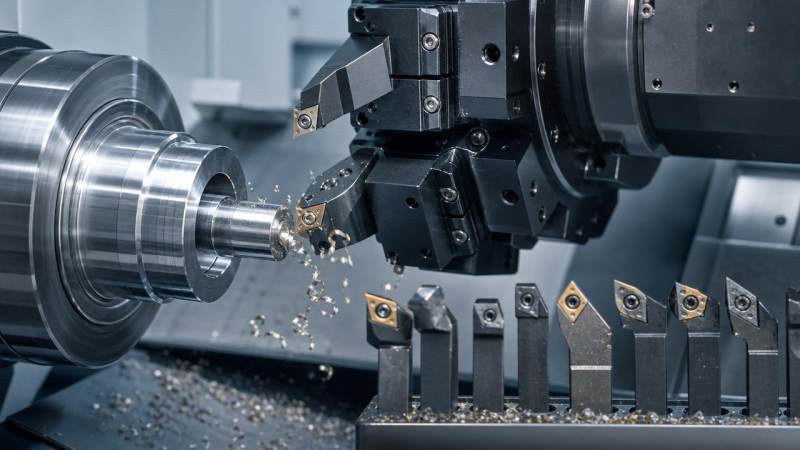
When buying carbide inserts wholesale, many operators expect consistent performance but see tool life vary dramatically from one job to the next. The reason often goes far beyond price or brand alone. From workpiece material and cutting parameters to coating quality and machine stability, several hidden factors shape real-world wear. Understanding these differences helps users reduce downtime, control costs, and choose inserts that deliver more reliable machining results.
Why scenario differences matter more than the catalog description
For machine operators, the biggest mistake in carbide inserts wholesale purchasing is assuming that one insert grade should perform equally well across all jobs. In practice, insert life is highly scenario-dependent. A batch of inserts may work well in stable CNC turning of carbon steel, then fail early in interrupted cutting on castings, and perform differently again in stainless steel finishing. The insert is only one part of a cutting system that includes the machine, holder, workpiece, coolant strategy, spindle condition, setup rigidity, and operator habits.
This is why experienced users do not ask only, “Which insert is cheapest?” They ask, “In which application will this insert run, at what speed, with what consistency, and under what machine condition?” In a broad industrial environment such as automotive components, general engineering, die and mold work, oil and gas parts, or maintenance machining, the same wholesale source can deliver very different value depending on how well the insert matches the real operating scene.
For organizations focused on uptime and machining stability, a data-driven approach is more useful than a brand-only decision. Wholesale buying can lower unit cost, but if the selected insert grade is not adapted to the application, the hidden cost appears in edge chipping, short life, poor surface finish, insert indexing frequency, and machine stoppage. That is where scenario-based judgment becomes critical.
Common application scenarios where tool life changes fast
Below are the most common scenarios in which carbide inserts wholesale users notice large differences in service life. These are not rare exceptions; they are daily production realities in mixed manufacturing environments.
Scenario 1: Continuous turning of mild or alloy steel
This is usually the most forgiving application. If the machine is stable and cutting data are within a reasonable range, insert wear tends to be predictable. Flank wear grows gradually, making it easier for operators to schedule indexing. In this scene, carbide inserts wholesale purchases often deliver good economic value, especially when the supplier can keep grade consistency from lot to lot.
Scenario 2: Stainless steel machining with heat concentration
Stainless steel creates a very different wear pattern. Heat tends to stay near the cutting zone, work hardening can appear quickly, and built-up edge may damage the cutting edge. An insert that looks excellent in carbon steel may lose life rapidly here. Operators need tougher grades, suitable edge preparation, and more careful speed and feed control.
Scenario 3: Interrupted cutting on castings or forgings
Rough surfaces, scale, holes, and variable engagement produce repeated impact. In this kind of job, edge toughness often matters more than maximum hardness. Many users buying carbide inserts wholesale focus on wear resistance, but in interrupted cutting, brittle failure may end tool life long before normal wear becomes visible.
Scenario 4: Finishing operations with tight surface quality requirements
When finish quality is critical, even a small amount of wear or micro-chipping can make the insert unusable. Here, “tool life” may not mean how long the insert cuts before it breaks, but how long it maintains dimensional accuracy and low roughness. Wholesale buyers should pay close attention to chipbreaker geometry, edge consistency, and coating smoothness.
A practical comparison table for carbide inserts wholesale users
The table below helps operators compare typical machining scenes and the main reason tool life may vary.
What operators should check in each scene before blaming the insert
When carbide inserts wholesale performance looks unstable, the insert itself may not be the only cause. Operators should first review the actual cutting scene. Four checkpoints usually explain most variation.
Workpiece material reality versus material label
Two parts may both be labeled “steel,” yet differ in hardness, scale condition, alloy content, or internal consistency. Recycled stock, heat-treated variation, and forged skin can strongly affect edge life. In job shops and general industrial production, this is common. A wholesale insert that performed well on one lot may fail sooner on another because the material condition changed, not because the insert grade changed.
Machine and holder rigidity
A premium insert cannot fully compensate for spindle vibration, worn bearings, poor clamping, or excessive tool overhang. Vibration creates edge micro-fractures that are often mistaken for weak coating or bad carbide. In tougher applications, especially interrupted cuts, rigidity is often the dividing line between normal wear and sudden chipping.
Coolant method and thermal shock
Some operators focus on adding more coolant, but the key issue is consistency. Intermittent coolant application can create thermal shock, especially in hard-running conditions. In some scenes, dry machining or a more stable coolant delivery method may produce better tool life than inconsistent flood coolant.
Actual cutting data on the shop floor
Programmed feed and speed are not always the same as real cutting conditions. Toolpath dwell, aggressive entry, unstable engagement, and manual overrides can all shorten life. For carbide inserts wholesale evaluation, users should compare actual machine data, not only recommended catalog values.
How different business environments should buy carbide inserts wholesale
Different organizations should not buy wholesale in the same way. The right strategy depends on the production model.
High-volume production lines
In repetitive production, even a small increase in tool life has a large annual impact. These users should prioritize lot stability, traceability, and predictable wear rather than chasing the lowest cost per insert. Supplier capability in maintaining grade consistency is critical.
Mixed-job machine shops
Shops handling many materials and changing setups need versatile insert families. Over-specialization can create inventory complexity and operator confusion. A smart carbide inserts wholesale plan here often means carrying a smaller number of proven grades that cover most jobs reliably.
Maintenance and emergency machining teams
For repair teams, predictability is often more important than top benchmark performance. They may face unknown material conditions, older machines, and urgent deadlines. In this scenario, forgiving geometry and tougher grades often outperform highly optimized but narrow-use inserts.
Common misjudgments that create false conclusions about tool life
One reason carbide inserts wholesale decisions go wrong is that users evaluate the result too quickly or from the wrong angle. Several misjudgments are especially common.
- Comparing two inserts on different material lots and assuming the insert was the only variable.
- Using the same cutting data in very different applications, such as continuous turning and interrupted cutting.
- Judging insert quality by one dramatic failure instead of repeated trial data.
- Buying a high-hardness wear-resistant grade for a shock-loaded job that actually needs toughness.
- Ignoring holder condition, turret alignment, or spindle vibration during performance reviews.
Avoiding these errors can improve insert utilization even before changing suppliers. In many factories, better application matching produces faster gains than simply switching brands.
Scenario-based selection advice for more reliable results
If you are sourcing carbide inserts wholesale, start with application mapping instead of broad assumptions. Group jobs by material family, interruption level, surface finish requirement, and machine rigidity. Then identify which insert grades are truly universal and which should be reserved for special jobs.
Ask suppliers for data that relate to your use case: recommended speed windows, edge prep style, coating type, and performance in similar applications. If possible, run short controlled trials with the same machine, holder, program, and material lot. Operators should record wear type, not just total cutting time. Flank wear, crater wear, notching, built-up edge, and chipping each tell a different story.
For broader industrial buyers, this practical method supports better cost control and more stable production. It also aligns with the performance-focused approach used by technical intelligence platforms such as G-PME, where tooling decisions are best evaluated through application conditions, process discipline, and measurable output rather than through nominal price alone.
Final takeaway: match carbide inserts wholesale choices to your real operating scene
Tool life varies so much because machining scenes vary so much. The same carbide insert can be highly economical in one operation and disappointing in another. For operators and production teams, the key is not to search for one “best” insert in the abstract, but to identify the best fit for each recurring scenario.
A stronger carbide inserts wholesale strategy begins with clear questions: What material is actually being cut? Is the cut continuous or interrupted? Is surface finish or edge survival the first priority? How rigid is the machine? What wear pattern ends the tool’s useful life? When these questions are answered honestly, insert selection becomes more consistent, downtime falls, and wholesale purchasing produces real value instead of unpredictable results.
If your operation handles multiple materials or unstable production conditions, review your current insert usage by scenario before placing the next wholesale order. That single step often reveals why tool life has been inconsistent and which grades deserve a larger role in future machining plans.
Recommended News
 When a horizontal boring machine improves accuracy in large metal partsDiscover when a horizontal boring machine for metalworking improves accuracy in large parts, protecting critical bore alignment, stable datums, and assembly-ready results.
 What to verify before choosing a fluid control supplier for critical flowChoose a fluid control supplier with confidence: verify pressure cycling, material compatibility, flow validation, traceability, sealing, and long-term support for critical applications.
 Cleanroom equipment application guidance to reduce contamination riskIndustrial application guidance for cleanroom equipment: reduce contamination risk with practical airflow, material flow, maintenance, and process protection strategies.
 When should wind turbine parts be replaced instead of repaired?Wind turbine parts: learn when replacement is safer than repair, how to reduce repeat failures, protect uptime, and make smarter maintenance decisions.
 What to verify before choosing a coolant flow rate and pressure supplierCoolant flow rate and pressure supplier selection guide: verify duty points, pump curves, filtration, controls and service support for reliable machining performance.
 How mold design choices affect cooling time in injection moldingDiscover how mold design affects injection molding cooling time, part stability, cycle efficiency, and long-term production quality with practical engineering insights.
 Machine tool standards alerts that require 5-axis safety procedure updatesMachine tool standards alerts can trigger critical 5-axis safety procedure updates. Learn which changes demand action to protect operators, equipment, and production uptime.
 Does manufacturing standards compliance for semiconductors affect EDM tool approval?Manufacturing standards compliance for semiconductors shapes EDM tool approval through traceability, validation, contamination control, and inspection. Learn what proves reliable capability.
 Which medical grade materials withstand repeated sterilization in pumps?Medical grade materials for sterilizable pumps: compare 316L, PEEK, PPSU, PTFE, silicone, and EPDM for steam, radiation, and chemical resistance.
 What G-code compatibility issues arise when moving to 5-axis centers?G code compatibility issues in 5-axis centers can affect TCP, rotary limits, feeds, and safety. Learn how to validate programs before production.
 Can custom mailer boxes reduce damage costs in subscription shipping?Custommailerboxes can lower subscription shipping damage costs through right-sizing, protective inserts, stronger materials, and efficient pack-out. Discover how to reduce claims and improve delivery performance.
 How to assess a lubricants manufacturer's batch traceabilityLubricants manufacturer batch traceability: learn how to audit records, controls, CoAs, packaging, and recall readiness to reduce supply risk and protect uptime.
 When solar inverters should be replaced instead of repairedSolar inverters: learn when recurring faults, obsolete parts, safety damage, and rising lifecycle costs make replacement smarter than repair.
 What to verify before choosing a first aid kits distributorFirst aid kits distributor checklist: verify compliance, traceability, expiry control, replenishment, and multi-site delivery before choosing a reliable supplier.
 How mold engineering design reduces warpage in thin-wall partsMold engineering design reduces thin-wall part warpage through balanced gating, cooling, packing, and ejection for stable, production-ready precision.
 What to audit at a CNC machine tools factory before approving a supplierCNC machine tools factory audit guide: verify machining accuracy, metrology, traceability, workforce skills, and capacity resilience before approving a precision supplier.
 When does a horizontal boring machine with ATC justify its cost?Discover when a horizontal boring machine with ATC delivers ROI through faster setups, higher uptime, lower labor costs, and reliable capacity growth.
 How office acoustics affect speech privacy in open-plan workspacesOffice acoustics shape speech privacy in open-plan workspaces. Discover practical strategies for reducing distractions, protecting sensitive conversations, and improving focus.
 Can AI in precision engineering for aerospace applications improve defect detection?AI in precision engineering for aerospace applications improves defect detection through smarter inspection, traceable workflows, and early process-drift alerts. Explore proven deployment strategies.
 Using a supplier capability evaluation framework to screen CNC suppliersSupplier capability evaluation framework for screening CNC suppliers: verify quality, traceability, capacity, and resilience to select reliable partners.
 When supplier capability evaluation services reduce tooling project riskSupplier capability evaluation services help reduce tooling project risk by verifying technical fit, quality controls, capacity, and delivery readiness before costly delays occur.














Search News
Popular Tags