
CNC Lathe Manufacturer Claims: What Actually Matters
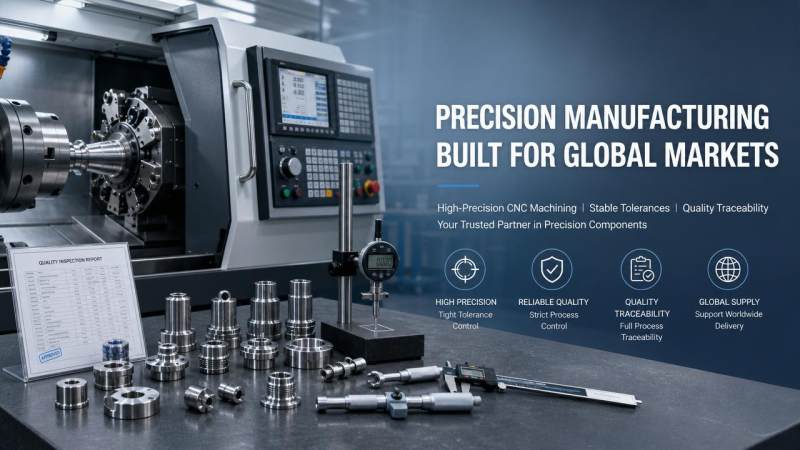
Choosing a cnc lathe manufacturer is not about the loudest claims or the longest equipment list. For business evaluators, what truly matters is verified machining capability, tolerance stability, material traceability, delivery reliability, and long-term production risk control. This article examines which manufacturer claims deserve attention, which are mostly marketing, and how to assess suppliers with greater technical and commercial confidence.
When buyers search for a cnc lathe manufacturer, the real intent is usually not to learn what CNC turning is. It is to reduce sourcing risk, compare suppliers more intelligently, and identify which claims translate into dependable production results. For commercial evaluators, the key question is simple: can this supplier consistently deliver parts that meet drawing, timeline, cost, and compliance requirements at the volume the business actually needs?
That means the strongest evaluation framework goes beyond brochures. A supplier may advertise advanced machines, imported controls, or years of experience, but those claims only matter if they support repeatable output, manageable quality cost, and stable supply performance. In practice, buyers should prioritize evidence over language, process control over machine count, and operating discipline over branding.
What business evaluators should really look for in a cnc lathe manufacturer
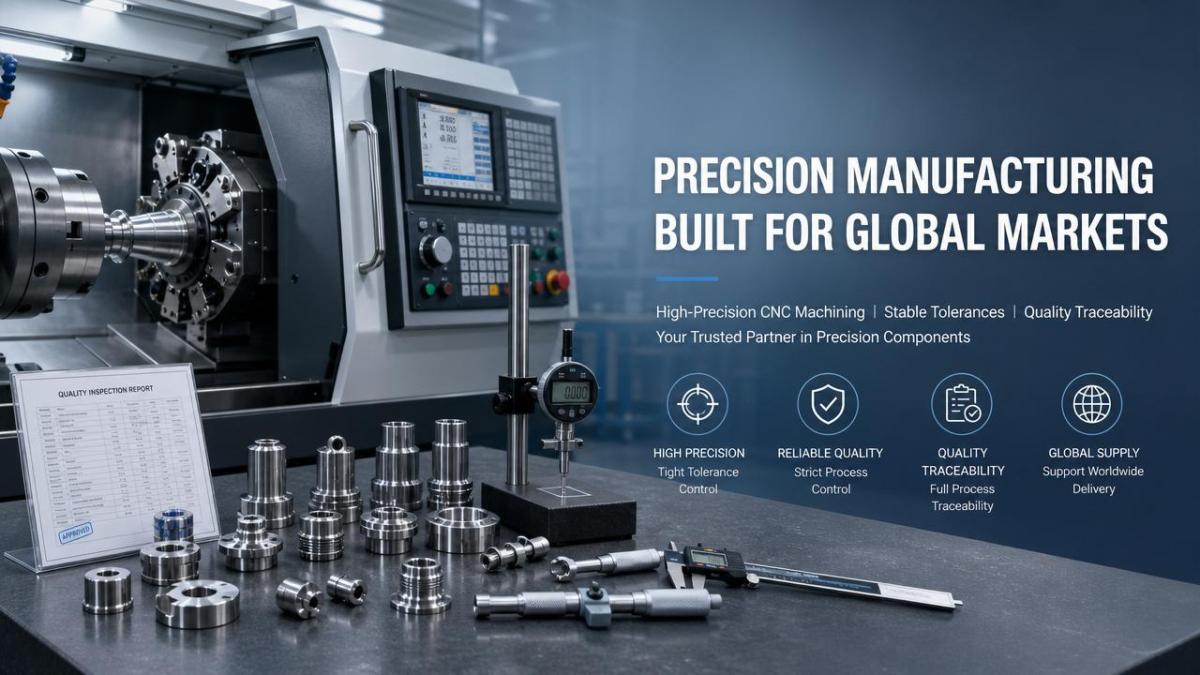
The most useful way to assess a cnc lathe manufacturer is to separate marketing claims from operational proof. Many suppliers can produce a good sample. Fewer can maintain dimensional consistency over months, across batches, materials, operators, and schedule pressure. That difference is where procurement risk lives.
For most business evaluations, five criteria matter more than almost anything else: actual machining capability, tolerance consistency, material and process traceability, on-time delivery performance, and responsiveness when quality issues occur. If a supplier is strong in these areas, many other claims become secondary. If the supplier is weak in these areas, impressive presentation materials will not protect the program.
Commercially, the best supplier is not always the one with the lowest quoted price. It is often the one that creates the lowest total cost of ownership through fewer defects, less line disruption, lower incoming inspection burden, more stable lead times, and better engineering communication. For business evaluators, this is the proper lens.
Which manufacturer claims matter, and which are mostly marketing
Some claims deserve serious attention. Others are useful only as supporting context. A common example is “we have many CNC machines.” Capacity matters, but machine quantity alone says little about capability. Twenty machines without process control may be less valuable than six well-maintained machines supported by disciplined inspection, documented setup control, and competent operators.
Claims such as “high precision,” “strict quality control,” and “customized solutions” are too generic to be decision-making criteria unless the supplier can define them with numbers and records. Ask what tolerances are routinely held, on which materials, at what batch sizes, and with what Cp/Cpk or internal acceptance data. Serious manufacturers can answer specifically. Weak ones stay vague.
Likewise, “experienced team” matters only if that experience is embedded in repeatable systems. If tribal knowledge lives only in one programmer or one senior machinist, the business faces continuity risk. Real capability appears in documented work instructions, first-article approval processes, inspection plans, revision control, training records, and problem-resolution methods.
On the other hand, a few claims usually do matter. Evidence of industry-relevant certification, calibrated inspection equipment, stable supplier management for raw materials, and demonstrated ability to manage engineering changes are highly relevant. These directly affect whether the supplier can support commercial continuity, not just initial sample approval.
Verified machining capability matters more than equipment lists
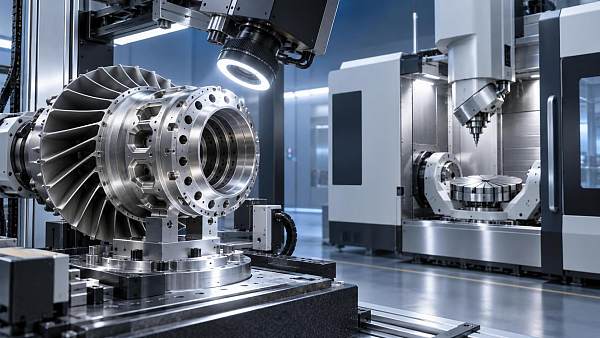
A cnc lathe manufacturer may promote turning centers, live tooling, Y-axis capability, sub-spindles, bar feeders, or automation cells. These features can be important, but buyers should connect each feature to the actual part family being sourced. The question is not whether the equipment sounds advanced. The question is whether it matches your geometry, tolerance stack-up, material behavior, and throughput requirements.
For example, if the parts involve tight concentricity, repeat shoulder positioning, fine surface finish, or secondary milling features in one setup, then machine configuration directly affects risk and cost. A supplier that can complete more features in one clamping may reduce cumulative error and handling time. That is meaningful. A supplier listing advanced equipment that is unrelated to your parts is not.
Ask for evidence from comparable projects. Similar diameters, lengths, wall thicknesses, materials, and tolerance classes are more useful than generic case studies. If your application requires stainless steel, Inconel, brass, hardened alloy, or engineering plastics, the supplier should demonstrate actual machining knowledge for those materials, including tool wear behavior, burr management, heat control, and process repeatability.
Capability should also be tested at the production level, not only at prototype level. Many suppliers can machine ten parts carefully. Fewer can run ten thousand parts while preserving quality and lead-time stability. For evaluators, this distinction is crucial when awarding long-term supply contracts.
Tolerance stability is more important than one-time precision
One of the most misunderstood supplier claims is precision. A supplier may show a highly accurate first sample, but business buyers need to know whether that precision is stable over time. Repeatability matters more than isolated excellence because production programs fail when dimensions drift, offsets are not controlled, or wear compensation is inconsistent.
Ask how the cnc lathe manufacturer controls process stability. Useful indicators include first-piece validation, in-process inspection intervals, statistical process control where appropriate, gauge calibration discipline, tool life management, and clear rules for offset adjustment. A mature supplier can explain how it prevents drift, not just how it detects defects after they occur.
It is also wise to ask which dimensions are process-critical and how those are managed differently. Not all dimensions deserve the same control intensity. Good manufacturers identify critical characteristics early and align setup, tooling, inspection frequency, and fixture logic accordingly. This shows process understanding rather than generic quality language.
For business evaluators, tolerance stability affects hidden costs. Unstable processes increase incoming inspection, sorting, line-side containment, claims handling, and emergency resupply. Even if unit price seems attractive, instability can erase the savings quickly.
Material traceability and documentation are often underestimated
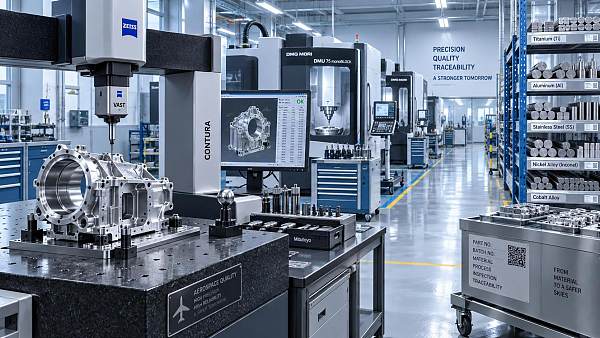
Many sourcing teams focus heavily on machining price and overlook traceability until a problem appears. Yet for regulated industries, safety-related assemblies, or expensive downstream processes, material traceability can be as important as dimensional compliance. If a batch issue occurs, the ability to identify affected lots quickly can reduce financial and operational damage dramatically.
A strong cnc lathe manufacturer should be able to show how raw material certificates are received, reviewed, linked to production lots, and retained. If heat numbers, bar stock lots, or material substitutions are poorly controlled, the risk extends beyond quality failure into legal, warranty, and customer-trust issues.
Traceability should not stop at raw material. For higher-risk applications, buyers may also need visibility into outsourced heat treatment, plating, grinding, coating, or nondestructive testing. If critical value-added operations are subcontracted, ask how the manufacturer qualifies and monitors those external processors. Supply-chain opacity is a common weak point.
Documentation responsiveness matters too. Can the supplier provide certificates, inspection reports, first article packages, and revision-controlled records without delays and confusion? A supplier that machines acceptable parts but struggles with paperwork can still become a costly partner, especially in multinational or audit-heavy environments.
Delivery reliability is a technical issue, not just a logistics issue
Many evaluators treat on-time delivery as a scheduling metric, but in machining supply it is often a reflection of process maturity. Late shipments may result from poor capacity planning, unstable setups, high scrap rates, rework, tooling shortages, weak subcontractor coordination, or unreliable raw material sourcing. In other words, delivery performance reveals operational discipline.
When reviewing a cnc lathe manufacturer, ask for on-time delivery history, but also ask what systems support it. Useful questions include: how is capacity loaded, how are urgent orders handled, what is the average setup changeover burden, how are bottlenecks identified, and how are machine downtime and preventive maintenance managed? Consistent answers usually indicate a more reliable operation.
Lead time should also be evaluated in context. A short quoted lead time is attractive only if it is realistic. Some suppliers win orders with aggressive commitments and recover margin by pushing schedules later. A slightly longer but dependable lead time is often commercially safer than an optimistic promise that creates downstream disruption.
For buyers managing critical production lines, flexibility is another key factor. Can the supplier absorb forecast changes, expedite a partial shipment, or support safety stock strategies? Delivery resilience is not about speed alone. It is about the ability to maintain continuity when conditions change.
How to evaluate quality systems without being misled by certificates alone
Certificates such as ISO 9001 can be useful, but they should be treated as entry-level indicators, not final proof of manufacturing excellence. A certified cnc lathe manufacturer may still have weak inspection planning, poor engineering communication, or inconsistent floor execution. Buyers should verify how the quality system actually operates in production.
Ask to see the path from drawing receipt to shipment release. How are revisions reviewed? Who approves process plans? How are first articles conducted? What happens when nonconformance is found? How are corrective actions documented and verified? These practical details are more revealing than framed certificates in a meeting room.
It is also important to judge the speed and quality of supplier response when issues occur. No manufacturer is perfect. The difference between strong and weak suppliers often appears in containment discipline, root-cause depth, and corrective-action effectiveness. If a supplier becomes defensive, vague, or slow during technical questioning, that is a warning sign.
Business evaluators should also check measurement capability. Inspection equipment should fit the tolerance challenge. Basic calipers are not enough for all precision-turning requirements. A supplier that aligns gauges and metrology methods with part criticality is generally more trustworthy than one that relies on minimal inspection tools for demanding work.
Commercial risk factors that buyers should not ignore
Beyond machining quality, a cnc lathe manufacturer should be evaluated as a business partner. A technically capable supplier can still create risk through weak financial health, customer concentration, poor communication, or overdependence on a few key employees. These issues often surface only after production has begun, when switching costs are higher.
Evaluate whether the supplier serves a customer mix that resembles your expectations. If your business needs strong schedule discipline, engineering change control, and formal reporting, but the supplier mainly serves low-complexity spot orders, there may be a mismatch in operating culture. Capability is not only technical. It is organizational.
Geographic and supply-chain factors matter as well. Buyers should consider logistics routes, customs exposure, raw material volatility, and the supplier’s backup plans for power interruption, machine breakdown, labor shortage, or subcontractor failure. The best source is not simply the cheapest global option. It is the one whose risk profile is acceptable for the importance of the part.
Pricing transparency is another practical issue. If a quotation is unusually low, ask whether tooling, inspection, packaging, scrap assumptions, and secondary operations are fully included. Hidden cost often appears later through change requests, quality disputes, or delivery failure. Strong suppliers usually provide clearer cost logic.
A practical checklist for comparing cnc lathe manufacturers
For business evaluators, the most effective approach is a structured comparison model. Start with part fit: does the supplier regularly machine similar geometries, materials, and tolerances? Then verify production fit: can the supplier support the required volume, lead time, and change frequency? After that, assess system fit: are quality control, traceability, and communication strong enough for your internal requirements?
Next, request evidence, not promises. Review sample inspection reports, material certificates, process flow descriptions, corrective action examples, and delivery metrics. If possible, compare how multiple suppliers answer the same technical and commercial questions. The differences become visible quickly.
Site audits, whether physical or virtual, are especially useful when the part is high value or strategically sensitive. Look for housekeeping, labeling discipline, work-in-progress control, machine maintenance condition, tool organization, and operator understanding of the job. A factory’s daily habits often predict performance better than its sales presentation.
Finally, consider using a weighted scorecard. Common categories include machining capability, quality assurance, delivery reliability, traceability, engineering support, responsiveness, commercial clarity, and risk resilience. This helps keep the sourcing decision grounded in evidence rather than impressions.
Final judgment: what actually matters most
In the end, the best cnc lathe manufacturer is not the one with the boldest precision claim, the biggest machine inventory, or the most polished marketing language. It is the supplier that can prove repeatable capability on relevant parts, maintain tolerance stability in real production, document material and process history, deliver reliably, and respond professionally when problems arise.
For business evaluators, the smartest sourcing decisions come from asking a harder question than “Who can make this part?” Ask instead, “Who can make this part consistently, transparently, and with acceptable total business risk?” That is the standard that protects procurement performance, production continuity, and long-term value.
If you use that framework, manufacturer claims become easier to interpret. The noise falls away, and the signals that matter stand out: evidence, control, discipline, and reliability. Those are the factors that deserve confidence when selecting a cnc lathe manufacturer.
Recommended News
 When should wind turbine parts be replaced instead of repaired?Wind turbine parts: learn when replacement is safer than repair, how to reduce repeat failures, protect uptime, and make smarter maintenance decisions.
 What to verify before choosing a coolant flow rate and pressure supplierCoolant flow rate and pressure supplier selection guide: verify duty points, pump curves, filtration, controls and service support for reliable machining performance.
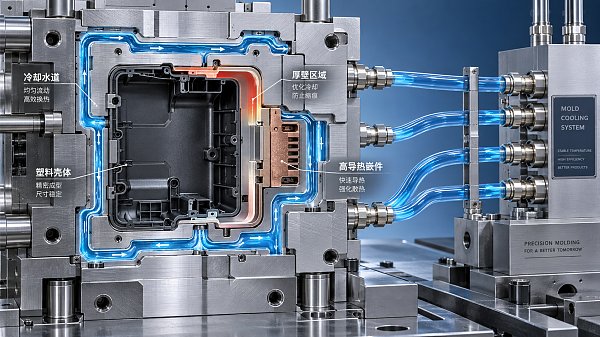
 How mold design choices affect cooling time in injection moldingDiscover how mold design affects injection molding cooling time, part stability, cycle efficiency, and long-term production quality with practical engineering insights.
 Machine tool standards alerts that require 5-axis safety procedure updatesMachine tool standards alerts can trigger critical 5-axis safety procedure updates. Learn which changes demand action to protect operators, equipment, and production uptime.
 Does manufacturing standards compliance for semiconductors affect EDM tool approval?Manufacturing standards compliance for semiconductors shapes EDM tool approval through traceability, validation, contamination control, and inspection. Learn what proves reliable capability.
 Which medical grade materials withstand repeated sterilization in pumps?Medical grade materials for sterilizable pumps: compare 316L, PEEK, PPSU, PTFE, silicone, and EPDM for steam, radiation, and chemical resistance.
 What G-code compatibility issues arise when moving to 5-axis centers?G code compatibility issues in 5-axis centers can affect TCP, rotary limits, feeds, and safety. Learn how to validate programs before production.
 Can custom mailer boxes reduce damage costs in subscription shipping?Custommailerboxes can lower subscription shipping damage costs through right-sizing, protective inserts, stronger materials, and efficient pack-out. Discover how to reduce claims and improve delivery performance.
 How to assess a lubricants manufacturer's batch traceabilityLubricants manufacturer batch traceability: learn how to audit records, controls, CoAs, packaging, and recall readiness to reduce supply risk and protect uptime.
 When solar inverters should be replaced instead of repairedSolar inverters: learn when recurring faults, obsolete parts, safety damage, and rising lifecycle costs make replacement smarter than repair.
 What to verify before choosing a first aid kits distributorFirst aid kits distributor checklist: verify compliance, traceability, expiry control, replenishment, and multi-site delivery before choosing a reliable supplier.
 How mold engineering design reduces warpage in thin-wall partsMold engineering design reduces thin-wall part warpage through balanced gating, cooling, packing, and ejection for stable, production-ready precision.
 What to audit at a CNC machine tools factory before approving a supplierCNC machine tools factory audit guide: verify machining accuracy, metrology, traceability, workforce skills, and capacity resilience before approving a precision supplier.
 When does a horizontal boring machine with ATC justify its cost?Discover when a horizontal boring machine with ATC delivers ROI through faster setups, higher uptime, lower labor costs, and reliable capacity growth.
 How office acoustics affect speech privacy in open-plan workspacesOffice acoustics shape speech privacy in open-plan workspaces. Discover practical strategies for reducing distractions, protecting sensitive conversations, and improving focus.
 Can AI in precision engineering for aerospace applications improve defect detection?AI in precision engineering for aerospace applications improves defect detection through smarter inspection, traceable workflows, and early process-drift alerts. Explore proven deployment strategies.
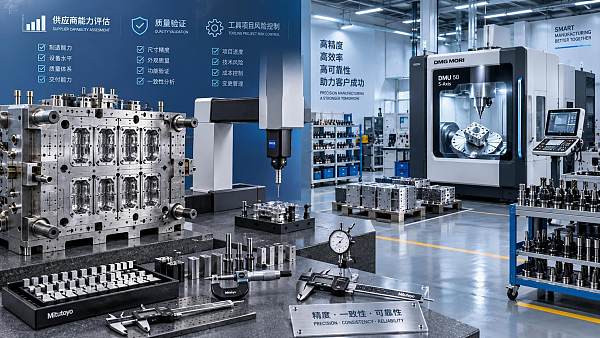
 Using a supplier capability evaluation framework to screen CNC suppliersSupplier capability evaluation framework for screening CNC suppliers: verify quality, traceability, capacity, and resilience to select reliable partners.
 When supplier capability evaluation services reduce tooling project riskSupplier capability evaluation services help reduce tooling project risk by verifying technical fit, quality controls, capacity, and delivery readiness before costly delays occur.
 How can a trade network help distributors enter new regional markets?Trade network strategies help distributors enter regional markets with verified partners, local insights, technical fit, and reliable logistics for faster, lower-risk growth.
 Does private label manufacturing contract assembly reduce launch risk?Private label manufacturing contract assembly can reduce launch risk with proven quality systems, traceability, supplier validation, and scalable production control.
 When do e-readers make sense for a distraction-free work library?E-readers for focused work libraries: discover when they improve deep reading, technical document review, security, and distraction-free research workflows.











Search News
Popular Tags