
CNC cutting tools wholesale quality problems usually start here
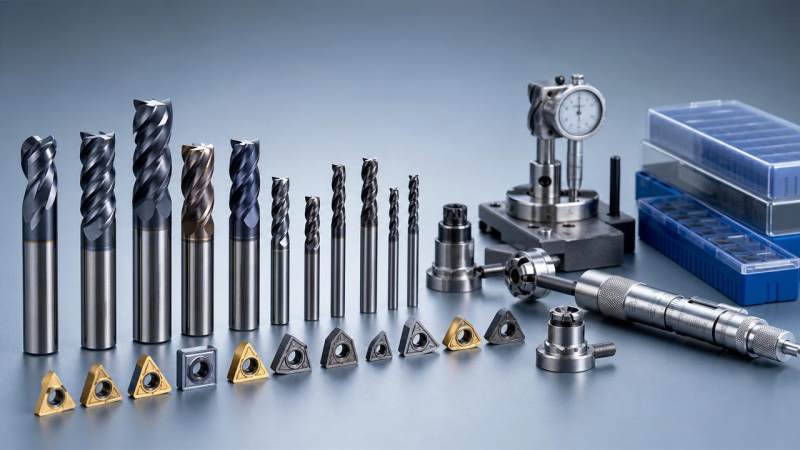
Many cnc cutting tools wholesale quality problems do not start in your warehouse, your sales channel, or even at the customer’s machine. They usually begin much earlier—when a supplier makes shortcuts in carbide grade selection, edge preparation, coating application, geometry consistency, or final inspection. For distributors, dealers, and agents, this matters because tool quality failures rarely stay “technical.” They quickly become margin loss, customer complaints, returns, emergency replacements, and damage to account trust.
The core search intent behind this topic is practical: buyers in wholesale channels want to know where quality problems really come from, how to identify them before purchase, and how to reduce risk when selecting suppliers. They are not looking for generic tool definitions. They want a decision framework that helps them avoid unstable products and build a more dependable portfolio.
For channel partners, the most important conclusion is simple: if a supplier cannot prove control over raw material quality, coating repeatability, geometry tolerance, and batch inspection, the wholesale price advantage is often false economy. A lower quotation may only delay the real cost until the tool reaches the customer’s spindle.
Why quality problems in cnc cutting tools wholesale often begin before shipment
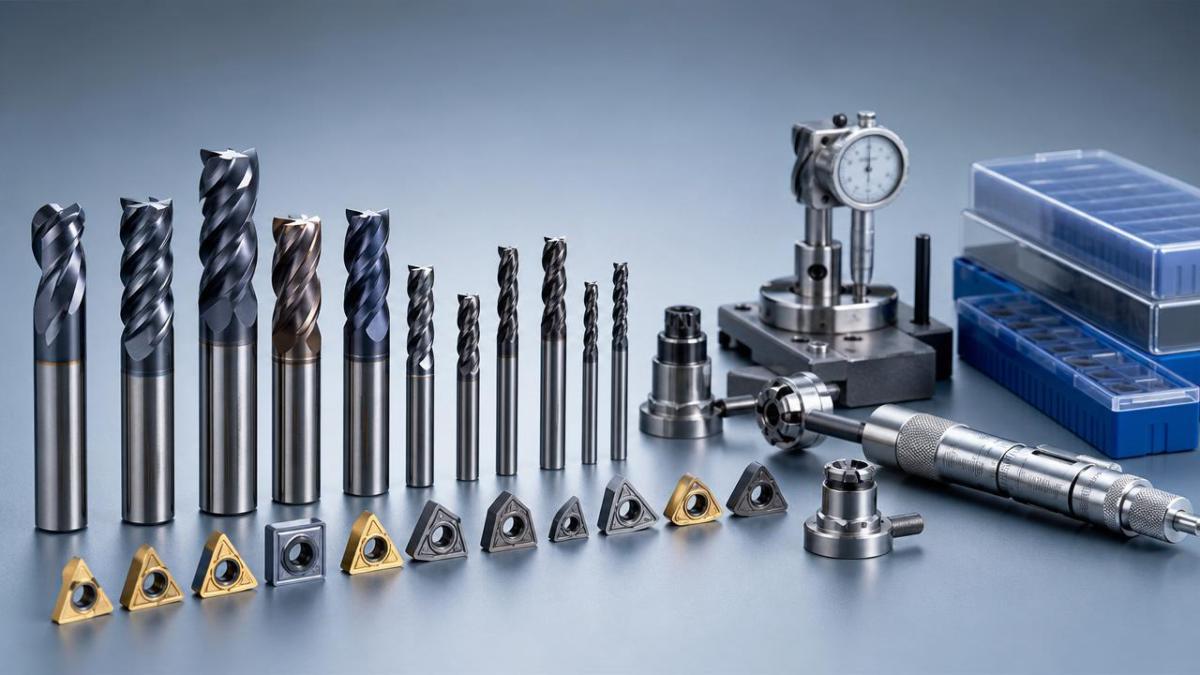
In wholesale trade, quality is often judged too late. Many distributors discover problems only after tools begin chipping, burning, vibrating, or wearing out faster than expected in customer applications. By then, the failure has already passed through production, packaging, logistics, sales, and field use. The damage is more expensive to fix because it has moved from a factory issue to a channel issue.
This is why experienced distributors look upstream. They ask not only, “Is this tool cheaper?” but also, “What in the manufacturing system makes this batch reliable?” In the cnc cutting tools wholesale market, repeatability matters more than one good sample. A supplier that sends excellent trial pieces but cannot maintain the same quality across production lots creates hidden business risk.
The most common upstream failure points are material inconsistency, unstable sintering, poor grinding accuracy, uneven coating adhesion, weak edge treatment, and incomplete outgoing inspection. Any one of these can cause unstable tool life. Combined, they create the pattern every distributor wants to avoid: some customers report acceptable performance, while others report early failure on apparently identical tools.
What distributors and agents care about most in real buying decisions
Dealers, distributors, and agents usually evaluate wholesale tools through a business lens first and a technical lens second. Their main concern is not whether a supplier can describe advanced tooling theory. It is whether the supplier can support reliable resale with acceptable complaint rates and predictable replacement cost.
In practice, these buyers usually care about five questions. First, will the tool perform consistently enough across batches? Second, can the supplier support mainstream applications without excessive troubleshooting? Third, what is the actual risk of returns, breakage claims, and customer dissatisfaction? Fourth, can the supplier provide traceable quality records? Fifth, does the gross margin still make sense after accounting for failure-related service costs?
This is an important distinction. A low unit price does not automatically create better wholesale value. If poor consistency causes your sales team to spend time on claims, urgent re-deliveries, and reputation repair, your real selling cost rises fast. For many channel businesses, the biggest profitability leak in cnc cutting tools wholesale is not purchase price. It is unstable field performance.
Material quality: the first hidden source of unstable tool performance
One of the earliest and most overlooked causes of tool quality problems is the substrate itself. In carbide tools, performance depends heavily on grain size distribution, binder composition, impurity control, hardness-toughness balance, and sintering stability. If the carbide grade is poorly matched to the intended cutting conditions, performance problems are almost guaranteed.
For example, a tool designed for aggressive steel machining may fail in interrupted cutting if toughness is insufficient. A tool marketed for stainless steel may wear too quickly if heat resistance and coating compatibility are weak. A supplier may still advertise both as “general-purpose,” but the mismatch shows up later as edge chipping, crater wear, plastic deformation, or unpredictable breakage.
Distributors should therefore ask more precise questions. What carbide grades are used across different application families? Are they developed for P, M, K, N, S, or H material groups? Is there documentation showing hardness range, transverse rupture strength, and intended use window? Even if your customers do not ask for these details directly, they help you understand whether the supplier is managing quality scientifically or selling on appearance alone.
Geometry control problems are a wholesale risk multiplier
Even when the substrate is acceptable, tool geometry can destroy performance if it is not tightly controlled. Rake angle, clearance angle, helix angle, core diameter, point geometry, flute profile, chipbreaker shape, concentricity, and edge symmetry all affect cutting behavior. Small variation may appear minor on a drawing, but on a machine it can change cutting force, chip evacuation, heat generation, and vibration sensitivity.
This becomes especially important in drills, end mills, inserts, and thread tools sold through broad distribution channels. End users expect interchangeability. If two tools with the same SKU behave differently, your customer will often assume the problem is your supply chain, not their process. That is why geometry control is one of the biggest reputation risks in cnc cutting tools wholesale.
Distributors should request tolerance control data, grinding process capability, and inspection method details. Does the supplier inspect runout, diameter, corner radius, flute dimensions, and edge profile? Are critical dimensions checked statistically or only by random manual verification? If the answer is vague, consistency risk is high.
Coating quality is where many “good-looking” tools fail in real machining
Coating is one of the easiest areas for buyers to misunderstand because it is highly visible but not always easy to evaluate. A tool may look premium because it has a modern color or a branded coating name. But coating quality is not just about appearance. It depends on thickness consistency, adhesion, residual stress control, surface preparation, post-coating edge condition, and suitability for the work material.
Poor coating quality often reveals itself through rapid flank wear, edge peeling, built-up edge, or sudden chipping after short cutting time. In some cases, the substrate is acceptable but the coating process is unstable. In others, the coating is technically sound but chosen for the wrong application. Either way, the distributor faces the same commercial outcome: complaints from the field and pressure for compensation.
Strong suppliers can usually explain what coatings they use, why they use them, and for which materials and cutting speeds they are suitable. They can also describe whether the process is PVD, CVD, or another system, and what performance trade-offs are expected. If a supplier only says the coating is “high performance” without test context, that is not enough for channel-level risk control.
Edge preparation and finishing: a small detail with large commercial impact
Many wholesale buyers underestimate edge preparation because it sounds like a finishing detail rather than a core quality factor. In reality, the cutting edge condition strongly affects initial wear, chipping resistance, and overall tool life. Edge honing, micro-chamfering, polishing, and burr removal must be matched to the tool type and workpiece application.
An edge that is too sharp may fail prematurely in unstable or interrupted cutting. An edge that is too heavy may increase cutting force and heat. In micro tools or finishing tools, slight deviations in edge preparation can dramatically change surface finish and predictability. For distributors serving diverse customer segments, this matters because inconsistent edge condition creates application-specific complaints that are difficult to diagnose remotely.
If your supplier has a mature process, they should be able to explain edge preparation standards by product line. If they cannot define how edge treatment is controlled, you should expect tool life variability even when dimensions appear correct.
Inspection systems separate dependable suppliers from price-only suppliers
When distributors evaluate suppliers, they often focus heavily on samples, lead time, and price. Those are important, but the real differentiator is the inspection system behind batch production. A supplier with proper incoming material verification, in-process inspection, coating checks, final sampling, traceability labeling, and nonconformance handling is far more likely to support stable wholesale business over time.
In contrast, many quality issues in cnc cutting tools wholesale come from factories that can make acceptable tools but cannot maintain process discipline. They may rely on operator experience instead of documented standards. They may inspect cosmetic appearance more carefully than critical geometry. They may not isolate mixed batches properly. These weaknesses do not always show in the first order, but they often emerge when order volume increases.
Distributors should ask practical audit questions: Is there batch traceability? Are nonconforming tools segregated? What percentage of products receive full inspection versus sampling inspection? What instruments are used for geometry and coating evaluation? How are customer complaints analyzed and fed back into process improvement? The answers reveal whether the supplier is scalable and trustworthy.
How to identify warning signs before you commit to a wholesale supplier
Most channel buyers do not have time for a deep metallurgical audit of every potential supplier. Still, several warning signs can help you identify higher-risk partners early. One red flag is overbroad product claims, such as one grade or one coating being promoted as ideal for nearly every material. Another is inconsistent technical data across catalogues, quotations, and sample labels.
A third warning sign is the absence of application boundaries. Serious manufacturers define recommended materials, speed ranges, feed ranges, and use cases. Weak suppliers often avoid specifics because they do not want their limitations exposed. A fourth warning sign is resistance to traceability requests or reluctance to discuss quality complaints openly. A fifth is excessive dependence on visual presentation—premium packaging, polished sales language, or copied technical charts—without corresponding process documentation.
Distributors should also compare multiple batches, not just one sample set. A supplier that performs well once may still lack repeatability. If possible, validate tools across several end-user environments before making a large stocking decision. This step is often more valuable than negotiating a slightly better unit price.
What a practical distributor-side evaluation process should look like
To reduce risk, channel partners should build a structured qualification process for cnc cutting tools wholesale. Start with product segmentation. Separate high-volume general-purpose tools from high-risk application tools such as difficult-material end mills, stainless drills, or heavy-duty inserts. The stricter the application requirement, the deeper the qualification should be.
Next, request technical and commercial documentation together. Product drawings, grade descriptions, coating data, tolerance standards, and recommended application ranges should be reviewed alongside pricing, delivery terms, and complaint handling policy. This allows you to evaluate not just cost, but total commercial reliability.
Then conduct sample validation in realistic conditions. Avoid testing only in ideal environments. Use customer-like materials, machine stability levels, and cutting parameters. Record tool life, wear mode, surface finish, chip evacuation, and consistency between pieces. The goal is not to prove that the tool can cut once. The goal is to learn whether it can be sold repeatedly with manageable support effort.
Finally, monitor first-batch performance after launch. Track complaint rate, replacement requests, customer feedback patterns, and performance variance by SKU. The first three to six months often reveal whether a supplier’s process is mature enough for broader channel expansion.
Why better quality control protects margins, not just product reputation
Some distributors still treat quality control as a technical issue best left to manufacturers. In reality, it is a direct margin issue. If tools fail unpredictably, you pay through returns, emergency freight, sales disruption, technical service time, discount pressure, and damaged account confidence. These indirect costs often exceed the apparent savings from a lower wholesale purchase price.
Better supplier quality also improves inventory confidence. When batch consistency is stronger, you can stock more efficiently, reduce defensive over-buffering, and support repeat orders with less hesitation. Sales teams can recommend products more confidently, and your business becomes less exposed to negative word-of-mouth in industrial customer circles where trust is hard to rebuild.
For agents and distributors competing in crowded industrial markets, a reliable product line is often the real differentiator. Many competitors can quote low. Fewer can supply tools that perform consistently enough to reduce downstream friction. That is where long-term channel value is created.
Final takeaway for cnc cutting tools wholesale buyers
The main lesson is clear: most quality problems in cnc cutting tools wholesale begin upstream, inside manufacturing controls that many buyers never see. Material selection, geometry accuracy, coating consistency, edge preparation, and inspection discipline are not factory-side details only. They directly shape your complaint rate, resale reputation, and profit quality.
For distributors, dealers, and agents, the smartest buying strategy is not to chase the lowest entry price. It is to identify suppliers that can demonstrate repeatable process control, clear application logic, traceable batch quality, and honest technical boundaries. Those suppliers help you build a portfolio that is easier to sell, easier to support, and less costly to defend after delivery.
In short, if you want fewer claims and stronger margins, start your evaluation where the problems usually start: inside the supplier’s quality system, long before the tools reach your shelf.
Recommended News
 Machine tool standards alerts that require 5-axis safety procedure updatesMachine tool standards alerts can trigger critical 5-axis safety procedure updates. Learn which changes demand action to protect operators, equipment, and production uptime.
 Does manufacturing standards compliance for semiconductors affect EDM tool approval?Manufacturing standards compliance for semiconductors shapes EDM tool approval through traceability, validation, contamination control, and inspection. Learn what proves reliable capability.
 Which medical grade materials withstand repeated sterilization in pumps?Medical grade materials for sterilizable pumps: compare 316L, PEEK, PPSU, PTFE, silicone, and EPDM for steam, radiation, and chemical resistance.
 What G-code compatibility issues arise when moving to 5-axis centers?G code compatibility issues in 5-axis centers can affect TCP, rotary limits, feeds, and safety. Learn how to validate programs before production.
 Can custom mailer boxes reduce damage costs in subscription shipping?Custommailerboxes can lower subscription shipping damage costs through right-sizing, protective inserts, stronger materials, and efficient pack-out. Discover how to reduce claims and improve delivery performance.
 How to assess a lubricants manufacturer's batch traceabilityLubricants manufacturer batch traceability: learn how to audit records, controls, CoAs, packaging, and recall readiness to reduce supply risk and protect uptime.
 When solar inverters should be replaced instead of repairedSolar inverters: learn when recurring faults, obsolete parts, safety damage, and rising lifecycle costs make replacement smarter than repair.
 What to verify before choosing a first aid kits distributorFirst aid kits distributor checklist: verify compliance, traceability, expiry control, replenishment, and multi-site delivery before choosing a reliable supplier.
 How mold engineering design reduces warpage in thin-wall partsMold engineering design reduces thin-wall part warpage through balanced gating, cooling, packing, and ejection for stable, production-ready precision.
 What to audit at a CNC machine tools factory before approving a supplierCNC machine tools factory audit guide: verify machining accuracy, metrology, traceability, workforce skills, and capacity resilience before approving a precision supplier.
 When does a horizontal boring machine with ATC justify its cost?Discover when a horizontal boring machine with ATC delivers ROI through faster setups, higher uptime, lower labor costs, and reliable capacity growth.
 How office acoustics affect speech privacy in open-plan workspacesOffice acoustics shape speech privacy in open-plan workspaces. Discover practical strategies for reducing distractions, protecting sensitive conversations, and improving focus.
 Can AI in precision engineering for aerospace applications improve defect detection?AI in precision engineering for aerospace applications improves defect detection through smarter inspection, traceable workflows, and early process-drift alerts. Explore proven deployment strategies.
 Using a supplier capability evaluation framework to screen CNC suppliersSupplier capability evaluation framework for screening CNC suppliers: verify quality, traceability, capacity, and resilience to select reliable partners.
 When supplier capability evaluation services reduce tooling project riskSupplier capability evaluation services help reduce tooling project risk by verifying technical fit, quality controls, capacity, and delivery readiness before costly delays occur.
 How can a trade network help distributors enter new regional markets?Trade network strategies help distributors enter regional markets with verified partners, local insights, technical fit, and reliable logistics for faster, lower-risk growth.
 Does private label manufacturing contract assembly reduce launch risk?Private label manufacturing contract assembly can reduce launch risk with proven quality systems, traceability, supplier validation, and scalable production control.
 When do e-readers make sense for a distraction-free work library?E-readers for focused work libraries: discover when they improve deep reading, technical document review, security, and distraction-free research workflows.
 How a precision milling center factory controls part-to-part consistencyDiscover how a precision milling center factory achieves reliable part-to-part consistency through controlled tooling, workholding, traceability, and in-process inspection.
 Which CNC manufacturing investment drivers matter before capacity expansionCNC manufacturing investment drivers: evaluate demand, automation, workforce readiness, and lifecycle ROI before expanding capacity. Build resilient, profitable growth.
 When CNC turning is the right fit for precision machining servicesPrecision machining services: discover when CNC turning delivers superior concentricity, surface finish, and cost control for critical rotational parts.















Search News
Popular Tags