
CNC Lathe Manufacturer Claims vs Real Tolerance Performance
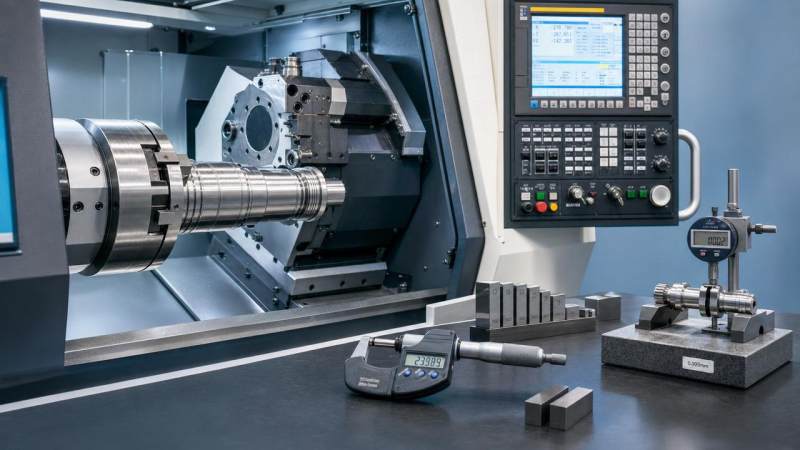
A cnc lathe manufacturer may promise micron-level accuracy, but technical evaluators know quoted tolerances often differ from real production performance. This article examines how to verify tolerance claims through process capability, thermal stability, tooling conditions, and inspection data, helping engineering and procurement teams distinguish marketing language from repeatable machining results.
Why do cnc lathe manufacturer tolerance claims often look better than shop-floor reality?
This gap exists because a brochure number is usually not the same as a sustained production result. A cnc lathe manufacturer may publish positioning accuracy, repeatability, or a best-case roundness result from a short internal test. Technical evaluators, however, need to know what happens during an eight-hour shift, with changing ambient temperature, varying material batches, operator differences, tool wear, coolant fluctuations, and part clamping variation.
In practice, “machine accuracy” can refer to several different things: axis positioning error, spindle runout, straightness, repeatability, thermal drift, or finished part tolerance under a defined process. A supplier may claim ±0.005 mm capability, but unless the statement is tied to a material, geometry, tool path, cycle time, inspection method, and process capability study, it remains incomplete for serious evaluation.
For procurement and engineering teams, the key is to separate single-event performance from repeatable process performance. A strong cnc lathe manufacturer should be able to explain not only what the machine can achieve once, but what it can maintain across lots, operators, and environmental conditions. That distinction is where many sourcing decisions succeed or fail.
What should technical evaluators ask first when a cnc lathe manufacturer quotes tight tolerance capability?
The first question is simple: “Under what exact conditions was this tolerance achieved?” Without that context, the number has limited decision value. A credible answer should include material grade, part geometry, chucking method, overhang, tooling brand and wear state, coolant strategy, machine warm-up time, and the measurement system used to verify results.
Next, ask whether the tolerance applies to a single dimension or to a full part profile. Many turned parts include diameter, concentricity, cylindricity, perpendicularity, surface finish, and thread quality requirements at the same time. A cnc lathe manufacturer that can hold one diameter tightly may still struggle when all geometric requirements must be met together in normal cycle conditions.
A third question concerns statistical evidence. Engineering buyers should ask for Cp, Cpk, Pp, or Ppk data from stable production runs, not just first-article inspection reports. If a supplier says a feature is held to ±10 microns, the natural follow-up is whether the process capability supports that level with acceptable scrap risk over a meaningful sample size.
Finally, ask how the supplier compensates for thermal growth and tool wear. These are among the most common reasons why a promising trial result fails to scale into routine output. A dependable cnc lathe manufacturer usually has documented compensation routines, scheduled in-process checks, and a clear tool life management strategy.
Which data points prove real tolerance performance instead of marketing language?
The most useful proof is layered evidence, not a single chart. Technical evaluators should look for inspection reports from multiple consecutive parts, capability studies across full production lots, machine calibration records, spindle health records, and environmental control data. The goal is to understand whether the claimed tolerance is robust or fragile.
A practical verification stack often includes:
- Ballbar or laser calibration records for axis accuracy and backlash trends
- Spindle runout and vibration history
- Gauge R&R results showing the inspection system can resolve the claimed tolerance
- First-off, in-process, and final inspection data from the same lot
- Cp/Cpk or Pp/Ppk values linked to defined dimensions
- Tool change intervals and wear compensation records
- Temperature logging around the machine and metrology area
When reviewing these documents, context remains essential. A good-looking Cpk value on a short run of free-cutting aluminum does not guarantee similar performance on stainless steel, Inconel, or long slender shafts. Likewise, measurements from a highly controlled sample room may not reflect what happens on the production line if transfer time, fixturing relaxation, or operator handling affects the part.
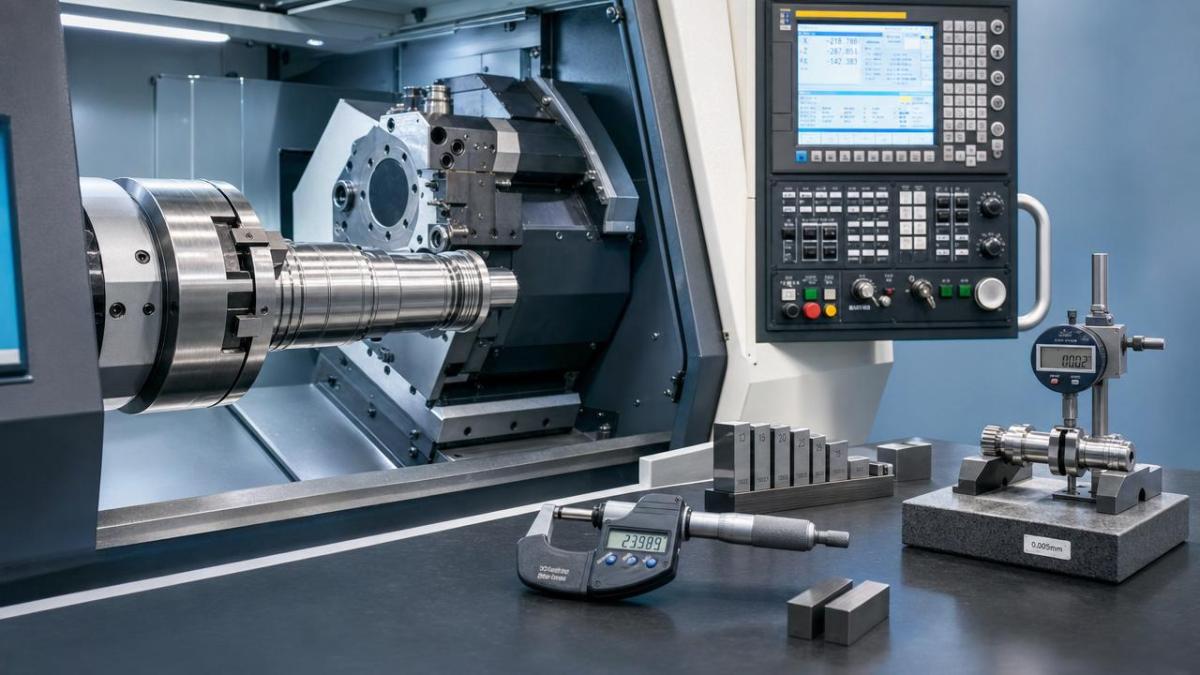
How do thermal stability, tooling, and setup conditions change the real output of a cnc lathe manufacturer?
Thermal stability is one of the most underestimated variables in turning accuracy. During spindle acceleration, hydraulic operation, coolant circulation, and long cycles, the machine structure warms unevenly. Even a high-end cnc lathe manufacturer cannot escape thermal expansion physics; the difference lies in machine design, compensation algorithms, and process discipline.
For example, a part measured immediately after machine warm-up may differ from parts made later in the shift when spindle bearings and ball screws reach a more stable temperature state. If the supplier’s validation test was performed only after full thermal stabilization, but production in your plant starts from cold conditions every morning, actual tolerance drift may be wider than the sales claim suggests.
Tooling condition is equally decisive. Insert geometry, nose radius consistency, coating behavior, tool holder rigidity, and projection length all influence dimensional control. A cnc lathe manufacturer may demonstrate excellent results using premium tooling in a laboratory-like trial, while a cost-optimized production program with longer tool life targets creates more variation. Technical evaluators should therefore examine the exact tooling package assumed in the quoted tolerance window.
Setup discipline also matters. Chuck pressure, jaw condition, workpiece protrusion, tailstock alignment, bar feeder stability, and fixture repeatability directly affect runout and deformation. Thin-wall parts and long shafts are especially sensitive. If a tolerance claim does not discuss workholding, the evaluation is incomplete because many turning deviations originate at the setup stage rather than the axis system itself.
How can you compare cnc lathe manufacturer claims more objectively during supplier screening?
A structured comparison matrix helps remove ambiguity. Instead of asking every supplier whether they can “hold tight tolerance,” define the same challenge part, material, drawing revision, tolerance stack, surface finish requirement, lot size, and measurement plan. Then compare both response quality and evidence quality.
Below is a practical screening table for technical assessment teams:
This kind of side-by-side review is particularly useful for global sourcing teams. It helps convert supplier claims into comparable engineering risk profiles, which is more valuable than relying on a polished machine demonstration alone.
What are the most common mistakes buyers make when evaluating a cnc lathe manufacturer?
One common mistake is treating machine catalog accuracy as equivalent to part accuracy. The machine may be highly capable, but the finished result still depends on workholding, cutting strategy, coolant delivery, chip evacuation, and inspection control. A capable cnc lathe manufacturer understands this system view; buyers should too.
Another mistake is overvaluing first-article success. A supplier may produce several perfect samples with exceptional attention, but those results may not survive normal throughput pressure. Repeatability over time matters more than a hand-picked sample set. Ask for production history, not just showcase parts.
A third mistake is ignoring metrology limitations. If the tolerance band is very narrow, the measurement system must be substantially more precise than the tolerance itself. Otherwise, the inspection report may look scientific while still carrying too much uncertainty for confident release decisions.
Buyers also sometimes fail to match tolerance requirements with economic reality. Not every feature needs sub-10-micron control. If the print is overconstrained, supplier filtering becomes harder, lead times grow, and costs rise. The right cnc lathe manufacturer may actually be the one who challenges unnecessary tolerances with sound engineering reasoning.
When is a tolerance claim credible enough for sourcing, qualification, or production approval?
A tolerance claim becomes credible when it is specific, measurable, repeatable, and tied to controlled conditions that resemble your actual application. For qualification, engineering teams should look for a combination of technical evidence and process maturity: preventive maintenance records, traceable calibration, operator training, documented setup sheets, and a clear reaction plan for drift or nonconformance.
It is also wise to validate the supplier with a pilot run instead of a pure sample run. A pilot lot exposes hidden weaknesses in cycle consistency, insert life, burr formation, thermal stabilization, and inspection flow. If the cnc lathe manufacturer can maintain quality through a realistic lot under agreed takt expectations, confidence increases substantially.
For strategic sectors, the standard should be even higher. Multi-site industrial groups, EPC contractors, and R&D-led programs often need assurance that the supplier’s process is transferable, documented, and auditable. In these cases, evidence should align with broader quality governance, not just part-level acceptance.
What should you clarify before moving forward with a cnc lathe manufacturer?
Before requesting a quote, trial, or sourcing approval, technical evaluators should align on several points: which dimensions are truly critical, what process capability is required, what lot sizes are expected, how parts will be measured, what environmental controls are available, and whether secondary operations may affect the final tolerance stack. These questions reduce misunderstanding and prevent later disputes over whether the cnc lathe manufacturer “met spec” in theory but not in practical production terms.
If further confirmation is needed on a specific program, prioritize discussion around the challenge drawing, material behavior, target Cpk, thermal conditions, tool management plan, inspection method, pilot lot size, and response process for deviation trends. Those topics create a far more reliable basis for cooperation than accepting a micron-level claim at face value.
Recommended News
 What to verify in a fluid control manufacturer's quality systemFluid control manufacturer quality checks: verify traceability, testing, calibration, document control, and corrective actions to reduce risk.
 When do smart device manufacturing solutions reduce assembly errors?Smart device manufacturing solutions reduce assembly errors with closed-loop controls, vision inspection, torque verification, and traceable process data. Learn what drives reliable production.
 Import trends reshaping precision tooling supply in 2026Import trends in 2026 are reshaping precision tooling supply. Discover how to reduce landed risk, strengthen sourcing resilience, and protect production performance.
 Choosing carbide end mills for stainless steel without edge chippingCarbide end mills for stainless steel: learn how to prevent edge chipping with the right substrate, geometry, coating, coolant, and stable milling parameters.
 What contract manufacturing support should cover before sourcingIndustrial procurement support for contract manufacturing: learn what to verify before sourcing, from DFM and traceability to quality, capacity, cost control, and compliance.
 When integrated precision manufacturing solutions reduce launch delaysIntegrated precision manufacturing solutions help industrial teams prevent launch delays by aligning design, sourcing, machining, sealing, testing, and supply-chain readiness.
 What a tooling fee covers before an injection mold is builtTooling fee explained: discover what it covers before an injection mold is built, from DFM and mold design to validation, ownership, and cost control.
 When a horizontal boring machine improves accuracy in large metal partsDiscover when a horizontal boring machine for metalworking improves accuracy in large parts, protecting critical bore alignment, stable datums, and assembly-ready results.
 What to verify before choosing a fluid control supplier for critical flowChoose a fluid control supplier with confidence: verify pressure cycling, material compatibility, flow validation, traceability, sealing, and long-term support for critical applications.
 Cleanroom equipment application guidance to reduce contamination riskIndustrial application guidance for cleanroom equipment: reduce contamination risk with practical airflow, material flow, maintenance, and process protection strategies.
 When should wind turbine parts be replaced instead of repaired?Wind turbine parts: learn when replacement is safer than repair, how to reduce repeat failures, protect uptime, and make smarter maintenance decisions.
 What to verify before choosing a coolant flow rate and pressure supplierCoolant flow rate and pressure supplier selection guide: verify duty points, pump curves, filtration, controls and service support for reliable machining performance.
 How mold design choices affect cooling time in injection moldingDiscover how mold design affects injection molding cooling time, part stability, cycle efficiency, and long-term production quality with practical engineering insights.
 Machine tool standards alerts that require 5-axis safety procedure updatesMachine tool standards alerts can trigger critical 5-axis safety procedure updates. Learn which changes demand action to protect operators, equipment, and production uptime.
 Does manufacturing standards compliance for semiconductors affect EDM tool approval?Manufacturing standards compliance for semiconductors shapes EDM tool approval through traceability, validation, contamination control, and inspection. Learn what proves reliable capability.
 Which medical grade materials withstand repeated sterilization in pumps?Medical grade materials for sterilizable pumps: compare 316L, PEEK, PPSU, PTFE, silicone, and EPDM for steam, radiation, and chemical resistance.
 What G-code compatibility issues arise when moving to 5-axis centers?G code compatibility issues in 5-axis centers can affect TCP, rotary limits, feeds, and safety. Learn how to validate programs before production.
 Can custom mailer boxes reduce damage costs in subscription shipping?Custommailerboxes can lower subscription shipping damage costs through right-sizing, protective inserts, stronger materials, and efficient pack-out. Discover how to reduce claims and improve delivery performance.
 How to assess a lubricants manufacturer's batch traceabilityLubricants manufacturer batch traceability: learn how to audit records, controls, CoAs, packaging, and recall readiness to reduce supply risk and protect uptime.
 When solar inverters should be replaced instead of repairedSolar inverters: learn when recurring faults, obsolete parts, safety damage, and rising lifecycle costs make replacement smarter than repair.
 What to verify before choosing a first aid kits distributorFirst aid kits distributor checklist: verify compliance, traceability, expiry control, replenishment, and multi-site delivery before choosing a reliable supplier.











Search News
Popular Tags