
When does low-volume electronics manufacturing make economic sense?
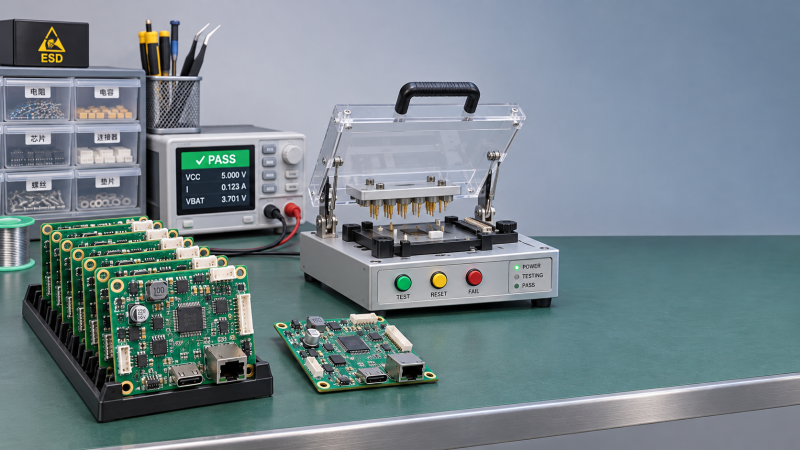
Low-volume electronics manufacturing can make economic sense when demand is uncertain, customization is essential, or excess inventory would cost more than the savings from a lower unit price. For buyers assessing electronics manufacturing solutions low volume search results may surface, the order quantity is only the starting point. Tooling, component commitments, testing, lead times, and the product lifecycle determine whether a smaller production run creates a stronger business case.
The purchasing decision should compare the total cost of meeting actual demand, including the cost of being wrong about that demand. A higher assembly price can be justified if it avoids obsolete stock, preserves engineering flexibility, or brings a saleable product to market sooner.
When electronics manufacturing solutions low volume buyers seek make financial sense
There is no universal unit threshold that separates low-volume from mass production. A few hundred assemblies may be routine for an industrial controller but commercially insignificant for a consumer device. The relevant question is whether expected demand is large and stable enough to recover the fixed costs and commitments of a higher-volume process.
Low-volume production deserves serious consideration in several situations:
- Demand is uncertain: A new product, pilot deployment, or regional launch has a credible forecast but limited order history.
- Variants are commercially necessary: Customers need different connectors, firmware, enclosures, certifications, or component configurations.
- The design is still changing: Engineering revisions are likely before production demand stabilizes.
- The product has a long service life: Replacement boards or retrofit assemblies are needed in intermittent batches.
- Demand is stable but inherently small: Specialized industrial, medical, or laboratory equipment may never justify a dedicated high-volume line.
Low volume is less attractive when demand is predictable, the design is stable, and the buyer can use the full output before components or finished goods become obsolete. In that case, spreading setup and tooling costs across more units can produce a durable cost advantage.
Compare total cost at the quantity customers will actually buy
A manufacturing quotation often highlights the price per assembled board at a specified quantity. That number is useful, but it is not the same as the cost per saleable product. Compare bids over the same demand period, with the same design revision, quality requirements, delivery terms, and expected sales volume.
A practical comparison adds fixed costs, variable manufacturing costs, freight, duties where applicable, inventory carrying costs, expected scrap or rework, and the expected cost of unused materials. Use scenario ranges where outcomes are uncertain. Do not count the full value of unsold stock as a loss if it can be used later or recovered through resale; estimate its realistic residual value instead.
A break-even calculation for competing quotes
For a simplified comparison, assume a low-volume option has $5,000 in fixed setup costs and a variable cost of $55 per unit. A higher-volume option requires $20,000 in fixed costs and costs $40 per unit. Assume both can produce the quantities considered and that all other costs are equal.
Break-even quantity = difference in fixed costs ÷ difference in variable cost per unit.
Here, the calculation is $15,000 ÷ $15, or 1,000 units. At 600 units, the low-volume option costs $38,000 and the higher-volume option costs $44,000. At 1,500 units, the respective costs are $87,500 and $80,000.
This is an illustrative calculation, not a market quote. It assumes the same number of good units is produced and sold, with no difference in inventory, yield, freight, or delivery timing. If the higher-volume supplier requires a minimum order of 1,500 units but demand reaches only 600, model the 900 extra units separately, including storage, financing, and realistic recovery value. The simple break-even point then no longer captures the full decision.
Understand the cost of readiness, not just the cost of assembly
Electronics manufacturing requires work before the first acceptable unit ships. A low-volume quote may include production preparation, or it may list those charges separately. Ask each supplier to identify one-time, per-revision, and per-batch costs so that a low initial price does not conceal expensive repeat orders.
Engineering, tooling, and production setup
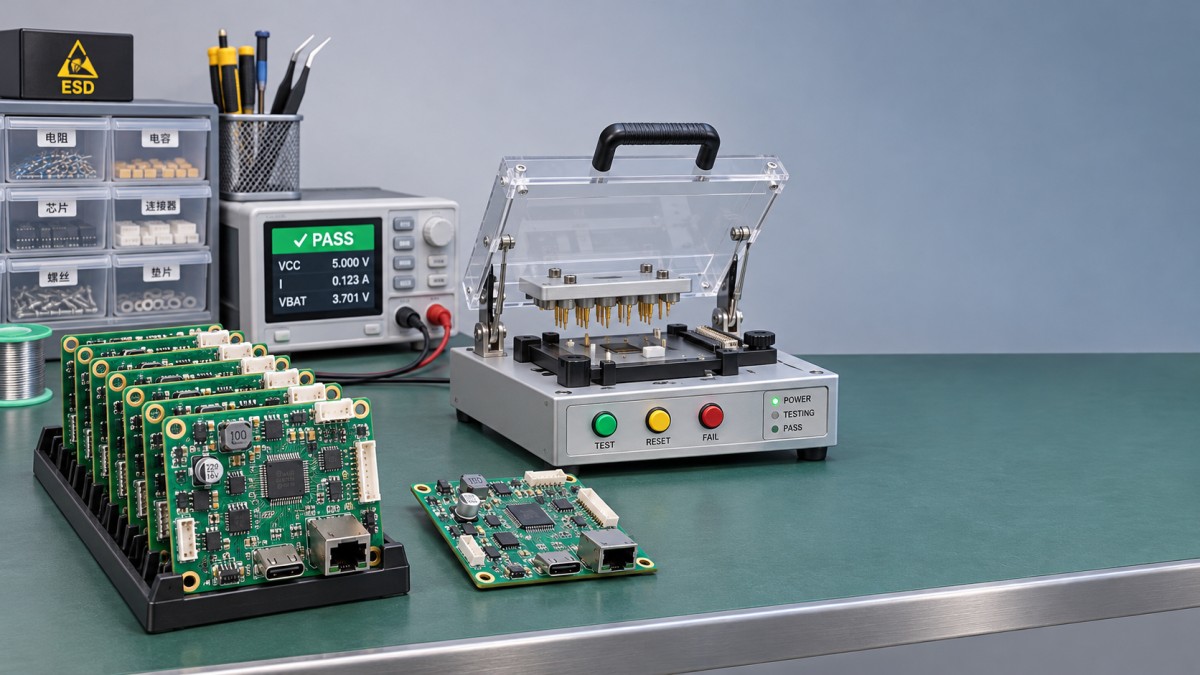
Non-recurring engineering can include design-for-manufacturing review, bill-of-materials verification, machine programming, panel design, and test development. Tooling may include solder-paste stencils, assembly fixtures, programming equipment, and functional test fixtures. Mechanical parts can introduce separate costs for CNC machining, sheet-metal tooling, or molded enclosures.
For a small run, a machined enclosure may cost more per piece than a molded enclosure while avoiding mold investment. For a stable, larger program, the mold may pay for itself. Compare those choices using expected lifetime demand and revision risk, not the first purchase order alone.
Confirm who owns each fixture, where it is stored, whether it can be transferred, and what the supplier charges to update it after an engineering change. A fixture that belongs to the buyer may still require documentation and software access before another manufacturer can use it.
Testing and the cost of a field failure
Reducing test coverage can make a bid look competitive while shifting cost into installation, warranty support, or customer downtime. Define the required inspection and test plan before comparing prices. Depending on the design, this may involve automated optical inspection, electrical checks, firmware programming, functional testing, or environmental screening.
Ask suppliers to state what each test detects, which operations are sampled or performed on every unit, and how failures are recorded and dispositioned. A functional test fixture can be expensive for a short run, but manual testing may also be costly or inconsistent. The appropriate choice depends on failure consequences, repeat demand, and the repeatability required.
Component procurement can erase the apparent savings
Small orders do not always mean small commitments. A manufacturer may need to buy a full reel, meet a distributor’s minimum order quantity, or secure parts with a long lead time. If the buyer must purchase the remaining stock or accept a non-cancellable order, the economic exposure can extend well beyond the assembled units.
Request a component-level view of the bill of materials for high-risk or high-value items. Identify the quoted manufacturer part number, source, available quantity, lead time, minimum purchase, excess quantity, and any proposed alternative. Check whether the quote assumes inventory that is actually available for the required production date.
Substitution is an engineering and commercial decision. An alternative component may require design validation, firmware changes, revised documentation, or customer approval. A cheaper available part is not equivalent if it delays release or invalidates an existing qualification.
Also clarify how the supplier handles shortages, counterfeit-part prevention, traceability, and parts supplied by the customer. Consigned components can reduce duplicate purchasing, but the agreement should specify incoming inspection, storage, loss, damage, and responsibility for defective material.
Account for lead time and the value of flexibility
Low-volume suppliers may offer a faster route to an initial batch, particularly when they can use available materials and existing equipment. Faster delivery is not guaranteed. Component lead times, engineering review, test development, factory capacity, and approval cycles can dominate the schedule regardless of batch size.
Build the timeline backward from the customer’s required date. Separate design release, material procurement, production, inspection, shipment, and acceptance. Ask which dates are commitments and which depend on assumptions. For repeat orders, establish the replenishment lead time and the notice required to reserve capacity.
Flexibility has a measurable value when an early batch can validate demand before a larger commitment. It also has a cost: repeated setups, smaller component purchases, and additional freight can make multiple short runs more expensive than one planned build. Model the likely reorder pattern rather than assuming that every future batch will receive the first-run price.
For long-life equipment, the opposite risk matters too. A supplier may accept a small order today but lack a plan for obsolete components or future capacity. Discuss last-time buys, approved alternatives, documentation retention, and the minimum economical reorder quantity before awarding a program that must be supported for years.
Put quality and compliance requirements into the request for quotation
A supplier’s quality certification is useful evidence of a management system, but it does not automatically prove that a particular assembly meets the buyer’s product, regulatory, or customer requirements. State the applicable requirements in the request for quotation and verify the scope of any certification claimed.
- Acceptance criteria: Specify workmanship requirements, inspection methods, and the process for accepting deviations. IPC-A-610 may be relevant to electronic assemblies when contractually specified, with the applicable class agreed.
- Traceability: Define whether records must link finished units to component lots, production dates, test results, or serial numbers, and how long records must be retained.
- Regulatory obligations: Identify applicable market and product requirements, such as restrictions on hazardous substances where relevant. Confirm who provides supporting declarations and evidence.
- Change control: Require notification and approval rules for component, process, location, firmware, or subcontractor changes that could affect the product.
- Nonconforming material: Agree on containment, root-cause investigation, rework authorization, and the allocation of freight and replacement costs.
These requirements affect price and lead time. A quote that excludes traceability or functional testing cannot be compared directly with one that includes them. Ask suppliers to price the same baseline and show optional services separately.
Build a purchasing decision around three demand cases
Before placing the order, create a low, expected, and high demand case for the same planning horizon. Use the cases to test whether the recommended approach remains viable when sales or engineering assumptions change.
- Set the demand and revision assumptions. Estimate units likely to ship, expected reorder timing, possible design changes, and the date after which inventory may lose value.
- Normalize supplier quotes. Include assembly, materials, setup, tooling, test, packaging, freight, applicable duties, and any minimum-order or cancellation commitments.
- Calculate scenario costs. Add expected inventory carrying costs and losses from excess or obsolete stock, using a documented residual value. Include repeat setup and replenishment costs where applicable.
- Check operational constraints. Confirm component availability, capacity, lead times, quality evidence, and the time needed to approve substitutions or design changes.
- Negotiate the transition. Establish price breaks, ownership of excess materials and tooling, forecast obligations, and the conditions for moving to a larger batch.
A staged agreement can combine an initial low-volume build with pre-negotiated terms for later production. Its value depends on the details: a future price break is useful only if material availability, capacity, and the approved design can support it. Ask the supplier how long the pricing and capacity assumptions remain valid.
The strongest business case is not necessarily the quote with the lowest unit price. Select the option that meets the required quality and delivery conditions at the lowest credible total cost across the demand cases that matter. Then record the assumptions and revisit them when orders, component availability, or the product design change.
Facing technical bottlenecks in manufacturing or looking for more efficient industrial solutions? Leave your details below and let the engineering experts at G-PME solve them for you.
We respect your privacy. Your information is strictly confidential.
Recommended News
 When does low-volume electronics manufacturing make economic sense?Explore electronics manufacturing solutions low volume buyers can use to cut inventory risk, compare total costs, and decide when smaller production runs make economic sense.
 How to spot worn conveyor components on a production lineSpot worn production line conveyor components early. Learn to trace noise, belt damage and tracking issues to their source and plan safer repairs.
 How to vet private label manufacturers in Latin AmericaPrivate label manufacturing Latin America: discover how to vet suppliers, verify quality and compliance, and reduce sourcing risks before you commit.
 How to choose home textiles that withstand frequent washingMake every textile home purchase count. Discover how to choose durable towels, bedding and covers that fit your laundry routine and withstand frequent washing.
 When does autonomous machining for automotive production make sense?Autonomous machining for automotive production: discover when it pays off and how to assess process stability, quality risks, capacity, and ROI.
 How to find the right OEM quick installation guide for your deviceFind the right OEM consumer electronics quick installation guide for your device. Learn how to verify your model, revision, and official setup instructions.
 How to select manufacturing materials for high-temperature useMaterial selection for manufacturing guide: compare high-temperature materials by strength, creep, environment and fabrication to choose with confidence.
 What causes car electronics to drain the battery when parked?Car electronics can drain your battery while parked. Discover common causes, from hidden lights to faulty modules, and learn how to pinpoint the problem.
 How to compare machine tool prices across supplier quotesUnderstand machine tool market pricing and compare supplier quotes with confidence. Uncover hidden costs, assess performance, and negotiate better terms.
 How machine thermal stability affects machining accuracyMachine thermal stability directly affects machining accuracy. Discover how to measure thermal drift, evaluate test results, and maintain tighter tolerances.
 How to assess an industrial machining factory's inspection processAssess an industrial machining factory’s inspection process with practical checks for measurement methods, traceability, sampling, and quality records.
 Can AI CNC programming reduce setup time in European factories?Can AI CNC programming in Europe reduce setup time? Discover where it saves effort, what affects results and how to run a practical factory pilot.
 Which medical scrubs are most comfortable for long shifts?Find comfortable medical scrubs for long shifts. Compare fabrics, fit, breathability, and practical features to choose a set that moves with you all day.
 How to compare quotes from shipping agentsCompare shipping agents with confidence. Learn how to assess total costs, hidden fees, Incoterms, insurance, and cargo handling before you book.
 Can a manufacturing capability assessment identify capacity risks?A manufacturing capability assessment can uncover bottlenecks and capacity risks before they delay your project. Discover how to evaluate suppliers and protect delivery dates.
 How supplier sourcing solutions support incoming quality inspectionExplore supplier sourcing solutions quality assurance practices that strengthen incoming inspections, improve traceability, and reduce supply risks.
 How to verify FDA clearance when choosing an aesthetics device supplier in the USAChoosing an aesthetics devices supplier in USA? Learn how to verify FDA records, match device configurations, and compare costs with confidence.
 How technical specification support helps verify semiconductor compatibilityTechnical specification support for semiconductors helps verify compatibility, identify hidden risks, and guide confident component selection. Explore the key checks.
 How to assess shelf life when buying bath bombs wholesaleBuying bathbombswholesale? Learn how to assess shelf-life claims, packaging and remaining selling time to protect margins and make smarter purchasing decisions.
 How reshoring affects CNC industry investment in the USAExplore how reshoring shapes CNC industry investment in the USA, from machine purchases and automation to supply chain risks and smarter capital decisions.
 How to keep application engineering support documentation currentKeep application engineering support documentation current with practical guidance on ownership, change control, supplier updates, and reliable handovers.








Search News
Popular Tags