
How supplier sourcing solutions support incoming quality inspection
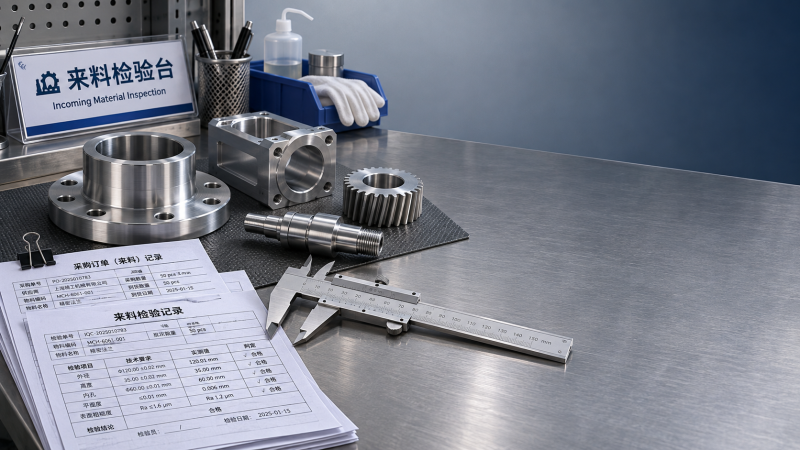
Incoming quality inspection starts long before materials reach the loading dock. For quality control and safety managers, inconsistent supplier documentation, unclear acceptance criteria, and undetected defects can put production reliability and workplace safety at risk. Effective supplier sourcing solutions quality assurance practices connect supplier qualification with inspection planning, traceability, and corrective action. This article explores how sourcing decisions can strengthen incoming inspections, reduce quality risks, and support more consistent acceptance of industrial components and materials.
The inspection plan begins with the sourcing decision
Receiving inspection is often treated as a final filter: material arrives, a technician checks it, and the lot is released or rejected. That model works only when the receiving team already knows what to check, how to check it, and which records should accompany the shipment. Those decisions depend on information gathered during supplier selection and purchase order preparation.
A supplier may offer a competitive price and an acceptable lead time but rely on subcontractors for heat treatment, coating, testing, or chemical blending. That is not necessarily a problem. It does, however, affect where defects can arise and which organization holds the evidence needed to investigate them. If those process steps are invisible to the buyer, an incoming inspector may receive a certificate without enough context to determine whether it applies to the delivered lot.
A useful sourcing process therefore asks a practical question before approving a supplier: can the organization consistently provide the product and the evidence required to accept it? The answer shapes the inspection workload, the need for independent testing, and the response when something goes wrong.
Turn supplier qualification into an actionable inspection plan
Qualification should do more than collect a questionnaire or an audit report. It should establish which characteristics affect fit, function, and safety; how the supplier controls them; and what the buyer can realistically verify on receipt.
For a precision-machined component, a drawing may identify dimensions, geometric tolerances, material grade, surface condition, and treatment requirements. The buyer still needs to decide which dimensions are critical to assembly or operation, whether suitable measuring equipment is available, and whether the supplier’s reported measurements can be linked to the delivered parts. A dimensional report is less useful if it references an obsolete drawing revision or does not identify the inspection method.
For industrial lubricants or functional chemicals, the receiving plan may focus instead on product identity, batch identification, packaging integrity, shelf life where applicable, and the documents needed for safe handling. A delivery that appears intact can still be unsuitable if its formulation or contamination limits differ from the approved specification. Safety data sheets support handling decisions, but they do not replace a product specification or demonstrate that a particular batch meets it.
Before an order is released, procurement, engineering, quality, and safety personnel should agree on the following:
- Acceptance basis: the drawing, specification, revision, and any applicable contractual or standard requirements.
- Critical characteristics: features whose failure could affect safe operation, product performance, or regulatory obligations.
- Evidence: the certificates, test reports, inspection records, and batch or serial identifiers required with each delivery.
- Verification method: what the supplier checks, what the receiving team checks, and what requires a qualified external laboratory or other specialist.
- Disposition authority: who can accept, reject, or approve a documented deviation, and under what conditions.
This discussion is especially valuable when a requirement cannot be verified without destructive testing or access to a production process. In those cases, waiting until the shipment arrives is too late to decide whether supplier records, witness testing, or another control is needed.
Make the purchase order a bridge between qualification and receiving
Supplier approval is not a substitute for a clear purchase order. Even an established supplier can ship against the wrong revision when specifications change or when a part number is used across multiple applications. The order should identify the applicable technical documents and state which records must accompany the goods or be available before shipment.
The link should continue through receiving: purchase order to delivery note, delivery note to package markings, package markings to lot or serial number, and identifier to the relevant test records. If one link is missing, the inspector may be unable to release material even when the physical product looks correct.
For example, a material certificate for a metal component is useful only if its heat or batch reference can be associated with the material supplied and its reported properties can be assessed against the specified requirements. A certificate of conformity may provide a supplier declaration, but the buyer must determine whether that declaration alone is sufficient for the application. Where independent test evidence is required, the order should say so rather than leaving the receiving team to negotiate after delivery.
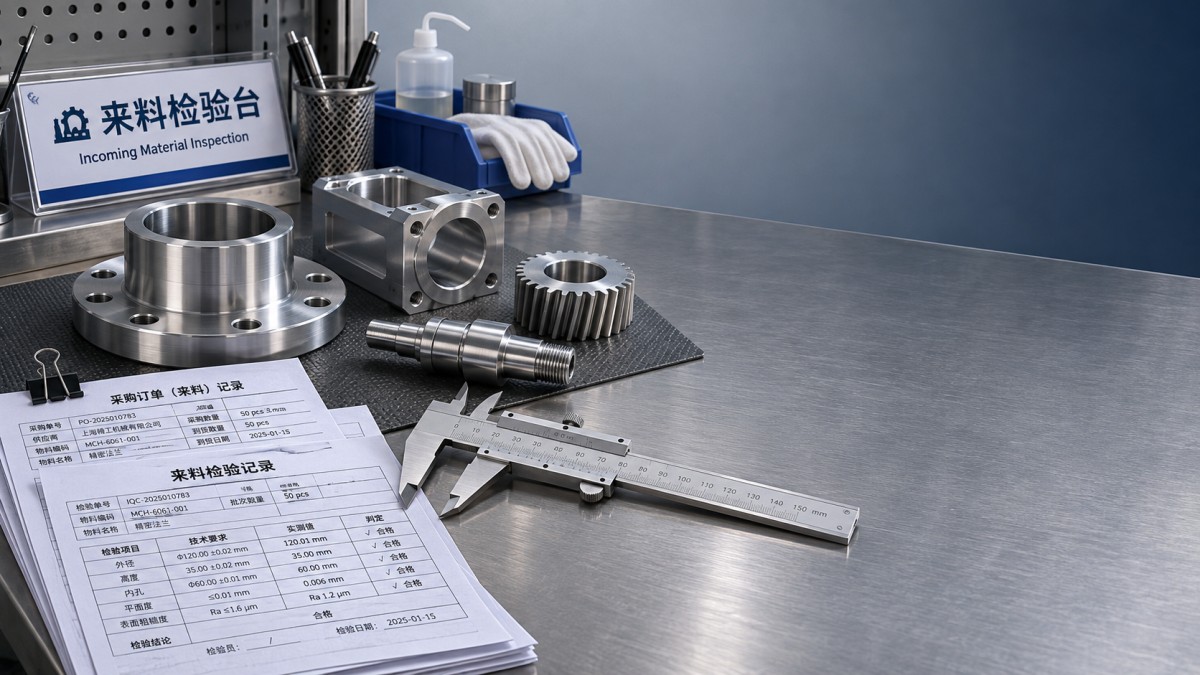
The same discipline applies to changes. A new manufacturing location, raw-material source, subcontracted process, or test method may alter risk even if the part number stays the same. Define which changes require prior notification or approval, what evidence must be resubmitted, and whether the next delivery needs additional inspection. The level of control should reflect the application, not an assumption that every change is equally consequential.
Choose checks based on failure risk, not habit
Inspecting everything is not always feasible, and checking only visible damage is rarely enough. A sound receiving plan considers the severity of a potential failure, the likelihood that a defect will escape earlier controls, and the ability of the proposed inspection to detect it.
A pump component used in a demanding service may need attention to material compatibility, pressure-related requirements, sealing surfaces, and traceability. A fastener may require verification of grade, dimensions, markings, and supporting records. A die-cast part may call for dimensional checks and an agreed approach to internal discontinuities where those affect performance. These are examples of questions to resolve, not universal inspection prescriptions.
Sampling needs the same care. A plan should define the lot, the sampling method, the characteristics inspected, and the rules for acceptance or rejection. If a recognized sampling standard is specified, the parties should agree on the applicable edition and parameters. Sampling can support a decision about a lot; it cannot prove that every individual item is defect-free. For safety-critical characteristics, additional controls may be warranted based on the design, applicable requirements, and failure consequences.
Inspection capability matters as much as inspection frequency. A measurement taken with equipment unsuitable for the tolerance, an uncontrolled fixture, or an unclear reference datum can produce a misleading result. Agree on measurement methods, calibration status, and how measurement uncertainty will be considered when a result is close to a limit. If buyer and supplier use different methods, resolve the difference before treating a borderline reading as a product failure.
Treat documentation gaps as quality and safety signals
A missing document is not automatically proof that material is defective. It is, however, a reason to stop and determine whether the required evidence can still be obtained and trusted. A certificate with a mismatched lot number, an expired shelf-life statement, or an unidentified drawing revision should not be quietly filed to keep material moving.
The receiving procedure should distinguish between a documentation hold and a confirmed product nonconformance. Both need identification and segregation, but the investigation will differ. A corrected administrative record may resolve one issue; a traceability break may require replacement, additional testing, or an engineering decision. Any release under deviation should be documented by an authorized person and assessed against contractual and applicable safety requirements.
Physical segregation matters too. Material on hold should be clearly identified and controlled in the inventory system so it cannot be issued to production by mistake. For chemicals, damaged containers or suspected leaks may also require an immediate safety response under the site’s procedures, separate from the commercial decision to accept or reject the delivery.
Use receiving results to challenge the supplier, not just the shipment
A rejected lot is useful information only if the organization learns why it failed. A supplier corrective action request should describe the defect, affected identifiers, objective evidence, and the containment needed for material in transit or already delivered. It should also ask the supplier to address both the cause of the defect and the reason existing controls did not detect it.
“Operator error” on its own is not an adequate explanation. Was the instruction unclear? Was the wrong revision accessible? Did the inspection fixture fail to distinguish acceptable from unacceptable parts? The buyer should assess whether the proposed corrective action addresses the mechanism and whether its effectiveness can be verified through subsequent evidence. Sorting a shipment may protect immediate production, but sorting is containment, not necessarily a permanent fix.
Supplier performance reviews can combine delivery records with defect trends, documentation accuracy, responsiveness, and the quality of corrective actions. A stable history may support a justified reduction in receiving checks where procedures and contractual requirements allow it. Conversely, a process change, repeated paperwork errors, or an unexplained defect may justify temporary tightened inspection or requalification. Reduced inspection should be a documented decision, not a reward given merely because a supplier has been used for years.
Evaluate sourcing information in the context of the application
Supplier sourcing solutions are most useful when commercial intelligence and technical requirements are considered together. Price movements or an alternative source may justify a sourcing review, but they do not establish interchangeability. A replacement seal material, machining route, or lubricant formulation may change performance in ways that are not visible during a routine receiving check.
Global Precision-Machining & Engineering (G-PME) brings together technical and supply-chain perspectives across machining, fastening and sealing, fluid control, die-casting, and industrial chemicals. That cross-disciplinary view can help teams frame the right questions when comparing specifications or reviewing sourcing risks. References to ISO, DIN, ASME, or JIS should still be checked against the specific document, edition, contractual requirement, and intended application; a standard designation by itself is not evidence that a delivered lot conforms.
A practical next step is to select one high-consequence purchased item and trace its path from specification to supplier controls, shipment records, receiving checks, and release decision. Any point where the team cannot identify the acceptance criterion, responsible person, or supporting evidence is a point to resolve before the next delivery.
Facing technical bottlenecks in manufacturing or looking for more efficient industrial solutions? Leave your details below and let the engineering experts at G-PME solve them for you.
We respect your privacy. Your information is strictly confidential.
Recommended News
 How supplier sourcing solutions support incoming quality inspectionExplore supplier sourcing solutions quality assurance practices that strengthen incoming inspections, improve traceability, and reduce supply risks.
 How to verify FDA clearance when choosing an aesthetics device supplier in the USAChoosing an aesthetics devices supplier in USA? Learn how to verify FDA records, match device configurations, and compare costs with confidence.
 How technical specification support helps verify semiconductor compatibilityTechnical specification support for semiconductors helps verify compatibility, identify hidden risks, and guide confident component selection. Explore the key checks.
 How to assess shelf life when buying bath bombs wholesaleBuying bathbombswholesale? Learn how to assess shelf-life claims, packaging and remaining selling time to protect margins and make smarter purchasing decisions.
 How reshoring affects CNC industry investment in the USAExplore how reshoring shapes CNC industry investment in the USA, from machine purchases and automation to supply chain risks and smarter capital decisions.
 How to keep application engineering support documentation currentKeep application engineering support documentation current with practical guidance on ownership, change control, supplier updates, and reliable handovers.
 When is a scraper chip conveyor system suitable for CNC swarf?Is a scraper chip conveyor system right for your CNC swarf? Explore chip types, coolant filtration, capacity and wear to make a confident choice.
 How to size a CNC surface grinding machine for your workpiecesChoose the right surface cnc grinding machine with practical guidance on travel, clearance, load capacity and accuracy for your workpieces.
 How application engineering support improves product selectionApplication engineering support improves product selection by aligning specifications with real operating conditions. Discover how to compare options with confidence.
 What affects the price of an industrial air compressor?Understand what affects air compressors price, from capacity and controls to installation and energy costs. Compare quotes and choose the best-value system.
 How to check whether a bulletproof vest is NIJ certifiedLearn how to verify bulletproofvests on the official NIJ Compliant Products List, match labels and configurations, and avoid misleading certification claims.
 How to verify organic cotton baby clothes certificationShopping for organiccottonbabyclothes? Learn how to verify GOTS and OCS claims, check certificate details, and choose baby clothing with confidence.
 How to choose a laser level for outdoor workCompare laserlevels for outdoor work by range, accuracy, durability, and receiver compatibility. Find the right tool for reliable results on site.
 How to evaluate an industrial supplier's delivery reliabilityStrengthen industrial procurement support and supplier evaluation with practical checks for delivery records, lead times, capacity, and recovery plans.
 How to inspect welded iron pipes for seam defectsInspect weldedironpipes for seam defects with a practical guide to visual checks, NDT methods, acceptance criteria, and safe repair decisions.
 How to assess electronics manufacturing solutions in North America for production capacityAssess electronics manufacturing solutions North America teams can rely on. Compare capacity, supply risks and quality controls to choose the right production partner.
 Can portable telemedicine devices work with poor connectivity?Telemedicine hardware portable devices can support care with poor connectivity. Discover what works offline and how to evaluate reliable remote care workflows.
 How to choose rugs and carpets for high-traffic roomsDiscover how to choose rugs and carpets for high-traffic rooms. Compare materials, construction, cleaning needs, and fit to find a practical, lasting option.
 What affects the wholesale price of EPS sandwich panels?Compare EPS sandwich panels wholesale prices and discover how core density, steel facings, order size, and delivery costs affect your project budget.
 Why do automatic mechanical watches stop when not worn?Why do automaticmechanicalwatches stop when unworn? Discover how power reserve works, how to restart your watch, and when to seek professional help.
 How does excess inventory affect fashion retail profitability?Discover how excess inventory erodes fashion retail profits through markdowns and holding costs, and learn practical ways to protect margins and free up cash.

















Search News
Popular Tags