
How to verify organic cotton baby clothes certification

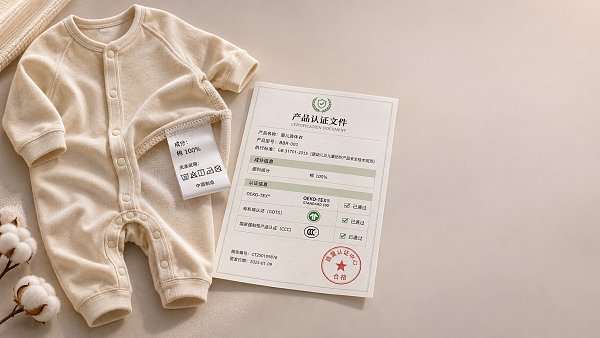
To verify an organic cotton claim on baby clothes, look for the name of a recognized certification standard, the certifying body and a reference that can be checked against an official database or directly with the certifier. Then confirm that the certification covers the finished garment, the relevant production stage and the period when the item was made. A cotton claim on a label is useful evidence only when its scope matches the item being sold.
Descriptions such as “natural,” “eco-friendly” and “made with organic cotton” do not, by themselves, establish independent certification. They also leave an important question unanswered: is the claim about the cotton fiber, the fabric, or the complete garment?
Start with the exact claim on the garment
Read the care label, hangtag and product description together. A credible claim should identify the standard and give enough information to trace the certification to a named organization. The same product may carry several labels, each addressing a different issue.
For example, a bodysuit described as “made with organic cotton” could contain certified organic cotton fiber without the finished garment being certified to an organic textile standard. A label saying “organic cotton shell” narrows the claim to the outer fabric; it does not establish that the lining, trim or filling is organic. A garment advertised as organic cotton with a small amount of elastane should also be understood as a blend, not as a garment made entirely from cotton.
Compare the claim with the fiber composition on the care label. A description that suggests all fibers are organic cotton while the composition lists other fibers deserves clarification. Composition percentages describe fiber content; they do not, on their own, prove organic origin.

Know which standard answers which question
Certification names are easy to confuse because they can appear together on the same garment. Their scopes differ.
GOTS and OCS have different requirements and labeling rules. Do not infer that the same percentage applies to every garment bearing either name. Read the label grade and the actual fiber declaration, then consult the standard’s current labeling guidance if the wording is unclear.
Similarly, a harmful-substance testing label can add useful information about a finished article without proving organic agriculture. A garment can carry both types of certification, but one should not be treated as a substitute for the other. For baby clothing, the distinction matters because fiber origin and the substances assessed in a finished item answer separate questions.
Use the certificate reference to trace the claim
Find the certificate number, license number or other reference printed beside the certification mark. Go to the standard’s official website and use its certificate search or follow its instructions for verification. Enter the reference exactly, including letters and punctuation where required. If there is no public search result, contact the named certification body with the reference and the product details.
A valid-looking number is only the starting point. Review the organization name, certification status, validity dates and scope shown in the result or certificate. The name may belong to a garment producer, processing company or brand owner rather than the name printed prominently on the clothing. A different name is not automatically a problem, but the seller should be able to explain the connection and show how the garment falls within the certified operation.
Some public databases show organization-level information rather than a searchable record for every individual style. A matching company entry therefore supports the claim, but may not independently identify a particular romper or sleep suit. Where the public record does not establish the product link, ask for additional documentation from the seller or confirmation from the certification body.
Look closely at the scope
A scope certificate describes the certified entity and the activities or product categories covered by its certification. Read beyond the certificate title. A certificate for spinning yarn, for example, does not by itself demonstrate that a separately produced finished garment was certified. Likewise, a certificate naming fabric does not automatically establish certification of every item later sewn from that fabric.
Look for a product category and operation consistent with the claim: baby apparel, knitted garments, sewing or processing, as applicable. The exact wording varies by standard and certifier. If the document covers only an earlier stage, the finished garment’s status remains unresolved until the later stages and product claim are substantiated.
Validity also needs context. An expired certificate does not automatically prove that a garment made while it was valid was uncertified. Equally, a certificate that is valid today does not prove that an older garment was produced during a covered period. Production or transaction records are needed when the dates do not clearly align.
Ask for evidence that connects the document to the item
A certificate displayed on a product page is stronger when it can be linked to the specific garment. Useful details include the style name or number, fiber composition, certified product category and the organization responsible for the claim. Compare those details with the packaging and sewn-in label. Differences in color names or retail descriptions may be harmless; a mismatch in material, product category or certificate holder needs an explanation.
For certified material moving between businesses, a transaction certificate may provide evidence about a particular shipment or transaction under the applicable standard. It is different from a scope certificate: one concerns a defined transaction, while the other establishes the certified entity’s approved scope. A transaction certificate is not always available on a retail product page, and confidential commercial details may be redacted. Its absence from the listing alone is not proof that the claim is false.
If the seller supplies a document, examine whether the item description and quantities, where shown, relate to the product in question. A certificate for organic cotton yarn cannot by itself establish that a finished sleep suit is certified. Nor does an unrelated transaction certificate prove that a particular retail item came from the shipment it describes.
A practical request is specific: “Which certification covers this style, what is the certificate reference, and does the scope include the finished garment?” If the answer points only to a factory certificate or repeats the marketing description, the connection to the item has not yet been demonstrated.
Read blends, components and wording carefully
Baby garments often combine a cotton body with snaps, thread, labels, elastic or printed details. Certification schemes have rules for permitted components and processing, but “certified organic” should not be interpreted as meaning every part is organic cotton. Read the precise label claim and the standard’s current rules for the relevant label grade.
The same caution applies to sets. A multipack may contain garments with different fabric compositions, while a gift set could include a blanket, hat and accessory from different production runs. A certification claim attached to the set should make clear which items it covers. A logo on an outer box is not enough to resolve an ambiguous claim about every item inside.
Color and print also affect what needs verification. Organic cotton describes the origin of the fiber; it does not describe the dye, print treatment or finished garment’s complete chemical profile. A relevant textile-processing certification can address additional criteria, but only within its stated scope. A pale or undyed appearance should not be treated as evidence of certification.
Recognize claims that need a closer look
Be cautious when a listing shows a certification logo with no named certifier or reference, uses a cropped certificate with missing dates, or presents an unrelated company’s document without explaining the connection. A certificate that cannot be found publicly is not necessarily invalid, but an inability to obtain confirmation from the issuing body leaves the claim unverified.
Other signals are more subtle. “Certified factory” may accurately describe a facility while leaving the garment itself outside the certified scope. “Organic fabric” may refer to a component rather than the whole article. A certificate number copied across many listings may be legitimate if the products fall within the same valid scope, but the number alone does not establish that each listing is covered.
Keep screenshots of the listing and any certificate details when ordering, especially if the claim influences the choice. When the garment arrives, compare its labels with the online description. If the certification reference, composition or product identity differs, ask for clarification before relying on the original claim.
Certification is one part of choosing baby clothing. It does not replace attention to fit, garment condition or care instructions. For the organic claim itself, the most useful evidence is a traceable certificate whose holder, scope and timing connect clearly to the specific item.
Recommended News
 How to verify organic cotton baby clothes certificationShopping for organiccottonbabyclothes? Learn how to verify GOTS and OCS claims, check certificate details, and choose baby clothing with confidence.
 How corner radius carbide end mills reduce edge chippingDiscover how corner radius carbide end mills reduce edge chipping, improve machining consistency, and support longer tool life with the right geometry and setup.
 How to choose a laser level for outdoor workCompare laserlevels for outdoor work by range, accuracy, durability, and receiver compatibility. Find the right tool for reliable results on site.
 Global Metal-Cutting Semi-Synthetic Coolant Market Forecast to Reach $1.73 Billion by 2030The semi-synthetic metal-cutting coolant market is forecast to reach $1.73 billion by 2030. Explore growth drivers and key considerations for buyers and suppliers.
 How coating thickness affects carbide tool coating costsCarbide coating cost analysis: discover how thickness affects tool prices, wear and cost per part, and learn when a premium coating is worth the investment.
 What pressure stability data should a pump supplier provide?How do I shortlist the right high-pressure pumps supplier for stable pressure? Learn which test data to request and compare bids with confidence.
 How to evaluate an industrial supplier's delivery reliabilityStrengthen industrial procurement support and supplier evaluation with practical checks for delivery records, lead times, capacity, and recovery plans.
 Stonepeak Completes 65% Castrol Acquisition; Former Shell CEO to ChairStonepeak's 65% Castrol acquisition brings new leadership as former Shell CEO Ben van Beurden becomes chair. Explore potential implications for lubricant buyers and suppliers.
 How to inspect welded iron pipes for seam defectsInspect weldedironpipes for seam defects with a practical guide to visual checks, NDT methods, acceptance criteria, and safe repair decisions.
 How to assess electronics manufacturing solutions in North America for production capacityAssess electronics manufacturing solutions North America teams can rely on. Compare capacity, supply risks and quality controls to choose the right production partner.
 How to reduce thermal cracking in die casting mold insertsReduce thermal cracking in die casting mold inserts with practical tips on temperature control, cooling, steel selection and maintenance to extend tool life.
 Can portable telemedicine devices work with poor connectivity?Telemedicine hardware portable devices can support care with poor connectivity. Discover what works offline and how to evaluate reliable remote care workflows.
 How to choose rugs and carpets for high-traffic roomsDiscover how to choose rugs and carpets for high-traffic rooms. Compare materials, construction, cleaning needs, and fit to find a practical, lasting option.
 What affects the wholesale price of EPS sandwich panels?Compare EPS sandwich panels wholesale prices and discover how core density, steel facings, order size, and delivery costs affect your project budget.
 Japan's Machine Tool Export Controls Accelerate China's Five-Axis SubstitutionJapan's machine tool export controls are accelerating China's five-axis CNC substitution. Explore the implications for buyers and supply chains.
 Why do automatic mechanical watches stop when not worn?Why do automaticmechanicalwatches stop when unworn? Discover how power reserve works, how to restart your watch, and when to seek professional help.
 Choosing high-tensile bolts for industrial fastening in EuropeIndustrial fastening Europe: Learn how to select high-tensile bolts, coatings and standards for reliable joints, accurate preload and safer assembly.
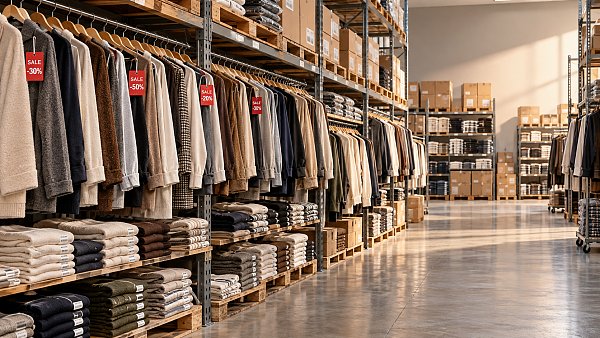
 How does excess inventory affect fashion retail profitability?Discover how excess inventory erodes fashion retail profits through markdowns and holding costs, and learn practical ways to protect margins and free up cash.
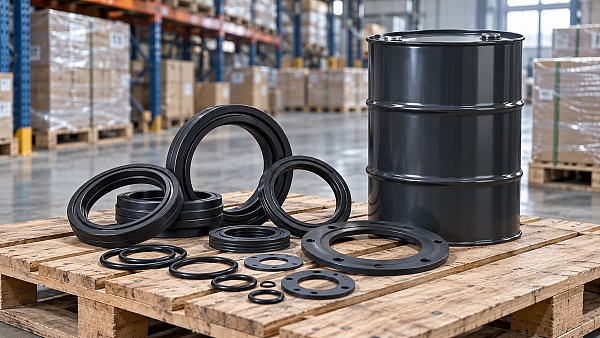
 US Adds 50% Section 338 Tariff on Canadian Seals and Other ProductsUS Section 338 tariffs add 50% to covered Canadian seals, lubricants and other goods. Explore the potential impact on sourcing and supply chain costs.
 Can lean manufacturing reduce changeover time in injection molding?Discover how lean manufacturing can reduce injection molding changeover time with SMED, better preparation, standardized processes, and quality controls.
 How to estimate the payback period for a CNC machining centerEstimate your CNC machining center investment payback with a practical formula, installed cost checklist, cash-flow examples, and risk analysis.


















Search News
Popular Tags