
How to choose home textiles that withstand frequent washing
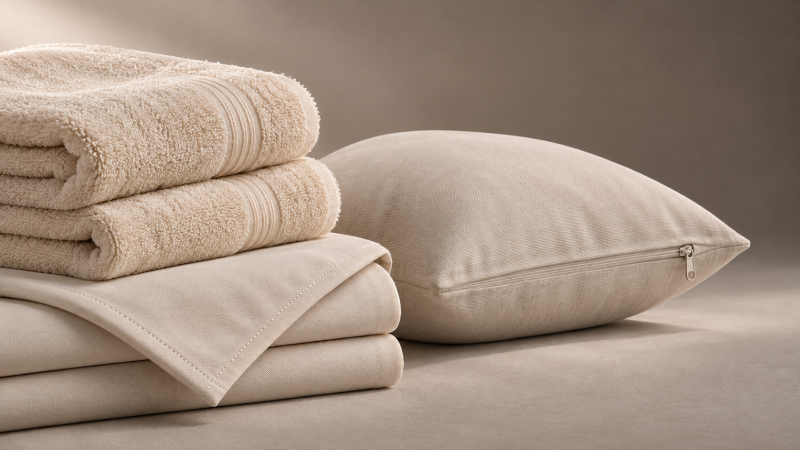
Choose frequently washed home textiles by working backward from your laundry routine. A towel that can handle a regular warm wash and tumble drying may be a better fit than a softer, more delicate option that needs a cool cycle and line drying. For bedding, cushion covers and other pieces, look for a care label you can follow consistently, then assess the fabric and construction.
Cotton and polyester blends are often practical starting points, but fiber content alone cannot predict how well an item will age. Yarn quality, fabric weight, stitching, dyeing and finishing all affect the result. The best choice for a busy household is the one that balances comfort with a realistic care routine—and has no obvious weak points likely to fail long before the fabric itself.
Start with how the item will be washed
Before comparing fabrics, decide how often the item is likely to go into the machine and what conditions it will face. Bed sheets, hand towels and kitchen textiles may need frequent washing. Decorative curtains may be laundered much less often, even in a household that does several loads a week.
Check the full care label before buying. A product described as “machine washable” may still require a delicate cycle, cold water, line drying or a low iron. Those instructions may be perfectly manageable for a spare cushion cover but inconvenient for the towels everyone uses daily. If a removable cover has an insert or lining, check the care instructions for each component.
Temperature matters when your household has a specific hygiene need. If you expect to wash an item at a particular temperature, choose one whose label permits it. Avoid assuming that every cotton product can tolerate a hot wash: color, finishes, elastic and other components can impose lower limits.
The same applies to drying. A fabric may survive machine washing yet shrink, lose softness or wear faster when repeatedly dried at high heat. If you rely on a tumble dryer, look for an item whose label allows it, and follow the stated heat setting.
Compare fibers by use, not by reputation
There is no single best fiber for every textile home purchase. A useful comparison starts with what touches the skin, how quickly the item needs to dry and whether you are willing to accept wrinkling or a little change in texture.
Cotton: comfortable and versatile, with variable results
Cotton is a familiar choice for sheets, towels and kitchen cloths because it feels comfortable against the skin and absorbs moisture. Well-made cotton textiles can stand up to repeated laundering, but quality varies widely. Some may shrink, fade, wrinkle or develop a rougher feel, especially if the care instructions are ignored.
For towels, inspect the loops and hems as well as the softness. A plush surface can feel appealing in a shop, but a very thick towel may take longer to dry. For sheets, consider whether you prefer a crisp woven fabric or a softer finish, then check the label for the laundering conditions each requires.
Polyester and blends: convenient, but feel matters
Polyester and cotton-polyester blends can be useful when easy care, quicker drying and reduced wrinkling are priorities. They appear in bedding, cushion covers, table linens and curtains. A blend may suit a household that wants everyday pieces to come out of the wash ready to use with little ironing.
Comfort is personal, however. Some people find certain polyester fabrics less breathable against the skin, while others like their smooth feel. Synthetic fabrics can also develop pills, particularly where washing and everyday use create friction. Examine the surface and, where possible, feel the fabric before choosing it for sheets or pillowcases.
Linen and other natural fibers: check the maintenance trade-off
Linen can be a good option for bedding or table linens when its texture and naturally creased appearance appeal to you. It may soften with use, but it is not automatically immune to shrinkage, abrasion or damaged seams. Follow the label, particularly on drying and ironing, and be comfortable with a less pressed look.
Other fibers, including silk, wool and some viscose fabrics, can feel attractive or luxurious but may require gentler care. Do not rule them out solely because they are delicate; reserve them for pieces whose cleaning needs fit your routine. A washable blend or a removable cover may make a decorative item easier to maintain, provided all parts are labeled for the wash method you intend to use.
Inspect the parts that tend to fail first
Even when the main fabric feels substantial, seams, hems and fastenings can determine whether a piece stays usable. A quick inspection in person—or a close look at product photos and the care description online—can reveal details that a fiber label cannot.
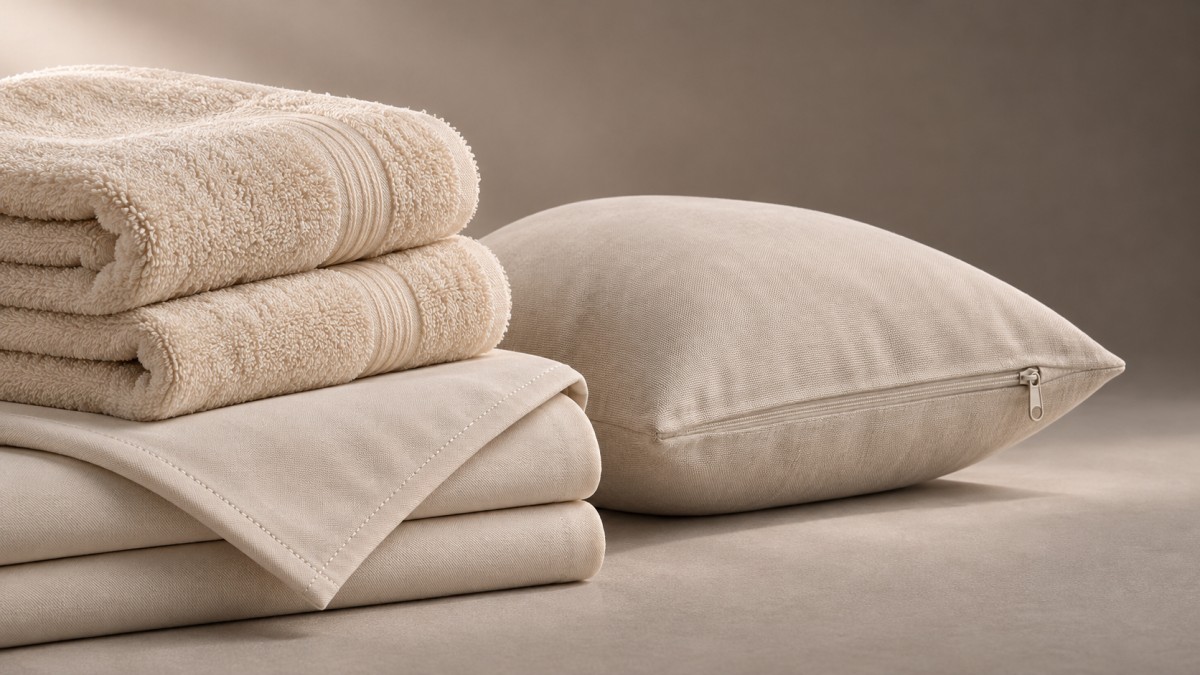
- Seams and hems: Look for even stitching, secured thread ends and hems that lie flat. Tug gently at a seam in a shop; visible gaps, loose threads or puckering are reasons to look more closely.
- Fabric surface: Check for uneven areas, snags or loose loops. On towels, a few pulled loops may occur in use, but an already snagged surface is a poor starting point.
- Fastenings: Open and close cushion-cover zippers and duvet-cover buttons if possible. They should operate smoothly, with fabric securely stitched around them.
- Elastic: For fitted sheets, inspect how the elastic is attached and whether it appears evenly distributed. The sheet must retain enough stretch to stay on the mattress after repeated use.
- Multiple layers: Quilted pieces, lined curtains and padded covers should have secure stitching across the layers. Check that the entire item, including its filling or lining, can be washed as intended.
Weight can help you judge how a fabric feels, but heavier does not automatically mean longer-lasting. A thick bath towel may feel luxurious yet be awkward to dry; a lighter, well-constructed towel may suit frequent use better. Likewise, a high thread count on sheets is only one part of a specification. It does not tell you on its own how durable, comfortable or easy to care for the finished fabric will be.
Choose differently for towels, bedding and covers
Towels need absorption and drying practicality. Look for a fabric that feels comfortable, has secure hems and can be washed and dried using your normal settings. Consider where it will hang between uses: a very dense towel may be less convenient in a poorly ventilated bathroom. Check care instructions before using fabric softener, which can affect absorbency.
Sheets and pillowcases need both comfort and dimensional stability. Read the permitted wash and drying instructions, particularly if you prefer warmer washes. Check the fitted sheet’s stated dimensions against your mattress, including its depth. A little room for the manufacturer’s stated shrinkage allowance, if provided, can be useful; an excessively tight fit puts more strain on corners and elastic.
Kitchen textiles face stains as well as washing. Tea towels, cloth napkins and table linens may be exposed to oils, sauces and frequent handling. Choose washable fabrics and colors that suit the way you deal with stains. A patterned or darker item may make some marks less visible, although it can still fade and may need color-safe stain treatment.
Cushion covers and curtains need a workable removal plan. A washable cushion cover is easier to clean when its zipper opening is large enough to remove and replace the insert without forcing the seams. For curtains, check whether the lining, trim and any attached hardware affect the care instructions. Large panels also need enough room in the washing machine to move freely; if they do not fit, choose a permitted cleaning method that you can arrange.
Read color and finish claims with care
Dark colors, vivid prints and contrasting trims can make a piece attractive, but they also make color changes more noticeable. Follow the label for washing with similar colors, particularly for the first few washes. A care label may also specify whether bleach is allowed. If it is not, plan to treat stains with a product and method suitable for the fabric and color.
Labels such as “wrinkle resistant,” “easy care” or “pre-shrunk” can be helpful clues, but read the details. A pre-shrunk sheet can still change dimensions during later laundering, and a wrinkle-resistant finish does not make a fabric immune to heat damage. Decorative coatings, trims or surface treatments may need gentler handling than the underlying fabric.
If you are ordering online, look for a complete fiber composition and care instructions rather than relying on a photograph or a broad claim such as “durable.” Close-up images of seams and fastenings are useful, too. When that information is missing and frequent washing is essential, a product with clearer instructions is easier to assess.
Make the care routine part of the decision
A good purchase can wear prematurely if it is routinely washed outside its care limits. Sort by color and fabric type, use the recommended detergent amount, and avoid overloading the machine so items can move and rinse properly. Close zippers before washing covers, and separate rough or heavily soiled items from delicate fabrics when practical.
Treat stains promptly using a method suitable for the fabric, and check that a stain has lifted before machine drying if the care label permits drying. Heat can make some stains harder to remove. For printed or dark items, turning covers or pillowcases inside out may help reduce surface friction during washing.
When comparing two otherwise suitable products, choose the one whose care instructions match what you will actually do each week. A textile that fits the wash cycle, drying space and level of ironing you can maintain has a better chance of staying in regular use for longer.
Facing technical bottlenecks in manufacturing or looking for more efficient industrial solutions? Leave your details below and let the engineering experts at G-PME solve them for you.
We respect your privacy. Your information is strictly confidential.
Recommended News
 How to choose home textiles that withstand frequent washingMake every textile home purchase count. Discover how to choose durable towels, bedding and covers that fit your laundry routine and withstand frequent washing.
 When does autonomous machining for automotive production make sense?Autonomous machining for automotive production: discover when it pays off and how to assess process stability, quality risks, capacity, and ROI.
 How to find the right OEM quick installation guide for your deviceFind the right OEM consumer electronics quick installation guide for your device. Learn how to verify your model, revision, and official setup instructions.
 How to select manufacturing materials for high-temperature useMaterial selection for manufacturing guide: compare high-temperature materials by strength, creep, environment and fabrication to choose with confidence.
 What causes car electronics to drain the battery when parked?Car electronics can drain your battery while parked. Discover common causes, from hidden lights to faulty modules, and learn how to pinpoint the problem.
 How to compare machine tool prices across supplier quotesUnderstand machine tool market pricing and compare supplier quotes with confidence. Uncover hidden costs, assess performance, and negotiate better terms.
 How machine thermal stability affects machining accuracyMachine thermal stability directly affects machining accuracy. Discover how to measure thermal drift, evaluate test results, and maintain tighter tolerances.
 How to assess an industrial machining factory's inspection processAssess an industrial machining factory’s inspection process with practical checks for measurement methods, traceability, sampling, and quality records.
 Can AI CNC programming reduce setup time in European factories?Can AI CNC programming in Europe reduce setup time? Discover where it saves effort, what affects results and how to run a practical factory pilot.
 Which medical scrubs are most comfortable for long shifts?Find comfortable medical scrubs for long shifts. Compare fabrics, fit, breathability, and practical features to choose a set that moves with you all day.
 How to compare quotes from shipping agentsCompare shipping agents with confidence. Learn how to assess total costs, hidden fees, Incoterms, insurance, and cargo handling before you book.
 Can a manufacturing capability assessment identify capacity risks?A manufacturing capability assessment can uncover bottlenecks and capacity risks before they delay your project. Discover how to evaluate suppliers and protect delivery dates.
 How supplier sourcing solutions support incoming quality inspectionExplore supplier sourcing solutions quality assurance practices that strengthen incoming inspections, improve traceability, and reduce supply risks.
 How to verify FDA clearance when choosing an aesthetics device supplier in the USAChoosing an aesthetics devices supplier in USA? Learn how to verify FDA records, match device configurations, and compare costs with confidence.
 How technical specification support helps verify semiconductor compatibilityTechnical specification support for semiconductors helps verify compatibility, identify hidden risks, and guide confident component selection. Explore the key checks.
 How to assess shelf life when buying bath bombs wholesaleBuying bathbombswholesale? Learn how to assess shelf-life claims, packaging and remaining selling time to protect margins and make smarter purchasing decisions.
 How reshoring affects CNC industry investment in the USAExplore how reshoring shapes CNC industry investment in the USA, from machine purchases and automation to supply chain risks and smarter capital decisions.
 How to keep application engineering support documentation currentKeep application engineering support documentation current with practical guidance on ownership, change control, supplier updates, and reliable handovers.
 When is a scraper chip conveyor system suitable for CNC swarf?Is a scraper chip conveyor system right for your CNC swarf? Explore chip types, coolant filtration, capacity and wear to make a confident choice.
 How to size a CNC surface grinding machine for your workpiecesChoose the right surface cnc grinding machine with practical guidance on travel, clearance, load capacity and accuracy for your workpieces.
 How application engineering support improves product selectionApplication engineering support improves product selection by aligning specifications with real operating conditions. Discover how to compare options with confidence.















Search News
Popular Tags