
Base Oil Quotes Weaken as Lubricant Price Increases Emerge
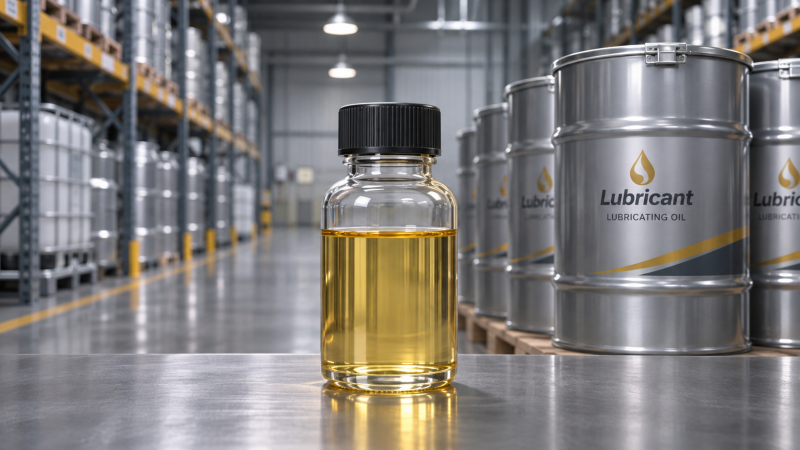
In the third week of November 2026, parts of the base oil market showed signs of weakness even as finished lubricant companies issued price increase notices, according to a LubTop weekly report published by China Lubricant Information Network. The divergence presents lubricant businesses with a question: how should they approach purchasing and pricing when signals from the two sides of the market point in different directions?
The report described some imported and domestic base oil quotations as softening or consolidating at weaker levels. At the same time, finished lubricant producers were announcing price increases. It also examined the choices companies face over price adjustments and inventory replenishment, cautioning that following price movements blindly could affect profits.
Those developments should be read as two related but distinct signals. A weaker quotation concerns the price at which some base oils are being offered; a lubricant price increase notice concerns a producer’s announced selling price for finished products. The information does not establish that every base oil quote fell or that every lubricant price rose. Nor does a notice on its own show how buyers will respond.
Why the gap matters for margins
Base oil is an input for finished lubricants, so its price is relevant to a producer’s purchasing costs. But the relationship between a current quotation and the cost of lubricant being sold is not necessarily immediate. The financial effect depends, among other things, on when material was bought, what remains in inventory and which products are being priced.
For a company considering a price increase, softer base oil offers could affect the calculation for future purchases. They do not, by themselves, establish the cost of material already held or used in products covered by a notice. Equally, an announced increase in finished lubricant prices does not establish the margin a company will achieve: the outcome also depends on the prices at which sales ultimately take place and the costs associated with those sales.
The distinction matters in the opposite direction as well. A business that assumes weaker base oil quotations must immediately translate into lower finished lubricant prices could overlook differences between quoted input prices and its own costs. The report’s warning about blindly following price changes points to the importance of evaluating the two sides together rather than treating either signal as a complete picture of profitability.
Procurement and inventory decisions
For buyers considering replenishment, a weaker offer may create an opportunity to review purchase timing and quantities. The value of waiting, however, depends on what happens to quotations later and on the buyer’s inventory needs. A current weak quotation is not a guarantee of further declines.
Buying more because prices appear attractive also involves a trade-off. If a buyer acquires more material than it needs and quotations subsequently fall, the material purchased earlier may prove more expensive than later supplies. If the buyer waits and prices rise instead, replenishment could cost more. These are conditional outcomes, not forecasts of the next market move.
The choice is therefore linked to the intended use of the material as well as its quoted price. A buyer assessing an offer can compare it with existing inventory and expected requirements; a finished lubricant seller faces a separate question about how its announced prices relate to the costs and terms of its own sales. The weekly report places both decisions in focus because movement on one side does not settle the decision on the other.
What the notices signal
The price increase notices show that some finished lubricant companies were seeking higher prices while some base oil quotations were weak. They do not, on their own, explain every company’s reasons for adjusting prices. The report’s description also does not establish whether the announced increases were applied to all products, how customers responded or how long the divergence will last.
Those limits are important when interpreting the direction of the market. A quotation and a price notice can identify changes in offers or announced intentions, but they do not by themselves describe every completed purchase or sale. The practical effect on a company’s margin will depend on the prices and quantities involved in its own transactions.
Further movements in imported and domestic base oil quotations, along with subsequent lubricant price notices, will help show whether the divergence persists. For businesses managing purchases and sales, the central issue is how those developments affect their own inventory costs and realized selling prices over time.
Facing technical bottlenecks in manufacturing or looking for more efficient industrial solutions? Leave your details below and let the engineering experts at G-PME solve them for you.
We respect your privacy. Your information is strictly confidential.
Recommended News
 Base Oil Quotes Weaken as Lubricant Price Increases EmergeBase oil quotes are weakening as lubricant price increases emerge. Explore what the divergence means for procurement, inventory and margins.
 Nigeria Faces Lubricant Supply Pressure as Global Base Oil TightensNigeria's lubricant supply faces pressure as global base oil tightens. Explore the potential impact on imports, blending costs and availability.
 When do PAO synthetic lubricants suit low-temperature operation?PAO synthetic lubricants can improve cold-start flow—but are they right for your equipment? Learn how to assess viscosity, compatibility and performance.
 EIA Raises Oil Forecasts, Sees Brent Near $100 for Rest of 2026EIA oil forecasts put Brent near $100 for the rest of 2026. Explore potential impacts on lubricant costs and procurement, and what buyers should verify.
 Americas Base Oil Weekly: High Crude and Feedstock Costs Compound Supply TightnessAmericas base oil supply is tightening as crude and feedstock costs rise. Explore the impact on Group II+ and Group III availability, pricing and purchasing.
 Stonepeak Completes 65% Castrol Acquisition; Former Shell CEO to ChairStonepeak's 65% Castrol acquisition brings new leadership as former Shell CEO Ben van Beurden becomes chair. Explore potential implications for lubricant buyers and suppliers.
 LANXESS and BPCL to Explore Immersion Cooling Fluids and Advanced LubricantsLANXESS and BPCL are exploring immersion cooling fluids and advanced lubricants. Discover what the proposed collaboration could mean for buyers and suppliers.
 How to qualify a catalyst manufacturer for synthetic oil productionQualify a catalysts manufacturer for synthetic oil production with practical checks for performance, batch quality, and scale-up. Learn how to reduce risk and select a reliable supplier.
 China’s Base Oil Imports Hit 2026 Low in September; Top Three Suppliers Account for 82.5%China’s base oil imports hit a 2026 low of 67,400 tonnes in September, with three origins accounting for 82.5%. Explore the data and implications for sourcing and supply risk.
 How to verify batch quality with an industrial lubricating oils exporterBuying from an industrial lubricating oils exporter? Learn how to verify batch test results, sampling, and traceability to reduce purchasing risks and protect equipment.
 Are Synthetic Lubricants Worth the Higher Upfront Cost?Are synthetic lubricants worth the higher upfront cost? Discover when lower maintenance, longer oil life, and energy savings justify the premium—and how to calculate your return.
 Choosing a Synthetic Machine Oil Manufacturer: Specs, Testing, and TraceabilityChoose a synthetic machine oil manufacturer with confidence. Learn how to verify specs, testing, and batch traceability to reduce production risks and secure reliable supply.
 When do industrial lubricants for compressors need oil analysis?Industrial lubricants for compressors need oil analysis at baseline, under harsh operating conditions, and after warning signs. Learn how testing prevents downtime and protects equipment.
 When organic chemicals are suitable feedstocks for synthetic lubricantsOrganic chemicals can unlock high-performance synthetic lubricants. Learn how purity, stability, compatibility, and supply control shape reliable industrial formulations.
 What to check before choosing an industrial lubricating oils factoryIndustrial lubricating oils factory selection guide: compare quality control, formulation fit, traceability, technical support, and total cost to reduce downtime risks.
 Can Synthetic Lubricants Be Mixed with Mineral Oils?Can synthetic lubricants be mixed with mineral oils? Discover compatibility risks, safe top-up practices, and expert guidance for protecting industrial equipment.
 How to assess a lubricants manufacturer's batch traceabilityLubricants manufacturer batch traceability: learn how to audit records, controls, CoAs, packaging, and recall readiness to reduce supply risk and protect uptime.
 When do synthetic gear lubricants justify their higher upfront cost?Synthetic gear lubricants can lower lifecycle costs in high-load, hot, or hard-to-service gearboxes. Learn when premium performance delivers real ROI.
 When should industrial lubricating oils be replaced?Industrial lubricating oils: learn when condition, contamination, heat, and oil analysis signal replacement to protect equipment, reduce downtime, and improve reliability.
 FDA Tightens Filing Rules for Synthetic Food-Contact LubricantsFDA Tightens Filing Rules for Synthetic Food-Contact Lubricants: learn how the 2026 FDA update impacts import compliance, toxicology files, certification gaps, and U.S. market access.
 REACH SVHC Update Targets PAHs in Synthetic OilsREACH SVHC Update Targets PAHs in Synthetic Oils: learn how ECHA’s new PAH listing affects EU exports, SCIP notification, compliance planning, and supply chain risk before February 2027.

















Search News
Popular Tags