
REACH SVHC Update Targets PAHs in Synthetic Oils
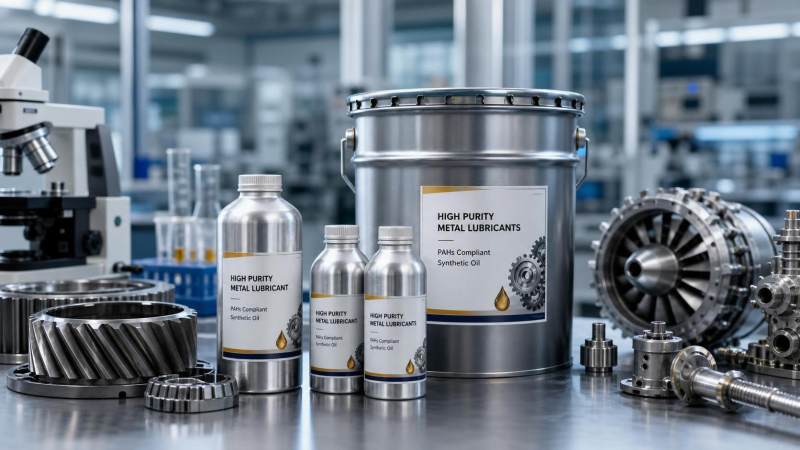
On August 3, 2026, the European Chemicals Agency (ECHA) added four polycyclic aromatic hydrocarbons (PAHs) to the REACH Substances of Very High Concern (SVHC) Candidate List, in a move tied to synthetic base oil formulations used in industrial gear oils, compressor oils, and aviation lubricants. For companies involved in exporting synthetic oils to the EU, this is not just a regulatory update in name: it directly affects compliance planning, product review, and downstream communication, especially with a SCIP notification requirement applying from February 2027 for synthetic lubricants containing PAHs above the relevant limit and with possible downstream authorization implications.
What Has Been Confirmed So Far
The confirmed event is that ECHA formally included four PAH substances in the REACH SVHC Candidate List on August 3, 2026. The information provided states that these substances are connected to synthetic base oil formulations widely used in industrial gear oil, compressor oil, and aviation lubricant applications.
The same update also indicates a direct impact on the EU export compliance route for synthetic oils containing the relevant PAH components. From February 2027, synthetic lubricants exported to the EU that contain PAHs above the applicable threshold will need SCIP notification, and the change may also trigger downstream supply chain authorization obligations.
Where the Pressure May Appear First in the Supply Chain
Export-facing lubricant suppliers
From an industry perspective, exporters are likely to face the earliest operational impact because the change is explicitly tied to EU market access and compliance routing. The main pressure points are likely to be product screening, document readiness, and confirmation of whether affected synthetic oil formulations contain the listed PAHs above the relevant limit.
Formulation and manufacturing teams
Manufacturers using synthetic base oil formulations in industrial gear oils, compressor oils, and aviation lubricants may be affected where listed PAHs are present in the formulation chain. The practical issue is less about broad market messaging and more about identifying which products, batches, or formula structures could fall within the new compliance scope.
Procurement and raw material management
For procurement functions, the change raises a supplier information issue. What deserves closer attention is whether upstream raw material disclosures, technical documentation, and composition statements are sufficient to support compliance decisions for products intended for the EU market.
Downstream users and EU-side customers
Customers and downstream users may also be affected because the provided information points to possible authorization obligations further along the supply chain. This means the regulatory impact may not stop at the exporter level and could extend into customer communication, product acceptance, and purchasing decisions.
What Companies Should Track Now
Identify the product groups that may fall into scope
Companies dealing in synthetic oils should first map the product lines most closely linked to the applications mentioned in the update: industrial gear oils, compressor oils, and aviation lubricants. The immediate task is to determine whether the affected PAHs may be present in those synthetic base oil formulations.
Separate confirmed obligations from pending interpretation
Analysis shows that one part of the change is already clear from the provided information: from February 2027, exports to the EU of synthetic lubricants exceeding the relevant PAH threshold will require SCIP notification. A separate point requiring continued attention is the possible downstream authorization obligation, which should be tracked carefully as companies assess how far the impact extends in practice.
Prepare supplier and customer communication early
Where products may be affected, businesses should pay attention to document flow across the chain, including composition-related information, compliance statements, and customer-facing explanations. In practical terms, delays often emerge not from the rule itself but from gaps in shared documentation and timing across multiple parties.
Watch how compliance timing affects delivery planning
Observably, this update has a time-linked operational dimension because the February 2027 trigger creates a planning window rather than an immediate shipment stop. That makes lead time management, internal review scheduling, and customer coordination important areas to monitor now.
Why This Looks Like More Than a Routine List Update
Analysis shows that this development should not be read as a narrow administrative revision for the lubricants sector. It directly connects substance listing, export compliance, and downstream regulatory exposure in product categories that are widely used in industrial and specialized applications. At the same time, it would be premature to treat it as a fully settled end-state for every product and every company, because the practical impact will depend on whether affected formulations exceed the relevant threshold and how downstream obligations are interpreted and applied in business workflows.
It is more appropriate to understand this as a concrete compliance signal with immediate review value and continued monitoring needs. The event already changes what affected exporters need to check, while some practical consequences still require close observation.
How the Market Should Read This Development
At this stage, the industry significance lies in the fact that regulatory attention has moved directly into synthetic oil formulations used in several important lubricant applications. The immediate takeaway is not that every synthetic oil product faces the same outcome, but that companies connected to EU trade should now treat PAH-related substance review, SCIP readiness, and downstream communication as active work items.
A neutral reading is that this is both a short-term compliance trigger and a longer-term regulatory signal. It already matters for near-term preparation, while its full commercial and supply-chain effect will become clearer as companies translate the listing into product-level decisions.
Basis of This Article and What Still Needs Verification
This article is based on the user-provided news title, event date, and event summary regarding ECHA's August 3, 2026 addition of four PAHs to the REACH SVHC Candidate List in relation to synthetic oils. For this type of development, source categories commonly relevant include official regulatory notices, company compliance statements, industry association updates, authoritative media reporting, and standards or regulatory documentation.
No specific official source link was provided in the input, so the exact official reference should continue to be verified. Follow-up attention should focus on any further official wording related to scope, threshold application in practice, SCIP filing expectations, and how possible downstream authorization obligations are interpreted in actual supply-chain use.
Recommended News
 When should wind turbine parts be replaced instead of repaired?Wind turbine parts: learn when replacement is safer than repair, how to reduce repeat failures, protect uptime, and make smarter maintenance decisions.
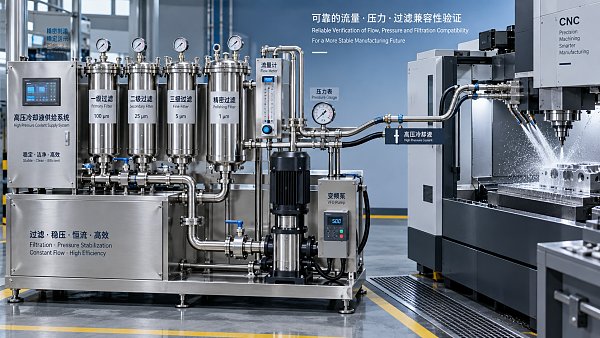
 What to verify before choosing a coolant flow rate and pressure supplierCoolant flow rate and pressure supplier selection guide: verify duty points, pump curves, filtration, controls and service support for reliable machining performance.
 How mold design choices affect cooling time in injection moldingDiscover how mold design affects injection molding cooling time, part stability, cycle efficiency, and long-term production quality with practical engineering insights.
 Machine tool standards alerts that require 5-axis safety procedure updatesMachine tool standards alerts can trigger critical 5-axis safety procedure updates. Learn which changes demand action to protect operators, equipment, and production uptime.
 Does manufacturing standards compliance for semiconductors affect EDM tool approval?Manufacturing standards compliance for semiconductors shapes EDM tool approval through traceability, validation, contamination control, and inspection. Learn what proves reliable capability.
 Which medical grade materials withstand repeated sterilization in pumps?Medical grade materials for sterilizable pumps: compare 316L, PEEK, PPSU, PTFE, silicone, and EPDM for steam, radiation, and chemical resistance.
 What G-code compatibility issues arise when moving to 5-axis centers?G code compatibility issues in 5-axis centers can affect TCP, rotary limits, feeds, and safety. Learn how to validate programs before production.
 Can custom mailer boxes reduce damage costs in subscription shipping?Custommailerboxes can lower subscription shipping damage costs through right-sizing, protective inserts, stronger materials, and efficient pack-out. Discover how to reduce claims and improve delivery performance.
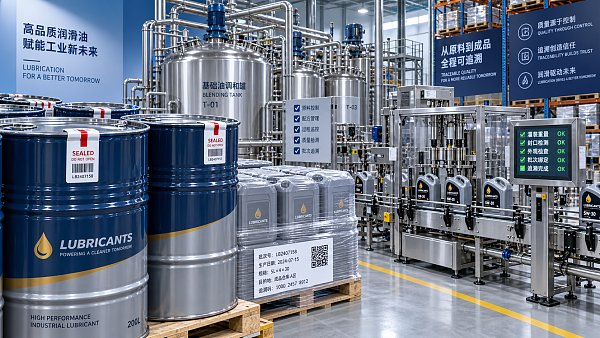
 How to assess a lubricants manufacturer's batch traceabilityLubricants manufacturer batch traceability: learn how to audit records, controls, CoAs, packaging, and recall readiness to reduce supply risk and protect uptime.
 When solar inverters should be replaced instead of repairedSolar inverters: learn when recurring faults, obsolete parts, safety damage, and rising lifecycle costs make replacement smarter than repair.
 What to verify before choosing a first aid kits distributorFirst aid kits distributor checklist: verify compliance, traceability, expiry control, replenishment, and multi-site delivery before choosing a reliable supplier.
 How mold engineering design reduces warpage in thin-wall partsMold engineering design reduces thin-wall part warpage through balanced gating, cooling, packing, and ejection for stable, production-ready precision.
 What to audit at a CNC machine tools factory before approving a supplierCNC machine tools factory audit guide: verify machining accuracy, metrology, traceability, workforce skills, and capacity resilience before approving a precision supplier.
 When does a horizontal boring machine with ATC justify its cost?Discover when a horizontal boring machine with ATC delivers ROI through faster setups, higher uptime, lower labor costs, and reliable capacity growth.
 How office acoustics affect speech privacy in open-plan workspacesOffice acoustics shape speech privacy in open-plan workspaces. Discover practical strategies for reducing distractions, protecting sensitive conversations, and improving focus.
 Can AI in precision engineering for aerospace applications improve defect detection?AI in precision engineering for aerospace applications improves defect detection through smarter inspection, traceable workflows, and early process-drift alerts. Explore proven deployment strategies.
 Using a supplier capability evaluation framework to screen CNC suppliersSupplier capability evaluation framework for screening CNC suppliers: verify quality, traceability, capacity, and resilience to select reliable partners.
 When supplier capability evaluation services reduce tooling project riskSupplier capability evaluation services help reduce tooling project risk by verifying technical fit, quality controls, capacity, and delivery readiness before costly delays occur.
 How can a trade network help distributors enter new regional markets?Trade network strategies help distributors enter regional markets with verified partners, local insights, technical fit, and reliable logistics for faster, lower-risk growth.
 Does private label manufacturing contract assembly reduce launch risk?Private label manufacturing contract assembly can reduce launch risk with proven quality systems, traceability, supplier validation, and scalable production control.
 When do e-readers make sense for a distraction-free work library?E-readers for focused work libraries: discover when they improve deep reading, technical document review, security, and distraction-free research workflows.


















Search News
Popular Tags