
How to assess a lubricants manufacturer's batch traceability

For quality-control and safety teams, batch traceability is not an administrative detail buried in a supplier file. It is the evidence trail that answers difficult questions when a lubricant fails in service, a contamination concern emerges, or a recall must be executed without delay. Can the supplier identify exactly what went into a drum of hydraulic oil? Can it distinguish one production run from another? Can it show where the affected material was shipped and what adjacent batches may be at risk?
When assessing a lubricants manufacturer, the goal is not simply to confirm that batch numbers appear on labels. A credible system links raw-material receiving, formulation control, blending conditions, laboratory release, packaging, warehousing, and distribution into one retrievable record. The stronger that connection, the easier it is to protect equipment uptime, investigate incidents, and make defensible compliance decisions.
This matters especially in applications where lubricant performance supports safety and process stability: hydraulic systems, compressors, gearboxes, turbines, metalworking operations, food-adjacent production areas, and high-precision machining cells. In these environments, an unexplained variation in viscosity, additive balance, water content, or cleanliness may become far more than a routine purchasing issue.
Start with the question a traceability system must answer
Before reviewing a supplier’s documents, define the practical standard: from one delivered container, can the manufacturer trace backward to every relevant input and forward to every shipment affected by the same production event?
A useful traceability system should support two directions:
- Backward traceability: from a finished-lubricant batch to the base oils, additives, dyes, processing aids, packaging materials, production equipment, operators, and quality results associated with it.
- Forward traceability: from a raw-material lot, blending batch, or packaging run to every customer order, warehouse location, distributor shipment, and container potentially affected.
Some manufacturers can retrieve a certificate of analysis for a named batch but cannot confidently identify all shipments packed during a particular filling-line event. Others track base-oil receipts but lose the connection once materials are transferred to intermediate tanks. These gaps may remain invisible during normal supply. They become critical when a safety investigation or product withdrawal begins.
Do not confuse a batch number with real batch control
A batch code is only the visible endpoint of a traceability process. Ask the lubricants manufacturer how the code is created, what it represents, and whether it changes at meaningful control points. The answers often reveal whether the system is built for operational control or merely for label compliance.
For example, a blending batch may be produced in a single tank, held in an intermediate vessel, and packed across several shifts into drums, pails, IBCs, or bulk road tankers. The supplier should be able to explain whether one blend number remains linked to multiple packaging sub-lots, whether each filling run receives its own identifier, and how line flushes or product changeovers are recorded.
Pay close attention to the unit of traceability. A system based only on a production date may be too broad to isolate risk. One based only on individual package serial numbers may generate detail without showing the relationship to the actual blend. The most useful model preserves both levels: a controlled manufacturing batch and clear links to specific packed units or shipping documents.
The evidence trail to request during supplier qualification
A document review should follow the physical life of the lubricant rather than relying on a generic questionnaire. Request a recent, closed batch record—preferably for the grade and packaging format relevant to your operation—and ask the supplier to walk through it in sequence.
1. Raw-material receipt and release
Each incoming base oil and additive lot should have a supplier reference, receiving date, internal lot number, quantity, storage location, and acceptance status. For critical inputs, the record should also link to incoming certificates, sampling results, and any deviations identified at receipt.
Ask how the manufacturer prevents an unapproved material from entering production. Quarantine labels, electronically controlled inventory status, segregated storage, and documented release by authorized personnel are all stronger signs than a verbal assurance that “incoming materials are checked.”
Traceability must also survive tank transfers. If several base-oil deliveries are commingled in a bulk tank, the manufacturer should maintain a tank genealogy showing which receipts were present when a given blend was made. Without that genealogy, the original supplier lot may be impossible to identify after the fact.
2. Formula governance and controlled dispensing
Lubricant formulations are sensitive not only to which ingredients are used but also to their proportions and sequence of addition. A controlled master formula should identify approved raw materials, target quantities, tolerance ranges, blending instructions, and revision status. The batch record should show which formula version was used.
For safety and quality teams, a key concern is substitution. Can an operator use an alternate additive package when the preferred one is unavailable? If so, who authorizes it, how is compatibility evaluated, and how is the change recorded on the certificate and technical documentation? A substitute ingredient may be legitimate, but an undocumented one damages the integrity of the entire record.
Electronic weighing systems, barcode scanning, or recipe-management software can reduce transcription errors. Yet paper systems are not automatically unacceptable if they include legible entries, independent checks, corrections that preserve the original record, and clear authorization. What matters is whether records can be trusted and reconstructed.
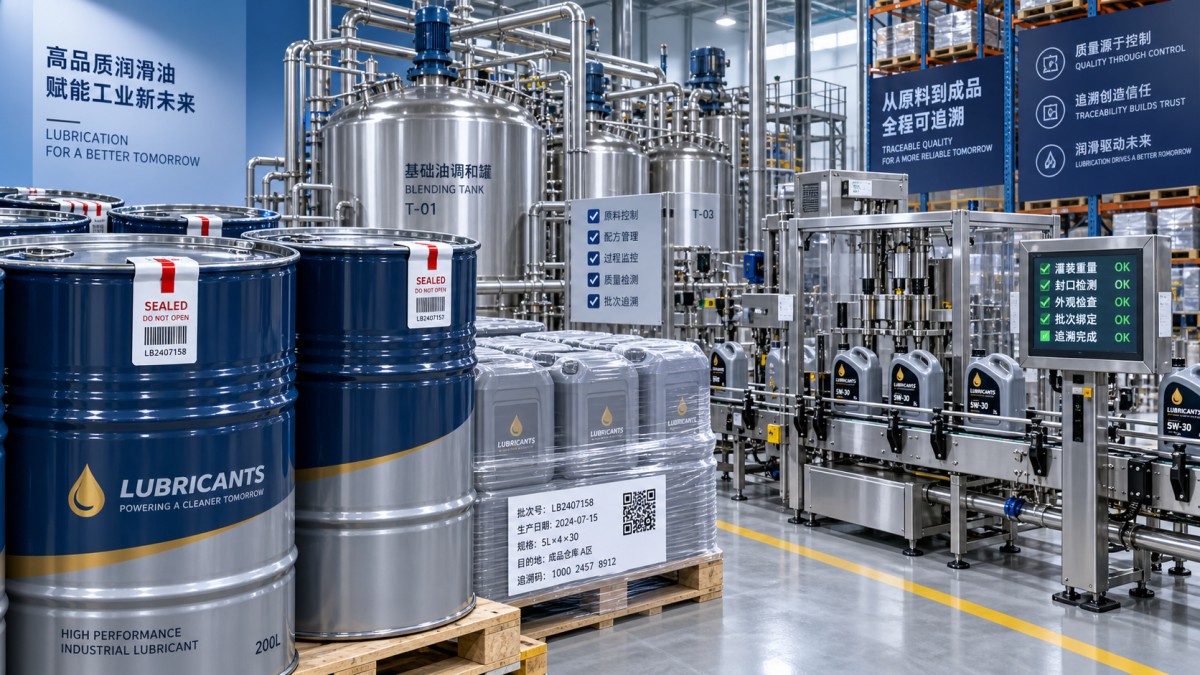
3. Blending, sampling, and in-process conditions
A robust batch record captures more than ingredient names. It should document the blending vessel, date and time, temperature where relevant, mixing duration, sequence of addition, recirculation or filtration steps, and any out-of-range event. These details are especially important for products containing performance additives, dispersants, antiwear chemistry, or components that require specific incorporation conditions.
Ask whether equipment cleaning and line clearance are documented between products. Residual gear oil in a hydraulic fluid line, or an inappropriate fluid carried over into a specialty application, can create a significant issue even if the final blend generally appears acceptable. A manufacturer should know the validated flush method, the previous product on the line, and the disposition of the first material through after changeover.
4. Laboratory release and certificate integrity
The certificate of analysis (CoA) is often the first document buyers request, but it should be treated as a summary of a controlled release process—not as the entire traceability system. Check that the CoA identifies the product name, grade, batch number, manufacture or packaging date as applicable, test methods, specifications, actual results, and approval status.
For industrial lubricants, relevant release tests may include viscosity, density, flash point, water content, acidity, appearance, elemental content, cleanliness, demulsibility, foam behavior, or other grade-specific parameters. The exact panel depends on the product and intended use. What matters is that the supplier can explain why the selected tests demonstrate conformance for that batch.
Review how out-of-specification results are handled. A concerning answer is, “The lab retests until it passes.” A controlled process distinguishes between an analytical error, a confirmed nonconformance, and a justified investigation. Original results must remain visible, retesting must be authorized, and any rework or downgrade decision must be traceable to the released material.
Packaging is where traceability often weakens
Even well-controlled blending operations can lose accountability at the filling line. Drums may be relabeled, pallets consolidated, or stock moved between warehouses. During an assessment, ask to see how the finished-product label is reconciled with the batch record and shipping documentation.
At a minimum, labels should be durable and readable throughout normal storage and handling. They should identify the product and batch or lot in a way that corresponds directly to the CoA and delivery paperwork. For regulated, hazardous, food-related, or high-consequence applications, additional controls may be appropriate, including tamper evidence, package-level coding, and controlled label issuance.
Warehouse controls deserve equal attention. A supplier should be able to prevent release of quarantined, expired, returned, damaged, or superseded stock. First-expiry-first-out practices may be relevant where shelf life applies, but physical condition matters too: damaged seals, unreadable labels, and outdoor storage without adequate protection can undermine an otherwise good quality system.
Test the system with a live traceability exercise
The most revealing audit step is not asking whether the supplier has a recall procedure. It is conducting a timed traceability challenge. Provide a batch number from a recent shipment and ask the manufacturer to retrieve the complete file. Then reverse the exercise: select a raw-material lot or packaging lot and ask for all finished batches and customers affected.
The exercise should produce a coherent chain of evidence, including:
- the approved formulation revision and dispensing records;
- all relevant base-oil and additive lots, including tank genealogy where applicable;
- in-process records, final test results, CoA, and release authorization;
- packaging dates, line records, package identifiers, and pallet or warehouse references;
- delivery notes, customer destinations, distributor movements, and quantities shipped;
- any deviations, rework activity, complaints, or nonconformances associated with the batch.
Speed matters, but completeness matters more. A supplier that produces a result in minutes by searching a well-maintained ERP or manufacturing execution system may be well prepared. A manual system may take longer and still be acceptable if the records are controlled and the scope is accurate. The real red flag is uncertainty: missing links, contradictory quantities, unexplained batch splits, or an inability to define the potentially affected population.
Reconcile quantities, not just documents
Traceability records should make physical sense. Compare the quantity of raw materials charged, expected process losses, finished quantity released, retention samples, waste, rework, inventory, and shipped volume. This is often called mass balance or material reconciliation.
A perfect-looking document chain can still conceal a control problem if volumes do not reconcile. Large unexplained differences may indicate recording errors, inventory weaknesses, unauthorized rework, or an inability to distinguish one lot from another. Reasonable process losses are normal; unexplained losses should not be.
This check is particularly useful when evaluating a lubricants manufacturer that operates bulk storage, shared blending assets, or multiple packaging sites. The more complex the material flow, the more important it is that the data model reflects the physical operation.
Standards, certifications, and their limits
Quality-management certification, such as ISO 9001, can indicate that a manufacturer maintains documented processes and internal controls. It is a useful starting point, not a substitute for reviewing the traceability system itself. Certification scope should be checked carefully: does it cover the actual blending and packaging site, the relevant product category, and the activities under evaluation?
For particular end uses, additional requirements may apply. Safety data sheets, chemical regulatory obligations, transport classification, food-contact or incidental-contact requirements, OEM approvals, and customer-specific specifications may all influence what must be traced and retained. Procurement teams should translate these requirements into a supplier quality agreement rather than assuming that a general certificate covers every obligation.
The agreement should define minimum record-retention periods, notification timelines for significant changes, access to CoAs, retention-sample expectations, complaint investigation responsibilities, and recall cooperation. Where a lubricant is critical to production continuity, include expectations for emergency contact availability and the format of shipment data.
Warning signs that deserve follow-up
Not every weakness means a supplier must be rejected. But the following findings warrant a corrective-action discussion before approval:
- batch numbers cannot be connected to raw-material lots or final-release records;
- CoAs contain generic values, missing methods, or results that do not match the stated batch;
- formula revisions, substitutions, and rework are not clearly authorized and recorded;
- labels are generated manually without reconciliation or line-clearance controls;
- returned goods can be returned to saleable inventory without documented evaluation;
- the supplier has never performed a recall simulation or cannot identify all shipment destinations;
- records depend heavily on individual employee knowledge rather than controlled procedures.
A thoughtful supplier will not claim that deviations never occur. More reassuring is a transparent explanation of how deviations are contained, investigated, documented, and prevented from recurring. Traceability is ultimately a measure of organizational discipline under pressure.
Turn the assessment into an operating safeguard
Supplier qualification should not be the final interaction. For lubricants used in critical machinery, establish a routine of batch-document review at receipt, periodic verification of CoA consistency, and escalation rules when package codes, documentation, or product appearance do not align. Retain samples when the application risk justifies it, and preserve the link between the sample, receiving record, equipment use, and maintenance history.
For procurement directors, plant quality teams, and safety managers, the value of batch traceability is simple: it reduces the time between uncertainty and a defensible decision. A capable lubricants manufacturer can show where material came from, how it was made, how it was verified, and where it went. That level of visibility does not eliminate every lubricant-related risk, but it gives an organization the evidence needed to contain problems before they become costly failures.
Recommended News
 What G-code compatibility issues arise when moving to 5-axis centers?G code compatibility issues in 5-axis centers can affect TCP, rotary limits, feeds, and safety. Learn how to validate programs before production.
 Can custom mailer boxes reduce damage costs in subscription shipping?Custommailerboxes can lower subscription shipping damage costs through right-sizing, protective inserts, stronger materials, and efficient pack-out. Discover how to reduce claims and improve delivery performance.
 How to assess a lubricants manufacturer's batch traceabilityLubricants manufacturer batch traceability: learn how to audit records, controls, CoAs, packaging, and recall readiness to reduce supply risk and protect uptime.
 When solar inverters should be replaced instead of repairedSolar inverters: learn when recurring faults, obsolete parts, safety damage, and rising lifecycle costs make replacement smarter than repair.
 What to verify before choosing a first aid kits distributorFirst aid kits distributor checklist: verify compliance, traceability, expiry control, replenishment, and multi-site delivery before choosing a reliable supplier.
 How mold engineering design reduces warpage in thin-wall partsMold engineering design reduces thin-wall part warpage through balanced gating, cooling, packing, and ejection for stable, production-ready precision.
 What to audit at a CNC machine tools factory before approving a supplierCNC machine tools factory audit guide: verify machining accuracy, metrology, traceability, workforce skills, and capacity resilience before approving a precision supplier.
 When does a horizontal boring machine with ATC justify its cost?Discover when a horizontal boring machine with ATC delivers ROI through faster setups, higher uptime, lower labor costs, and reliable capacity growth.
 How office acoustics affect speech privacy in open-plan workspacesOffice acoustics shape speech privacy in open-plan workspaces. Discover practical strategies for reducing distractions, protecting sensitive conversations, and improving focus.
 Can AI in precision engineering for aerospace applications improve defect detection?AI in precision engineering for aerospace applications improves defect detection through smarter inspection, traceable workflows, and early process-drift alerts. Explore proven deployment strategies.
 Using a supplier capability evaluation framework to screen CNC suppliersSupplier capability evaluation framework for screening CNC suppliers: verify quality, traceability, capacity, and resilience to select reliable partners.
 When supplier capability evaluation services reduce tooling project riskSupplier capability evaluation services help reduce tooling project risk by verifying technical fit, quality controls, capacity, and delivery readiness before costly delays occur.
 How can a trade network help distributors enter new regional markets?Trade network strategies help distributors enter regional markets with verified partners, local insights, technical fit, and reliable logistics for faster, lower-risk growth.
 Does private label manufacturing contract assembly reduce launch risk?Private label manufacturing contract assembly can reduce launch risk with proven quality systems, traceability, supplier validation, and scalable production control.
 When do e-readers make sense for a distraction-free work library?E-readers for focused work libraries: discover when they improve deep reading, technical document review, security, and distraction-free research workflows.
 How a precision milling center factory controls part-to-part consistencyDiscover how a precision milling center factory achieves reliable part-to-part consistency through controlled tooling, workholding, traceability, and in-process inspection.
 Which CNC manufacturing investment drivers matter before capacity expansionCNC manufacturing investment drivers: evaluate demand, automation, workforce readiness, and lifecycle ROI before expanding capacity. Build resilient, profitable growth.
 When CNC turning is the right fit for precision machining servicesPrecision machining services: discover when CNC turning delivers superior concentricity, surface finish, and cost control for critical rotational parts.
 When ozone generators are suitable for odor control in commercial spacesOzone generators for commercial odor control: learn when controlled treatment is appropriate, how to protect people and materials, and why source removal comes first.
 How to select mechanical seals for mixers handling abrasive slurriesMechanical seals for mixers: learn how to select durable seal arrangements, face materials, and support systems for abrasive slurry service.
 How supply chain analysis supports risk management before disruptions occurSupply chain analysis risk management helps businesses detect hidden dependencies, assess recovery time, and act early to protect operations before disruptions occur.

















Search News
Popular Tags