
Which medical grade materials withstand repeated sterilization in pumps?
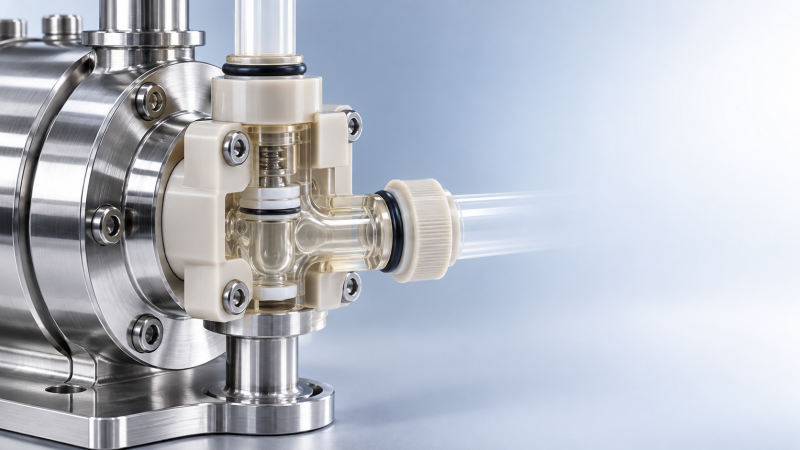
Repeated sterilization is not a single exposure condition. A pump that survives a one-time autoclave cycle may still lose dimensional control, seal preload, surface integrity, or chemical compatibility after its intended service life. The most reliable material choices are therefore those matched to the sterilization method, the pumped medium, the pump geometry, and the number of validated reuse cycles—not simply those sold as “medical grade materials.”
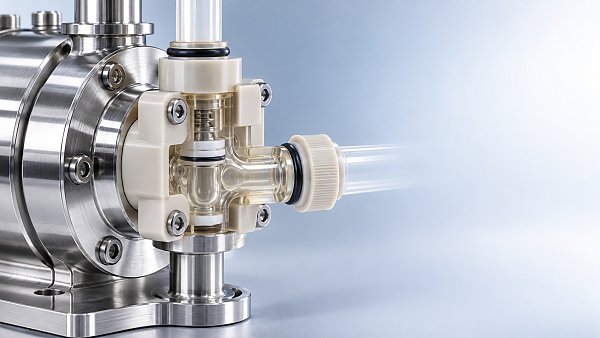
For pump wetted parts exposed to repeated steam sterilization, 316L stainless steel, titanium, PEEK, PPSU, PTFE/PFA, and properly specified silicone or EPDM elastomers are the principal material families to evaluate. Their suitability differs sharply by component function. A material that performs well as a rigid housing may be unsuitable for a dynamic diaphragm, valve seat, bearing surface, or compression seal.
The first specification question should be: What exactly is being sterilized, how, and how often? Steam at 121°C and steam at 134°C impose different risks. Chemical sterilants can be more aggressive than heat toward some elastomers and engineering plastics. Gamma and electron-beam sterilization introduce another failure mechanism: radiation-induced chain scission, cross-linking, discoloration, and embrittlement.
Steam sterilization remains the hardest broad-screening test
Autoclave exposure combines elevated temperature, saturated steam, pressure changes, rapid heating and cooling, and repeated drying. It challenges more than a material’s published temperature limit. The critical issues in a pump are hydrolysis, stress relaxation, thermal expansion mismatch, creep, and the ability of seals to recover after compression.
316L stainless steel is the default benchmark for reusable fluid-contact pump components. It combines strong resistance to steam, good mechanical stability, broad compatibility with aqueous process fluids, and a regulatory history suitable for medical and biopharmaceutical equipment. Electropolished or mechanically polished 316L is often preferred where cleanability and residue control matter, but surface finish alone does not make a system hygienic. Crevices under clamps, threaded interfaces, dead legs, welded joints, and poorly drained pump cavities can defeat an otherwise sound material selection.
For chloride-bearing fluids, aggressive cleaning agents, or higher corrosion risk, titanium and selected nickel-based alloys may be considered. Titanium has excellent corrosion resistance and steam durability, but it is not an automatic upgrade: its cost, machining requirements, galling behavior, and compatibility with mating components need review. Nickel alloys such as Hastelloy grades may be appropriate in narrowly defined chemical-duty applications, but their use should be justified by corrosion data for the actual fluid and cleaning chemistry rather than by a general assumption of superiority.
Among polymers, PEEK is one of the strongest candidates for repeated high-temperature sterilization. It retains stiffness and dimensional stability better than many thermoplastics at autoclave temperatures, has broad chemical resistance, and can be machined into valve components, manifolds, diaphragms, wear elements, and structural pump parts. Its limits are equally relevant: PEEK is expensive, its frictional behavior depends on grade and counterface, and highly filled grades require separate biocompatibility, extractables, and surface-finish assessment. A carbon- or glass-filled PEEK should not be assumed equivalent to unfilled medical-contact PEEK.
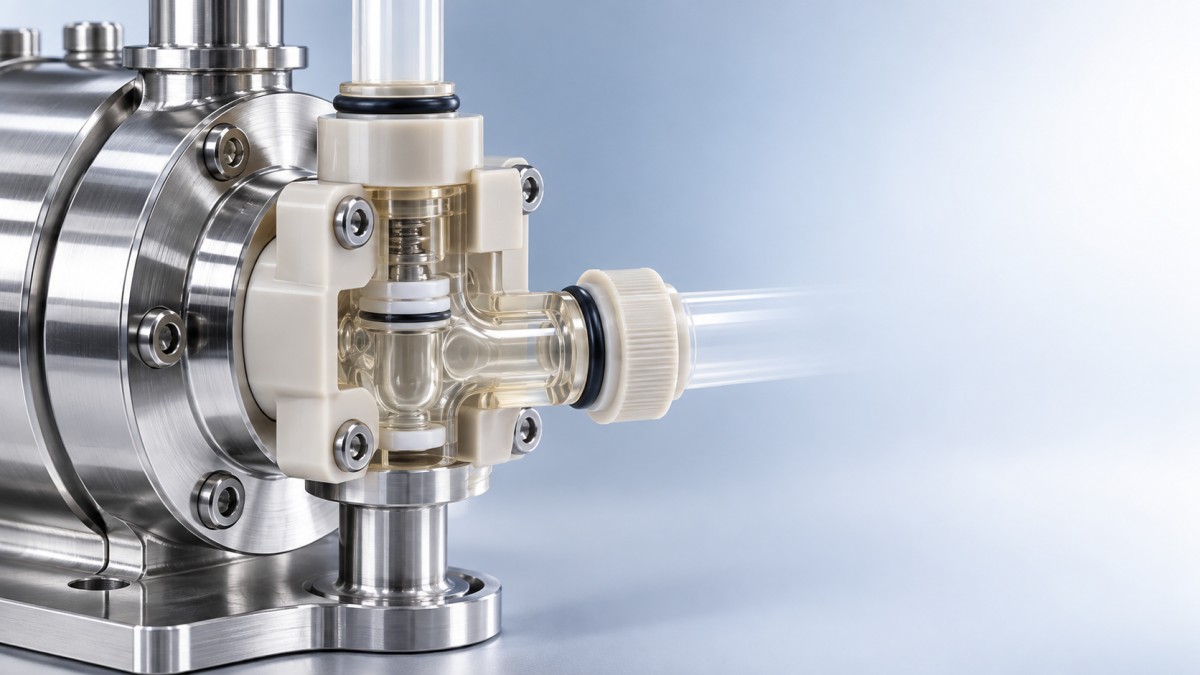
PPSU is a practical option for reusable housings, fluid paths, and transparent-to-amber molded components where repeated steam exposure is expected. It offers better hydrolytic and impact performance under autoclave conditions than polycarbonate, which can crack or haze after repeated steam sterilization. PPSU is frequently selected where molding flexibility and toughness matter, but it is not as dimensionally robust as metal or PEEK under all loads. Thin walls, press-fit features, stressed threads, and long-term exposure to oxidizing cleaning agents deserve particular scrutiny.
Polysulfone (PSU) can also tolerate sterilization conditions, but PPSU generally provides a wider durability margin in demanding reusable-device applications. Where a pump is expected to operate near the upper end of steam sterilization conditions or experience high mechanical load, the difference can determine whether a molded feature remains stable over its validated cycle count.
Fluoropolymers solve chemical problems but can create mechanical ones
PTFE, PFA, and related fluoropolymers have outstanding chemical resistance and tolerate steam well in many configurations. They are valuable for valve seats, liners, tubing, diaphragms, gaskets, and low-friction contact surfaces. They are especially relevant when the pump handles solvents, reactive chemicals, or cleaning agents that would attack conventional elastomers or engineering plastics.
The main caution is creep. PTFE can cold-flow under sustained compressive load, particularly at elevated temperature. In a pump, this can reduce gasket compression, alter valve-seat geometry, loosen a clamped liner, or change the performance of a diaphragm assembly after many cycles. A PTFE gasket that seals on the first test may not preserve sealing force through repeated autoclave use. Spring-energized designs, constrained gasket geometries, live-loaded joints, or alternative seal materials may be needed where compression retention is critical.
PFA provides some fabrication and mechanical advantages over PTFE in certain formed or lined components, but the same design question remains: can the part retain its shape and sealing function at temperature, under pressure, and after repeated clamping? Chemical resistance data alone cannot answer that question.
Elastomers are often the actual life-limiting components
In many reusable pump assemblies, rigid components survive sterilization while O-rings, diaphragms, valve seals, and tubing determine the replacement interval. Elastomer selection must account for compression set, steam resistance, chemical exposure, permeability, particulate shedding, and the material’s response to the pumping motion itself.
Silicone is widely used for medical tubing, diaphragms, and seals because of its broad biocompatibility history, flexibility, and resistance to many sterilization methods. High-consistency silicone and liquid silicone rubber are not interchangeable merely because both are described as silicone. Cure system, post-curing, fillers, volatile content, and molding quality can affect extractables, mechanical life, and resistance to repeated sterilization. Silicone is often a strong choice for flexible pump elements, but it has lower tear and abrasion resistance than some alternatives and can swell in certain solvents.
EPDM is commonly considered for steam, hot water, and many aqueous cleaning environments. It can be a sound O-ring or gasket choice where mineral oils and hydrocarbons are absent. Its weakness is not steam; it is incompatibility with many oil-based fluids, fuels, and nonpolar solvents. An EPDM seal may be ideal for a water-based sterilizable pump but fail rapidly if the process fluid changes to an oil-containing formulation.
FKM fluoroelastomers offer strong resistance to many chemicals and oils, but steam performance varies by formulation and service temperature. Some FKM compounds can suffer deterioration in hot water or steam, making them a poor default for autoclaved pump seals. Compound-specific data from the seal manufacturer is necessary; “FKM” is a family designation, not a complete specification.
Perfluoroelastomers (FFKM) can provide exceptional chemical and thermal resistance, including in difficult sterilant environments. Their cost is substantial, and they still require validation for dynamic flexing and compression-set performance. They are best reserved for cases where cheaper silicone, EPDM, or properly formulated FKM cannot meet the combination of fluid, temperature, and sterilization requirements.
Radiation sterilization changes the ranking of polymers
Gamma irradiation and electron-beam sterilization are frequently used for single-use pump assemblies, disposable manifolds, tubing sets, and preassembled fluid paths. These methods avoid repeated heat exposure, but ionizing radiation can alter polymer chemistry. The effect depends on polymer type, radiation dose, oxygen exposure, additives, colorants, and post-irradiation aging.
Materials commonly regarded as steam-capable are not automatically radiation-stable, and materials suitable for gamma sterilization may not tolerate repeated autoclave cycles. Some polymers become brittle, discolored, or mechanically weaker after irradiation. Polypropylene, polyethylene, polycarbonate, polyurethane, and certain elastomer systems require grade-specific review rather than generic assumptions. Radiation-stable formulations may include stabilizers that affect extractables or other compliance testing, so the final material cannot be selected from a resin family name alone.
PEEK and fluoropolymers can offer useful radiation resistance in some applications, but their performance still depends on dose and geometry. A thick molded pump head, a thin membrane, and a transparent tube do not respond identically. If irradiation is part of the product lifecycle, the validation plan should include post-sterilization functional testing after aging, not only immediate inspection after treatment.
Chemical sterilants require a separate compatibility review
Vaporized hydrogen peroxide, peracetic acid formulations, alcohols, hypochlorite-based cleaners, and other chemical agents create a different selection problem from steam. Oxidizing chemistry may attack polymers, elastomers, metal surfaces, adhesives, and pigments even when the exposure temperature is moderate. Residual sterilant absorption and subsequent release can also matter for fluid-contact components.
316L is broadly useful but not immune to poor chemical control. Chloride concentration, temperature, dwell time, surface condition, and residual deposits influence pitting and crevice corrosion risk. Stainless steel parts should not be accepted solely on alloy designation if the application includes chloride-rich cleaners or aggressive chemical disinfection. Passivation condition, weld quality, surface finish, drainage, and cleaning protocol affect actual durability.
For polymeric components, the relevant question is not simply whether a material “resists” a chemical. The evaluator should determine whether repeated exposure changes tensile properties, mass, hardness, dimensions, surface cracking, permeability, or particle generation. This is especially important for diaphragms and valve elements, where a small shift in elasticity can change delivered volume, opening pressure, or pump calibration.
“Medical grade” is evidence, not a material property
A polymer, stainless steel, or elastomer does not become appropriate for a medical pump because its commercial description includes the term “medical grade.” That label may refer to manufacturing controls, biocompatibility history, traceability, formulation restrictions, or a supplier’s intended market. It does not establish compatibility with a specific sterilization regime or pumped fluid.
Material evidence should be tied to the component’s role. For patient-contact or fluid-contact components, biological evaluation is commonly structured using ISO 10993 principles, with the necessary endpoints determined by the nature and duration of contact. Where pharmaceutical or bioprocess fluids are involved, extractables and leachables assessment may also be required. USP Class VI is often requested in supply specifications, but it should not be treated as a complete substitute for application-specific biological, chemical, and functional evaluation.
Traceability deserves equal attention. A validated prototype made from one resin grade, elastomer compound, pigment package, or molding process cannot automatically support production parts made from an apparently similar substitute. Supplier changes involving additives, cure systems, processing aids, recycled content policy, or manufacturing location may alter sterilization durability and extractables behavior.
Evaluate the pump as an assembly, not a material list
Material selection frequently fails at interfaces. A stainless pump body may be stable, while a polymer valve cage expands more than its metal seat during steam exposure. A PEEK manifold may tolerate the cycle, while an adhesive-bonded fitting does not. A silicone diaphragm may remain intact, but its clamping geometry may permit creep or edge tearing after thermal cycling.
A useful evaluation sequence begins with the intended sterilization method and maximum validated cycle count. It then examines each component according to its exposure: wetted surface, external environment, dynamic flexing, compression load, frictional contact, or structural load. The most consequential tests are functional after sterilization: flow accuracy, pressure capability, leak rate, valve response, torque, diaphragm deflection, and dimensional fit. Visual inspection alone misses many failure modes.
The strongest specifications state the sterilization conditions explicitly: method, temperature or radiation dose, dwell time, drying conditions, chemical concentration where relevant, and required number of cycles. They also identify the actual resin grade, elastomer compound, metal condition, surface treatment, and permitted supplier-change controls. A broad request for “medical grade materials” leaves too much room for technically different substitutions.
For reusable steam-sterilized pumps, 316L stainless steel and PEEK form the most robust starting point for rigid wetted components, with PPSU appropriate where molded toughness and lower mass are important. PTFE or PFA should be chosen for chemical resistance with deliberate compensation for creep. Silicone and EPDM remain important sealing materials, but their suitability depends on the exact process fluid and dynamic duty. Where radiation or chemical sterilants replace steam, the material ranking must be reassessed rather than carried over from autoclave service.
Recommended News
 Machine tool standards alerts that require 5-axis safety procedure updatesMachine tool standards alerts can trigger critical 5-axis safety procedure updates. Learn which changes demand action to protect operators, equipment, and production uptime.
 Does manufacturing standards compliance for semiconductors affect EDM tool approval?Manufacturing standards compliance for semiconductors shapes EDM tool approval through traceability, validation, contamination control, and inspection. Learn what proves reliable capability.
 Which medical grade materials withstand repeated sterilization in pumps?Medical grade materials for sterilizable pumps: compare 316L, PEEK, PPSU, PTFE, silicone, and EPDM for steam, radiation, and chemical resistance.
 What G-code compatibility issues arise when moving to 5-axis centers?G code compatibility issues in 5-axis centers can affect TCP, rotary limits, feeds, and safety. Learn how to validate programs before production.
 Can custom mailer boxes reduce damage costs in subscription shipping?Custommailerboxes can lower subscription shipping damage costs through right-sizing, protective inserts, stronger materials, and efficient pack-out. Discover how to reduce claims and improve delivery performance.
 How to assess a lubricants manufacturer's batch traceabilityLubricants manufacturer batch traceability: learn how to audit records, controls, CoAs, packaging, and recall readiness to reduce supply risk and protect uptime.
 When solar inverters should be replaced instead of repairedSolar inverters: learn when recurring faults, obsolete parts, safety damage, and rising lifecycle costs make replacement smarter than repair.
 What to verify before choosing a first aid kits distributorFirst aid kits distributor checklist: verify compliance, traceability, expiry control, replenishment, and multi-site delivery before choosing a reliable supplier.
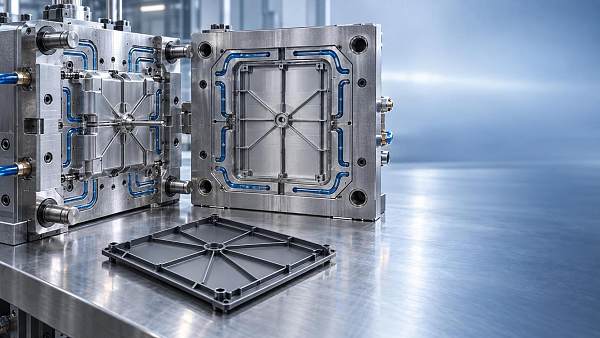
 How mold engineering design reduces warpage in thin-wall partsMold engineering design reduces thin-wall part warpage through balanced gating, cooling, packing, and ejection for stable, production-ready precision.
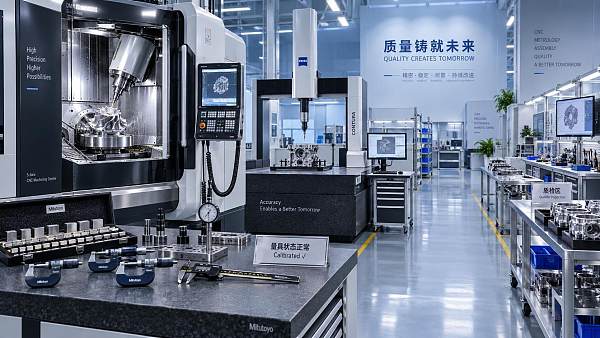
 What to audit at a CNC machine tools factory before approving a supplierCNC machine tools factory audit guide: verify machining accuracy, metrology, traceability, workforce skills, and capacity resilience before approving a precision supplier.
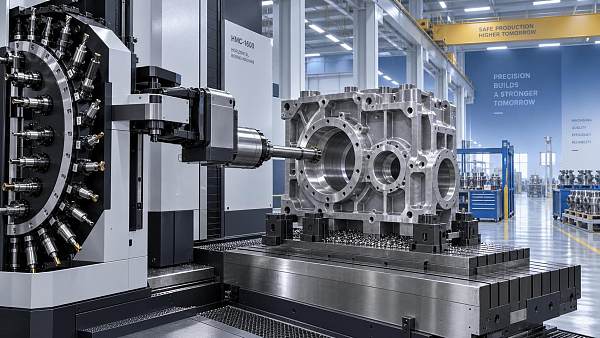
 When does a horizontal boring machine with ATC justify its cost?Discover when a horizontal boring machine with ATC delivers ROI through faster setups, higher uptime, lower labor costs, and reliable capacity growth.
 How office acoustics affect speech privacy in open-plan workspacesOffice acoustics shape speech privacy in open-plan workspaces. Discover practical strategies for reducing distractions, protecting sensitive conversations, and improving focus.
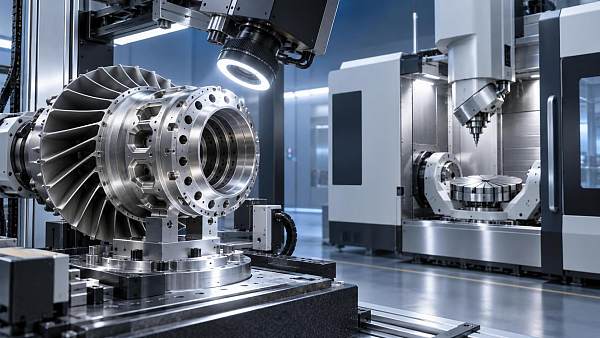
 Can AI in precision engineering for aerospace applications improve defect detection?AI in precision engineering for aerospace applications improves defect detection through smarter inspection, traceable workflows, and early process-drift alerts. Explore proven deployment strategies.
 Using a supplier capability evaluation framework to screen CNC suppliersSupplier capability evaluation framework for screening CNC suppliers: verify quality, traceability, capacity, and resilience to select reliable partners.
 When supplier capability evaluation services reduce tooling project riskSupplier capability evaluation services help reduce tooling project risk by verifying technical fit, quality controls, capacity, and delivery readiness before costly delays occur.
 How can a trade network help distributors enter new regional markets?Trade network strategies help distributors enter regional markets with verified partners, local insights, technical fit, and reliable logistics for faster, lower-risk growth.
 Does private label manufacturing contract assembly reduce launch risk?Private label manufacturing contract assembly can reduce launch risk with proven quality systems, traceability, supplier validation, and scalable production control.
 When do e-readers make sense for a distraction-free work library?E-readers for focused work libraries: discover when they improve deep reading, technical document review, security, and distraction-free research workflows.
 How a precision milling center factory controls part-to-part consistencyDiscover how a precision milling center factory achieves reliable part-to-part consistency through controlled tooling, workholding, traceability, and in-process inspection.
 Which CNC manufacturing investment drivers matter before capacity expansionCNC manufacturing investment drivers: evaluate demand, automation, workforce readiness, and lifecycle ROI before expanding capacity. Build resilient, profitable growth.
 When CNC turning is the right fit for precision machining servicesPrecision machining services: discover when CNC turning delivers superior concentricity, surface finish, and cost control for critical rotational parts.





Search News
Popular Tags