
When should industrial lubricating oils be replaced?
Replace lubricant by condition, not calendar alone
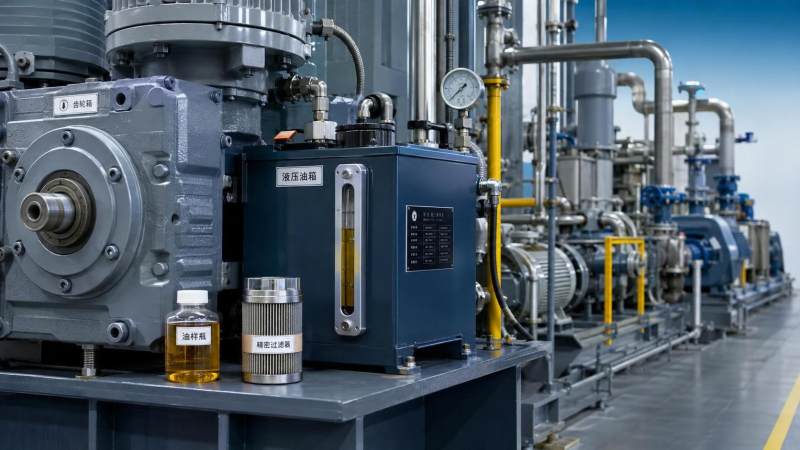
Industrial lubricating oils should be replaced when their condition no longer supports the equipment's required protection, heat control, cleanliness, or hydraulic response. A scheduled interval is useful as a planning limit, but it is rarely sufficient as the sole decision rule. The same oil can remain serviceable for a long period in a clean, lightly loaded gearbox and become unsuitable much earlier in a hot, wet, or contamination-prone system.
For after-sales maintenance personnel, the practical question is not simply, “How many hours has this oil run?” It is whether the lubricant has changed enough that continued use increases the probability of wear, overheating, valve malfunction, corrosion, seal damage, or unplanned shutdown. The decision should combine operating history, inspection findings, oil-analysis trends, and the condition of the machine itself.
Replacing oil too late can allow damage to develop before a visible alarm appears. Replacing it too early can waste a usable lubricant, introduce contamination during changeout, and conceal an underlying machine problem. A condition-based decision provides a more reliable middle ground.
Start with the service interval, then test its assumptions
The equipment manufacturer’s recommended drain interval should remain the initial reference point, especially during commissioning, warranty periods, or when no oil-condition history exists. However, that interval usually assumes reasonably stable duty, compatible lubricant, controlled temperature, and acceptable contamination levels. Many field installations do not operate under those assumptions.
An interval should be shortened or supported by closer monitoring when the equipment experiences conditions such as:
- high bulk oil temperature or repeated overheating events;
- heavy loads, shock loads, frequent starts, or sustained high speed;
- dusty, humid, washdown, marine, or outdoor operating environments;
- known water ingress paths through breathers, coolers, seals, or storage practices;
- fine filtration limitations or frequent filter bypass events;
- mixed duty cycles, intermittent standby service, or long idle periods;
- recent repairs involving bearings, gears, pumps, seals, or internal cleaning.
Conversely, a drain interval may be extended only when oil analysis and machine condition show stable performance over several sampling cycles. Extension should be a controlled decision, recorded by asset and lubricant type. It should not be applied across an entire plant simply because one system has performed well.
Synthetic industrial lubricating oils often have stronger oxidation resistance than many conventional mineral formulations, but this does not make them immune to contamination, additive depletion, or viscosity change. A premium base oil can provide longer life under suitable conditions; it cannot compensate for a leaking cooler, an open fill port, or the wrong filter arrangement.
Warning signs that justify immediate investigation
Some lubricant problems can be seen or detected during routine rounds before laboratory results are available. These signs do not always mean that an immediate drain is required, but they should trigger sampling, inspection, or corrective action without delay.
Changes in appearance
Darkening alone is not a dependable reason to replace oil. Certain oils darken during normal oxidation or after suspending fine contaminants, while others may remain visually clear despite serious degradation. Appearance becomes more meaningful when the change is sudden or accompanied by haze, sediment, foam, varnish, burnt odor, or visible free water.
A milky or cloudy appearance commonly indicates emulsified water or air entrainment. In a gearbox, hydraulic reservoir, or circulating system, water can reduce film strength, accelerate corrosion, consume additives, and interfere with filtration. Free water collecting at the bottom of a sight glass is a more urgent signal. Draining the oil without locating the ingress route may only repeat the problem.
Foam, air release, and unstable operation
Persistent foam at the reservoir surface can reduce effective lubrication and cause erratic hydraulic behavior. It may result from overfilling, incompatible top-up oil, air leaks on pump suction lines, excessive return-line turbulence, degraded antifoam additives, or contamination. The appropriate response depends on the cause. If the issue is mechanical or related to reservoir design, an oil change alone may not resolve it.
In hydraulic equipment, sluggish actuator movement, pressure fluctuation, noisy pumps, or unstable servo performance can be associated with viscosity loss, air entrainment, water contamination, varnish, or particle contamination. These symptoms justify checking the oil, filters, temperature, suction condition, and machine controls together. Treating every hydraulic response problem as an oil-life issue can lead to unnecessary drains and missed faults.
Temperature and odor
A sustained rise in operating temperature accelerates oxidation and shortens lubricant life. Burnt odor, smoke, or unusually rapid darkening may indicate thermal distress. Before changing the oil, maintenance personnel should also examine cooling-water flow, cooler fouling, oil level, load conditions, bearing condition, alignment, and circulation performance. High temperature is often both a lubricant problem and a machine problem.
When a system has been severely overheated, changing the oil may be necessary, but it should be accompanied by inspection for sludge, varnish deposits, hardened seals, blocked coolers, and damaged filters. Fresh oil added to a contaminated system can degrade quickly if deposits and the original heat source remain in place.
Use oil analysis to decide what has changed
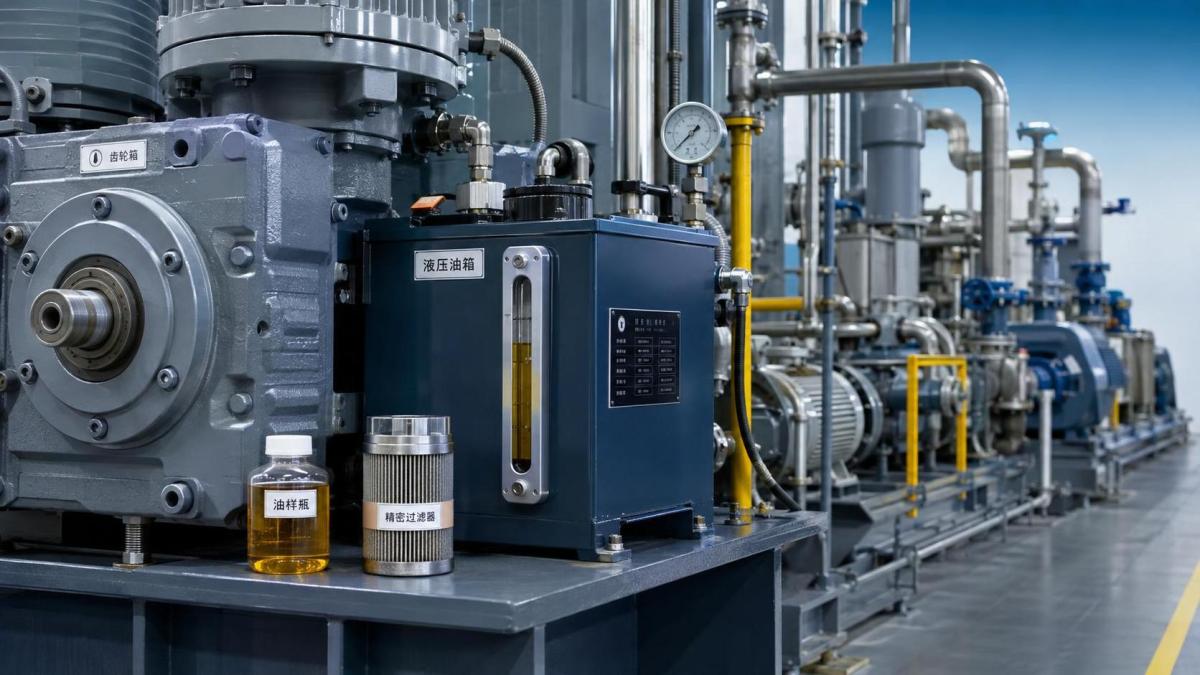
Routine oil analysis is most useful when results are trended over time for the same asset. A single sample can identify an obvious problem, but trends reveal whether the lubricant and machine are stable, deteriorating gradually, or moving toward a failure condition.
The relevant test slate depends on the application. A hydraulic oil sample should not be judged by exactly the same criteria as a heavily loaded gear oil or a turbine oil. Still, several categories consistently support replacement decisions.
No single test result should be treated as a universal condemnation point. Acceptable limits depend on viscosity grade, machine design, operating temperature, fluid type, component sensitivity, and the laboratory method used. A modest particle increase in a slow-speed, noncritical gearbox has a different consequence from the same result in a close-tolerance servo-hydraulic system.
Laboratory data should also be checked against the sampling method. A sample taken from the bottom drain may overstate settled contamination; a sample taken from a clean return line may fail to represent material accumulating in the reservoir. Consistent live-zone sampling locations and clean sample bottles make trends far more actionable.
Do not change oil before identifying contamination sources
Water, dust, process material, metal debris, and incompatible fluids are common reasons for replacing lubricant prematurely. Yet the drain-and-refill action addresses the symptom only. Unless the source is controlled, the replacement oil inherits the same exposure.
For water contamination, inspect breathers, reservoir covers, shaft seals, cooler integrity, washdown practices, and storage conditions. Desiccant breathers may help where humidity and thermal breathing are persistent, but they require inspection and timely replacement. In equipment that operates intermittently, condensation can form even when there is no obvious leak.
For particle contamination, inspect breather filtration, fill practices, transfer containers, filter condition, bypass indicators, and maintenance access points. New oil is not necessarily clean enough for every system when delivered from a drum or bulk tank. If the asset has tight clearances or sensitive control components, oil may need filtration during transfer and filling.
Incompatible top-up oil is another frequent cause of shortened service life. Mixing products with similar viscosity grades does not guarantee chemical compatibility. Different additive systems can affect demulsibility, air release, corrosion protection, filterability, and foam control. When the history of a top-up is uncertain, sample the system and consult the lubricant supplier’s technical guidance before deciding whether a partial drain, full change, or controlled flush is appropriate.
When a full oil change is the right response
A complete replacement is generally justified when testing or inspection shows that the lubricant can no longer provide its intended function, when contamination cannot be effectively removed in service, or when the system has undergone a major event that may have damaged the fluid.
Typical examples include confirmed severe oxidation, viscosity outside the equipment’s acceptable range, persistent water contamination, substantial chemical contamination, incompatible lubricant mixing, or a repair that introduced significant debris. A full change may also be necessary after internal component failure, but the work scope should include flushing, filter replacement, reservoir cleaning, and inspection of coolers, lines, and dead legs where debris can remain trapped.
Oil should not be changed solely because the machine has reached a calendar date if the system is clean, analysis is stable, and the equipment supplier permits condition-based maintenance. At the same time, a sample that appears acceptable does not always justify continued service after an abnormal event. If the unit has suffered a bearing seizure, major gear damage, fire exposure, process-fluid ingress, or prolonged extreme heat, the maintenance decision must account for contaminants and deposits that a routine sample may not fully represent.
A practical replacement decision for after-sales teams
A repeatable workflow makes these decisions easier to defend and hand over between shifts. Start by confirming the lubricant in service: product identity, viscosity grade, fill quantity, top-up history, date of last change, and known operating events. Then compare current operating temperature, noise, vibration, pressure behavior, and filter condition with the asset’s normal baseline.
If there is no urgent symptom, obtain a representative sample and review the trend rather than reacting to color alone. If results indicate contamination or degradation, identify whether the oil can be restored through filtration, dehydration, or corrective maintenance. If it cannot, schedule replacement with the correct fluid, clean transfer equipment, new filters where appropriate, and a documented inspection of the contamination source.
The final decision should leave the machine in a better state than before the drain. Fresh oil is valuable only when the system is clean, the lubricant specification is correct, and the failure mechanism that shortened its life has been addressed. That is the difference between an oil change performed as routine service and one that genuinely improves equipment reliability.
Recommended News
 When is industrial procurement support worth the cost for tooling?When is industrial procurement support worth the cost for tooling? Discover how to compare total costs, assess supplier risk, and build a clear break-even case before you invest.
 How to assess a mold manufacturer's cooling design expertiseAssess a mold engineering manufacturer's cooling expertise with key checks for thermal simulations, circuit flow, and mold trials. Learn what evidence to demand before approving your supplier.
 How to vet OEM mold suppliers in a manufacturing directoryUsing a manufacturing directory with OEM suppliers? Learn how to vet mold makers, verify capabilities, compare quotes, and define acceptance criteria to reduce sourcing risk.
 Desma USA Introduces DataHub and Molding Technology to Improve Production EfficiencyExplore Desma USA’s DataHub, valve-gate and cavity-pressure technology to see how these innovations could enhance process control and improve molding production efficiency.
 How energy costs shape manufacturing competitiveness in the Middle EastManufacturing competitiveness Middle East guide: discover how energy costs, efficiency, and reliable power shape factory margins—and make smarter site and equipment investments.
 Choosing a compatible automatic tool changer for 5-axis CNCs in EuropeAutomatic tool changer Europe guide: find the right fit for your 5-axis CNC. Compare tool limits, collision clearance, safety and local support to avoid costly mistakes.
 When is a Swiss-type lathe worth the investment in Europe?Swiss type lathe Europe: is it worth the investment? Compare ownership costs, verified savings and payback scenarios to build a stronger business case before you buy.
 Will wireless alarm systems still work during a power outage?Will wirelessalarmsystems work during a power outage? Discover which features stay active, why cellular backup matters, and what to check before choosing your alarm.
 What affects lead times when buying carbide inserts in Europe?Buying carbide inserts Europe-wide? Discover how stock, specifications, factory schedules and shipping affect lead times, and learn what to confirm to keep production running.
 Which window treatments provide privacy without blocking daylight?Discover window treatments that balance privacy and daylight. Compare cellular shades, sheers, and layered options to find the right fit—and avoid nighttime privacy surprises.
 How to verify a 5-axis CNC machine supplier's MTTF claimsVerify MTTF for CNC machine tools supplier claims with expert checks on failure records, operating hours, and confidence bounds. Make a smarter 5-axis CNC investment.
 How to choose STEM education kits for small-group classroom workChoose STEM education kits that keep every student engaged. Discover how to assess group participation, lesson fit, safety, and long-term costs to make smarter classroom purchases.
 How to read an EDM surface finish Ra chart in µm and µinRead an EDM surface finish Ra chart with confidence. Learn µm-to-µin conversions, avoid costly unit errors, and choose finish targets backed by reliable inspection.
 How to use data analytics to reduce scrap in injection moldingUse data analytics to reduce injection molding scrap. Learn which production data to track, how to uncover defect causes, and how to verify improvements that cut waste and protect quality.
 What affects the cost of axis calibration on a 5-axis machine?Understand axis calibration cost for 5-axis machines, from rotary-axis condition to downtime. Learn how to compare quotes, avoid hidden fees, and secure verified accuracy.
 How to verify a supplier's chip removal rate measurement accuracyReview chip removal metrics supplier teams provide. Learn how to verify removal rates, calibration, timing, and uncertainty for smarter, more confident purchasing decisions.
 How cryogenic service requirements affect fluid control system pricesExplore fluid control systems price drivers for cryogenic service, from materials and testing to insulation. Learn how to compare quotes, avoid hidden costs, and buy with confidence.
 When is die-cast aluminum suitable for lightweight vehicle housings?Light-weighting vehicle materials: Discover when die-cast aluminum suits vehicle housings, balancing weight savings, tooling costs, sealing, and durability for smarter design decisions.
 How to specify CNC machining tolerances for press-fit assembliesSpecify CNC machining tolerance for reliable press-fit assemblies. Learn to calculate interference, control thermal effects, and verify supplier capability to prevent costly fit failures.
 How to assess five-axis machine tool thermal stability data in Latin AmericaReview machine tool thermal stability data Latin America suppliers provide. Discover how to assess five-axis drift, ISO 230-3 tests, and site conditions for smarter purchasing decisions.
 How thick should fiberglass acoustic insulation be for wall cavities?Fiberglass acoustic insulation: how thick should it be? Explore 3.5- and 5.5-inch wall cavity options, tested STC requirements, and installation tips to avoid costly mistakes.





Search News
Popular Tags