
How cryogenic service requirements affect fluid control system prices
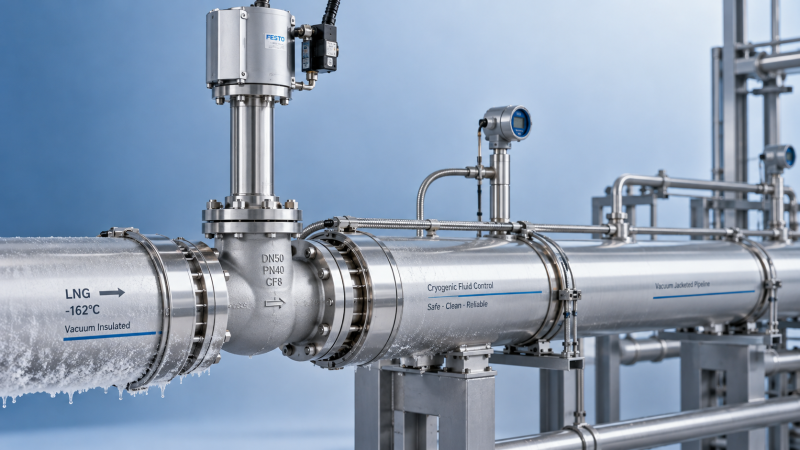
Cryogenic service increases fluid control system prices because equipment must do more than withstand a low operating temperature. It must retain pressure-boundary integrity, control leakage as components contract, manage heat ingress, and operate reliably through cooldown and warm-up. A lower quotation is not a saving if it excludes the materials, testing, insulation interfaces, or protective functions required by the actual duty.
There is no defensible universal percentage premium for a “cryogenic” system. Liquid nitrogen, liquefied natural gas, liquid oxygen, and liquid hydrogen impose different temperature, compatibility, cleanliness, and safety requirements. The useful comparison is therefore not standard equipment versus cryogenic equipment, but competing offers against the same operating envelope and acceptance criteria.
The operating envelope determines the price—not the cryogenic label
A specification stating only “suitable for cryogenic service” leaves substantial room for suppliers to price different scopes. One offer may include a valve qualified for low-temperature isolation; another may include cold leakage testing on every supplied valve, oxygen-service cleaning, extended documentation, and a factory-integrated insulated assembly. Both may carry the same nominal size and pressure class while representing very different deliverables.
The minimum design temperature is particularly important. Approximate normal boiling points at atmospheric pressure are −162°C for methane, −183°C for oxygen, −196°C for nitrogen, and −253°C for hydrogen. These values illustrate the range of cryogenic conditions; they are not substitutes for the project's design temperatures. Actual fluid composition, operating pressure, depressurization, and transient conditions must inform the specification.
The temperature requirement also needs to be mapped onto the assembly. A valve body exposed to liquid may experience conditions different from those at the packing, actuator, instrument connection, or structural support. Requiring every component to operate at the fluid's minimum temperature can create unnecessary cost. Conversely, assuming that an exposed accessory will remain warm without examining installation geometry can leave a critical function unprotected.
Before comparing prices, establish the fluid and its phase, minimum and maximum design temperatures, pressure envelope, flow range, allowable leakage, operating frequency, and required failure position. Include cooldown, shutdown, and standby conditions. These details determine whether the quoted equipment is genuinely comparable.
Materials and internal clearances change the manufacturing cost
Low-temperature toughness is a primary reason ordinary-service construction cannot simply be carried over. A material acceptable at ambient conditions may not provide suitable resistance to brittle fracture at the required temperature. Austenitic stainless steels are widely used in cryogenic equipment, but a grade designation alone does not establish suitability: product form, weld condition, pressure design, applicable code, and fluid compatibility still matter.
The material-related premium includes more than the purchase price of stainless steel. Specified material certification, heat-number traceability, welding procedures, examination, and any required impact testing can add manufacturing and documentation costs. Those requirements should follow the governing code and project specification rather than being applied indiscriminately to every component.
Valve internals introduce a separate problem. Bodies, stems, seats, and seals contract as they cool, and different materials contract by different amounts. Clearances and seating loads must remain functional across the temperature range. A valve that moves freely and seals at room temperature may bind or leak when cold if these effects have not been addressed.
Soft-seat construction can provide tight shutoff, but the seat material must suit the temperature, pressure, fluid, and cycling duty. Metal seats avoid some polymer limitations but bring their own machining, surface-finish, and leakage-performance considerations. Neither construction is automatically the economical choice. The relevant question is whether the specified seat achieves the required isolation performance without unnecessary complexity.
Extended bonnets and insulation affect the complete installation
An extended bonnet places the stem packing farther from the cold process region, helping keep it within a suitable temperature range. This adds material, machining, structural considerations, and installation height. Bonnet length is therefore a functional design choice, not simply an indication that a valve is “more cryogenic.”
The required arrangement depends on temperature, insulation thickness, valve orientation, and the manufacturer's validated design. A longer extension can increase cost and interfere with access or surrounding pipework. A shorter one may place the packing too close to the cold zone. Installation restrictions should be checked before purchase, especially where the proposed orientation differs from the supplier's qualified configuration.
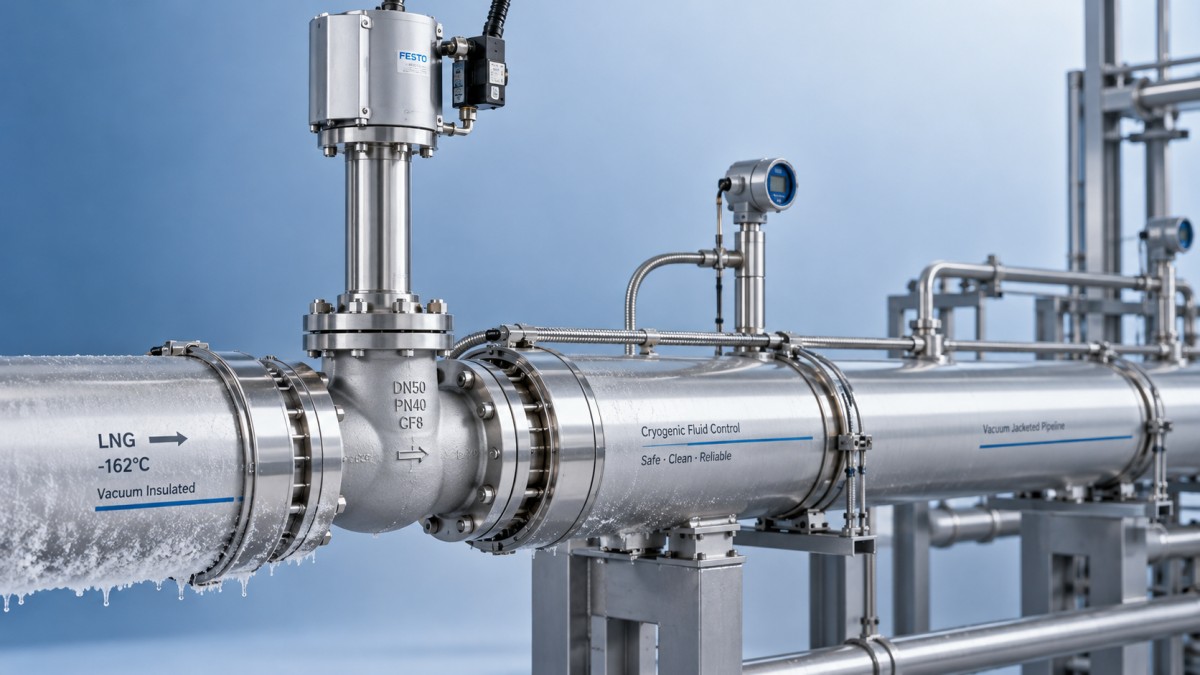
Insulation creates another major boundary between quotations. A conventional insulated line and a vacuum-jacketed assembly are not equivalent supplies. Vacuum jacketing introduces additional fabrication, supports, evacuation provisions, leak checking, and interfaces. Its economic justification depends on allowable heat ingress, operating duration, fluid value, and the consequences of boil-off or vapor formation.
The valve's insulation interface also matters. Access for maintenance, vapor-barrier continuity, and accommodation of thermal movement must be considered together. A low equipment price can be offset by expensive field fabrication if these interfaces are left unresolved. Quotations should state whether insulation, removable covers, vacuum-jacket transitions, and associated installation work are included or excluded.
Leakage requirements and testing can change the quotation substantially
“Leak-tight” is not a complete acceptance criterion. Internal leakage across a closed seat, external leakage through a pressure boundary or stem seal, and leakage affecting a vacuum jacket are different performance requirements. Each needs an appropriate test method and acceptance limit.
An ambient pressure test does not by itself demonstrate that a valve will meet its operating and sealing requirements at cryogenic temperature. Cold testing can reveal the effects of contraction on seat loading, stem operation, and external sealing. However, the extent of testing must be explicit: design qualification, production sampling, and testing every delivered unit provide different levels of evidence and carry different costs.
Testing becomes more expensive as the specification adds temperature stabilization, repeated thermal cycles, measurements in multiple flow directions, operation under differential pressure, witnessed inspection, or detailed reporting. These activities require facilities, test media, preparation, and scheduled test time. An otherwise completed order may wait for an available cryogenic test slot.
Standards such as BS 6364 and the ISO 28921 series can provide relevant requirements for valves within their respective scopes. Their designation alone is not enough to establish an identical supply basis. The contract should identify the applicable edition, valve coverage, required tests, acceptance criteria, and supplementary project requirements. Compliance with a valve standard also does not establish compliance of the entire piping or packaged system.
Terms such as “zero leakage” need particular care. Acceptance should be expressed using a defined method, test pressure, temperature, duration, and measurable limit. An undefined demand can produce conservative pricing without delivering clearer assurance. Equally, a supplier's “bubble-tight” description should not be treated as equivalent to another offer unless the test conditions match.
Fluid-specific requirements create different cost structures
Two systems operating at similarly low temperatures can require different preparation and qualification. Liquid oxygen service requires suitable materials and controlled cleanliness to manage ignition risks associated with contamination and incompatible substances. Cleaning, inspection, protected assembly, packaging, and preservation may therefore be significant quoted items. These are not automatically included in a generic cryogenic valve price.
Hydrogen service raises distinct questions about material compatibility, sealing, permeation, and leakage detection. Liquid hydrogen also operates at temperatures far below those of liquid nitrogen. Qualification for nitrogen service should not be accepted as sufficient evidence for hydrogen duty without examining the relevant design and test basis.
LNG applications require attention to the specified composition, hazardous-area conditions, isolation duty, and any fire-safe requirements imposed by the project. Cryogenic qualification and fire-safe qualification address different conditions; one should not be assumed to include the other.
Trapped liquid is a further design issue across cryogenic services. Liquid isolated in a cavity or pipe section can develop excessive pressure as it warms. The system may require thermal relief, suitable cavity-relief arrangements, or another engineered protective measure. Relief direction and discharge routing must match the installation. Omitting these functions from the equipment package does not eliminate their cost—it transfers the work and responsibility elsewhere.
Actuation and flow performance can outweigh the valve-body premium
A cryogenic control valve must meet the required flow performance, not merely survive the temperature. Pressure drop, flashing, two-phase conditions, and the required control range influence sizing and trim selection. Selecting by pipe size alone can produce poor controllability or an unnecessarily large valve and actuator.
Actuator sizing should reflect the maximum required operating torque or thrust, including the relevant differential-pressure and cold-service conditions. Emergency shutdown duties may add spring-return mechanisms, stored-energy arrangements, position indication, solenoid valves, or defined closing times. A quotation that excludes these accessories can appear cheaper while failing to deliver the specified function.
The economic distinction is especially clear between occasional isolation and continuous modulation. A valve operated only during filling or maintenance faces a different duty from one repeatedly controlling pressure or flow. Applying the most demanding cycling and control requirements to every isolation valve creates overspecification; treating all valves as simple isolation devices can understate the cost of reliable regulation.
Compare the scope before comparing the total
A useful commercial comparison separates the supply into price-driving obligations. This does not require suppliers to disclose proprietary manufacturing costs. It requires them to show what the quoted total actually buys.
Lead time should be assessed on the same basis. Material availability, nonstandard extensions, actuator integration, cleaning, and witnessed tests can each constrain delivery. Ask which activities determine the promised shipment date and whether inspection hold points are included in that schedule. Removing a necessary test to recover time changes the acceptance basis, not just the delivery date.
For cross-border supply, separate equipment pricing from freight, duties, local conformity obligations, site testing, and commissioning. Delivery terms and documentation responsibilities should be explicit. Otherwise, a nominally lower fluid control systems price may simply exclude costs carried by another offer.
Control lifecycle cost without paying for unnecessary requirements
Lifecycle comparison should focus on consequences that can be estimated credibly: leakage losses, heat ingress, maintenance access, spare parts, downtime exposure, and replacement work. Continuous service can make thermal performance commercially important, while intermittent use may place greater emphasis on cooldown losses and cycling reliability. Vacuum insulation should be evaluated against the actual operating pattern rather than selected automatically.
Maintainability can also justify a higher purchase price. Packing access, actuator removal, seat replacement, and availability of qualified spare parts affect how much piping or insulation must be disturbed during repair. A compact assembly may save installation space yet impose more extensive dismantling later.
The strongest cost-control measure is a precise specification. Retain requirements tied to temperature, fluid compatibility, safety, and measurable performance. Challenge duplicated testing, unsupported blanket material upgrades, and requirements applied to components that do not experience the stated conditions. Where an alternative design is proposed, require evidence that it meets the same duty and acceptance criteria.
The defensible purchase is not the cheapest cryogenic label or the most elaborate construction. It is the lowest evaluated cost for a clearly defined service, with exclusions resolved and the required performance supported by appropriate evidence. That makes the cryogenic premium explainable—and prevents apparent savings from becoming installation changes, qualification gaps, or operating losses.
Recommended News
 How cryogenic service requirements affect fluid control system pricesExplore fluid control systems price drivers for cryogenic service, from materials and testing to insulation. Learn how to compare quotes, avoid hidden costs, and buy with confidence.
 When is die-cast aluminum suitable for lightweight vehicle housings?Light-weighting vehicle materials: Discover when die-cast aluminum suits vehicle housings, balancing weight savings, tooling costs, sealing, and durability for smarter design decisions.
 How to specify CNC machining tolerances for press-fit assembliesSpecify CNC machining tolerance for reliable press-fit assemblies. Learn to calculate interference, control thermal effects, and verify supplier capability to prevent costly fit failures.
 How to assess five-axis machine tool thermal stability data in Latin AmericaReview machine tool thermal stability data Latin America suppliers provide. Discover how to assess five-axis drift, ISO 230-3 tests, and site conditions for smarter purchasing decisions.
 How thick should fiberglass acoustic insulation be for wall cavities?Fiberglass acoustic insulation: how thick should it be? Explore 3.5- and 5.5-inch wall cavity options, tested STC requirements, and installation tips to avoid costly mistakes.
 How bending radius affects the service life of high-voltage cablesProtect highvoltagecables from bending damage. Discover how bend radius affects service life, which installation limits matter, and practical checks for lasting reliability.
 Why Do Mechanical Seals Fail Prematurely?Why do mechanical seals fail prematurely? Discover how dry running, poor flushing, and misalignment cause leaks—and learn practical checks to prevent repeat failures and reduce downtime.
 OEM Manufacturing Design Support: What to Resolve Before Tooling StartsOEM manufacturing design support helps resolve materials, tolerances, and inspection before tooling starts. Discover how to avoid costly rework and make confident tooling decisions.
 How to size extrusion equipment for a target production outputSize extrusion equipment to meet your production targets. Learn how to calculate throughput, identify line bottlenecks, and verify capacity to avoid costly sizing mistakes.
 How to assess 5-axis demand in machining center market analysisStrengthen your machining center market analysis: learn how to assess 5-axis workloads, buyer readiness, and investment costs to build credible demand forecasts and avoid costly overestimates.
 Can procurement support reduce contract manufacturing tooling delays?Discover industrial procurement support contract manufacturing teams can use to cut avoidable tooling delays, secure materials, and keep production launches on track.
 Which export insights matter when entering a new market?Export insights for new-market entry: assess demand, standards, delivered costs, supply resilience, and buyer approval paths to build a profitable expansion plan.
 How industrial technology solutions in Southeast Asia handle humid sitesIndustrial technology solutions Southeast Asia: learn how site-adapted materials, sealing, condensation control, and maintenance strategies improve reliability in humid, coastal, and high-corrosion industrial environments.
 How hospitals can size telemedicine hardware for peak virtual visitsTelemedicine hardware for hospitals: learn how to size reliable endpoints for peak virtual visits, optimize reserves, workflows, network readiness, and uptime.
 Which electronic components most affect smart actuator reliability?Electronic components that shape smart actuator reliability: evaluate power supplies, motor drives, sensors, control boards, and connectors for demanding industrial performance.
 When do reshoring CNC investment opportunities justify 5-axis capacity?Explore when reshoring CNC investment opportunities justify 5-axis capacity—reduce setups, strengthen quality control, cut supply-chain risk, and build a resilient local machining strategy.
 What compliance documents should an industrial chemicals exporter provide?Industrial chemicals exporter compliance guide: learn which SDS, CoA, transport, customs, and market-access documents help prevent delays and risks.
 How to assess a smart device manufacturing solutions factoryAssess a smart device manufacturing solutions factory with practical insights on engineering, quality, testing, supply-chain resilience, and pilot builds.
 What CE certification means for a CNC controller systemCNC controller system CE certified: learn what CE marking covers, how to verify safety, EMC, documentation, and retrofit compliance for EU machinery.
 When industrial sewing is the right fit for high-volume productionIndustrial sewing for high-volume production: learn how seam design, material control, automation, and quality planning drive reliable output and lower risk.
 How ATC tool change time data reveals hidden cycle-time lossesATC tool change time data reveals hidden cycle-time losses, separates mechanical delays from program motion, and helps manufacturers improve uptime, capacity, and delivery confidence.




Search News
Popular Tags