
Are Synthetic Lubricants Worth the Higher Upfront Cost?
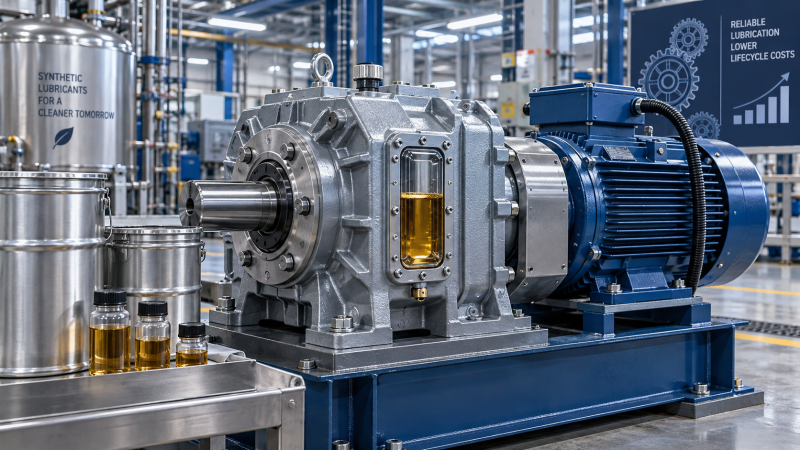
Synthetic lubricants are worth the higher upfront cost when their performance reduces expenses elsewhere: oil changes, maintenance labor, energy use, component wear, or production interruptions. The strongest case usually involves equipment operating continuously, under demanding temperatures, or with costly access for servicing. In lightly loaded equipment with clean operating conditions and inexpensive maintenance, a suitable mineral oil may remain the better financial choice.
The useful question is whether a particular synthetic lubricant solves a measurable problem in a particular machine. Paying more for oil makes sense when the resulting savings exceed the purchase premium and conversion costs. A “synthetic” label alone does not establish that return.
What does the higher price actually buy?
Synthetic lubricants use base fluids produced through controlled chemical processes. Different base fluids provide different properties, and the finished lubricant also depends on its additive package. Compared with conventional mineral oils, suitable synthetic formulations can offer better resistance to oxidation, improved flow at low temperatures, or more consistent viscosity as temperature changes.
These properties have practical consequences. Oil that resists oxidation can remain usable longer when heat is the main cause of deterioration. Better cold-temperature flow can help oil reach lubricated surfaces during startup. More stable viscosity can help maintain an appropriate lubricating film across a wider operating temperature range.
However, synthetic oils do not automatically provide better protection in every application. Antiwear performance, corrosion protection, air release, water separation, and deposit control depend on the complete formulation. A mineral oil designed for the machine can outperform a synthetic product intended for a different service.
Start with the equipment’s required lubricant specification, viscosity grade, and performance characteristics. Compare suitable products within that application. Switching from a correctly specified mineral oil to an incorrectly specified synthetic oil can increase costs despite the higher purchase price.
Which applications are most likely to justify synthetic lubricants?
The case is strongest when operating conditions expose a limitation of the current lubricant. A gearbox with sustained high oil temperatures, for example, may benefit from a synthetic formulation that resists oxidation and supports longer service intervals. A refrigeration compressor may require a particular synthetic chemistry because of refrigerant compatibility and oil-return behavior. In that case, suitability takes priority over a simple price comparison.
A demanding application does not necessarily mean high load alone. Load-carrying ability also depends on viscosity, additives, speed, and component design. A heavily loaded machine needs the correct finished lubricant; synthetic base oil is only one part of that decision.
Expensive equipment is not automatically a candidate either. If its current oil remains healthy until a scheduled shutdown and the machine operates reliably, switching may offer little additional value.
When is mineral oil still the more economical choice?
A suitable mineral lubricant can be economical in equipment operating at moderate temperatures, with predictable loads and convenient maintenance access. If the existing oil meets the required specification and delivers acceptable condition trends, there may be no operational problem for a synthetic product to solve.
Frequent contamination can weaken the business case for synthetics. Oil exposed to process fluids, abrasive dust, or recurring water ingress may require replacement while its base fluid is still chemically serviceable. Paying for greater oxidation resistance provides limited value if contamination determines the drain interval.
Leakage and high oil consumption have a similar effect. When much of the purchased lubricant escapes or is consumed before reaching its useful service life, the higher unit price becomes harder to recover. Repairing leaks, improving seals, or controlling contamination may produce a better return than changing lubricant chemistry.
Also consider the maintenance calendar. If oil must be replaced during every planned overhaul regardless of condition, a product capable of longer service may never deliver that benefit.
How should you calculate the total cost of ownership?
Compare both lubricants over the same operating period and production duty. Price per liter is one input. Include the initial fill, expected replacement volume, top-up consumption, servicing labor, filters, disposal, oil analysis, and production time lost during lubricant-related work.
A practical calculation is:
Net savings = avoided oil-change and maintenance costs + measured energy savings + supportable reductions in repair or downtime costs − additional lubricant and conversion costs.
Keep the first calculation conservative. Use established service costs and realistic operating hours. Treat energy savings as an assumption until measured, and assess potential reliability improvements separately when there is insufficient evidence to assign them a monetary value.
Consider a gearbox where oil changes require access equipment and a production stoppage. If a suitable synthetic oil enables fewer changes, the avoided access and shutdown costs may outweigh the higher fluid price. The same oil in a small, accessible gearbox may offer a much weaker return.
Include conversion expenses in the initial investment. These can involve draining, flushing where required, replacement filters, compatible seals, additional sampling, and lubricant identification. For a payback calculation, divide that incremental investment by the expected annual net savings. If the savings depend entirely on an assumed drain extension or an unmeasured efficiency improvement, the business case needs stronger evidence.
Will synthetic oil last longer and reduce energy consumption?
It can, but these are separate benefits with separate conditions. Longer oil life is most plausible when oxidation or thermal degradation limits the existing lubricant. If water, particles, process contamination, or additive depletion determines oil life, improved base-fluid stability may not extend the service interval substantially.
Drain intervals should follow equipment requirements and lubricant-condition evidence. Useful indicators can include viscosity, oxidation, water content, particle contamination, and wear metals. The relevant limits and tests depend on the machine and lubricant. A single acceptable sample is not enough to establish a much longer interval; trends across operation provide a stronger basis.
Energy savings depend on how much power the machine loses through lubrication-related friction, churning, or pumping. Certain synthetic formulations can reduce friction in suitable gear applications. In hydraulic systems, viscosity behavior can affect efficiency, but the outcome also depends on temperature, pump design, internal leakage, and operating duty.
Compare power consumption under comparable loads, speeds, temperatures, and production conditions. A lower reading after an oil change may reflect a different workload or ambient temperature. Lower sump temperature can be useful supporting evidence, but it does not independently prove an energy saving.
Are all synthetic lubricants interchangeable?
No. “Synthetic” describes a broad category, not a single chemistry or performance level. Common industrial base fluids include polyalphaolefins, polyalkylene glycols, and synthetic esters. Their differences matter when selecting a product or planning a conversion.
- Polyalphaolefins, or PAOs: Used in many industrial formulations. They are often miscible with mineral oils, but finished-product compatibility still requires assessment.
- Polyalkylene glycols, or PAGs: Used in selected gear and compressor applications. Many conventional PAG fluids are not miscible with mineral oils or PAOs, although oil-soluble variants exist.
- Synthetic esters: Can provide useful lubricity and solvency. Depending on the ester and formulation, water exposure, hydrolytic stability, and material compatibility may need particular attention.
The same viscosity grade does not establish interchangeability. Two oils can differ in seal compatibility, water handling, additive chemistry, or suitability for a particular gear material.
Grease needs an additional check: thickener compatibility. Changing to a grease with synthetic base oil can still create problems if the old and new thickeners or additive systems are incompatible.
Can you switch directly from mineral oil to synthetic oil?
Sometimes, but a direct drain-and-fill should be a product-specific decision. Establish the current lubricant’s identity, the proposed replacement’s chemistry, acceptable residual oil, and compatibility with seals, hoses, coatings, and filters. Equipment approval requirements also remain relevant.
If the fluids are compatible and the application permits residual mixing, a controlled drain-and-fill may be sufficient. Where they are incompatible, a defined flushing procedure may be necessary. Flushing also needs to account for oil trapped in piping, coolers, reservoirs, and other components.
Some replacement formulations can mobilize existing deposits because of differences in solvency and detergency. That can affect filter loading after conversion. Existing seal damage or material incompatibility can also become apparent during the change. Synthetic oil is neither a leak repair nor an automatic cause of leakage; fluid properties and equipment condition determine the outcome.
After conversion, monitor temperature, leakage, filter condition, and oil-analysis trends. Clear labeling and updated maintenance records help prevent accidental mixing during future top-ups.
Does synthetic automatically mean food-safe or environmentally preferable?
No. Food-contact suitability, biodegradability, toxicity, and fire resistance are separate product characteristics. Each depends on the formulation and its intended use.
A lubricant for equipment with possible incidental food contact needs the relevant suitability designation for that application. A fluid intended to reduce environmental impact needs supporting product data. These attributes cannot be inferred from the word “synthetic.”
Longer service life may reduce lubricant consumption and waste, but the result depends on actual drain intervals, leakage, and disposal practices. Select for the required operating and environmental properties, then assess the economics.
What is the best next step before committing to a switch?
Select one machine where the current lubricant creates a documented cost or operating constraint. Record its lubricant specification, oil volume, operating temperature, service interval, top-up consumption, and maintenance history. This baseline gives the proposed change something meaningful to improve.
Choose a replacement that meets the equipment requirements and addresses the identified limitation. Request application-specific information on compatibility, conversion procedures, and the evidence supporting proposed benefits. General claims about synthetic oil life or efficiency are less useful than guidance for the actual machine and duty.
Run a controlled trial with defined acceptance criteria, such as oil-condition trends, maintenance hours, leakage, and power consumption under comparable operation. Expand the change when those results support it.
A synthetic lubricant earns its higher price by delivering useful performance that the equipment can exploit. Where the current mineral oil already provides reliable, economical service, retaining it is a sound decision. Where heat, access costs, or lubrication-related losses create a measurable constraint, a carefully selected synthetic can justify the additional investment.
Recommended News
 When does precision engineering machining need a 5-axis machine?Discover when precision engineering machining needs 5-axis capability. Compare 3+2 and simultaneous machining to improve tool access, control costs, and choose the right process.
 How to check clinical validation of wholesale blood pressure monitorsSourcing blood pressure monitors wholesale? Learn how to verify clinical studies, registry listings, cuff coverage, and model identity before approving your next bulk order.
 How much lithium battery storage do you need for solar energy?Lithium battery storage for solar energy: learn to calculate capacity, account for losses, and check backup power. Avoid costly sizing mistakes and find the right system for your needs.
 11th CIMSS Conference in Wuxi to Focus on Metalworking Fluid Industry UpgradesExplore the 11th CIMSS Conference in Wuxi, October 22–23, 2026, for insights into metalworking fluid innovation, industrial cleaning and cost control to support industry upgrades.
 Can solid-state battery breakthroughs scale to mass-produced EVs?Solid-state battery breakthroughs for electric vehicles: can they scale? Explore manufacturing yield, pack costs, and real-world performance to uncover what stands between lab success and mass production.
 Can digital manufacturing improve competitiveness by cutting lead times?Explore digital manufacturing competitiveness: learn how shorter lead times, smarter scheduling, and connected quality data can help win orders and cut costs without compromising quality.
 How to size a hydraulic press for forging large steel componentsSize a hydraulic press for forging large steel components with confidence. Learn how to assess forming force, working speed, stroke, and capacity limits to avoid costly selection errors.
 Aerospace Actuator Maker 7958 Joins Emerging Stock Market on October 22Aerospace actuator maker 7958 joins the Emerging Stock Market on October 22, 2026. Explore its precision motor technology and growth plans for drones and robotics.
 How to calculate payload for industrial robots removing molded partsSize industrial robots for molded-part removal with confidence. Learn to calculate total payload, center of gravity, inertia, and extraction loads to avoid overloads and optimize cycle times.
 When do automated CNC cell systems pay off for 5-axis machining?When do automated cnc cell systems pay off for 5-axis machining? Discover how demand, unattended reliability, and total costs shape ROI—and build a stronger investment case.
 When is industrial procurement support worth the cost for tooling?When is industrial procurement support worth the cost for tooling? Discover how to compare total costs, assess supplier risk, and build a clear break-even case before you invest.
 How to assess a mold manufacturer's cooling design expertiseAssess a mold engineering manufacturer's cooling expertise with key checks for thermal simulations, circuit flow, and mold trials. Learn what evidence to demand before approving your supplier.
 How to vet OEM mold suppliers in a manufacturing directoryUsing a manufacturing directory with OEM suppliers? Learn how to vet mold makers, verify capabilities, compare quotes, and define acceptance criteria to reduce sourcing risk.
 Desma USA Introduces DataHub and Molding Technology to Improve Production EfficiencyExplore Desma USA’s DataHub, valve-gate and cavity-pressure technology to see how these innovations could enhance process control and improve molding production efficiency.
 How energy costs shape manufacturing competitiveness in the Middle EastManufacturing competitiveness Middle East guide: discover how energy costs, efficiency, and reliable power shape factory margins—and make smarter site and equipment investments.
 Choosing a compatible automatic tool changer for 5-axis CNCs in EuropeAutomatic tool changer Europe guide: find the right fit for your 5-axis CNC. Compare tool limits, collision clearance, safety and local support to avoid costly mistakes.
 When is a Swiss-type lathe worth the investment in Europe?Swiss type lathe Europe: is it worth the investment? Compare ownership costs, verified savings and payback scenarios to build a stronger business case before you buy.
 Will wireless alarm systems still work during a power outage?Will wirelessalarmsystems work during a power outage? Discover which features stay active, why cellular backup matters, and what to check before choosing your alarm.
 What affects lead times when buying carbide inserts in Europe?Buying carbide inserts Europe-wide? Discover how stock, specifications, factory schedules and shipping affect lead times, and learn what to confirm to keep production running.
 Which window treatments provide privacy without blocking daylight?Discover window treatments that balance privacy and daylight. Compare cellular shades, sheers, and layered options to find the right fit—and avoid nighttime privacy surprises.
 How to verify a 5-axis CNC machine supplier's MTTF claimsVerify MTTF for CNC machine tools supplier claims with expert checks on failure records, operating hours, and confidence bounds. Make a smarter 5-axis CNC investment.













Search News
Popular Tags