
When do sludge dewatering machines lower hauling costs?
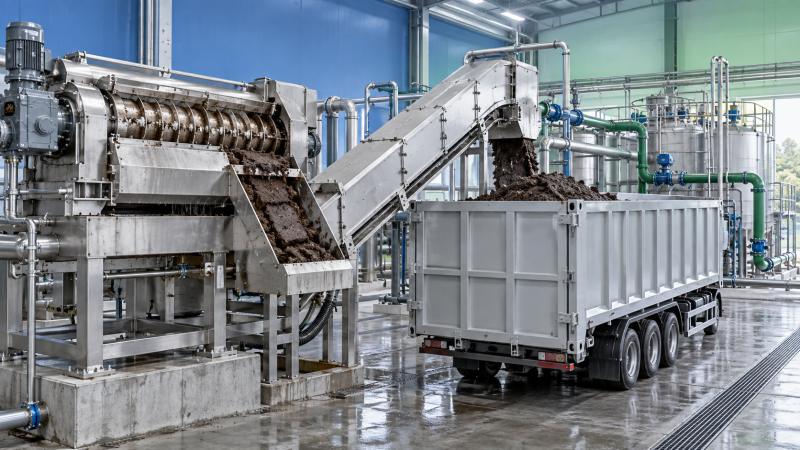
A disposal budget can look stable until the first months of operation reveal that containers are leaving the site more often than expected. The sludge may be legally acceptable for transport, yet still contain so much water that the site is paying to haul liquid rather than solids. This is most visible where trucking distance is long, disposal is charged by wet weight or load, or storage space forces frequent collection.
Sludge dewatering machines lower hauling costs when the increase in cake solids reduces the number of loads, transport weight, or collection frequency by more than the added cost of conditioning, power, labor, maintenance, and residual-water handling. A machine is not automatically economical because it produces a drier-looking cake. The financial case depends on the mass balance, the hauler’s charging method, the actual feed variability, and whether the selected equipment can maintain its performance outside ideal test conditions.
Start with the charge that the site is actually trying to reduce
Before comparing presses, centrifuges, screw presses, or belt filters, identify how the residual is billed. Hauling invoices may be based on truckloads, container pulls, wet tons, volume, distance, waiting time, or a combination of these items. Disposal facilities may separately charge by wet weight, dry solids, volume, or classification. A dewatering upgrade can strongly reduce one charge while leaving another unchanged.
For example, a site that pays a fixed fee per roll-off container has a clear incentive to reduce sludge volume enough to avoid container movements. A site charged mainly by dry solids will usually see less direct disposal benefit from higher cake dryness, because the dry mass remains nearly the same. It may still save on trucking capacity, storage area, odor exposure, and handling time, but these benefits must be valued separately.
Use the current operating records to establish a baseline over a representative period. The useful inputs are:
- Average and peak sludge flow, including seasonal or batch-related changes
- Feed solids concentration and its normal range
- Current wet mass or volume sent off site
- Dry solids generated per day, week, or month
- Truck type, payload limit, container volume, collection frequency, and transport distance
- Hauling, disposal, rental, waiting-time, and emergency-callout charges
- Polymer use, labor hours, washwater demand, power consumption, and maintenance cost for the existing process
The dry solids figure is particularly important. Dewatering changes the ratio of solids to water; it does not make the solids disappear. Without knowing dry solids production, a proposal can appear attractive simply because it compares one wet tonnage estimate with another without showing the underlying mass balance.
The cake-solids threshold that changes the transport equation
For purchasing decisions, calculate the expected wet cake mass from the same dry solids production at several realistic cake-solids levels. The relationship is straightforward:
Wet cake mass = dry solids mass ÷ cake solids fraction
If a process generates 10 units of dry solids, cake at 20% solids weighs 50 units in total. Cake at 25% solids weighs 40 units. Cake at 30% solids weighs about 33 units. The reduction is meaningful, but the incremental benefit becomes smaller as dryness rises. Moving from 20% to 25% removes more water per unit of dry solids than moving from 30% to 35%.
This is why the highest possible dryness is not always the best procurement target. A more aggressive operating point may require extra polymer, greater energy input, lower throughput, more frequent cleaning, or higher wear. The preferred machine is often the one that reaches the solids level needed to remove a load from the hauling schedule with stable operation, rather than the one with the best laboratory result.
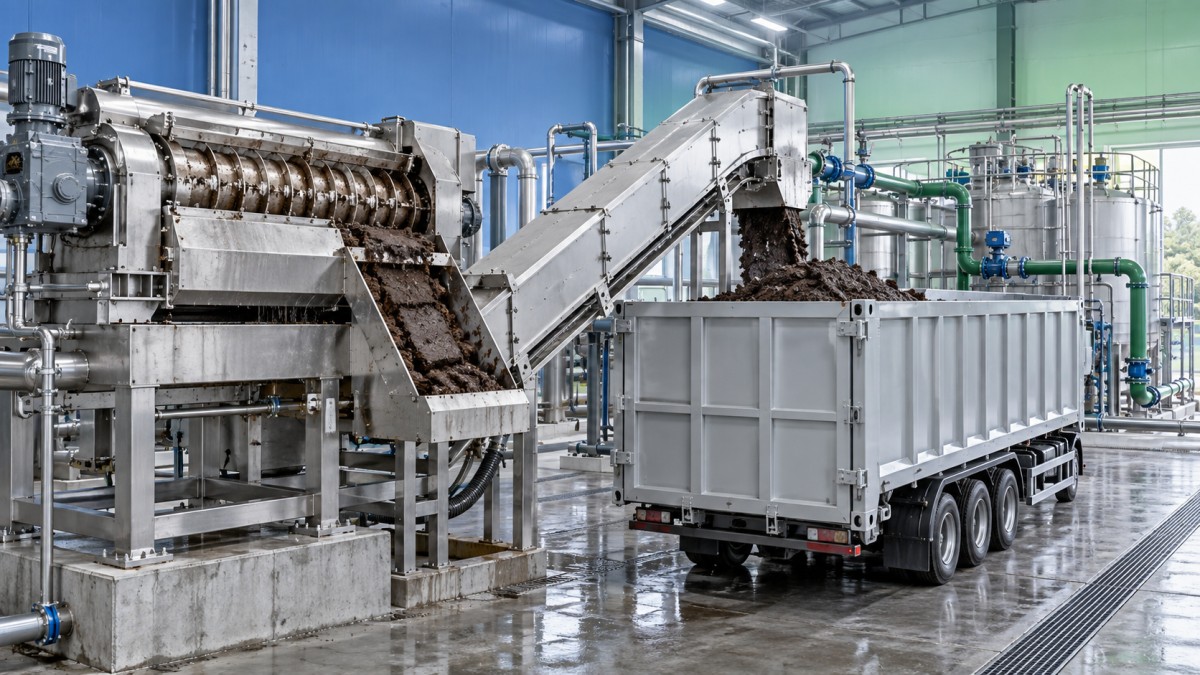
Compare calculated wet cake output with both truck payload and container volume. Dense inorganic cake may reach a vehicle’s legal payload before filling the container. Fibrous or biologically generated cake may fill the container first. A reduction in wet mass does not reduce truckloads if the limiting constraint remains container volume, while a reduction in volume may matter greatly even where billing is not strictly weight-based.
When dewatering produces a credible cost reduction
Hauling savings are most likely where the existing sludge is dilute, collection is frequent, and the receiving facility is not nearby. Sludge from clarification, biological treatment, metal finishing, food processing, pulp-related operations, and certain chemical processes can arrive at dewatering with very different properties, but the same commercial pattern applies: excess entrained water becomes expensive when it occupies trucks, containers, storage tanks, and operator time.
A clear volume or payload constraint exists
The strongest cases occur when the site can show that better cake dryness changes a discrete operational event: fewer containers per month, fewer tanker movements, a smaller collection schedule, or elimination of overflow pickups. Small reductions that do not change the number of loads may still create savings, but the estimate should not claim a full truckload benefit until the threshold is actually crossed.
Feed quality is stable enough to sustain performance
Dewatering equipment is easier to justify when feed solids, particle size, oil content, pH, and chemical composition remain within a manageable range. A machine evaluated on settled, well-conditioned sludge can underperform when exposed to dilute washdown flows, emulsified oils, surfactants, high biological variability, or intermittent chemical discharges. If the feed varies widely, include storage, blending, thickening, or automated polymer control in the evaluation rather than assuming the dewatering machine alone will solve the problem.
Disposal and transport charges reward water removal
Long-haul routes, high fuel surcharges, constrained collection availability, and expensive container handling make each avoided movement more valuable. Where local disposal is inexpensive and collections are infrequent, the savings may not support a high-capital, high-maintenance system. In that case, a simpler thickening stage or a lower-throughput unit may be more appropriate.
The site can manage the filtrate or centrate
Water removed from sludge returns somewhere in the process. Filtrate, centrate, or press liquor can carry suspended solids, soluble organics, phosphorus, ammonia, metals, salts, or residual polymer. If returning this stream overloads the upstream treatment process, causes permit issues, or requires a separate treatment step, the apparent hauling benefit can be eroded. The evaluation must account for this recirculation load.
Do not confuse thickening with dewatering
Thickening increases solids concentration before final dewatering and can substantially reduce tank volume, but it may not produce a stackable cake suitable for economical container transport. Dewatering normally aims for a material that can be conveyed, stored, loaded, and hauled with less free water. Some installations need both stages: thickening to stabilize feed and reduce equipment size, followed by a press or centrifuge to reach the transport target.
The distinction matters when reviewing vendor data. A quoted outlet concentration may refer to thickened sludge, not final cake. Ask whether the stated number is measured as total solids in the discharge, under what feed conditions, after what polymer dose, and at what throughput. A number without those operating details is not sufficient for a lifecycle cost calculation.
Choosing equipment around the cost driver
No equipment type is universally cheapest. The right choice depends on sludge behavior and the operating model, not only on maximum cake solids.
A high-dryness batch press may reduce hauling most effectively where disposal charges dominate and the site can accept cycle-based operation. A centrifuge may be preferable where space is constrained and continuous processing is essential, even if its energy and maintenance profile is higher. Belt and screw presses can suit operations that value accessible mechanics and lower rotational energy, provided the sludge can be conditioned to release water reliably.
Procurement documents should request performance ranges rather than a single guaranteed-looking number. Require suppliers to identify the assumed feed solids, sludge source, polymer chemistry and dose range, throughput, expected cake solids, capture rate, filtrate quality, utilities, cleaning requirements, and wear components. This makes proposals comparable and exposes where a result depends on unusually favorable feed conditions.
Use testing to prevent an expensive paper saving
Bench tests can help narrow polymer options and identify obvious incompatibilities, but they are not a substitute for representative equipment trials. Sludge responds differently under laboratory drainage, compression, shear, and full-scale residence time. Pilot work should cover ordinary feed as well as foreseeable difficult periods, such as low-solids conditions, production changes, or seasonal shifts.
During a trial, record more than cake solids. Measure feed rate, dry solids capture, polymer consumption, filtrate or centrate condition, power demand, cleaning time, operator interventions, and actual cake handling behavior. A cake that tests dry but sticks to chutes, bridges in a hopper, leaks free water during storage, or cannot be loaded efficiently may not deliver the expected transport benefit.
Also verify the sampling method. Grab samples from a poorly mixed feed tank or a single point on a cake conveyor can produce misleading values. Composite sampling over a meaningful operating interval gives a more useful picture of average performance. The same method should be applied to the existing process and the proposed alternative.
Build the decision around annualized operating reality
A practical comparison separates avoided external cost from new internal cost. Avoided external cost includes fewer container pulls, lower wet hauling weight where applicable, reduced disposal fees tied to wet mass or volume, and fewer emergency collections. New internal cost includes capital recovery, civil works, electrical upgrades, polymer, energy, labor, washwater, spare parts, preventive maintenance, and treatment of return liquors.
Do not omit downtime. If the current process needs a standby unit, rented equipment, extra storage, or contingency hauling during maintenance, the alternative should be assessed against that complete operating arrangement. Likewise, a new machine may need redundancy if sludge production cannot pause. The least expensive single unit on a quotation may not be the least expensive system after uptime requirements are included.
A useful procurement scenario model has at least three cases: expected feed conditions, difficult but normal feed conditions, and a low-throughput period. The proposal remains credible when it shows what happens to hauling cost in each case, rather than assuming the best observed cake solids every day of the year.
Conditions that can erase the savings
Several mistakes recur in dewatering projects. The first is specifying cake solids without specifying solids capture. Losing more fine solids to filtrate can make a cake seem dry while shifting load back into the liquid treatment system. The second is pricing polymer only by unit cost rather than by active dose and resulting performance. A cheaper polymer that requires a much higher dose or produces unstable cake is not necessarily cheaper in operation.
Another problem is ignoring upstream debris. Rags, plastics, stringy material, scale, grit, and metal fragments can damage or clog equipment, particularly where screening and grit removal are inadequate. Feed preparation is part of the dewatering scope. So are cake conveyors, storage bins, odor control where relevant, access for maintenance, drainage, and safe loading arrangements.
Finally, do not assume that a drier cake always has the same disposal classification. Changes in conditioning chemicals, blending of waste streams, or concentration of contaminants can affect downstream acceptance requirements. Confirm the disposal facility’s acceptance criteria before finalizing the process design, especially where industrial sludges contain metals, oils, salts, or regulated constituents.
A defensible point for approval
The purchase case is ready when the site can show a representative dry-solids balance, a verified range of achievable cake solids, the resulting truck or container requirement, and the full incremental operating cost. At that point, sludgedewateringmachines are not being purchased on the promise of “dryer sludge.” They are being evaluated as a transport-cost control measure with measurable thresholds, known operating obligations, and a clear explanation of where the savings will actually appear.
Recommended News
 When does 5-axis machining make sense for furniture manufacturing?Furniture manufacturing leaders: discover when 5-axis machining delivers real value through complex geometry, fewer setups, better joinery, and premium finishes.
 How to read a 5-axis positioning accuracy chart before machine acceptance5 axis positioning accuracy chart guide for machine acceptance: learn to assess error, repeatability, backlash, and rotary-axis risks before production sign-off.
 When do sludge dewatering machines lower hauling costs?Sludge dewatering machines cut hauling costs when higher cake solids reduce loads, weight, and collection frequency. Explore thresholds, savings, and selection factors.
 How to verify CE certification for industrial pumps before installationIndustrial pumps CE certified? Learn how to verify declarations, documentation, hazardous-area suitability, and installation compliance before commissioning.
 How to compare a plasma cutting machine supplier before placing an orderCompare a plasma cutting machine supplier with confidence—evaluate cut quality, total cost, consumables, and after-sales support before you order.
 Which factory upgrade projects benefit most from industrial technology solutions?Industrial technology solutions factory upgrade projects deliver the most value when they remove bottlenecks, cut downtime, improve quality, and strengthen resilience. Explore high-impact priorities.
 When a high precision CNC grinding machine justifies its costDiscover when a high precision CNC grinding machine delivers real ROI through repeatable quality, lower scrap, faster verification, and controlled production.
 When do industrial lubricants for compressors need oil analysis?Industrial lubricants for compressors need oil analysis at baseline, under harsh operating conditions, and after warning signs. Learn how testing prevents downtime and protects equipment.
 How CNC controller processing speed affects cycle times in EuropeCNC controller processing speed Europe: discover how look-ahead, interpolation and CAM optimisation can cut cycle times while protecting precision and surface quality.
 What to verify before using supplier sourcing solutions in EuropeSupplier sourcing solutions Europe: verify capabilities, compliance, traceability, total cost, and supply resilience before choosing reliable industrial partners.
 When smart fabrics are reliable enough for industrial wearablesSmart fabrics for industrial wearables: learn how to validate durability, signal quality, cleaning resilience, and safe failure performance before deployment.
 How supply chain management for exporters reduces customs delaysSupply chain management for exporters helps prevent customs delays with accurate data, origin checks, importer readiness, and proactive shipment controls. Explore practical strategies now.
 What to verify before approving an OEM electronics supplierOEM electronics supplier approval checklist: verify BOM control, traceability, testing, sourcing risk, capacity, and commercial terms before committing to volume production.
 When do CNC-machined precision components require five-axis milling?Precision components CNC machined with five-axis milling deliver better access, tighter datum control, and lower setup risk. Learn when five-axis machining is the smart choice.
 What should a restaurant POS system handle during a lunch rush?restaurantPOSsystems keep lunch rushes moving with fast ordering, smart kitchen routing, flexible payments, live inventory, and reliable service controls.
 How CNC controller cycle time speed affects machining throughputCNC controller cycle time speed can raise machining throughput by sustaining feed rates on complex toolpaths. Learn how to optimize CAM, look-ahead, and machine dynamics.
 When a 4 axis vertical machining center is the better fit than 3-axisDiscover when a 4 axis vertical machining center outperforms 3-axis machining—reduce setups, improve datum control, and boost efficiency for complex multi-face parts.
 When industrial fasteners bolts need traceable material certificationIndustrial fasteners bolts need traceable material certification for critical applications. Learn what QA teams should verify to reduce risk and ensure compliance.
 How to size pump systems for cooling circuits for stable flow ratesPump systems for cooling circuits: learn how to match flow, total dynamic head, NPSH, and controls for reliable, energy-efficient cooling performance.
 When does software as a service reduce CNC data management costs?Software as a service can lower CNC data management costs by reducing IT overhead, manual reporting, and disconnected records. Discover when SaaS delivers measurable savings.
 CNC investment trends 2026: are automation upgrades taking priority?CNC investment trends 2026 reveal why automation upgrades are reshaping capacity plans. Compare robots, pallet systems, and new machines for smarter CNC growth.








Search News
Popular Tags