
CNC Lathe Manufacturer Lead Times: What Delays Often Reveal
When a cnc lathe manufacturer quotes a long lead time, experienced project managers should not treat it as a scheduling inconvenience alone. In many cases, the delivery promise reflects the supplier’s real production maturity: whether materials are locked, tooling is stable, quality planning is ready, subcontractors are reliable, and machine loading is genuinely controllable. A long lead time may be reasonable, but it may also reveal hidden execution risk.
For engineering leads and project owners, the practical question is not simply “How many weeks?” It is “What is driving those weeks, and what does that tell us about the likelihood of on-time, in-spec delivery?” The answer matters because a delayed turned component can stall assembly, postpone validation, disrupt site commissioning, and trigger contract exposure across the project chain.
This article focuses on the real search intent behind the topic: how to interpret supplier lead times as an indicator of capability, risk, and sourcing fit. Rather than discussing delay in abstract terms, we will look at what lead times often reveal, which warning signs deserve escalation, and how buyers can qualify a CNC lathe manufacturer more effectively before schedule risk becomes a project problem.
Why lead time is really a diagnostic signal, not just a calendar number
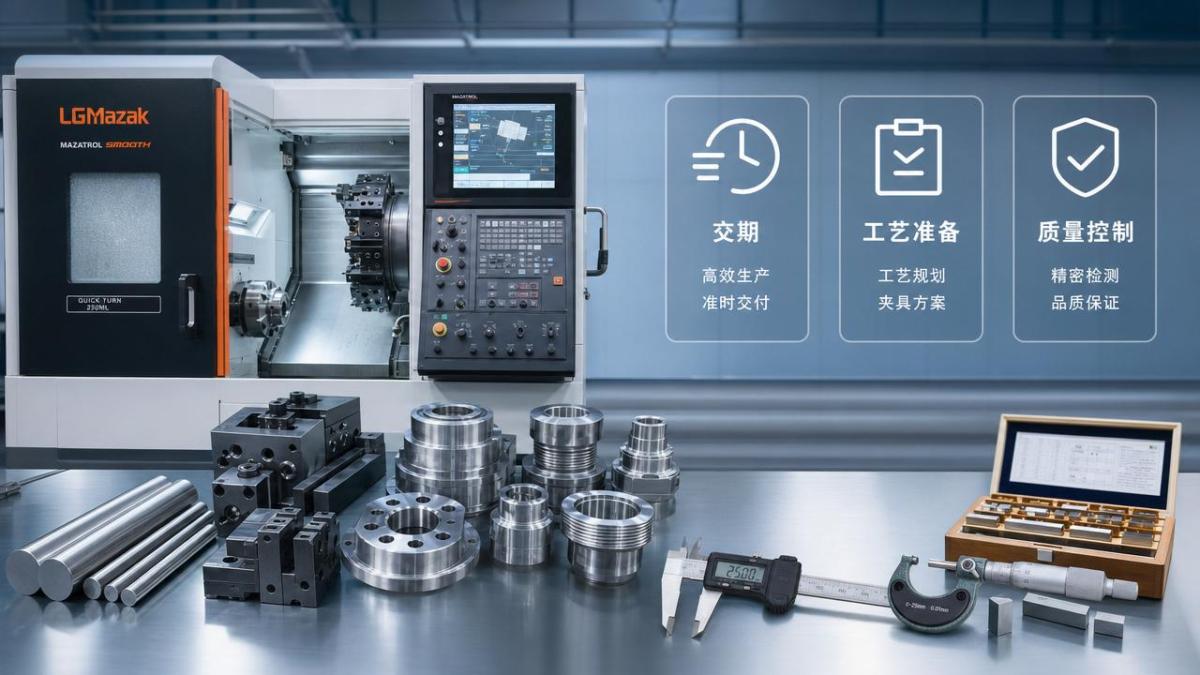
In precision manufacturing, lead time is the visible output of many invisible systems. A supplier may quote 10 to 14 weeks not because spindle capacity is full, but because drawing review is incomplete, raw material is uncertain, fixture design is not finished, first-article planning is weak, or special inspection resources are constrained. The quote compresses all these realities into one number.
That is why project managers should resist comparing suppliers by lead time alone. A short lead time from a weak supplier can be more dangerous than a longer but well-structured schedule from a disciplined one. What matters is whether the quoted timeline is built on a controlled process with clear assumptions, or on optimistic sales pressure that will later convert into engineering exceptions and delivery drift.
For a CNC lathe manufacturer serving critical industries, lead time quality is often as important as lead time length. A credible schedule should reflect process routing, material availability, tooling readiness, in-process inspection checkpoints, finishing or heat-treatment dependencies, and shipping logic. If a supplier cannot explain the structure behind its promise, the date itself has limited value.
What project managers are actually trying to learn from a delayed quote
When target readers search this topic, they are usually not looking for a generic definition of manufacturing delay. They want to know whether a long quoted lead time signals a serious sourcing risk, whether it should disqualify a supplier, and how to distinguish a healthy backlog from an unstable operation. They also want to know what questions to ask before issuing a purchase order.
For project managers, the main concern is schedule protection. They need confidence that a supplier will not become the hidden bottleneck in a wider project timeline. For engineering project leaders, there is also a technical concern: if a manufacturer struggles with planning, will the same weakness appear in tolerance control, process discipline, traceability, or final documentation?
In other words, lead time is being used as a proxy for deeper judgment. Buyers are trying to assess execution reliability, not just date commitment. The most useful content therefore is not broad commentary about “global supply chains,” but specific interpretation frameworks that help teams decide whether a delay is acceptable, manageable, or a sign to step back.
Long lead times often reveal the true condition of tooling and process readiness
One of the most common hidden drivers behind delayed delivery is incomplete tooling readiness. In CNC turning, this may involve custom soft jaws, collets, mandrels, boring bars, grooving tools, thread inserts, live tooling arrangements, chip-control testing, or special fixtures for secondary operations. If these items are not already validated, the calendar expands quickly.
A capable cnc lathe manufacturer should be able to separate standard machining time from tooling preparation time. If the quote simply states a long overall lead time with no distinction, buyers should ask whether the part is new to the shop, whether first-off trials are required, and whether process development has been included. New-part introduction risk is often underestimated in commercial discussions.
This issue becomes more important with thin-wall parts, difficult alloys, tight concentricity requirements, high surface-finish expectations, or parts requiring both turning and post-machining. In those cases, the supplier may be managing not only machine time but also process uncertainty. A transparent manufacturer will explain this. A weak one may hide it behind a vague “production queue.”
For project teams, the lesson is simple: not all long lead times are negative, but unexplained process-development time is a risk marker. If the supplier has not industrialized the routing, your project may be paying for their learning curve.
Material uncertainty is one of the clearest reasons delays deserve attention
Lead times frequently reveal the condition of a supplier’s material control system. Precision-turned parts often depend on certified bar stock, forgings, cast blanks, or customer-approved equivalents. If the required grade is niche, imported, mill-certified, oversized, or heat-specific, material availability may dominate the schedule more than machining itself.
For project managers, the key issue is not only whether the material can be purchased, but whether the supplier can secure it with predictable timing and traceability. A manufacturer that cannot confirm approved sources, expected mill lead times, incoming inspection procedures, or substitution controls may later trigger nonconformance, reapproval cycles, or urgent expediting costs.
This is especially relevant in sectors where documentation matters as much as geometry: energy, industrial equipment, fluid systems, aerospace-adjacent components, and regulated export projects. A delayed quote may signal that the supplier knows the material chain is fragile. That honesty can be valuable. But if the supplier appears uncertain about documentation requirements, the delay may point to a larger quality-system weakness.
Ask direct questions: Is raw material already in stock? If not, from which approved source? What is the exposure to alloy volatility, import timing, or minimum-order constraints? Can the manufacturer reserve stock at order placement? Answers to these questions reveal much more than the stated lead time alone.
Quality-system bottlenecks often hide behind “capacity” explanations
Many suppliers blame long delivery on machine loading, but in precision programs the real bottleneck may be quality assurance. First-article inspection, CMM scheduling, gauge design, thread verification, hardness testing, NDT coordination, or customer-specific report formatting can add substantial time. If the supplier’s inspection resources are stretched, shipments slip even when machines are available.
This matters because quality-system delays are harder to recover than simple machining delays. Extra shifts can sometimes create spindle capacity, but qualified metrology personnel, approved inspection plans, and calibrated measurement systems are not easily expanded overnight. A manufacturer that repeatedly cites “final inspection” as the reason for lateness may not have scalable process control.
For engineering leaders, one practical test is to ask how the supplier plans verification throughout the route. Is inspection only a final gate, or is it built into setup approval, first-piece validation, in-process checks, and final release? Mature suppliers distribute control across the process. Immature ones discover problems late, creating both delay and quality risk.
If a cnc lathe manufacturer can explain its control plan in detail, a longer lead time may simply reflect discipline. If it cannot describe where quality time is consumed, the schedule likely contains hidden instability.
Subcontract dependence can turn a normal schedule into a fragile one
Turned components often require outside processes such as heat treatment, plating, passivation, anodizing, grinding, balancing, marking, or special cleaning. In many cases, the lathe shop is only one node in a broader manufacturing route. A quote that seems conservative may actually reflect the manufacturer’s dependence on multiple external vendors with limited scheduling control.
This is not inherently a problem. Many excellent manufacturers rely on qualified subcontractors. The real issue is visibility and coordination. Project teams should know which operations are in-house, which are outsourced, what backup sources exist, and whether logistics between process steps are stable. Every outside handoff adds queue time, transport time, and quality-release risk.
If a supplier gives a long lead time because special coating slots are scarce or heat-treatment turnaround is inconsistent, that should affect sourcing judgment. It may still be the right supplier, but only if the project team understands the external constraint and can plan around it. Hidden subcontract reliance is far more dangerous than disclosed subcontract reliance.
A long lead time can also indicate healthy demand, not weak capability
It is important not to misread every delay as a warning sign. Some of the best manufacturers quote longer lead times because they protect process stability and refuse to overload key resources. A disciplined backlog can indicate strong market trust, selective order acceptance, and mature scheduling practices. In these cases, the supplier delays the quote because they know exactly what they can and cannot commit to.
For buyers, the challenge is distinguishing strong-demand congestion from weak operational control. The difference usually appears in how the supplier communicates. A strong supplier provides a structured timeline, identifies critical dependencies, offers realistic milestones, and may propose phased deliveries or engineering alternatives. A weak supplier gives general statements such as “production is busy” or “many orders are ahead of yours.”
Reliable manufacturers tend to discuss capacity at the work-center level, not as a vague company-wide condition. They can explain whether the bottleneck is bar-fed turning, mill-turn, deburring, inspection, or outside processing. That level of detail is a sign that the schedule is being managed, not guessed.
How to evaluate a cnc lathe manufacturer when lead times look concerning
When a quoted schedule appears long, buyers should shift from price comparison to risk interrogation. The goal is to understand what portion of the lead time is fixed, what portion is variable, and what events could make it slip further. This is the point where many sourcing teams either gain clarity or discover that the supplier’s plan is too weak for a critical project.
Start with five operational questions. First, what is the exact manufacturing route from raw material to shipment? Second, which step is the current bottleneck? Third, what assumptions are built into the quoted date? Fourth, what actions would shorten the timeline, and at what cost? Fifth, what evidence supports on-time performance for similar parts?
Then move into qualification depth. Ask for examples of comparable components, not generic capability lists. Review first-article discipline, material-cert handling, gauge strategy, and subcontractor management. If the project is schedule-sensitive, ask whether partial shipments, pre-buy of material, frozen revisions, or alternate finishes could reduce risk. A capable supplier will engage these questions constructively.
Also evaluate internal responsiveness. Slow, incomplete answers during quoting often predict poor execution after award. Lead time is not only a production metric; it is a communication metric. If engineering clarifications, DFM feedback, and document updates already move slowly, the later production stages will rarely move faster.
Warning signs that the delay points to deeper supplier risk
Several patterns should raise concern. One is a supplier that changes lead-time estimates frequently without a clear technical reason. Another is refusal to break down the schedule into material, machining, inspection, and outside processing windows. A third is dependence on verbal reassurance instead of documented planning.
Additional warning signs include uncertainty over raw material source, weak familiarity with the drawing’s critical characteristics, vague comments about “figuring out tooling later,” and no defined backup plan for outside processes. If the supplier focuses heavily on winning the order but lightly on explaining execution, the delay may be masking low preparedness.
Project teams should also pay attention to commercial inconsistency. For example, if a manufacturer offers an unusually short expedited option at a small premium, despite claiming major capacity constraints, the original quote may not be reliable. Either the first schedule was padded, or the expedited promise is unrealistic. Both situations deserve scrutiny.
How buyers can reduce lead-time risk before placing the order
The best mitigation starts before PO release. Freeze drawings and specifications early, especially tolerances, finish requirements, inspection formats, and material grades. Many “supplier delays” actually begin with late customer-side revisions. Where possible, align internal stakeholders before RFQ so the manufacturer is not planning against moving targets.
Next, separate strategic parts from routine parts. Critical path items deserve deeper supplier review, milestone tracking, and often a more conservative sourcing decision. Lower-risk parts can tolerate more flexibility. Treating all turned parts the same is a common project-management mistake.
Commercially, consider structuring the order to improve predictability. Material pre-authorization, staged release, pilot-lot approval, and agreed checkpoint reporting can all reduce surprises. If the supplier’s process is credible but naturally long, phased delivery may protect the project schedule better than pushing for an unrealistic full-lot date.
Finally, build lead-time verification into supplier selection itself. A reliable cnc lathe manufacturer should be assessed not just on unit cost and nominal delivery, but on schedule transparency, process maturity, quality discipline, and supply-chain resilience. Those factors often save far more money than an aggressive quote that later collapses.
What a “good” lead-time conversation should sound like
A strong supplier conversation is specific. It explains whether material is available, whether tooling is standard or custom, when first article can occur, where inspection capacity sits, and which external operations influence final shipment. It also clarifies what the customer can do to help, such as locking revisions, approving alternates, or confirming packaging and documentation requirements early.
Just as important, a good manufacturer is willing to discuss uncertainty honestly. That does not mean sounding pessimistic; it means identifying controllable and uncontrollable variables. For project managers, this kind of discussion is extremely valuable because it allows realistic planning, internal escalation, and contingency design before the schedule is threatened.
In contrast, a poor lead-time conversation is generic, reactive, and sales-led. It emphasizes confidence but avoids mechanics. That style may feel reassuring in the short term, yet it gives the project team little basis for risk control.
Conclusion: lead times reveal how a manufacturer really operates
When a cnc lathe manufacturer quotes a long lead time, the most useful response is not immediate frustration or automatic rejection. It is informed investigation. Lead times often reveal the true condition of tooling readiness, material control, quality-system capacity, subcontract coordination, and planning discipline. Those are the factors that ultimately determine whether a supplier supports or threatens project success.
For project managers and engineering leads, the practical takeaway is clear: evaluate the reason behind the delay, not just the date itself. A long but transparent and technically grounded schedule can be safer than a short promise built on weak controls. By reading lead times as operational evidence, sourcing teams make better supplier decisions, reduce hidden execution risk, and protect critical delivery milestones with greater confidence.
Recommended News
 What to audit at a CNC machine tools factory before approving a supplierCNC machine tools factory audit guide: verify machining accuracy, metrology, traceability, workforce skills, and capacity resilience before approving a precision supplier.
 When does a horizontal boring machine with ATC justify its cost?Discover when a horizontal boring machine with ATC delivers ROI through faster setups, higher uptime, lower labor costs, and reliable capacity growth.
 How office acoustics affect speech privacy in open-plan workspacesOffice acoustics shape speech privacy in open-plan workspaces. Discover practical strategies for reducing distractions, protecting sensitive conversations, and improving focus.
 Can AI in precision engineering for aerospace applications improve defect detection?AI in precision engineering for aerospace applications improves defect detection through smarter inspection, traceable workflows, and early process-drift alerts. Explore proven deployment strategies.
 Using a supplier capability evaluation framework to screen CNC suppliersSupplier capability evaluation framework for screening CNC suppliers: verify quality, traceability, capacity, and resilience to select reliable partners.
 When supplier capability evaluation services reduce tooling project riskSupplier capability evaluation services help reduce tooling project risk by verifying technical fit, quality controls, capacity, and delivery readiness before costly delays occur.
 How can a trade network help distributors enter new regional markets?Trade network strategies help distributors enter regional markets with verified partners, local insights, technical fit, and reliable logistics for faster, lower-risk growth.
 Does private label manufacturing contract assembly reduce launch risk?Private label manufacturing contract assembly can reduce launch risk with proven quality systems, traceability, supplier validation, and scalable production control.
 When do e-readers make sense for a distraction-free work library?E-readers for focused work libraries: discover when they improve deep reading, technical document review, security, and distraction-free research workflows.
 How a precision milling center factory controls part-to-part consistencyDiscover how a precision milling center factory achieves reliable part-to-part consistency through controlled tooling, workholding, traceability, and in-process inspection.
 Which CNC manufacturing investment drivers matter before capacity expansionCNC manufacturing investment drivers: evaluate demand, automation, workforce readiness, and lifecycle ROI before expanding capacity. Build resilient, profitable growth.
 When CNC turning is the right fit for precision machining servicesPrecision machining services: discover when CNC turning delivers superior concentricity, surface finish, and cost control for critical rotational parts.
 When ozone generators are suitable for odor control in commercial spacesOzone generators for commercial odor control: learn when controlled treatment is appropriate, how to protect people and materials, and why source removal comes first.
 How to select mechanical seals for mixers handling abrasive slurriesMechanical seals for mixers: learn how to select durable seal arrangements, face materials, and support systems for abrasive slurry service.
 How supply chain analysis supports risk management before disruptions occurSupply chain analysis risk management helps businesses detect hidden dependencies, assess recovery time, and act early to protect operations before disruptions occur.
 How to evaluate a smart switchable glass OEM before project approvalSmart switchable glass OEM evaluation guide: verify panel buildability, visual performance, controls integration, quality evidence, and delivery support before project approval.
 When should an interior design distributor expand into commercial projects?Interior design distributor guide: discover the key readiness signals, risks, and practical steps for expanding confidently into profitable commercial projects.
 Where to find industrial application guidance resources for process upgradesIndustrial application guidance resources help technical evaluators validate process upgrades with standards, supplier data, trials, and lifecycle insights.
 How to verify a chip conveyor is CE certified before purchaseChip conveyor CE certified? Learn how to verify declarations, safety documentation, integration duties, and supplier evidence before purchase.
 When smart machine tool integration reduces unplanned downtimeSmart machine tool integration helps manufacturers cut unplanned downtime by turning machine data into actionable maintenance, scheduling, and quality decisions.
 How to size portable solar generators for reliable jobsite powerPortable solar generators sized right deliver reliable jobsite power. Learn to match inverter output, battery capacity, surge demand, and solar recharge for every shift.















Search News
Popular Tags