
Automatic Tool Changer OEM Options That Reduce Downtime Risk
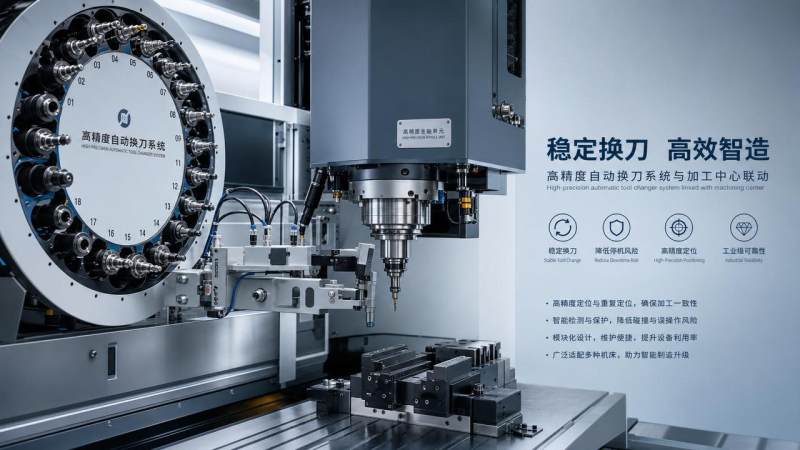
For operators, choosing the right automatic tool changer OEM is not just about speed—it is about reducing unexpected downtime, protecting machining accuracy, and keeping production schedules stable. This article explores OEM options that improve tool-change reliability, simplify maintenance, and support safer, more consistent performance in demanding industrial environments.
What an Automatic Tool Changer OEM Really Provides
In day-to-day machining, an automatic tool changer is often discussed as a machine feature, but for operators its value is much broader. The right automatic tool changer OEM does not only supply a carousel, arm, spindle interface, or magazine. It delivers the full reliability logic behind tool exchange: mechanical design, sensor integration, control compatibility, repeatable positioning, maintenance access, spare parts support, and service documentation.
That is why the phrase automatic tool changer OEM matters in industrial practice. OEM capability determines whether tool changes remain smooth under high cycle counts, whether fault diagnosis is straightforward when alarms appear, and whether wear components can be replaced before a stoppage turns into a production delay. For operators working under tight takt times, this connection between equipment design and uptime is not theoretical. It directly affects shift stability, scrap risk, and operator workload.
In a broad industrial context, including aerospace machining, automotive components, mold work, general fabrication, and high-mix precision engineering, OEM quality influences more than machine speed. It shapes how well the system tolerates vibration, contamination, thermal variation, tool imbalance, and frequent setup changes. A robust automatic tool changer OEM approach therefore becomes part of overall production risk control.
Why Downtime Risk Has Become a Primary Concern
Modern manufacturing lines operate with tighter quality windows and less tolerance for interruption. A tool change failure may start as a minor event, such as delayed arm movement or a missed pocket confirmation, but it can quickly create larger problems: spindle idle time, tool damage, offset loss, spindle taper contamination, or a part clamped in place while the cycle is halted. In high-value environments, even a short interruption can affect labor planning, machine utilization, and delivery commitments.
This is why operators and engineering teams increasingly review automatic tool changer OEM options through a reliability lens. They want systems that reduce common downtime triggers, including gripper wear, poor chip evacuation around the magazine, unstable sensor feedback, inconsistent drawbar timing, and difficult manual recovery after a fault. A strong OEM solution addresses these issues through better component selection and clearer service architecture rather than relying only on nominal tool-change speed.
For organizations focused on precision and uptime, such as those aligned with the data-driven industrial perspective promoted by advanced engineering platforms, the tool changer is part of a larger production integrity system. It links spindle performance, tool life, machine controls, and maintenance discipline into one operational chain.
Core OEM Features That Reduce Tool-Change Interruptions
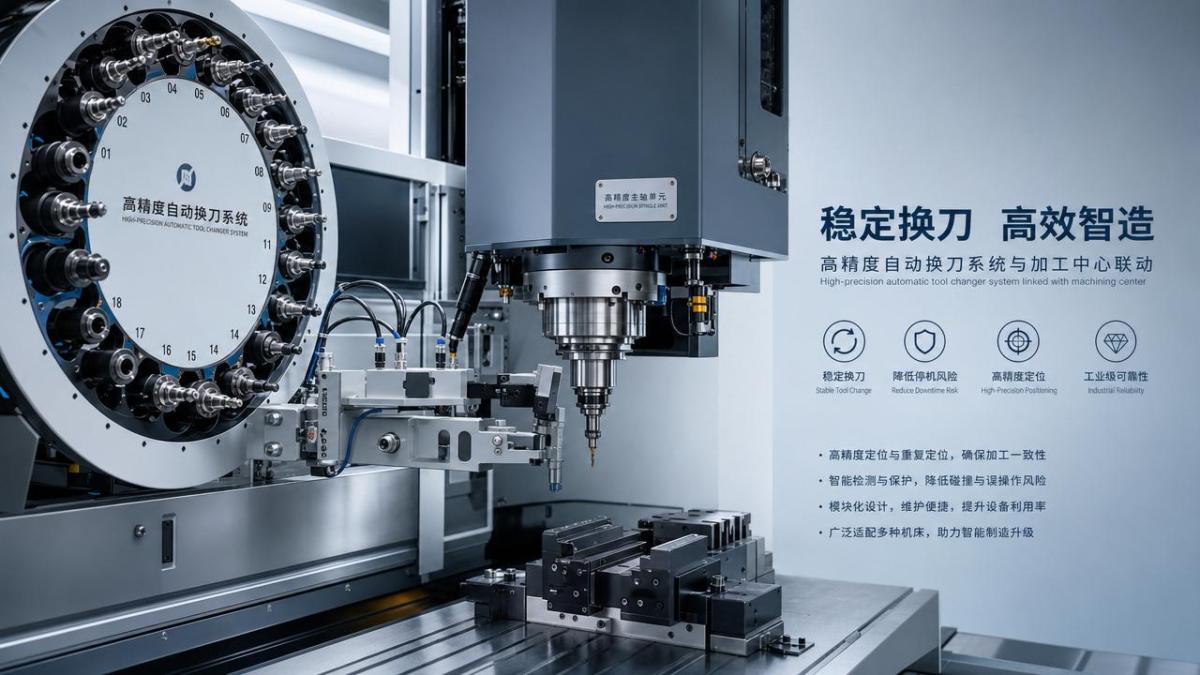
When evaluating an automatic tool changer OEM, operators should focus on practical features that lower failure rates over time. The first is mechanical repeatability. A well-designed mechanism maintains consistent motion paths and accurate handoff between magazine and spindle even after many cycles. This reduces misalignment, tool seat inconsistency, and hard-contact wear.
The second is sensor strategy. Reliable pocket detection, arm position confirmation, spindle orientation verification, and clamp/unclamp monitoring help the control system identify real conditions rather than estimated ones. Good OEM design avoids excessive sensor complexity while still giving enough diagnostic visibility to speed troubleshooting.
A third feature is contamination resistance. Chips, coolant mist, and fine dust are common causes of degraded movement and false signals. Automatic tool changer OEM designs that include protected sensor locations, sealed actuation areas, and easy-clean magazine layouts usually perform better in demanding production cells.
The fourth is maintainability. Operators benefit from service points that are visible and accessible, standardized wear parts, and recovery procedures that do not require excessive disassembly. If lubrication points, gripper access, and timing checks are difficult to reach, preventive maintenance often gets delayed, raising downtime risk later.
Industry Overview: What Operators Usually Compare
Different automatic tool changer OEM options are built for different production realities. Some prioritize compact footprint and moderate tool counts. Others are engineered for high-speed machining centers, heavy tools, or continuous multi-shift operation. The table below summarizes the main areas operators and production teams usually review.
Application Value Across Common Industrial Scenarios
The operational value of an automatic tool changer OEM becomes clearer when viewed through actual use cases. In precision component machining, stable tool exchange protects part tolerance by avoiding orientation errors or spindle contamination during frequent tool swaps. In mold and die work, where tools vary in length and diameter, OEM consistency helps prevent pocket mismatch and reduces manual intervention during complex programs.
In automotive and volume production, the focus is cycle continuity. Operators need a system that can repeat thousands of exchanges without gradual instability. Here, the best automatic tool changer OEM options are not simply the fastest on paper; they are the ones that maintain stable exchange timing and predictable wear behavior through repeated shifts.
In aerospace or high-value alloy machining, every interruption carries higher cost because materials, tools, and spindle time are expensive. Tool change reliability must support process security, especially where long tools, balanced holders, and strict runout control are involved. In these environments, a failure during tool exchange may damage not just the holder but also the part, fixture, or spindle taper.
Even in general engineering shops with mixed workloads, a dependable automatic tool changer OEM solution can make operators more productive. Less time is lost to checking magazine status, recovering interrupted cycles, or searching for replacement parts with uncertain specifications.
Typical OEM Option Categories for Operators to Understand
Not every tool changer architecture suits every shop. Operators should understand the strengths and trade-offs of common OEM categories before judging performance.
Practical Signs of a Strong Automatic Tool Changer OEM
For operators, the easiest way to recognize a strong automatic tool changer OEM is through predictable behavior over time. A good system does not rely on frequent adjustment to stay in tolerance. It returns tools smoothly, indexes correctly, and gives alarms that point to real causes rather than vague conditions.
Documentation is another strong indicator. Clear lubrication schedules, recovery steps, exploded parts views, and sensor mapping reduce downtime because they allow maintenance teams to respond quickly. OEMs that support standardized replacement parts and practical training also make life easier for operators, especially in multi-shift plants where troubleshooting knowledge must transfer across teams.
Another positive sign is how the OEM handles edge conditions. Can the system manage oversized tools with proper pocket spacing? Is there a clear procedure for interrupted exchange recovery? Are spindle orientation and magazine position checks easy to verify? These details often determine whether a small incident becomes a short pause or a major stoppage.
Maintenance and Operating Practices That Support OEM Performance
Even the best automatic tool changer OEM cannot reduce downtime alone if basic operating discipline is weak. Operators should keep tool holders clean, confirm pull studs meet specification, avoid loading damaged holders into the magazine, and watch for chips collecting in pockets or on exchange surfaces. Small contamination issues are among the most common causes of unreliable tool seating.
Routine checks should include unusual noise during indexing, delayed clamp response, inconsistent pocket stopping, and visible gripper wear. Trend monitoring is useful here. If exchange time slowly increases or recovery alarms appear more often, the machine is giving an early warning. Responding at that stage is far less disruptive than waiting for a full stoppage.
Maintenance teams should also align preventive intervals with actual machine usage rather than only calendar dates. A high-cycle production center may require more frequent inspection of arm timing, sensor mounts, and lubrication quality than a lower-volume machine. OEM guidance is the starting point, but real operating conditions should refine the schedule.
What to Consider Before Standardizing on an OEM Option
Before selecting or standardizing an automatic tool changer OEM across equipment, operators and supervisors should evaluate tool mix, spindle interface type, change frequency, environmental contamination level, and expected maintenance skill on the shop floor. A system that performs well in a clean, moderate-speed environment may not be ideal for heavy roughing or abrasive materials.
It is also wise to review spare parts access and service responsiveness. Downtime risk is not only a design issue; it is also a support issue. If a sensor, gripper, or indexing component fails, the true value of an automatic tool changer OEM often depends on whether replacement parts and technical guidance are quickly available.
For organizations pursuing higher manufacturing resilience, the best choice is usually the OEM option that balances mechanical durability, diagnostic clarity, maintenance simplicity, and long-term compatibility with the plant’s machining strategy. This approach supports both operators on the floor and engineering leaders responsible for productivity, compliance, and repeatable performance.
Moving from Faster Tool Changes to Safer Production Stability
A reliable automatic tool changer OEM should be judged by more than cycle-time claims. For operators, the real measure is whether the system reduces interruptions, protects tool and spindle condition, and makes recovery and maintenance manageable under real shop conditions. When those factors are built into the OEM design, the result is more stable output, less stress on crews, and lower exposure to costly downtime events.
If your team is reviewing automatic tool changer OEM options, start with the fundamentals: repeatability, contamination control, control integration, serviceability, and support quality. A structured evaluation of these areas will lead to more dependable machining operations and a stronger foundation for long-term production uptime.
Recommended News
 What to audit at a CNC machine tools factory before approving a supplierCNC machine tools factory audit guide: verify machining accuracy, metrology, traceability, workforce skills, and capacity resilience before approving a precision supplier.
 When does a horizontal boring machine with ATC justify its cost?Discover when a horizontal boring machine with ATC delivers ROI through faster setups, higher uptime, lower labor costs, and reliable capacity growth.
 How office acoustics affect speech privacy in open-plan workspacesOffice acoustics shape speech privacy in open-plan workspaces. Discover practical strategies for reducing distractions, protecting sensitive conversations, and improving focus.
 Can AI in precision engineering for aerospace applications improve defect detection?AI in precision engineering for aerospace applications improves defect detection through smarter inspection, traceable workflows, and early process-drift alerts. Explore proven deployment strategies.
 Using a supplier capability evaluation framework to screen CNC suppliersSupplier capability evaluation framework for screening CNC suppliers: verify quality, traceability, capacity, and resilience to select reliable partners.
 When supplier capability evaluation services reduce tooling project riskSupplier capability evaluation services help reduce tooling project risk by verifying technical fit, quality controls, capacity, and delivery readiness before costly delays occur.
 How can a trade network help distributors enter new regional markets?Trade network strategies help distributors enter regional markets with verified partners, local insights, technical fit, and reliable logistics for faster, lower-risk growth.
 Does private label manufacturing contract assembly reduce launch risk?Private label manufacturing contract assembly can reduce launch risk with proven quality systems, traceability, supplier validation, and scalable production control.
 When do e-readers make sense for a distraction-free work library?E-readers for focused work libraries: discover when they improve deep reading, technical document review, security, and distraction-free research workflows.
 How a precision milling center factory controls part-to-part consistencyDiscover how a precision milling center factory achieves reliable part-to-part consistency through controlled tooling, workholding, traceability, and in-process inspection.
 Which CNC manufacturing investment drivers matter before capacity expansionCNC manufacturing investment drivers: evaluate demand, automation, workforce readiness, and lifecycle ROI before expanding capacity. Build resilient, profitable growth.
 When CNC turning is the right fit for precision machining servicesPrecision machining services: discover when CNC turning delivers superior concentricity, surface finish, and cost control for critical rotational parts.
 When ozone generators are suitable for odor control in commercial spacesOzone generators for commercial odor control: learn when controlled treatment is appropriate, how to protect people and materials, and why source removal comes first.
 How to select mechanical seals for mixers handling abrasive slurriesMechanical seals for mixers: learn how to select durable seal arrangements, face materials, and support systems for abrasive slurry service.
 How supply chain analysis supports risk management before disruptions occurSupply chain analysis risk management helps businesses detect hidden dependencies, assess recovery time, and act early to protect operations before disruptions occur.
 How to evaluate a smart switchable glass OEM before project approvalSmart switchable glass OEM evaluation guide: verify panel buildability, visual performance, controls integration, quality evidence, and delivery support before project approval.
 When should an interior design distributor expand into commercial projects?Interior design distributor guide: discover the key readiness signals, risks, and practical steps for expanding confidently into profitable commercial projects.
 Where to find industrial application guidance resources for process upgradesIndustrial application guidance resources help technical evaluators validate process upgrades with standards, supplier data, trials, and lifecycle insights.
 How to verify a chip conveyor is CE certified before purchaseChip conveyor CE certified? Learn how to verify declarations, safety documentation, integration duties, and supplier evidence before purchase.
 When smart machine tool integration reduces unplanned downtimeSmart machine tool integration helps manufacturers cut unplanned downtime by turning machine data into actionable maintenance, scheduling, and quality decisions.
 How to size portable solar generators for reliable jobsite powerPortable solar generators sized right deliver reliable jobsite power. Learn to match inverter output, battery capacity, surge demand, and solar recharge for every shift.







Search News
Popular Tags