
How to verify quality standards when selecting mechanical seals
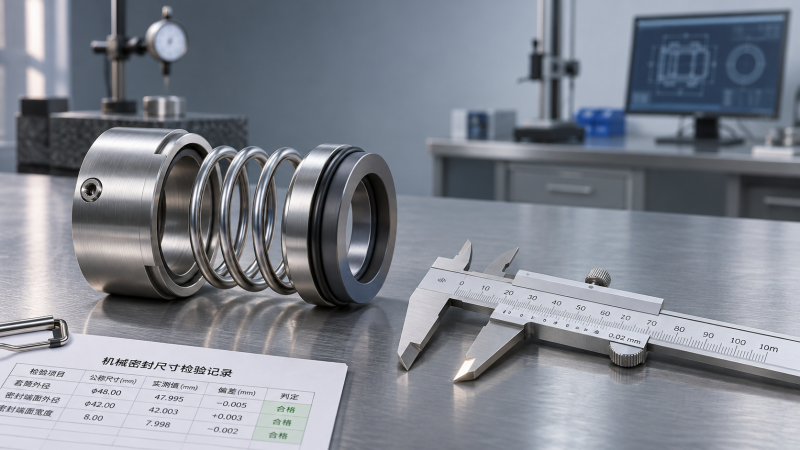
A mechanical seal failure can compromise equipment reliability, workplace safety, and environmental compliance. For quality control and safety professionals, effective product selection guidance begins with verifying quality standards against operating conditions, applicable specifications, and documented test results. This guide explains how to assess material traceability, manufacturer certifications, and performance evidence so you can identify suitable mechanical seals and make procurement decisions with greater confidence.
Start with the duty, not the certificate
A mechanical seal is an engineered assembly, not a single material or a universal component. Its suitability depends on the interaction between rotating and stationary faces, secondary seals, springs, hardware, the pumped fluid, and any supporting system. A supplier can have a sound quality management system and still offer a seal that is unsuitable for a particular pump.
Before reviewing supplier claims, establish the operating envelope. Record normal and maximum seal-chamber pressure and temperature, shaft speed and diameter, fluid composition, viscosity, solids content, and the possibility of crystallization or vaporization. Include startup, shutdown, cleaning, flushing, and upset conditions. A seal selected only for steady-state operation can be vulnerable during the brief periods when lubrication or cooling is least reliable.
Clarify the consequences of leakage as well as the expected leakage control. A nonhazardous utility service and a toxic or flammable process may require different seal arrangements, monitoring provisions, and response procedures. The acceptable approach should follow the site risk assessment, equipment specification, and applicable local requirements rather than a generic seal category.
Identify which standards apply—and what they actually cover
Standards are useful only when their scope matches the decision. The purchase specification should identify the relevant edition, any amendments, project-specific requirements, and approved exceptions. Do not assume that every pump service requires the same standard or that a dimensional standard proves leakage performance.
- API 682 addresses shaft sealing systems for centrifugal and rotary pumps in petroleum, petrochemical, and natural gas service. Where specified, check the seal arrangement, support system, qualification and production testing requirements, and documentation against the applicable edition and purchase specification.
- ISO 21049 also concerns sealing systems for centrifugal and rotary pumps in petroleum, petrochemical, and natural gas industries. Confirm the edition and its relationship to the project specification rather than treating references to ISO 21049 and API 682 as automatically interchangeable.
- EN 12756 covers principal dimensions and designation for mechanical seals. Dimensional compatibility is valuable for interchangeability, but it does not by itself establish chemical compatibility or suitability for a hazardous duty.
- ISO 9001 sets requirements for a quality management system. A valid certificate can support confidence in process controls, but it is not a product approval and does not prove that an individual seal passed a particular performance test.
Other material, inspection, environmental, or industry-specific requirements may apply. Where a customer specification cites a standard indirectly, ask which clauses are mandatory and how deviations are approved. “Manufactured to” or “designed in accordance with” a standard is not enough without a defined scope and supporting evidence.
Check the complete sealing system
A seal arrangement must fit the pump and the process. Verify the available seal-chamber dimensions, shaft or sleeve condition, connection sizes, direction of rotation where relevant, and permitted installation tolerances. Confirm whether the proposal is a component or cartridge seal, and whether a single, dual, or other arrangement is appropriate for the assessed leakage risk.
The support system deserves the same scrutiny as the seal. A flush, quench, buffer, or barrier system can affect face lubrication, heat removal, and containment. Where an API piping plan is specified, check the applicable plan against the operating duty and confirm the source, quality, pressure, temperature, and availability of the support fluid. A plan designation alone does not show that the site can operate it reliably.
For dual seals, establish whether the support fluid is pressurized or unpressurized relative to the process and what happens if that relationship changes. Identify the instrumentation, alarms, operator response, and maintenance responsibilities. A seal that needs a clean, continuously available barrier fluid should not be approved until those site provisions are confirmed.
The seal vendor and pump manufacturer should also resolve the interface between them. Seal-chamber pressure, shaft movement, vibration, and heat transfer cannot always be inferred from the pump discharge pressure or nameplate data. Record assumptions and obtain agreement on who verifies each one.
Follow material evidence down to the components
Material selection should cover both seal faces, elastomers or other secondary sealing elements, springs, sleeves, and wetted hardware. Check compatibility with the actual fluid mixture, including cleaning agents and foreseeable contaminants, at the relevant temperature and concentration. Chemical compatibility tables are a starting point; they do not replace a review of pressure, temperature, exposure duration, and the material grade used by the supplier.
Face material choices involve trade-offs. Hard faces may be considered where solids are present, but abrasive content, cooling, face geometry, and operating conditions still matter. A carbon face paired with a hard counterface can be appropriate in some duties, yet the specific carbon grade and its limitations need review. For elastomers, a broad material family name is not always enough: formulation, temperature limits, and exposure to process and cleaning fluids can change the decision.
Ask for a bill of materials that identifies the specified grades and distinguishes wetted from non-wetted parts. Where the project requires material certificates, verify the certificate type and whether the records can be linked to the relevant component or production lot. EN 10204, for example, defines types of inspection documents for metallic products; the specified document type and its traceability requirements should be agreed in the purchase documents.
Traceability has limits. A material certificate for a metal sleeve does not automatically verify the elastomer compound or the finished seal assembly. Ask how the manufacturer identifies face materials, secondary seals, and assembled units, and what evidence remains available after shipment. If full component-level traceability is essential, state that before ordering; it may not be part of a standard commercial package.
Separate certification, qualification, and production testing
These forms of evidence answer different questions. A management-system certificate concerns the supplier’s processes. A qualification test provides evidence about a defined design under defined conditions. A production or acceptance test concerns the supplied item or batch, as specified. None should be presented as a substitute for the others.
For a certification claim, check the issuing body, certificate validity, site address, and scope. A certificate held by a sales office or a different manufacturing site may not cover the activities that matter to your order. Where independent accreditation is required, verify it through the relevant accreditation body or recognized directory.
For test evidence, request enough detail to judge relevance:
- The seal design, size, face combination, secondary seals, and support arrangement tested.
- The test fluid, pressure, temperature, speed, duration, and operating sequence.
- The acceptance criteria, measured results, and any deviations or interruptions.
- Whether the report describes a design qualification, a sampled batch, or the actual unit being supplied.
- The identity of the testing organization and the status of applicable measuring equipment calibration.
A report for a similar size or material combination may still be useful, but it is not automatically proof for the proposed configuration. Ask the supplier to explain differences and their technical significance. Equally, a static pressure or leak check should not be described as a full simulation of dynamic operation.
Set inspection and acceptance points before manufacture
The most effective time to resolve documentation gaps is before the purchase order is released. Define an inspection and test plan that states what will be checked, which records will be submitted, and which activities require purchaser notification, witnessing, or approval. Align the plan with the criticality of the service; not every utility seal needs the same level of surveillance as a seal handling a hazardous fluid.
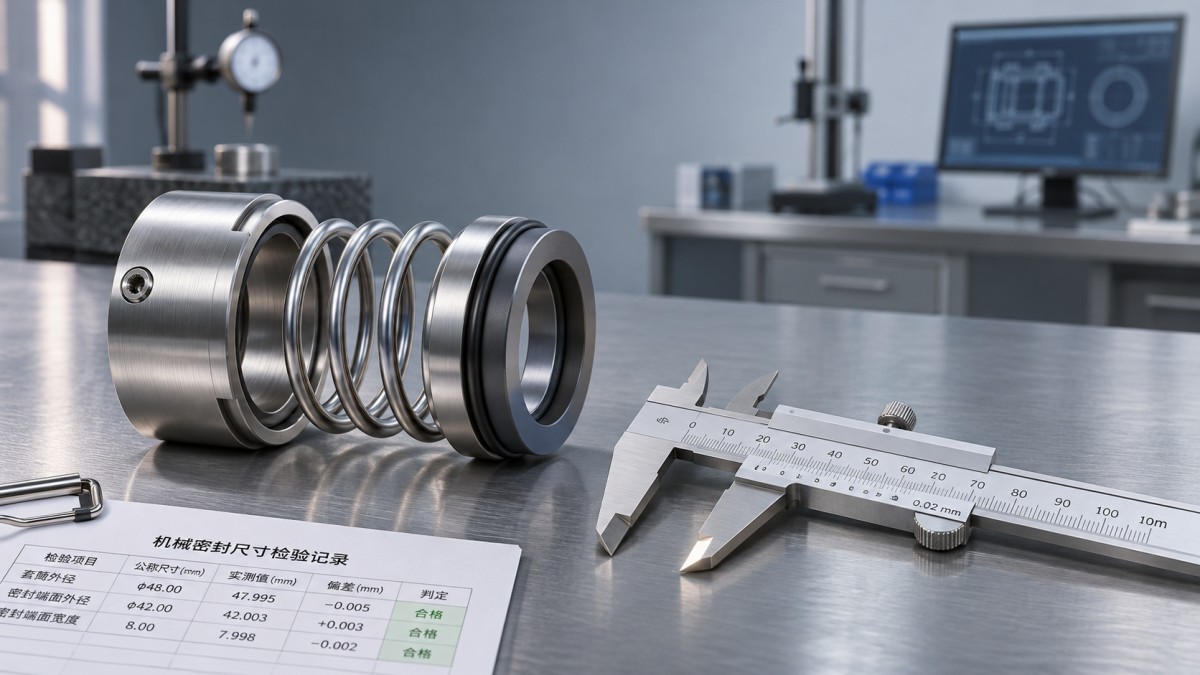
Typical review points include the approved drawing and bill of materials, dimensional inspection, face condition, material identification, assembly checks, and specified tests. Agree on acceptance limits and test methods in advance. A statement such as “no visible defects” may be useful for handling damage, but it is too vague to replace defined criteria where a dimension or performance limit is critical.
Control substitutions through a documented change process. An alternative elastomer, face grade, sub-supplier, or manufacturing location can alter the evidence supporting approval. The change request should explain the reason, affected parts, revised documents, and whether further testing or customer authorization is needed. Urgent delivery is not a technical justification for an undocumented substitution.
Review delivery, installation, and the record package
Inspection does not end at the factory. On receipt, match the part number, revision, quantity, and identification to the purchase order. Check packaging for impact, moisture, contamination, and preservation damage. Verify storage conditions and any shelf-life information for elastomeric components. Keep protective covers in place until installation, and follow the manufacturer’s handling instructions for delicate seal faces.
The handover package should include the approved drawing, material and inspection records required by the order, test reports, installation instructions, and any approved deviations. Maintenance staff also need the correct spare-parts identification and support-system requirements. An otherwise acceptable seal can fail if it is installed on a damaged sleeve, connected to the wrong flush source, or started without the required support fluid.
Global Precision-Machining & Engineering (G-PME) approaches this kind of decision across sealing systems, pump interfaces, precision machining, and applicable standards. That cross-disciplinary view is useful when a seal issue may originate in shaft condition, support-system design, or a documentation gap rather than in the seal faces alone.
Before approval, close the loop between the duty sheet, applicable standard, supplier drawing, material records, test evidence, and site operating procedures. If one of those documents describes a different configuration or operating limit, resolve the discrepancy explicitly. The best-supported selection is the one whose evidence matches both the seal being delivered and the conditions it will actually see.
Recommended News
 What affects the price of an industrial air compressor?Understand what affects air compressors price, from capacity and controls to installation and energy costs. Compare quotes and choose the best-value system.
 How mold temperature affects high-precision die castingSee how high precision die casting mold temperature affects tolerances, defects, and tool life—and learn what evidence to request from suppliers.
 How to verify quality standards when selecting mechanical sealsProduct selection guidance for mechanical seals: verify quality standards, material traceability, certifications, and test evidence before you buy.
 Tungsten Prices Rise as Ore Quotes Lead Gains, Adding Pressure on Tool CostsTungsten prices are rising as ore quotes climb, putting pressure on carbide and cutting tool costs. Discover what buyers should watch next.
 How ISO 230-1 addresses machine tool static stiffness testingMachine tool stiffness ISO testing explained: discover how ISO 230-1 guides force-deflection measurements and supports meaningful machine comparisons.
 How to check whether a bulletproof vest is NIJ certifiedLearn how to verify bulletproofvests on the official NIJ Compliant Products List, match labels and configurations, and avoid misleading certification claims.
 How to assess a lubricants supplier's delivery reliabilityAssess a lubricants supplier with practical checks on delivery records, stock availability and contingency plans to reduce supply risks and make confident sourcing decisions.
 Americas Base Oil Weekly: High Crude and Feedstock Costs Compound Supply TightnessAmericas base oil supply is tightening as crude and feedstock costs rise. Explore the impact on Group II+ and Group III availability, pricing and purchasing.
 How to verify organic cotton baby clothes certificationShopping for organiccottonbabyclothes? Learn how to verify GOTS and OCS claims, check certificate details, and choose baby clothing with confidence.
 How corner radius carbide end mills reduce edge chippingDiscover how corner radius carbide end mills reduce edge chipping, improve machining consistency, and support longer tool life with the right geometry and setup.
 How to choose a laser level for outdoor workCompare laserlevels for outdoor work by range, accuracy, durability, and receiver compatibility. Find the right tool for reliable results on site.
 Global Metal-Cutting Semi-Synthetic Coolant Market Forecast to Reach $1.73 Billion by 2030The semi-synthetic metal-cutting coolant market is forecast to reach $1.73 billion by 2030. Explore growth drivers and key considerations for buyers and suppliers.
 How coating thickness affects carbide tool coating costsCarbide coating cost analysis: discover how thickness affects tool prices, wear and cost per part, and learn when a premium coating is worth the investment.
 What pressure stability data should a pump supplier provide?How do I shortlist the right high-pressure pumps supplier for stable pressure? Learn which test data to request and compare bids with confidence.
 How to evaluate an industrial supplier's delivery reliabilityStrengthen industrial procurement support and supplier evaluation with practical checks for delivery records, lead times, capacity, and recovery plans.
 Stonepeak Completes 65% Castrol Acquisition; Former Shell CEO to ChairStonepeak's 65% Castrol acquisition brings new leadership as former Shell CEO Ben van Beurden becomes chair. Explore potential implications for lubricant buyers and suppliers.
 How to inspect welded iron pipes for seam defectsInspect weldedironpipes for seam defects with a practical guide to visual checks, NDT methods, acceptance criteria, and safe repair decisions.
 How to assess electronics manufacturing solutions in North America for production capacityAssess electronics manufacturing solutions North America teams can rely on. Compare capacity, supply risks and quality controls to choose the right production partner.
 How to reduce thermal cracking in die casting mold insertsReduce thermal cracking in die casting mold inserts with practical tips on temperature control, cooling, steel selection and maintenance to extend tool life.
 Can portable telemedicine devices work with poor connectivity?Telemedicine hardware portable devices can support care with poor connectivity. Discover what works offline and how to evaluate reliable remote care workflows.
 How to choose rugs and carpets for high-traffic roomsDiscover how to choose rugs and carpets for high-traffic rooms. Compare materials, construction, cleaning needs, and fit to find a practical, lasting option.





Search News
Popular Tags