
EN 14982:2026 Tightens Cryogenic Valve Rules
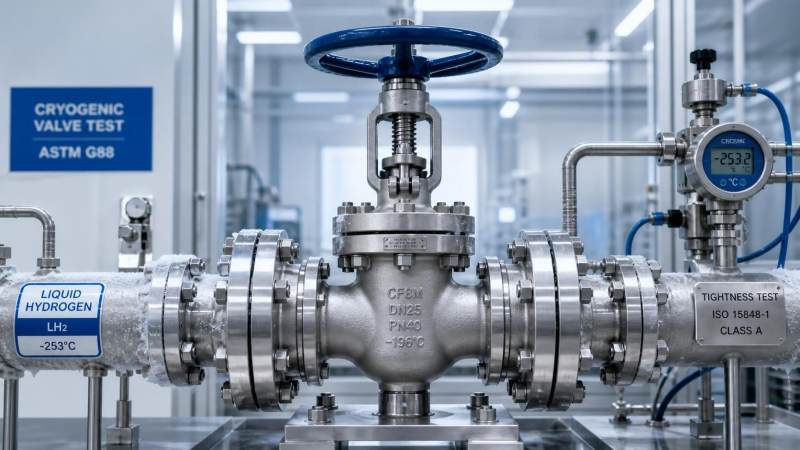
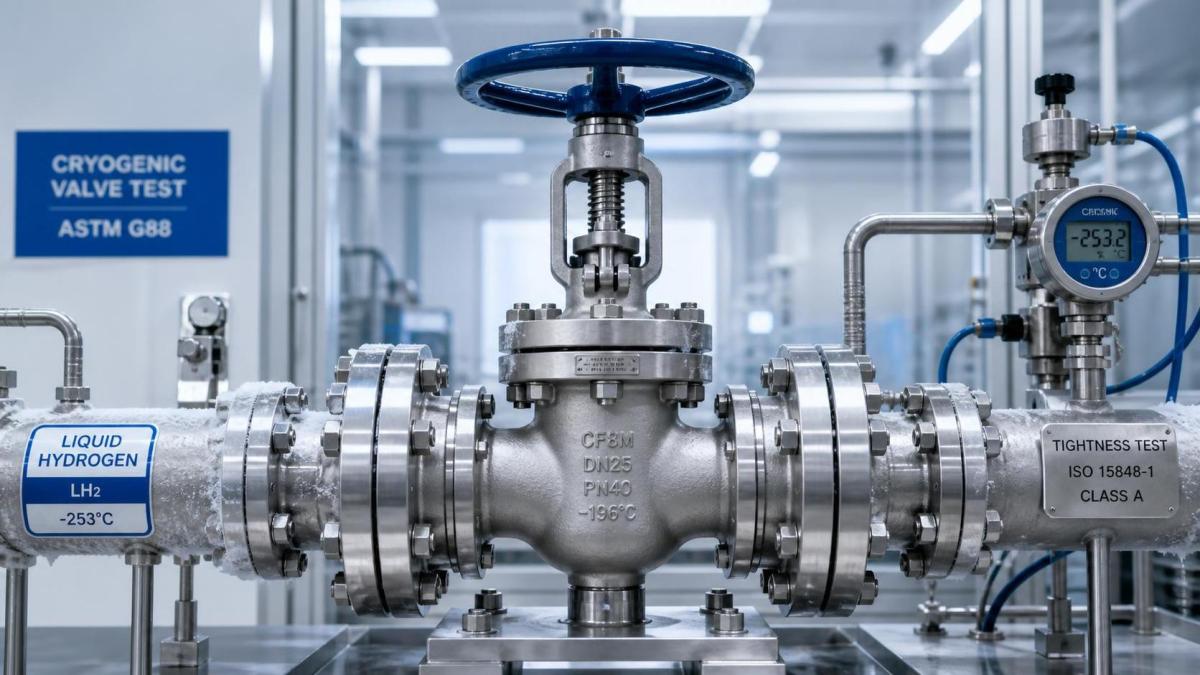
On August 7, 2026, CEN released EN 14982:2026, the updated standard for industrial cryogenic valves, with immediate effect. The revision matters most to cryogenic valve manufacturers exporting to the EU, along with certification, testing, procurement, and delivery teams, because it expands the applicable operating scope to liquid hydrogen conditions at -253°C, tightens Leak Zero sealing verification, and adds a third-party hydrogen cycling durability reporting requirement that may affect compliance preparation and type approval timing.
What the revised standard now requires
The confirmed update is that EN 14982:2026, titled Industrial cryogenic valves—design, manufacturing and testing requirements, was issued by CEN on August 7, 2026 and took effect immediately.
The new version brings liquid hydrogen service at -253°C into the scope of application for the first time. It also tightens the Leak Zero sealing verification threshold to no more than 1×10⁻⁹ mbar·L/s based on helium leak testing. In addition, the standard requires a third-party hydrogen cycling durability report.
According to the provided information, the standard directly affects the compliance pathway and type certification cycle for Chinese manufacturers of cryogenic valves exporting to the EU.
Where the operational impact is likely to appear
Export-oriented valve manufacturers face a narrower compliance window
From an industry perspective, manufacturers shipping cryogenic valves to the EU are the most directly exposed group because the revised standard changes what must be demonstrated before products can be presented as compliant. The main pressure points are likely to appear in product qualification, technical documentation, and certification scheduling.
What deserves closer attention is whether existing product lines previously aligned with earlier requirements can still move through the same approval path once hydrogen compatibility and the tighter leak-rate limit are applied.
Testing and certification functions may see longer validation sequences
Testing bodies, in-house laboratories, and certification teams may be affected because the revised standard adds a stricter Leak Zero threshold and a third-party hydrogen cycling durability reporting requirement. The practical impact is likely to center on test preparation, report completeness, and coordination between manufacturers and external verification parties.
Analysis shows that even where product design remains unchanged, the evidentiary burden may become heavier because the required proof set is more specific than before.
Procurement and customer-facing teams may need earlier technical alignment
Procurement staff, sales engineers, and EU-facing commercial teams may also be affected because technical compliance discussions may now start earlier in the order cycle. The relevant business impact is less about pricing in the abstract and more about specification matching, delivery planning, and customer confirmation of acceptable documentation.
Observably, any product intended for EU projects involving cryogenic service may now require more detailed pre-delivery communication on testing scope and certification status.
What companies should watch next
Check which product models are exposed to the new scope
Companies should first identify which valve models, configurations, or pending export projects could fall within the newly stated liquid hydrogen service scope at -253°C. This is a practical screening issue, because the compliance burden may differ depending on whether a product is positioned for hydrogen-related cryogenic duty.
Review leak-test evidence against the revised threshold
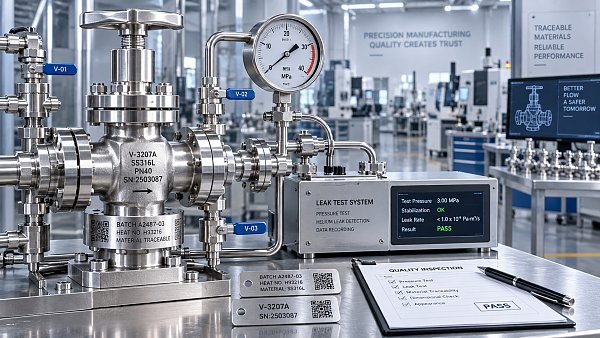
The tightened Leak Zero verification limit of ≤1×10⁻⁹ mbar·L/s means existing test files and qualification records should be reviewed against the new threshold. The key issue is not simply whether testing was done before, but whether the available helium leak-test evidence is aligned with the revised requirement.
Prepare for third-party durability documentation earlier
The added requirement for a third-party hydrogen cycling durability report makes document readiness a central issue. For exporters, this may affect coordination with outside testing resources, internal approval timelines, and the sequence of customer submissions tied to type certification.
Separate formal enforcement from day-to-day delivery planning
Analysis shows that the immediate effectiveness of the revised standard is a formal compliance point, while business execution may depend on how quickly each project, customer, or certification process reflects the new documentation and testing expectations. Companies should therefore track both the standard text requirements and the actual timing impact on orders already in progress.
Why this looks bigger than a routine standards update
As an editorial observation, this development is more appropriately understood as a concrete compliance shift rather than a minor technical revision. The inclusion of liquid hydrogen conditions, the tighter helium leak threshold, and the added third-party durability reporting requirement all point to a higher level of scrutiny around cryogenic valve suitability for hydrogen-related service.
At the same time, it would be premature to turn this into a broad market conclusion beyond the provided facts. What can be said now is that the revision changes the discussion from general cryogenic performance to more specific proof of hydrogen-related applicability and sealing integrity.
How the market should read this for now
The immediate industry meaning of EN 14982:2026 is clear: compliance expectations for cryogenic valves entering the EU have become more demanding in defined technical areas. For Chinese exporters in particular, the standard should currently be read as a direct operational and certification issue, not merely as a background policy signal.
It is more appropriate to understand this as both a short-term compliance change and a longer-term signal of stricter validation expectations in hydrogen-related cryogenic applications. The full commercial effect still requires continued observation through certification practice and customer implementation.
Basis of this article and points for continued verification
This article is based on the user-provided news title, event date, and event summary. Information of this kind is commonly cross-checked against source types such as official notices, standard-organization documents, industry association updates, company disclosures, and reporting by authoritative trade media.
No specific official source link was provided in the input, so the exact publication document and any related interpretive materials still need ongoing verification. The next points worth monitoring are any further official wording around implementation, how third-party hydrogen cycling durability reporting is presented in practice, and how the revised requirements affect real certification timelines for EU-bound cryogenic valve products.
Recommended News
 When electronics require precision manufacturing at micron tolerancesPrecision manufacturing solutions for electronics deliver micron-level control, reliable inspection, and scalable quality for critical housings, thermal parts, and complex assemblies.
 When do cabletrays need corrosion protection in industrial facilities?Cabletrays need corrosion protection when exposed to moisture, chemicals, salt, washdown, or condensation. Learn how to select durable materials and protect critical industrial routes.
 What suppliers must prove for manufacturing standards compliance in Southeast AsiaManufacturing standards compliance Southeast Asia: learn what suppliers must prove, from traceable materials and calibrated tools to controlled processes, safety, and shipment records.
 What to verify in a fluid control manufacturer's quality systemFluid control manufacturer quality checks: verify traceability, testing, calibration, document control, and corrective actions to reduce risk.
 When do smart device manufacturing solutions reduce assembly errors?Smart device manufacturing solutions reduce assembly errors with closed-loop controls, vision inspection, torque verification, and traceable process data. Learn what drives reliable production.
 Import trends reshaping precision tooling supply in 2026Import trends in 2026 are reshaping precision tooling supply. Discover how to reduce landed risk, strengthen sourcing resilience, and protect production performance.
 Choosing carbide end mills for stainless steel without edge chippingCarbide end mills for stainless steel: learn how to prevent edge chipping with the right substrate, geometry, coating, coolant, and stable milling parameters.
 What contract manufacturing support should cover before sourcingIndustrial procurement support for contract manufacturing: learn what to verify before sourcing, from DFM and traceability to quality, capacity, cost control, and compliance.
 When integrated precision manufacturing solutions reduce launch delaysIntegrated precision manufacturing solutions help industrial teams prevent launch delays by aligning design, sourcing, machining, sealing, testing, and supply-chain readiness.
 When a higher tooling price reduces long-run mold maintenance costsTooling price can reduce long-term mold maintenance costs when premium materials, precision machining, and serviceable design prevent downtime, scrap, and costly repairs.
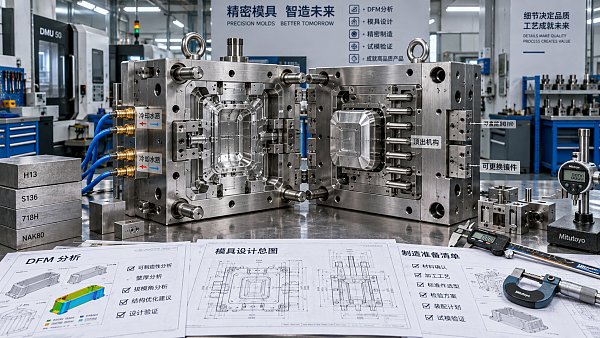
 What a tooling fee covers before an injection mold is builtTooling fee explained: discover what it covers before an injection mold is built, from DFM and mold design to validation, ownership, and cost control.
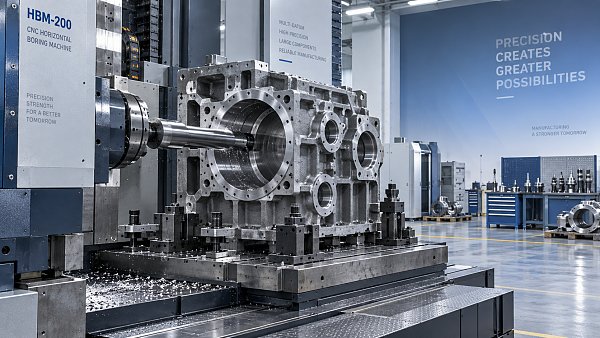
 When a horizontal boring machine improves accuracy in large metal partsDiscover when a horizontal boring machine for metalworking improves accuracy in large parts, protecting critical bore alignment, stable datums, and assembly-ready results.
 What to verify before choosing a fluid control supplier for critical flowChoose a fluid control supplier with confidence: verify pressure cycling, material compatibility, flow validation, traceability, sealing, and long-term support for critical applications.
 Cleanroom equipment application guidance to reduce contamination riskIndustrial application guidance for cleanroom equipment: reduce contamination risk with practical airflow, material flow, maintenance, and process protection strategies.
 When should wind turbine parts be replaced instead of repaired?Wind turbine parts: learn when replacement is safer than repair, how to reduce repeat failures, protect uptime, and make smarter maintenance decisions.
 What to verify before choosing a coolant flow rate and pressure supplierCoolant flow rate and pressure supplier selection guide: verify duty points, pump curves, filtration, controls and service support for reliable machining performance.
 How mold design choices affect cooling time in injection moldingDiscover how mold design affects injection molding cooling time, part stability, cycle efficiency, and long-term production quality with practical engineering insights.
 Machine tool standards alerts that require 5-axis safety procedure updatesMachine tool standards alerts can trigger critical 5-axis safety procedure updates. Learn which changes demand action to protect operators, equipment, and production uptime.
 Does manufacturing standards compliance for semiconductors affect EDM tool approval?Manufacturing standards compliance for semiconductors shapes EDM tool approval through traceability, validation, contamination control, and inspection. Learn what proves reliable capability.
 Which medical grade materials withstand repeated sterilization in pumps?Medical grade materials for sterilizable pumps: compare 316L, PEEK, PPSU, PTFE, silicone, and EPDM for steam, radiation, and chemical resistance.
 What G-code compatibility issues arise when moving to 5-axis centers?G code compatibility issues in 5-axis centers can affect TCP, rotary limits, feeds, and safety. Learn how to validate programs before production.





Search News
Popular Tags