
Why carbide inserts wholesale pricing varies so much
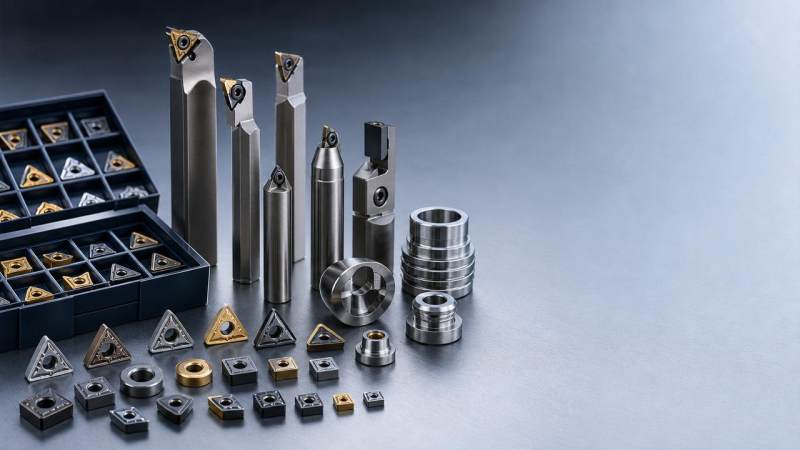
Why does carbide inserts wholesale pricing differ so dramatically between suppliers? For business evaluators, the answer goes far beyond unit cost. Material grade, coating technology, tolerance control, order volume, and supply-chain stability all shape the final quote. This article breaks down the real pricing drivers behind carbide inserts wholesale offers, helping procurement and technical decision-makers compare suppliers more accurately and reduce sourcing risk.
What really drives carbide inserts wholesale prices?
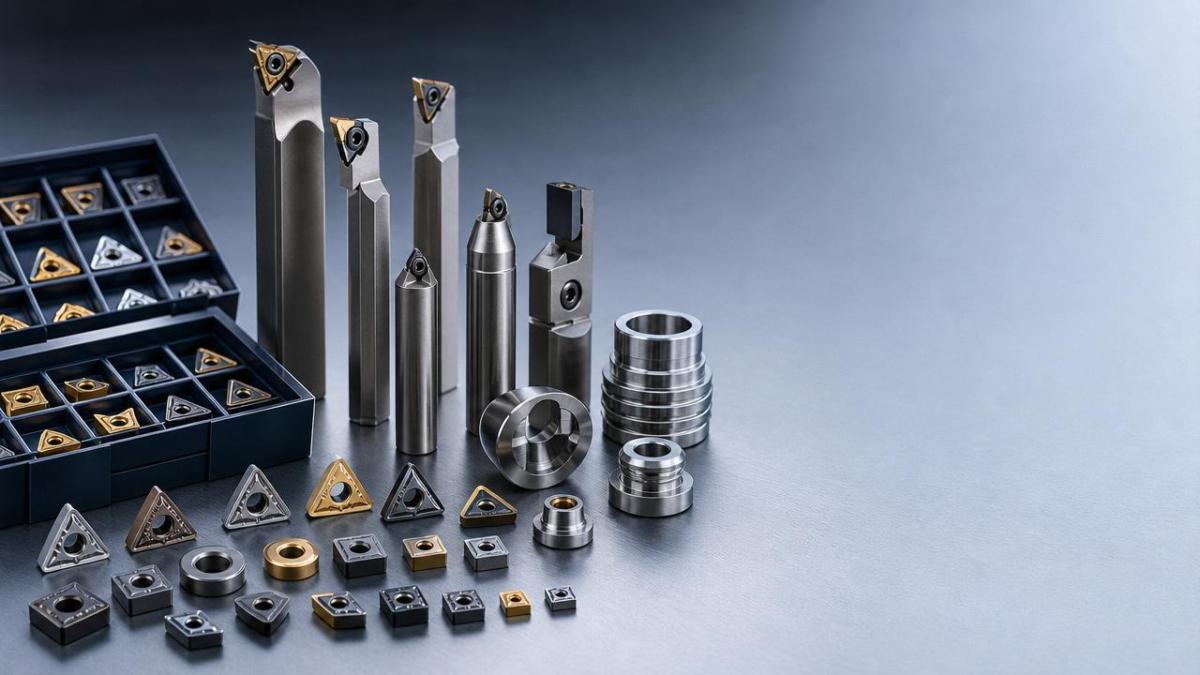
In industrial sourcing, carbide inserts wholesale pricing rarely reflects only the cost of tungsten carbide. A low quote may indicate a simpler substrate, thinner coating, broader tolerance band, or unstable production consistency.
For business evaluators, the challenge is not finding the cheapest insert. It is determining which supplier can deliver predictable tool life, dimensional consistency, and acceptable total machining cost under real operating conditions.
This is where a data-driven review matters. In sectors tied to CNC machining, mold engineering, die-casting, fluid-system parts, and industrial maintenance, insert performance affects uptime, scrap risk, and labor efficiency as much as purchase price.
- Substrate composition: Variations in grain size, cobalt binder ratio, and sintering control influence wear resistance, toughness, and price.
- Coating system: CVD, PVD, multilayer, and post-treatment options can raise wholesale cost but may lower cost per component machined.
- Geometry and chipbreaker design: Standard turning inserts cost less than specialized profiles for stainless steel, cast iron, or interrupted cuts.
- Inspection standard: Tighter thickness, corner-radius, and edge-prep control generally increase manufacturing and sorting cost.
- Commercial terms: MOQ, packaging, lead time, Incoterms, and after-sales response all change the real wholesale offer.
Why unit price can mislead procurement teams
A cheaper insert can become more expensive if it causes unstable tool life, machine stoppages, or poor surface finish. In carbide inserts wholesale evaluation, the right comparison metric is often cost per edge, cost per part, or cost per production hour.
G-PME supports this type of assessment by connecting tooling decisions with broader manufacturing variables such as alloy trends, production continuity, maintenance priorities, and cross-border supply resilience.
Which technical factors create the biggest price gaps?
The table below summarizes the main technical drivers behind carbide inserts wholesale quotations and how each one affects procurement judgment in a mixed industrial environment.
For evaluators, the key takeaway is simple: price gaps often reflect manufacturing discipline, not just margin policy. A quote makes sense only when the grade, coating, geometry, and inspection scope are clearly aligned.
Material volatility also matters
Carbide inserts wholesale markets are sensitive to tungsten and cobalt input costs, energy prices, and regional processing capacity. When raw material volatility rises, suppliers with long-term inventory planning can hold prices steadier than traders buying short.
This is particularly relevant for organizations managing multi-site procurement. The lowest current quote may not remain the lowest over a quarter if surcharge policies, freight exposure, or allocation risk are ignored.
How should business evaluators compare suppliers beyond the quote?
A reliable carbide inserts wholesale comparison should combine technical, commercial, and operational criteria. Many sourcing mistakes happen because teams compare catalog descriptions instead of measurable procurement outcomes.
The framework below helps evaluators screen suppliers more systematically before moving to trial orders or annual agreements.
This approach is especially useful when suppliers offer similar-looking SKUs. In carbide inserts wholesale procurement, the difference between acceptable and costly often appears after deployment, not on the quotation sheet.
A practical comparison checklist
- Map the insert to exact machining tasks, including workpiece material, machine rigidity, coolant mode, and finish requirement.
- Request technical data and not just grade names. Cross-brand grade labels can sound similar while performing differently.
- Compare landed cost, not ex-works price alone. Freight, customs, safety stock, and urgent replenishment costs often shift the final ranking.
- Use sample lots to monitor wear mode, edge chipping, crater wear, and dimensional repeatability over a realistic batch.
- Review supplier responsiveness. Slow technical feedback is a cost multiplier in high-mix production environments.
Why do order volume, lead time, and geography change carbide inserts wholesale offers?
Commercial structure can widen the price range as much as technical design. Two suppliers may sell functionally similar inserts, yet one quote can be materially higher because of smaller batch sizes, air freight exposure, or regional inventory strategy.
For business evaluators, this is where procurement discipline becomes essential. A quote should be read together with stocking logic, replenishment frequency, and the cost of production interruption.
Key commercial variables to examine
- MOQ and packaging multiples: A supplier may reduce carbide inserts wholesale price at higher carton volumes, but excess stock can erode savings if demand is uneven.
- Lead time structure: Standard catalog inserts often price differently from special geometries that require dedicated production scheduling.
- Regional warehousing: Local stock can justify a modest premium when machine uptime is critical and emergency deliveries are frequent.
- Currency and payment terms: Long validity periods, flexible payment, and lower foreign-exchange risk can create better commercial value than a narrow unit-price advantage.
- Supply continuity: Multi-source capability and transparent raw-material planning reduce exposure during market disruptions.
Where G-PME adds value in assessment
G-PME’s strength lies in connecting tooling procurement to larger manufacturing intelligence. That includes awareness of raw-material movements, standards benchmarking, project-driven demand changes, and supply-chain resilience across precision engineering sectors.
For evaluators handling cross-border or multi-category sourcing, this broader view helps prevent a narrow carbide inserts wholesale decision from creating downstream risk in machining, assembly, or maintenance schedules.
What are the most common pricing misconceptions in carbide inserts wholesale?
Some price differences are justified. Others come from incomplete specifications or weak comparison methods. Recognizing the common traps can prevent costly sourcing errors.
Misconception 1: Same shape means same performance
A CNMG or VNMG code does not guarantee equivalent substrate quality, coating adhesion, edge hone, or chipbreaker behavior. Similar geometry can hide very different process capability.
Misconception 2: The lowest quote always reduces cost
If inserts need more frequent indexing, create inconsistent finishes, or force conservative cutting parameters, a lower purchase price can increase cost per part and reduce machine utilization.
Misconception 3: Premium coating always pays back
Not every application needs the highest-end coating stack. For stable machining of common steels, a balanced grade may outperform a more expensive option on total economics.
Misconception 4: Price stability means supply stability
A fixed quote without clear supply commitment can still expose buyers to backorders, substitute grades, or delayed shipment during demand spikes. Commercial assurance must be verified separately.
FAQ: what should buyers ask before approving a supplier?
The questions below reflect typical carbide inserts wholesale concerns raised by procurement teams, manufacturing engineers, and business evaluators reviewing supplier quotations.
How do I know whether a higher carbide inserts wholesale quote is justified?
Ask for the technical basis of the price difference. Review grade family, coating process, tolerance level, inspection method, and expected application range. Then compare likely cost per edge or cost per machined component, not only unit price.
What documents or data should a serious supplier provide?
At minimum, request insert designation details, recommended application range, material compatibility, coating description, dimensional control information, packaging quantity, and lead-time confirmation. For critical programs, ask about traceability and quality-control practices.
Is it better to consolidate with one supplier or split sources?
It depends on risk tolerance and consumption pattern. Single-source arrangements may improve price and service alignment, while dual sourcing may protect continuity for key inserts. High-usage standard items often support split strategies more easily than custom geometries.
How long should a carbide inserts wholesale trial take?
A useful trial should cover enough production volume to reveal wear trends, edge failure patterns, and repeatability. For repetitive machining, one short test is rarely enough. Buyers should define trial criteria in advance, including surface finish, tool life, stability, and operator feedback.
Why choose us for carbide inserts wholesale evaluation support?
G-PME is built for industrial decision-makers who need more than a catalog comparison. Our role is to help procurement directors, R&D leaders, and project evaluators examine carbide inserts wholesale offers through a broader manufacturing lens.
We combine technical benchmarking with commercial intelligence across advanced CNC machining and related industrial pillars. That means your sourcing review can include not only insert specifications, but also application suitability, standards context, raw-material exposure, and supply-chain resilience.
- Parameter confirmation: Clarify grade, geometry, chipbreaker, coating, and tolerance expectations before quote comparison.
- Supplier screening: Assess whether price differences reflect true process capability or incomplete specification alignment.
- Delivery planning: Review lead times, stocking options, and replenishment risk for standard and special inserts.
- Sample support strategy: Define trial scope, evaluation criteria, and acceptance checkpoints for procurement approval.
- Quotation analysis: Compare landed cost, performance assumptions, and substitution options across suppliers.
If your team is reviewing carbide inserts wholesale quotations and needs clearer guidance on product selection, delivery cycle, certification-related concerns, sample planning, or pricing communication, contact us with your application details and sourcing targets. A structured evaluation at the beginning usually saves far more than it costs during production.
Recommended News
 How to size high pressure pumps for stable chemical injection ratesHigh pressure pumps sizing guide for stable chemical injection rates—learn how to balance flow range, pressure, suction conditions, materials, and controls for reliable dosing.
 When organic chemicals are suitable feedstocks for synthetic lubricantsOrganic chemicals can unlock high-performance synthetic lubricants. Learn how purity, stability, compatibility, and supply control shape reliable industrial formulations.
 What machine tool market size reveals about capital spending cyclesMachine tool market size reveals capital spending cycles through order mix, automation, replacement demand, and capacity signals. Discover what drives smarter investment decisions.
 What causes solar inverters to trip repeatedly after installationSolar inverters tripping repeatedly? Discover key causes, from grid voltage and DC faults to wiring, settings, heat, and practical troubleshooting steps.
 How a tool life calculation chart improves cutting parameter decisionsTool life calculation chart insights help optimize cutting speed, feed, and depth for predictable tool changes, better part quality, and lower machining costs.
 What to check before choosing an industrial lubricating oils factoryIndustrial lubricating oils factory selection guide: compare quality control, formulation fit, traceability, technical support, and total cost to reduce downtime risks.
 Where machine shop digital transformation delivers the fastest paybackMachine shop digital transformation delivers faster payback by reducing downtime, setup delays, quality risks, and capacity constraints with focused, measurable workflows.
 When a semiconductor manufacturing solutions provider can shorten process ramp-upA semiconductor manufacturing solutions provider can shorten ramp-up through validated hardware, change control, field support, and resilient supply chains.
 How to evaluate CNC tooling suppliers in Europe for repeatable precisionCNC tooling Europe: learn how to evaluate suppliers for repeatable precision, stable tool life, application support, traceability, and resilient delivery.
 When does manufacturing competitiveness consulting pay off for a plant?Manufacturing competitiveness consulting pays off when plants face costly constraints, capital decisions, quality risks, or supply disruptions. Learn how to build a measurable ROI case.
 How to order acoustic ceiling tiles in bulk without overbuyingAcoustic ceiling tiles bulk buying made simple: calculate accurate quantities, control waste, secure spare stock, and plan phased deliveries to avoid costly overordering.
 Which laboratory microscopes fit routine quality inspection work?Laboratory microscopes for routine quality inspection: compare stereo, digital, compound, and measuring options to improve defect detection, documentation, and throughput.
 Can AI for multi axis machining reduce errors in complex toolpaths?AI for multi axis machining helps reduce complex toolpath errors through smarter collision detection, kinematic analysis, post validation, and machine-data insights. Learn how to improve precision.
 How seamless steel pipes are checked for wall-thickness consistencySeamlesssteelpipes wall-thickness checks explained: learn how ultrasonic scanning, calibration, and tolerance control ensure reliable, pressure-ready pipe quality.
 When a horizontal boring machine for metalworking improves large-part setupHorizontal boring machine for metalworking: learn how stable datums, rotary indexing, and rigid fixturing improve large-part accuracy and setup efficiency.
 What the MTTF standard for CNC means for machine reliabilityMTTF standard for CNC explained: learn how failure definitions, duty cycles, MTTR, and real-world data shape machine reliability and uptime.
 When does company formation offshore reduce cross-border tax risk?Companyformationoffshore can reduce cross-border tax risk when substance, governance, transfer pricing, and supply-chain roles align. Learn the key tests.
 How to read a measuring tape accurately for repeatable cutsMeasuringtape guide for accurate, repeatable cuts: master markings, hook movement, reference edges, kerf control, and stop-block setup.
 How to assess a CNC cutting tools manufacturer before orderingAssess a CNC cutting tools manufacturer with confidence: compare quality control, application support, trial results, supply reliability, and total machining cost before ordering.
 How often should scaffolding be inspected on active job sites?Scaffolding inspection guidance for active job sites: learn when to inspect, key safety triggers, compliance intervals, and practical controls to prevent incidents.
 What to verify when sourcing precision machining tools in EuropePrecision machining tools Europe sourcing guide: verify accuracy, ISO compliance, traceability, service coverage, and delivery resilience to reduce risk and lifecycle costs.



















Search News
Popular Tags