
Choosing a CNC lathe manufacturer with stable lead times
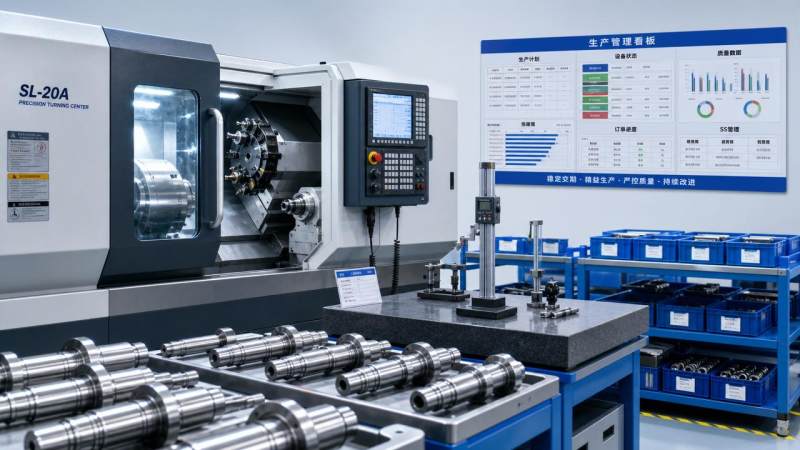
For project managers and engineering leads, choosing a cnc lathe manufacturer with stable lead times is not just a sourcing task—it directly affects schedules, budgets, and production continuity. This guide outlines how to evaluate supplier capacity, process control, and delivery reliability so you can reduce project risk and secure consistent machining support.
What project managers are really buying: schedule certainty, not just parts
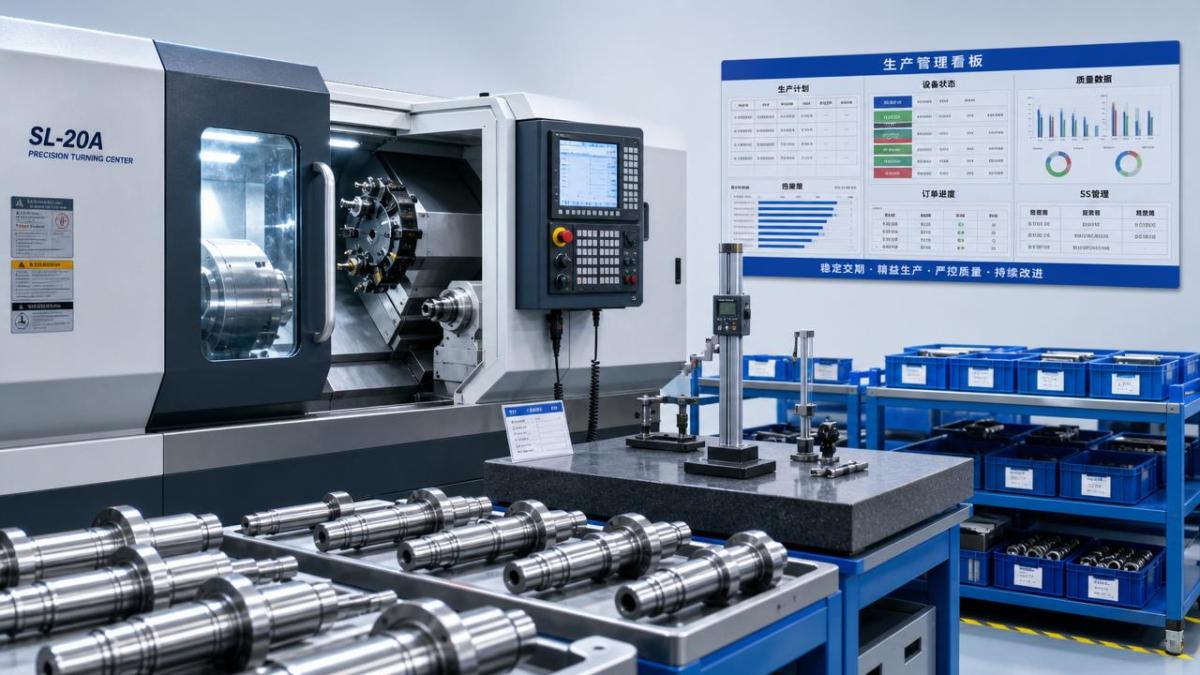
When buyers search for a cnc lathe manufacturer, they rarely need only turning capacity. They need predictable delivery that protects milestones, assembly sequencing, and customer commitments.
In most industrial projects, a late machined component creates more damage than a slightly higher unit price. Delays can idle downstream workstations, postpone validation, and trigger expedited logistics.
That is why stable lead times should be treated as a measurable supplier capability, not a sales promise. A qualified manufacturer must show how delivery performance is built into operations.
For engineering-led procurement, the best supplier is often not the lowest-cost option. It is the partner whose planning discipline, quality control, and capacity management reduce total project risk.
What users searching this topic usually want to know before selecting a supplier
Search intent around choosing a cnc lathe manufacturer with stable lead times is highly practical. Decision-makers want a shortlist framework, not generic explanations of what CNC turning is.
They are usually asking four questions. Can this supplier deliver on time repeatedly, maintain dimensional consistency, communicate early when risks appear, and scale without disrupting current orders?
They also want signs that separate reliable manufacturers from vendors that only look strong during quotation. Website claims matter far less than evidence from production data and account management behavior.
For project leads, the most useful content is a decision framework. It should connect lead time stability to factory loading, process maturity, inventory strategy, and supply-chain resilience.
Why lead time instability happens in CNC turning supply chains
Unstable lead times rarely come from one cause. They usually result from several weak points interacting across quoting, material sourcing, machine scheduling, inspection, and shipping coordination.
A cnc lathe manufacturer may quote aggressively before confirming raw material availability. If bar stock, forgings, or special alloys arrive late, the production plan collapses immediately.
Machine utilization is another common issue. A supplier operating near full load can appear efficient, yet even small disruptions such as tool breakage or urgent rework can affect every open order.
Programming bottlenecks also matter. Complex parts may wait for CAM preparation, first-article approval, or fixture readiness, extending actual lead times beyond the quoted manufacturing window.
Quality escapes create another hidden delay driver. When inspection catches dimensional errors late, the supplier must remake parts, reschedule machines, and consume buffer time that was never visible to the buyer.
Finally, communication failure magnifies all operational problems. A late supplier is difficult, but a silent late supplier is far more damaging because the project team loses time to mitigate impact.
How to evaluate whether a CNC lathe manufacturer can keep lead times stable
The most reliable evaluation method is to move from claims to evidence. Ask the cnc lathe manufacturer to explain exactly how orders are scheduled, monitored, and escalated when risks appear.
Start with capacity visibility. How many turning centers are available, what percentage of load is already committed, and how are priorities managed across prototypes, rush jobs, and serial production?
Then examine process redundancy. If a critical machine goes down, can the part be transferred to another machine with minimal setup disruption, or does the entire order stop?
Review the supplier’s material planning model. Stable delivery requires dependable procurement windows, approved alternates where possible, and clear policies for customer-furnished or long-lead materials.
Ask for on-time delivery data by part family, not a single marketing average. Performance on simple shafts may look excellent while thin-wall, tight-tolerance, or hardened material jobs perform much worse.
Also evaluate inspection flow. Manufacturers with in-process checks, first-off validation, and final inspection discipline are more likely to detect problems early before they become schedule failures.
Finally, assess project communication. A capable supplier can tell you what stage each order is in, what the current risk level is, and what corrective action is underway.
Questions that reveal real delivery discipline during supplier qualification
Good qualification questions should expose operating behavior, not encourage polished sales answers. The goal is to understand how the supplier performs under pressure, variation, and changing demand.
Ask what percentage of orders ship on time over the past six to twelve months. Then ask how on-time delivery is defined, since some suppliers measure against revised dates.
Request examples of delayed orders and their root causes. Mature manufacturers can describe breakdowns honestly and explain what process changes were implemented to prevent recurrence.
Ask how they separate quotation lead time from actual committed production lead time. This reveals whether sales teams are aligned with planning reality or routinely overpromise to secure orders.
Find out whether they reserve capacity for strategic customers. For project-critical programs, priority allocation can be more valuable than a nominally shorter but less protected standard lead time.
Ask how engineering changes are handled once production has started. Some suppliers absorb revisions smoothly, while others experience major scheduling disruption even from small drawing updates.
Also ask who owns customer communication when problems appear. You need a clear contact with authority, not a fragmented chain where production, quality, and sales pass responsibility between departments.
Operational signs of a manufacturer that is likely to stay reliable
Reliable lead times usually come from repeatable systems rather than heroic effort. Look for visual production control, digital job tracking, documented routing, and clear accountability at each process stage.
A strong cnc lathe manufacturer often has disciplined pre-production review. This includes drawing feasibility checks, tooling confirmation, material verification, and realistic scheduling before the order is released.
Tool management is another strong indicator. Shops with organized tool libraries, wear tracking, and replacement planning reduce unplanned downtime and maintain better cycle predictability.
Supplier quality systems also support delivery stability. Controlled documents, calibration records, inspection plans, and nonconformance workflows prevent late surprises that push jobs back into rework.
Cleanliness and workflow matter more than many buyers assume. A well-run floor usually reflects better planning, faster job changeovers, and lower risk of misplaced materials or incomplete documentation.
Look for evidence of continuous improvement. Manufacturers that track setup time, scrap rates, and machine downtime tend to identify lead time risk earlier and respond with more discipline.
How to compare suppliers beyond quoted lead time
A short quoted lead time can be misleading if it is achieved by overloading machines, skipping buffers, or depending on constant expediting. Comparison should focus on reliability, not headline speed.
Build a scorecard with weighted criteria. Include on-time delivery history, tolerance capability, quality escape rate, communication responsiveness, material sourcing strength, and backup capacity.
Also evaluate commercial fit. Payment terms, minimum order flexibility, packaging standards, Incoterms familiarity, and export documentation capability all influence whether deliveries remain smooth in practice.
For multi-site or international projects, logistics coordination matters greatly. A technically competent cnc lathe manufacturer can still create schedule instability if shipping execution is inconsistent.
It is also wise to separate prototype performance from production performance. Some suppliers respond quickly to low-volume urgent work but struggle once recurring demand requires sustained planning discipline.
Where possible, compare promised lead time against achieved lead time over a pilot order. Real transactional evidence is often the clearest predictor of long-term supplier behavior.
Risk reduction strategies when the part is critical to project execution
If the turned component is schedule-critical, do not rely on supplier selection alone. Combine qualification with structural risk controls that reduce the impact of unavoidable disruptions.
First, classify parts by criticality. Components tied to commissioning, safety systems, or customer acceptance should receive tighter supplier review, earlier release timing, and stronger communication routines.
Second, consider phased ordering. A smaller initial batch can validate process capability, quality response, and actual lead time performance before full project volume is committed.
Third, create realistic buffers where the project economics allow it. A few days of schedule protection can cost far less than line stoppage, field delay, or emergency air freight.
Fourth, maintain approved alternates for material, process route, or secondary supplier support where technical requirements permit. Sole-path sourcing increases schedule fragility significantly.
Fifth, establish escalation triggers. If raw material is late, first article slips, or machine downtime exceeds a threshold, both parties should know when management intervention begins.
These controls are especially important when sourcing from a new cnc lathe manufacturer. Early-stage discipline often determines whether the relationship becomes strategically useful or operationally risky.
What a strong supplier relationship looks like after award
Supplier performance does not stabilize automatically after purchase order issuance. Stable lead times require ongoing governance, especially for repeat parts, framework orders, or project-linked rolling demand.
Share forecast visibility when possible. Even imperfect demand signals help the manufacturer reserve machine hours, plan material purchases, and smooth scheduling across multiple customer programs.
Run regular performance reviews using a few practical metrics. On-time delivery, quality acceptance rate, response time to issues, and change-order handling usually provide enough visibility for action.
Encourage early warning behavior. Suppliers should feel expected to report risk before the due date is missed, not after options have already disappeared.
Document lessons from each job family. Setup complexity, preferred tooling, inspection checkpoints, and packaging requirements all become assets that improve repeatability and shorten future lead times.
When managed well, a cnc lathe manufacturer becomes more than a vendor. It becomes a dependable execution partner that supports planning confidence across engineering, procurement, and production teams.
Common mistakes buyers make when selecting a CNC lathe manufacturer
One common mistake is choosing based mainly on piece price. Lower unit cost can be quickly erased by schedule disruption, premium freight, production downtime, and internal firefighting effort.
Another mistake is treating all turned parts as operationally similar. In reality, tight concentricity, difficult materials, or secondary operations can change the lead time risk profile substantially.
Buyers also underestimate the importance of communication structure. Even a technically competent supplier can become difficult if there is no clear owner for schedule updates and escalation management.
Some teams fail to audit how lead times are actually built. They accept a quoted number without understanding assumptions around stock availability, queue time, outside processing, or inspection capacity.
Finally, many organizations wait until a delay happens before defining recovery expectations. By then, options are limited and discussions become reactive instead of planned and data-based.
Conclusion: choose predictability over promises
For project managers and engineering leads, the right cnc lathe manufacturer is the one that can protect execution, not merely quote attractively. Stable lead times come from systems, transparency, and operational discipline.
If you evaluate capacity, material planning, quality control, communication routines, and historical delivery evidence together, supplier selection becomes far more reliable and commercially defensible.
The strongest decision is usually not about finding the fastest promise. It is about choosing the manufacturer most likely to deliver consistently, signal risk early, and support your project without disruption.
In complex industrial environments, that level of predictability is often the difference between controlled execution and avoidable delay. For serious buyers, it should be a primary selection criterion.
Recommended News
 How to size pump systems for cooling circuits for stable flow ratesPump systems for cooling circuits: learn how to match flow, total dynamic head, NPSH, and controls for reliable, energy-efficient cooling performance.
 When does software as a service reduce CNC data management costs?Software as a service can lower CNC data management costs by reducing IT overhead, manual reporting, and disconnected records. Discover when SaaS delivers measurable savings.
 CNC investment trends 2026: are automation upgrades taking priority?CNC investment trends 2026 reveal why automation upgrades are reshaping capacity plans. Compare robots, pallet systems, and new machines for smarter CNC growth.
 How to size high pressure pumps for stable chemical injection ratesHigh pressure pumps sizing guide for stable chemical injection rates—learn how to balance flow range, pressure, suction conditions, materials, and controls for reliable dosing.
 When organic chemicals are suitable feedstocks for synthetic lubricantsOrganic chemicals can unlock high-performance synthetic lubricants. Learn how purity, stability, compatibility, and supply control shape reliable industrial formulations.
 What machine tool market size reveals about capital spending cyclesMachine tool market size reveals capital spending cycles through order mix, automation, replacement demand, and capacity signals. Discover what drives smarter investment decisions.
 What causes solar inverters to trip repeatedly after installationSolar inverters tripping repeatedly? Discover key causes, from grid voltage and DC faults to wiring, settings, heat, and practical troubleshooting steps.
 How a tool life calculation chart improves cutting parameter decisionsTool life calculation chart insights help optimize cutting speed, feed, and depth for predictable tool changes, better part quality, and lower machining costs.
 What to check before choosing an industrial lubricating oils factoryIndustrial lubricating oils factory selection guide: compare quality control, formulation fit, traceability, technical support, and total cost to reduce downtime risks.
 Where machine shop digital transformation delivers the fastest paybackMachine shop digital transformation delivers faster payback by reducing downtime, setup delays, quality risks, and capacity constraints with focused, measurable workflows.
 When a semiconductor manufacturing solutions provider can shorten process ramp-upA semiconductor manufacturing solutions provider can shorten ramp-up through validated hardware, change control, field support, and resilient supply chains.
 How to evaluate CNC tooling suppliers in Europe for repeatable precisionCNC tooling Europe: learn how to evaluate suppliers for repeatable precision, stable tool life, application support, traceability, and resilient delivery.
 When does manufacturing competitiveness consulting pay off for a plant?Manufacturing competitiveness consulting pays off when plants face costly constraints, capital decisions, quality risks, or supply disruptions. Learn how to build a measurable ROI case.
 How to order acoustic ceiling tiles in bulk without overbuyingAcoustic ceiling tiles bulk buying made simple: calculate accurate quantities, control waste, secure spare stock, and plan phased deliveries to avoid costly overordering.
 Which laboratory microscopes fit routine quality inspection work?Laboratory microscopes for routine quality inspection: compare stereo, digital, compound, and measuring options to improve defect detection, documentation, and throughput.
 Can AI for multi axis machining reduce errors in complex toolpaths?AI for multi axis machining helps reduce complex toolpath errors through smarter collision detection, kinematic analysis, post validation, and machine-data insights. Learn how to improve precision.
 How seamless steel pipes are checked for wall-thickness consistencySeamlesssteelpipes wall-thickness checks explained: learn how ultrasonic scanning, calibration, and tolerance control ensure reliable, pressure-ready pipe quality.
 When a horizontal boring machine for metalworking improves large-part setupHorizontal boring machine for metalworking: learn how stable datums, rotary indexing, and rigid fixturing improve large-part accuracy and setup efficiency.
 What the MTTF standard for CNC means for machine reliabilityMTTF standard for CNC explained: learn how failure definitions, duty cycles, MTTR, and real-world data shape machine reliability and uptime.
 When does company formation offshore reduce cross-border tax risk?Companyformationoffshore can reduce cross-border tax risk when substance, governance, transfer pricing, and supply-chain roles align. Learn the key tests.
 How to read a measuring tape accurately for repeatable cutsMeasuringtape guide for accurate, repeatable cuts: master markings, hook movement, reference edges, kerf control, and stop-block setup.


















Search News
Popular Tags