
Does an automatic tool changer OEM help cut downtime
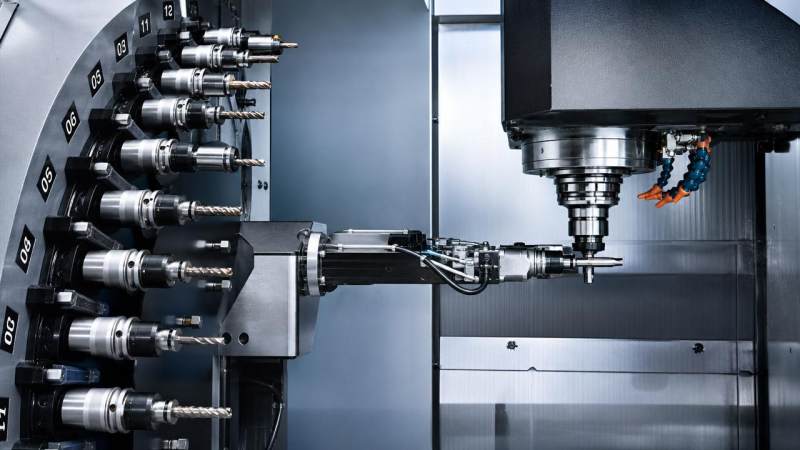
For operations where spindle time defines profitability, an automatic tool changer OEM often affects downtime more than expected. Tool exchange speed matters, but repeatability, alignment accuracy, diagnostics, and service depth matter even more.
A weak interface between changer, spindle, magazine, control system, and maintenance process can create small interruptions that accumulate into major production losses. A capable automatic tool changer OEM helps reduce those losses through engineering discipline and support readiness.
This matters across the broader industrial landscape represented by G-PME, where precision machining, uptime assurance, and standards-based performance drive competitiveness. In this context, selecting an automatic tool changer OEM is a reliability decision, not only a sourcing decision.
What an automatic tool changer OEM actually influences
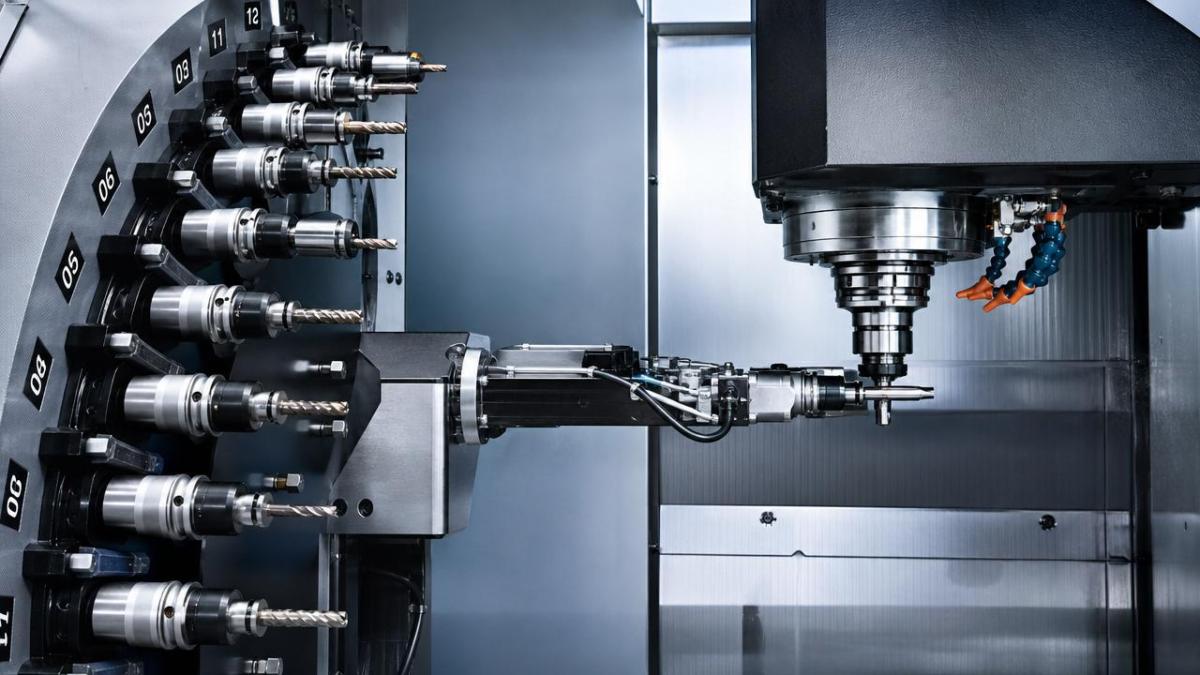
An automatic tool changer OEM supplies more than a mechanism that swaps tools. It shapes mechanical durability, software communication, changeover consistency, and maintainability throughout the machine’s service life.
In practical terms, the automatic tool changer OEM affects four downtime drivers. These drivers appear in both high-volume production and mixed-part machining environments.
- Mechanical reliability of arms, grippers, cams, bearings, and magazines
- Control integration with spindle orientation, sensors, and PLC logic
- Tool-to-tool repeatability under vibration, contamination, and thermal change
- Availability of spare parts, field support, and troubleshooting data
If any of these areas underperform, downtime rises through alarms, misloads, recovery delays, and preventive maintenance gaps. That is why the automatic tool changer OEM plays a direct role in production continuity.
Why downtime reduction depends on OEM capability
Downtime rarely comes from one dramatic failure. It usually grows from recurring micro-stoppages. A high-quality automatic tool changer OEM reduces those events by controlling tolerances, component matching, and fault logic.
Precision engineering reduces interruption frequency
Tool changers operate in a harsh environment. Chips, coolant mist, thermal variation, and repeated acceleration stress every moving element. Better materials, sealing, and geometry reduce wear-related stoppages.
An experienced automatic tool changer OEM usually validates gripper force, pocket accuracy, indexing stability, and sensor reliability under repeated cycles. That verification lowers unexpected faults during real production loads.
Integration quality shortens recovery time
Even a robust changer can cause downtime when integration is weak. Signal timing, spindle orientation, air supply stability, and safety interlocks must work together without ambiguity.
A strong automatic tool changer OEM provides interface drawings, I/O logic guidance, and commissioning support. Clear integration standards make alarm tracing faster and machine recovery safer.
Spare-parts structure protects uptime
Downtime expands when common wear parts are hard to identify or slow to obtain. The best automatic tool changer OEM supports structured part numbering, recommended inventory lists, and replacement intervals.
This is especially valuable for facilities operating multiple machining cells. Standardized parts and manuals reduce dependence on improvised repairs and uncertain lead times.
Current industry signals around automatic tool changer OEM selection
Across general industry, attention has shifted from unit price alone to total production resilience. This shift is visible in machining, die and mold work, industrial equipment fabrication, and engineered components manufacturing.
These signals show why the automatic tool changer OEM now sits closer to asset strategy. The right partner can lower disruption risk across both planned and unplanned maintenance windows.
Business value beyond faster tool swaps
The main question is not only whether an automatic tool changer OEM can cut downtime. It is how much operational value comes from fewer interruptions over months and years.
- Lower scrap risk caused by failed tool handoff or poor positioning
- Higher machine utilization through stable, repeatable change cycles
- Reduced maintenance labor through better diagnostics and service access
- Better planning accuracy when preventive replacement intervals are predictable
- Improved asset life through correct load distribution and component design
For organizations benchmarking according to ISO, DIN, ASME, or JIS-aligned practices, documentation quality also matters. A disciplined automatic tool changer OEM supports traceability, maintenance control, and technical review.
Typical scenarios where OEM choice has the strongest effect
Not every operation sees the same benefit level. Downtime savings from the right automatic tool changer OEM are usually strongest in the following environments.
In these scenarios, the automatic tool changer OEM has a measurable influence on mean time between failure, mean time to repair, and schedule stability.
What to evaluate before selecting an automatic tool changer OEM
A useful evaluation process combines technical fit, support depth, and lifecycle economics. The following checklist helps separate capable suppliers from basic component vendors.
- Verify cycle-life data under realistic loads and contamination conditions.
- Review tolerance control for pockets, grippers, cams, and alignment surfaces.
- Confirm controller integration experience and I/O documentation quality.
- Check preventive maintenance intervals and wear-part replacement procedures.
- Assess regional service response, spare-parts stock, and escalation channels.
- Request failure-mode history, alarm logic examples, and commissioning references.
It also helps to evaluate whether the automatic tool changer OEM supports root-cause analysis after field issues. That capability often determines whether the same downtime event repeats.
Common mistakes to avoid
- Choosing on purchase price without reviewing lifecycle maintenance cost
- Ignoring chip evacuation and coolant exposure around the changer area
- Assuming all automatic tool changer OEM designs are equally compatible
- Overlooking training for alarm recovery and manual intervention procedures
A practical path to lower downtime
Yes, the right automatic tool changer OEM can help cut downtime, often substantially. The benefit comes from better engineering, smoother integration, faster recovery, and stronger parts support working together.
The strongest results appear when selection criteria move beyond speed specifications alone. Reliability data, service structure, and maintenance design should carry equal weight during technical review.
For organizations aligning equipment choices with broader manufacturing resilience, the automatic tool changer OEM should be assessed as a long-term uptime partner. A focused audit of field history, interface quality, and spare-parts readiness is the next practical step.
A structured comparison today can prevent recurring stoppages tomorrow, while supporting the precision, continuity, and standards-driven performance expected across modern industrial operations.
Recommended News
 How to size high pressure pumps for stable chemical injection ratesHigh pressure pumps sizing guide for stable chemical injection rates—learn how to balance flow range, pressure, suction conditions, materials, and controls for reliable dosing.
 When organic chemicals are suitable feedstocks for synthetic lubricantsOrganic chemicals can unlock high-performance synthetic lubricants. Learn how purity, stability, compatibility, and supply control shape reliable industrial formulations.
 What machine tool market size reveals about capital spending cyclesMachine tool market size reveals capital spending cycles through order mix, automation, replacement demand, and capacity signals. Discover what drives smarter investment decisions.
 What causes solar inverters to trip repeatedly after installationSolar inverters tripping repeatedly? Discover key causes, from grid voltage and DC faults to wiring, settings, heat, and practical troubleshooting steps.
 How a tool life calculation chart improves cutting parameter decisionsTool life calculation chart insights help optimize cutting speed, feed, and depth for predictable tool changes, better part quality, and lower machining costs.
 What to check before choosing an industrial lubricating oils factoryIndustrial lubricating oils factory selection guide: compare quality control, formulation fit, traceability, technical support, and total cost to reduce downtime risks.
 Where machine shop digital transformation delivers the fastest paybackMachine shop digital transformation delivers faster payback by reducing downtime, setup delays, quality risks, and capacity constraints with focused, measurable workflows.
 When a semiconductor manufacturing solutions provider can shorten process ramp-upA semiconductor manufacturing solutions provider can shorten ramp-up through validated hardware, change control, field support, and resilient supply chains.
 How to evaluate CNC tooling suppliers in Europe for repeatable precisionCNC tooling Europe: learn how to evaluate suppliers for repeatable precision, stable tool life, application support, traceability, and resilient delivery.
 When does manufacturing competitiveness consulting pay off for a plant?Manufacturing competitiveness consulting pays off when plants face costly constraints, capital decisions, quality risks, or supply disruptions. Learn how to build a measurable ROI case.
 How to order acoustic ceiling tiles in bulk without overbuyingAcoustic ceiling tiles bulk buying made simple: calculate accurate quantities, control waste, secure spare stock, and plan phased deliveries to avoid costly overordering.
 Which laboratory microscopes fit routine quality inspection work?Laboratory microscopes for routine quality inspection: compare stereo, digital, compound, and measuring options to improve defect detection, documentation, and throughput.
 Can AI for multi axis machining reduce errors in complex toolpaths?AI for multi axis machining helps reduce complex toolpath errors through smarter collision detection, kinematic analysis, post validation, and machine-data insights. Learn how to improve precision.
 How seamless steel pipes are checked for wall-thickness consistencySeamlesssteelpipes wall-thickness checks explained: learn how ultrasonic scanning, calibration, and tolerance control ensure reliable, pressure-ready pipe quality.
 When a horizontal boring machine for metalworking improves large-part setupHorizontal boring machine for metalworking: learn how stable datums, rotary indexing, and rigid fixturing improve large-part accuracy and setup efficiency.
 What the MTTF standard for CNC means for machine reliabilityMTTF standard for CNC explained: learn how failure definitions, duty cycles, MTTR, and real-world data shape machine reliability and uptime.
 When does company formation offshore reduce cross-border tax risk?Companyformationoffshore can reduce cross-border tax risk when substance, governance, transfer pricing, and supply-chain roles align. Learn the key tests.
 How to read a measuring tape accurately for repeatable cutsMeasuringtape guide for accurate, repeatable cuts: master markings, hook movement, reference edges, kerf control, and stop-block setup.
 How to assess a CNC cutting tools manufacturer before orderingAssess a CNC cutting tools manufacturer with confidence: compare quality control, application support, trial results, supply reliability, and total machining cost before ordering.
 How often should scaffolding be inspected on active job sites?Scaffolding inspection guidance for active job sites: learn when to inspect, key safety triggers, compliance intervals, and practical controls to prevent incidents.
 What to verify when sourcing precision machining tools in EuropePrecision machining tools Europe sourcing guide: verify accuracy, ISO compliance, traceability, service coverage, and delivery resilience to reduce risk and lifecycle costs.








Search News
Popular Tags