
Why automatic tool changer OEM choices affect uptime
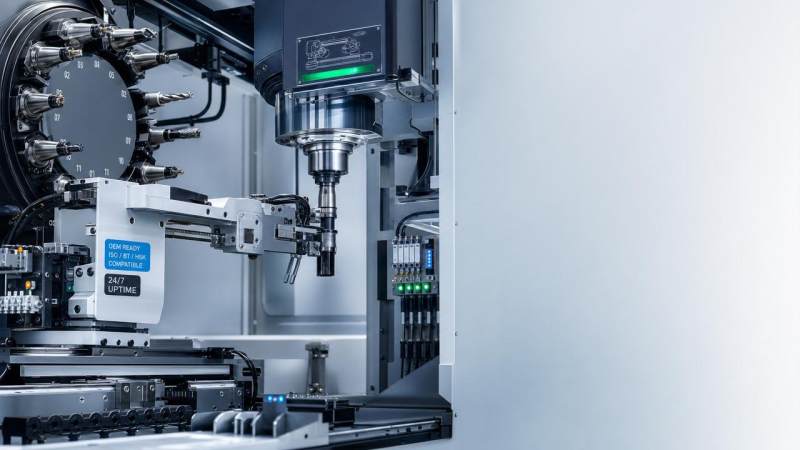
For after-sales maintenance teams, uptime depends on more than routine service—it starts with the right automatic tool changer OEM. A poor OEM choice can lead to frequent tool-change faults, longer troubleshooting cycles, and costly production interruptions. Understanding how OEM quality, parts support, and system compatibility influence reliability helps maintenance professionals reduce downtime and keep machining performance stable.
In precision machining environments, the automatic tool changer is not just a convenience module. It is a high-cycle mechanical and control interface that can perform hundreds or even thousands of tool swaps per shift, depending on spindle utilization, batch size, and part complexity.
For maintenance personnel supporting CNC machining centers, transfer lines, and integrated production cells, the automatic tool changer OEM decision directly affects spare parts access, alarm diagnosis speed, alignment repeatability, and service recovery time. In practical terms, that means the OEM choice can determine whether a line restarts in 30 minutes or remains down for 8 hours.
This matters across industries served by G-PME, where machining accuracy, component integrity, and stable operating windows are linked to international production standards, supplier control, and long-term serviceability. For teams responsible for after-sales maintenance, selecting the right automatic tool changer OEM is a reliability strategy, not only a procurement item.
Why the automatic tool changer OEM has a direct impact on uptime
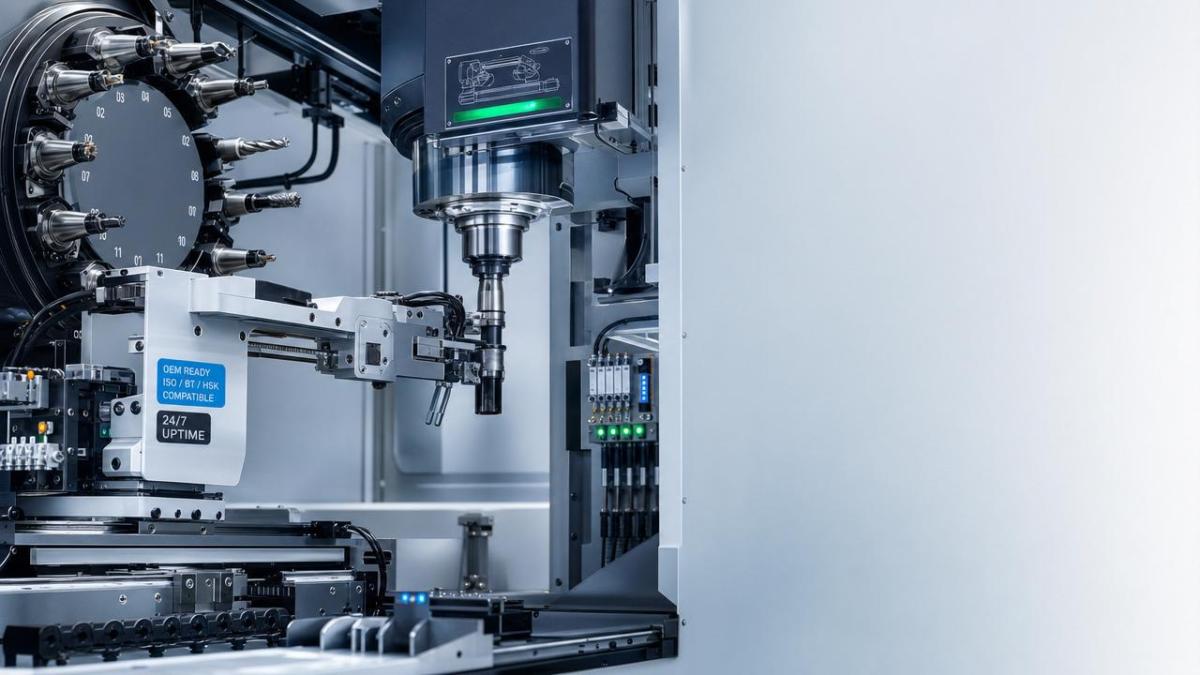
An automatic tool changer OEM influences uptime through three connected layers: mechanical consistency, control integration, and service support. If any one of these layers is weak, fault frequency rises and recovery time expands. In high-mix machining operations, even a 2% increase in tool-change failure can create significant production instability over a 30-day cycle.
Mechanical repeatability affects every tool-change cycle
A well-built automatic tool changer OEM typically controls arm movement, pocket positioning, gripper force, and cam timing within narrow tolerances. In service conditions, maintenance teams often see problems first as intermittent faults: tool not unclamped, arm not home, magazine indexing error, or spindle orientation mismatch.
These issues are rarely random. They usually trace back to wear rate, assembly consistency, lubrication design, or sensor placement. If an OEM uses lower-grade bearings, weaker springs, or inconsistent heat treatment, service intervals can shrink from 12 months to 3–6 months under heavy production loads.
Typical wear points maintenance teams monitor
- Tool arm grippers and retention fingers
- Magazine indexing mechanisms and Geneva drives
- Proximity switches, encoders, and limit sensors
- Pneumatic cylinders, seals, and pressure regulators
- Cam followers, bearings, and spindle orientation interfaces
Control compatibility determines troubleshooting speed
The best automatic tool changer OEM does more than ship hardware. It ensures clean communication with CNC controls, PLC logic, servo feedback, and machine interlocks. A mismatch in I/O mapping, signal timing, or ladder structure can add 2–4 hours to fault isolation because the maintenance team has to investigate both hardware and control logic simultaneously.
This becomes critical when a plant uses mixed control platforms such as FANUC, Siemens, Mitsubishi, or Syntec. An OEM that provides complete wiring documentation, ladder references, alarm trees, and parameter boundaries reduces mean time to repair and avoids repeated trial-and-error resets.
Spare parts response defines downtime duration
When an ATC failure occurs, uptime is shaped less by the initial fault than by the speed of obtaining the right replacement part. A maintenance team may diagnose a failed gripper sensor in 20 minutes, but if the OEM has a 3–5 week lead time for a non-standard component, the production loss multiplies quickly.
Reliable automatic tool changer OEM partners typically support tiered parts availability: critical wear parts in 24–72 hours, common mechanical subassemblies within 7–15 days, and larger replacement modules within 2–6 weeks. That structure is often the difference between controlled maintenance and emergency line stoppage.
The comparison below shows why maintenance outcomes vary so much between OEM selections, even when two tool changers appear similar in catalog format.
For after-sales teams, the key lesson is simple: uptime losses usually come from supportability gaps, not just initial hardware defects. An automatic tool changer OEM that offers maintainable design and predictable parts supply reduces both fault frequency and recovery uncertainty.
How maintenance teams should evaluate an automatic tool changer OEM
Maintenance teams often join the process after equipment is installed, but their input is most valuable before OEM selection is finalized. A practical evaluation model should include at least 5 dimensions: compatibility, wear life, diagnostics, service lead time, and field replaceability. This moves the decision from a purchase-price discussion to a lifecycle uptime assessment.
1. Check machine and process compatibility first
Not every automatic tool changer OEM fits every machine architecture. Maintenance teams should review tool capacity, taper type, spindle speed range, tool mass, maximum tool diameter, and tool length envelope. A mismatch of only a few millimeters in pocket clearance or arm approach can trigger recurring collision alarms.
For example, a BT40 or HSK63 application with tools above 6–8 kg requires stronger gripping stability than lighter machining programs. If the OEM’s changer design was optimized for lighter vertical machining centers, heavy-duty duty cycles may create premature wear in pockets, cams, and transfer arms.
2. Review service intervals and replaceable wear parts
A dependable automatic tool changer OEM should specify maintenance intervals by cycle count or operating hours. Typical checkpoints may appear at 250,000 cycles, 500,000 cycles, and 1 million cycles. If service guidance is vague, maintenance planning becomes reactive rather than preventive.
Ask whether grippers, springs, sensor brackets, and pneumatic modules can be replaced individually. A modular design shortens repair windows. Replacing a subassembly in 45 minutes is very different from changing a full arm unit over 4–6 hours with re-alignment.
3. Confirm diagnostics depth and fault traceability
Maintenance efficiency improves when the OEM provides fault trees with precise checkpoints. Good documentation should distinguish between mechanical stalls, low air pressure conditions, encoder errors, magazine misindexing, and spindle orientation faults. That structure can cut troubleshooting from 2 hours to less than 40 minutes in many service scenarios.
Teams should also verify whether the automatic tool changer OEM supports remote diagnosis, parameter review, and digital service records. In multi-site operations, this helps standardize repairs and reduces knowledge loss between shifts or regional facilities.
4. Measure parts support against actual downtime risk
OEM support should be measured by criticality, not by general claims. Ask for lead times on at least 6 components: gripper, sensor, cylinder, proximity switch, magazine motor, and tool pocket hardware. If 4 of those items require factory-only sourcing, downtime risk is high.
Where production runs 16–24 hours per day, even a single unavailable component can disrupt output, labor planning, and downstream assembly. This is especially important in sectors with strict delivery schedules and process validation requirements.
The table below provides a practical screening framework for after-sales maintenance teams involved in supplier review, retrofits, or replacement planning.
This checklist is particularly useful in cross-border sourcing, where a low upfront price can hide long logistics cycles, language gaps in service manuals, and incompatible replacement standards. For many plants, service readiness matters more than initial capital savings of 5%–10%.
Common failure patterns linked to poor OEM selection
Maintenance teams often inherit problems that were built into the equipment decision from the start. When the automatic tool changer OEM is selected without enough service review, failures tend to appear in recurring patterns rather than isolated incidents.
Intermittent faults that resist quick diagnosis
One of the most costly issues is the intermittent ATC alarm. The machine may run normally for 3 days and then fail twice in one shift. This usually points to weak sensor repeatability, thermal drift, loose tolerances, or unstable pneumatic pressure windows. Poor OEM design makes these faults difficult to reproduce and even harder to eliminate permanently.
Excessive dependence on non-standard parts
Some automatic tool changer OEM suppliers use proprietary brackets, custom sensors, or non-standard cylinder arrangements without providing substitute references. That limits field flexibility. If a common switch cannot be cross-matched locally, a minor failure can hold a machine idle for 10–20 days.
Poor maintainability during scheduled shutdowns
A weak design also increases labor demand during planned service. If access points are blocked, alignment requires special jigs, or component removal forces broader disassembly, a 2-hour PM task can turn into a full-shift intervention. Over a year, those added service hours reduce available production capacity.
Red flags maintenance teams should escalate
- No clear parts list for top 10 wear items
- No documented cycle-based inspection interval
- Repeated need to adjust home position after minor service
- Long reset sequences after simple sensor replacement
- OEM support that depends only on full unit replacement
These red flags do not always mean the changer will fail immediately. They do mean the automatic tool changer OEM may create higher lifetime service costs and less predictable uptime, especially in continuous machining programs or plants with limited local spares inventory.
Best practices for lowering uptime risk after OEM selection
Even after choosing an automatic tool changer OEM, maintenance teams can still improve uptime by building a structured service approach. The goal is to turn the OEM relationship into a predictable support system rather than a reactive vendor contact.
Build a critical spares tier
Separate parts into 3 levels: immediate-use spares, planned-shutdown spares, and strategic backup modules. Immediate-use items usually include sensors, springs, seals, and pneumatic fittings. Planned-shutdown items can include grippers, pocket assemblies, and indexing hardware. Strategic backup modules may include a magazine drive or arm subassembly.
Record failure history by cycle count
If the machine control or production system can estimate tool-change counts, service teams should log failures against cycle bands such as 100,000, 250,000, and 500,000 cycles. This helps detect whether a specific automatic tool changer OEM design has a recurring wear threshold and supports better preventive replacement timing.
Standardize troubleshooting steps across shifts
Create a 5-step response sequence for common ATC alarms: confirm alarm code, verify air pressure, check sensor states, inspect mechanical home positions, and review recent manual interventions. When teams follow the same logic, repair quality improves and repeat faults become easier to analyze.
Align OEM support with plant service expectations
Before long-term operation, define response expectations with the OEM: remote feedback within 2–4 hours, parts confirmation within 24 hours, and escalation path for shutdown-critical failures. This is especially important for multinational supply chains where shipping, customs, and time-zone differences can slow urgent recovery.
For after-sales maintenance teams, uptime is protected when the automatic tool changer OEM delivers more than a functioning assembly. The real value comes from consistent cycle performance, clear diagnostics, modular repairability, and fast parts support across the life of the machine.
In precision machining and broader industrial production environments, the right OEM choice reduces fault recurrence, shortens service interventions, and supports stable output under demanding schedules. If you are reviewing a new project, retrofit plan, or replacement strategy, now is the right time to assess your automatic tool changer OEM against real maintenance requirements.
Contact us to discuss your application, request a tailored evaluation checklist, or learn more solutions for serviceable, uptime-focused CNC tooling systems.
Recommended News
 What causes solar inverters to trip repeatedly after installationSolar inverters tripping repeatedly? Discover key causes, from grid voltage and DC faults to wiring, settings, heat, and practical troubleshooting steps.
 How a tool life calculation chart improves cutting parameter decisionsTool life calculation chart insights help optimize cutting speed, feed, and depth for predictable tool changes, better part quality, and lower machining costs.
 What to check before choosing an industrial lubricating oils factoryIndustrial lubricating oils factory selection guide: compare quality control, formulation fit, traceability, technical support, and total cost to reduce downtime risks.
 Where machine shop digital transformation delivers the fastest paybackMachine shop digital transformation delivers faster payback by reducing downtime, setup delays, quality risks, and capacity constraints with focused, measurable workflows.
 When a semiconductor manufacturing solutions provider can shorten process ramp-upA semiconductor manufacturing solutions provider can shorten ramp-up through validated hardware, change control, field support, and resilient supply chains.
 How to evaluate CNC tooling suppliers in Europe for repeatable precisionCNC tooling Europe: learn how to evaluate suppliers for repeatable precision, stable tool life, application support, traceability, and resilient delivery.
 When does manufacturing competitiveness consulting pay off for a plant?Manufacturing competitiveness consulting pays off when plants face costly constraints, capital decisions, quality risks, or supply disruptions. Learn how to build a measurable ROI case.
 How to order acoustic ceiling tiles in bulk without overbuyingAcoustic ceiling tiles bulk buying made simple: calculate accurate quantities, control waste, secure spare stock, and plan phased deliveries to avoid costly overordering.
 Which laboratory microscopes fit routine quality inspection work?Laboratory microscopes for routine quality inspection: compare stereo, digital, compound, and measuring options to improve defect detection, documentation, and throughput.
 Can AI for multi axis machining reduce errors in complex toolpaths?AI for multi axis machining helps reduce complex toolpath errors through smarter collision detection, kinematic analysis, post validation, and machine-data insights. Learn how to improve precision.
 How seamless steel pipes are checked for wall-thickness consistencySeamlesssteelpipes wall-thickness checks explained: learn how ultrasonic scanning, calibration, and tolerance control ensure reliable, pressure-ready pipe quality.
 When a horizontal boring machine for metalworking improves large-part setupHorizontal boring machine for metalworking: learn how stable datums, rotary indexing, and rigid fixturing improve large-part accuracy and setup efficiency.
 What the MTTF standard for CNC means for machine reliabilityMTTF standard for CNC explained: learn how failure definitions, duty cycles, MTTR, and real-world data shape machine reliability and uptime.
 When does company formation offshore reduce cross-border tax risk?Companyformationoffshore can reduce cross-border tax risk when substance, governance, transfer pricing, and supply-chain roles align. Learn the key tests.
 How to read a measuring tape accurately for repeatable cutsMeasuringtape guide for accurate, repeatable cuts: master markings, hook movement, reference edges, kerf control, and stop-block setup.
 How to assess a CNC cutting tools manufacturer before orderingAssess a CNC cutting tools manufacturer with confidence: compare quality control, application support, trial results, supply reliability, and total machining cost before ordering.
 How often should scaffolding be inspected on active job sites?Scaffolding inspection guidance for active job sites: learn when to inspect, key safety triggers, compliance intervals, and practical controls to prevent incidents.
 What to verify when sourcing precision machining tools in EuropePrecision machining tools Europe sourcing guide: verify accuracy, ISO compliance, traceability, service coverage, and delivery resilience to reduce risk and lifecycle costs.
 When electronics require precision manufacturing at micron tolerancesPrecision manufacturing solutions for electronics deliver micron-level control, reliable inspection, and scalable quality for critical housings, thermal parts, and complex assemblies.
 When do cabletrays need corrosion protection in industrial facilities?Cabletrays need corrosion protection when exposed to moisture, chemicals, salt, washdown, or condensation. Learn how to select durable materials and protect critical industrial routes.
 What suppliers must prove for manufacturing standards compliance in Southeast AsiaManufacturing standards compliance Southeast Asia: learn what suppliers must prove, from traceable materials and calibrated tools to controlled processes, safety, and shipment records.









Search News
Popular Tags