
Automatic Tool Changer OEM Choices That Affect Future Upgrades
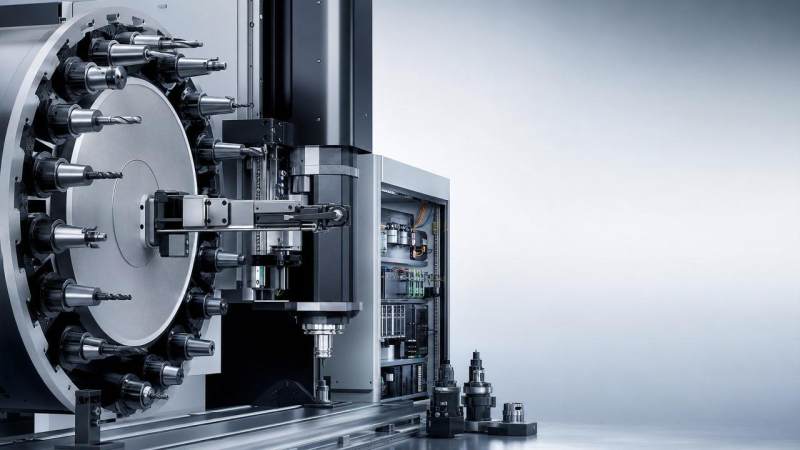
Choosing the right automatic tool changer OEM is not just about today’s spindle taper, magazine size, or cycle time.
For distributors, agents, and industrial resellers, the OEM decision determines how easily a machine can be upgraded, serviced, and profitably supported years later.
In practice, the best OEM choice is usually the one with the strongest upgrade logic, not simply the lowest entry price or the highest current specification.
That means evaluating controller architecture, interface openness, spare-parts continuity, mechanical standardization, field retrofit support, and the OEM’s channel discipline.
This article focuses on the factors that most affect future upgrades, helping channel partners reduce lifecycle risk while protecting margin and customer confidence.
What buyers really mean when they search for an automatic tool changer OEM
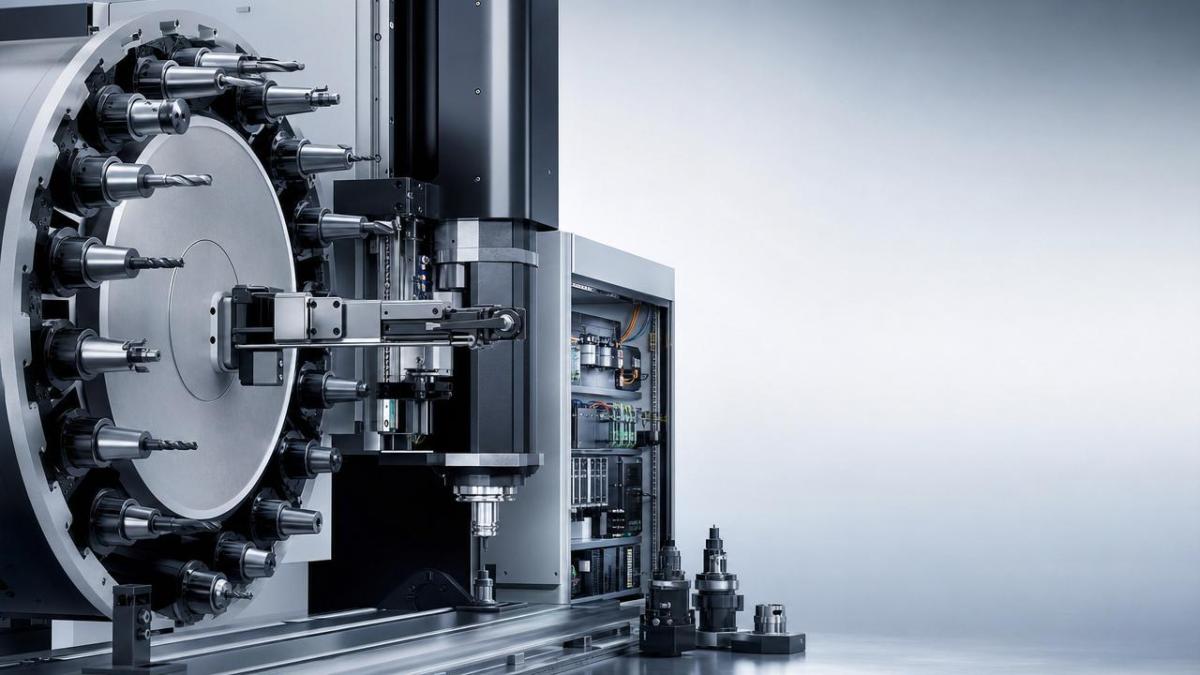
Searches around automatic tool changer OEM rarely reflect curiosity about one isolated component.
For channel partners, the real intent is usually commercial and technical at the same time: which supplier will remain workable as customer requirements evolve.
That includes faster tool-change demands, larger tool libraries, control retrofits, automation add-ons, spindle changes, and stricter uptime commitments.
Distributors also want to know which OEMs are easiest to represent in competitive bids without creating future service liabilities.
So the central question is not only “Can this ATC work now?” but “Will this OEM still make sense after the next upgrade cycle?”
Why future upgradeability matters more to distributors than to one-time machine buyers
An end user may focus on immediate production targets, but a distributor inherits the downstream consequences of the OEM selection.
If the automatic tool changer becomes difficult to expand, reconfigure, or integrate, the channel partner often absorbs the cost in support hours and reputation.
A rigid OEM platform can also block follow-on revenue from retrofit kits, spindle modernization, controller replacement, and maintenance contracts.
By contrast, an upgrade-friendly OEM creates repeat business through tool magazine expansion, arm replacement, servo updates, and integration with broader automation packages.
That is why distributors should treat ATC OEM selection as a lifecycle portfolio decision rather than a single equipment sale.
Controller compatibility is often the first make-or-break upgrade factor
Among all evaluation points, controller compatibility has the greatest influence on future flexibility.
An automatic tool changer may be mechanically sound, yet become difficult to upgrade if its logic depends on a closed or poorly documented control environment.
Channel partners should verify whether the OEM supports common industrial controllers, fieldbus standards, and clear I/O mapping for ATC sequences.
Compatibility with Fanuc, Siemens, Mitsubishi, Beckhoff, or other mainstream ecosystems can significantly reduce retrofit friction.
Equally important is whether the OEM can provide ladder logic support, alarm documentation, parameter maps, and troubleshooting workflows for third-party integration teams.
If those assets are missing, even a simple magazine expansion may become a long commissioning exercise that erodes project margin.
For upgrade planning, ask one practical question: can this ATC be re-used if the customer changes the machine control platform later?
If the answer is uncertain, the OEM may limit future retrofit opportunities more than expected.
Mechanical interface standardization determines how painless future retrofits will be
Mechanical design choices made at the OEM stage directly affect future upgrade routes.
Distributors should look closely at mounting dimensions, spindle interface assumptions, gripper geometry, carousel format, tool pot modularity, and guarding layout.
Standardized interfaces make it easier to increase tool capacity, replace damaged assemblies, or adapt the ATC to a revised machine configuration.
Proprietary mechanical arrangements can trap the customer in expensive custom fabrication when a production requirement changes.
This issue becomes especially important in mixed fleets, where end users expect similar spare strategies across multiple machine brands.
If an OEM’s design relies on custom castings, unique sensors, or one-off arm assemblies, lead times and future field modifications become harder to manage.
For channel partners, mechanical modularity is not just an engineering convenience; it is a long-term serviceability and profitability advantage.
Spare-parts continuity affects upgrade confidence as much as base machine quality
Many resellers underestimate how strongly spare-parts policy influences future upgrade decisions.
Customers are far more willing to approve ATC expansion or modernization when they trust that key components will remain available for years.
Evaluate whether the OEM uses globally sourced bearings, motors, sensors, pneumatics, and switches, or whether it depends on narrow proprietary sourcing.
An OEM with stable bill-of-material continuity gives distributors more confidence in quoting lifecycle support and service-level commitments.
It also reduces the risk that a future upgrade is delayed because one legacy component has become obsolete.
Ask the OEM for documented support windows, supersession policies, and interchangeability plans for discontinued parts.
The strongest suppliers can explain not only what parts they sell today, but how they manage migration when product generations change.
That discipline matters because upgrades often fail commercially when legacy support has already become fragile.
Software openness and diagnostic transparency separate scalable OEMs from restrictive ones
As ATC systems become more integrated with machine diagnostics, software architecture matters far more than many buyers assume.
A distributor should determine whether the OEM provides usable diagnostics, event histories, alarm trees, and remote support data for service teams.
When software access is overly restricted, minor upgrade projects can require repeated factory intervention, raising both cost and response time.
Transparent diagnostics make it easier to validate tool-change timing, identify misalignment, and troubleshoot sensor or actuator faults after a retrofit.
This is especially relevant when the customer later adds robot loading, MES connectivity, or predictive maintenance layers.
An upgrade-ready OEM does not need to expose every code layer, but it should offer enough documentation and diagnostic depth for authorized partners to work efficiently.
That capability improves first-time fix rates and strengthens the distributor’s position as a technically credible solution provider.
Magazine scalability and tool-format flexibility have direct resale and upsell value
One of the most common future requests from end users is increased tool capacity.
That makes magazine scalability a critical evaluation criterion when selecting an automatic tool changer OEM.
Can the same platform move from a compact tool count to a larger carousel or chain-type system without redesigning the entire machine envelope?
Can the OEM support different tool lengths, weights, and balancing requirements as the customer’s product mix becomes more demanding?
These details matter because many machine users evolve from simpler jobs toward higher-mix production with more frequent tool changes.
Distributors benefit when the original OEM platform supports that progression through modular expansion rather than complete replacement.
It creates a cleaner upsell path and lowers the barrier for customers who want more capability without buying a new machine.
Upgrade-friendly OEMs make channel economics stronger over the full lifecycle
For distributors and agents, the value of an OEM relationship is measured over multiple transactions, not one shipment.
An upgrade-friendly supplier helps generate service revenue, retrofit projects, application engineering work, and recurring spare-parts demand.
It also lowers non-billable support burdens because documentation, training, and integration pathways are already structured.
By contrast, a low-cost OEM with poor upgrade support can consume margin through emergency troubleshooting, custom adaptation, and difficult customer escalations.
That is why lifecycle economics should be built into supplier comparison from the beginning.
Instead of comparing only purchase price, channel partners should estimate commissioning effort, training hours, service frequency, and probable upgrade conversion rates.
Often, the stronger long-term business case comes from the OEM that enables the most predictable installed-base growth.
Questions distributors should ask before representing an automatic tool changer OEM
A disciplined qualification process helps separate presentation quality from real operational value.
Start by asking whether the OEM has documented retrofit case histories, not just standard product brochures.
Then confirm controller compatibility matrices, communication protocols, I/O requirements, and supported machine architectures.
Request detailed spare-parts lists with lead times, obsolescence policy, and recommended stocking plans for channel partners.
Review mechanical drawings to understand what can be replaced modularly and what requires custom rework.
Also ask who owns field commissioning responsibility when the ATC is integrated into a third-party machine or line.
Training depth matters too: can the OEM train distributor technicians to handle alignment, sequence testing, and common fault recovery independently?
Finally, clarify commercial protections such as territory policy, aftermarket support terms, and pricing consistency for future upgrade packages.
Common red flags that can limit future upgrades
Some warning signs appear early if you know where to look.
One red flag is a highly proprietary control approach with limited access to logic, alarms, or interface documentation.
Another is a mechanical design that uses custom components without clear replacement equivalents or migration plans.
Unclear spare-part lead times, inconsistent revision control, and weak serial-number traceability also increase lifecycle risk.
Be cautious if the OEM cannot explain how an installed ATC can be expanded, modernized, or adapted after initial deployment.
Similarly, if every future modification requires factory-only intervention, the distributor may struggle to build profitable local support capability.
These issues do not always rule out a supplier, but they should reduce confidence in long-term upgrade resilience.
How to position the right OEM choice to end customers
Distributors can create stronger sales conversations by translating OEM selection into business outcomes the customer already values.
Instead of focusing only on tool-change speed, explain how the chosen platform protects uptime, future automation plans, and maintenance predictability.
Show how controller compatibility can reduce retrofit costs if the plant standardizes controls later.
Highlight spare-parts continuity as an insurance policy against unexpected downtime or forced redesign.
Where possible, frame magazine scalability as a path to higher product mix, longer unattended running, or reduced setup disruption.
This approach helps customers understand that selecting an automatic tool changer OEM is not a narrow component decision.
It is a strategic decision about how much flexibility they preserve for the next phase of production growth.
Conclusion: the best automatic tool changer OEM is the one that keeps options open
For channel partners, the strongest OEM choice is rarely defined by current specifications alone.
The suppliers that create the most value are those with open integration logic, standardized interfaces, scalable magazine options, and credible long-term parts support.
Those factors shape whether future upgrades become profitable opportunities or costly complications.
When evaluating an automatic tool changer OEM, focus on controller compatibility, modular mechanics, software diagnostics, spare-parts continuity, and channel support discipline.
That framework will help distributors, agents, and resellers build a more resilient installed base while offering customers solutions that remain competitive over time.
In a market where industrial buyers increasingly expect adaptability, upgradeability is not an added feature; it is a core selection criterion.
Recommended News
 Where machine shop digital transformation delivers the fastest paybackMachine shop digital transformation delivers faster payback by reducing downtime, setup delays, quality risks, and capacity constraints with focused, measurable workflows.
 When a semiconductor manufacturing solutions provider can shorten process ramp-upA semiconductor manufacturing solutions provider can shorten ramp-up through validated hardware, change control, field support, and resilient supply chains.
 How to evaluate CNC tooling suppliers in Europe for repeatable precisionCNC tooling Europe: learn how to evaluate suppliers for repeatable precision, stable tool life, application support, traceability, and resilient delivery.
 When does manufacturing competitiveness consulting pay off for a plant?Manufacturing competitiveness consulting pays off when plants face costly constraints, capital decisions, quality risks, or supply disruptions. Learn how to build a measurable ROI case.
 How to order acoustic ceiling tiles in bulk without overbuyingAcoustic ceiling tiles bulk buying made simple: calculate accurate quantities, control waste, secure spare stock, and plan phased deliveries to avoid costly overordering.
 Which laboratory microscopes fit routine quality inspection work?Laboratory microscopes for routine quality inspection: compare stereo, digital, compound, and measuring options to improve defect detection, documentation, and throughput.
 Can AI for multi axis machining reduce errors in complex toolpaths?AI for multi axis machining helps reduce complex toolpath errors through smarter collision detection, kinematic analysis, post validation, and machine-data insights. Learn how to improve precision.
 How seamless steel pipes are checked for wall-thickness consistencySeamlesssteelpipes wall-thickness checks explained: learn how ultrasonic scanning, calibration, and tolerance control ensure reliable, pressure-ready pipe quality.
 When a horizontal boring machine for metalworking improves large-part setupHorizontal boring machine for metalworking: learn how stable datums, rotary indexing, and rigid fixturing improve large-part accuracy and setup efficiency.
 What the MTTF standard for CNC means for machine reliabilityMTTF standard for CNC explained: learn how failure definitions, duty cycles, MTTR, and real-world data shape machine reliability and uptime.
 When does company formation offshore reduce cross-border tax risk?Companyformationoffshore can reduce cross-border tax risk when substance, governance, transfer pricing, and supply-chain roles align. Learn the key tests.
 How to read a measuring tape accurately for repeatable cutsMeasuringtape guide for accurate, repeatable cuts: master markings, hook movement, reference edges, kerf control, and stop-block setup.
 How to assess a CNC cutting tools manufacturer before orderingAssess a CNC cutting tools manufacturer with confidence: compare quality control, application support, trial results, supply reliability, and total machining cost before ordering.
 How often should scaffolding be inspected on active job sites?Scaffolding inspection guidance for active job sites: learn when to inspect, key safety triggers, compliance intervals, and practical controls to prevent incidents.
 What to verify when sourcing precision machining tools in EuropePrecision machining tools Europe sourcing guide: verify accuracy, ISO compliance, traceability, service coverage, and delivery resilience to reduce risk and lifecycle costs.
 When electronics require precision manufacturing at micron tolerancesPrecision manufacturing solutions for electronics deliver micron-level control, reliable inspection, and scalable quality for critical housings, thermal parts, and complex assemblies.
 When do cabletrays need corrosion protection in industrial facilities?Cabletrays need corrosion protection when exposed to moisture, chemicals, salt, washdown, or condensation. Learn how to select durable materials and protect critical industrial routes.
 What suppliers must prove for manufacturing standards compliance in Southeast AsiaManufacturing standards compliance Southeast Asia: learn what suppliers must prove, from traceable materials and calibrated tools to controlled processes, safety, and shipment records.
 What to verify in a fluid control manufacturer's quality systemFluid control manufacturer quality checks: verify traceability, testing, calibration, document control, and corrective actions to reduce risk.
 When do smart device manufacturing solutions reduce assembly errors?Smart device manufacturing solutions reduce assembly errors with closed-loop controls, vision inspection, torque verification, and traceable process data. Learn what drives reliable production.
 Import trends reshaping precision tooling supply in 2026Import trends in 2026 are reshaping precision tooling supply. Discover how to reduce landed risk, strengthen sourcing resilience, and protect production performance.








Search News
Popular Tags