
Carbide Inserts Wholesale: Where Cost Savings Often Disappear
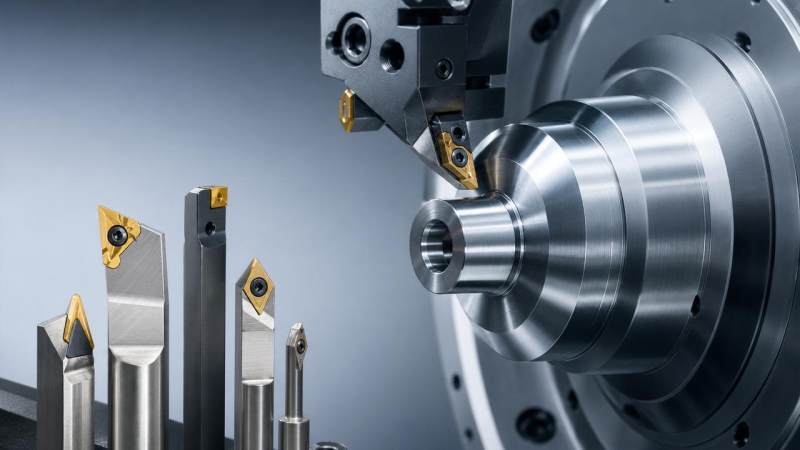
Carbide inserts wholesale can look like a direct route to lower pricing, yet the lowest quote rarely delivers the lowest machining cost. Hidden losses often emerge through unstable quality, premature wear, delayed replenishment, and avoidable downtime.
In precision manufacturing, insert performance affects cycle time, surface finish, scrap rate, spindle utilization, and maintenance planning. That is why carbide inserts wholesale should be judged by total operational value, not only by piece price.
This guide explains where cost savings disappear, how to compare offers, and which signals matter before committing to a bulk purchase strategy.
Why does carbide inserts wholesale look cheaper but cost more later?
The first trap is price isolation. A lower insert cost can be wiped out by shorter tool life within a few production shifts.
When carbide inserts wholesale lots vary in grain structure, coating adhesion, or edge preparation, cutting behavior becomes inconsistent. That inconsistency creates unstable processes and hidden expense.
Typical loss points include:
- More frequent tool changes
- Unexpected chipping during roughing or interrupted cuts
- Poor dimensional repeatability
- Higher scrap and rework rates
- Machine stoppages while replacing failed inserts
- Extra labor for process adjustment
In many operations, a few minutes of unplanned downtime costs more than the nominal savings from a large carbide inserts wholesale order.
Another issue is overbuying. Wholesale volume discounts may encourage inventory far beyond actual consumption. If applications change, stock becomes slow-moving capital.
This is especially risky when machining programs shift between stainless steel, cast iron, hardened steel, and exotic alloys. A cheaper insert is expensive when it sits unused.
What hidden quality variables most often erase carbide inserts wholesale savings?
Not all carbide grades perform equally, even when dimensions look identical. Small material and process differences can change performance dramatically.
1. Substrate quality
The carbide substrate determines toughness, hardness, and thermal resistance. Poor control here often causes edge collapse, notch wear, or unpredictable fracture.
2. Coating consistency
CVD and PVD coatings must be uniform and well bonded. Inconsistent coating thickness can reduce wear resistance and increase friction during cutting.
3. Edge preparation
A precise hone or chamfer supports stable chip formation. Weak edge preparation can ruin insert life in demanding turning, milling, or grooving conditions.
4. Dimensional tolerance
Tight insert tolerance supports repeatable indexing and stable offsets. Poor tolerance introduces variation, especially in high-precision finishing operations.
5. Application matching
A low-cost general-purpose grade may fail in high-heat alloys or interrupted cuts. Carbide inserts wholesale only pays off when grade and geometry match the job.
The lesson is simple. Visual similarity does not guarantee equal machining value.
How should wholesale buyers evaluate total cost instead of unit price?
The most reliable method is cost per machined part, not cost per insert. This shifts attention from purchase price to real production economics.
A practical evaluation should include these metrics:
- Average tool life per cutting edge
- Parts produced before indexing
- Cycle time impact
- Surface finish consistency
- Downtime caused by insert change or failure
- Scrap, rework, and offset correction frequency
- Lead time reliability and emergency availability
If a lower-priced insert lasts 30% less and increases stoppages, the apparent carbide inserts wholesale savings disappear quickly.
Testing matters. Before a broad rollout, compare two or three insert options under controlled feed, speed, coolant, material, and machine conditions.
A short test should document:
- Wear pattern at fixed intervals
- Edge failure mode
- Part count per edge
- Operator interventions needed
- Final cost per acceptable part
This evidence-based approach fits the broader industrial discipline promoted by data-driven engineering platforms such as G-PME, where component decisions must align with operational integrity.
Which supply-chain risks make carbide inserts wholesale more expensive over time?
Wholesale buying is not only a tooling question. It is also a supply continuity question.
A supplier may offer aggressive bulk pricing but lack stable production control, consistent raw materials, or dependable export logistics. That gap creates long-term risk.
Common supply-chain issues include:
- Batch-to-batch performance variation
- Long or unpredictable lead times
- Grade substitution without clear notice
- Weak traceability documentation
- Limited technical support after delivery
For production systems running tight schedules, delayed inserts can stop machines, delay deliveries, and force costly emergency sourcing.
A reliable carbide inserts wholesale partner should provide stable specifications, lot traceability, application guidance, and realistic inventory commitments.
Supply resilience is part of tooling value. Cheap inserts with uncertain replenishment are not low-cost assets.
How can buyers compare carbide inserts wholesale offers more accurately?
A structured comparison prevents decisions based only on catalog claims or quotation totals.
When reviewing carbide inserts wholesale offers, request evidence instead of relying on generic compatibility claims.
Useful questions include:
- Is the insert optimized for steel, stainless, cast iron, or superalloys?
- What are the typical wear modes in similar applications?
- Can batch traceability and inspection records be supplied?
- What support exists if field performance deviates?
What mistakes commonly undermine a carbide inserts wholesale strategy?
Several recurring mistakes turn a valid sourcing idea into a cost problem.
Mistake 1: Buying by discount tier alone
A bigger order is not better if usage patterns are uncertain or insert life is unstable.
Mistake 2: Ignoring machine and material differences
An insert that works on one machine may fail on another due to rigidity, coolant delivery, or spindle behavior.
Mistake 3: Skipping controlled trials
Without side-by-side data, true carbide inserts wholesale value remains guesswork.
Mistake 4: Underestimating support quality
Fast technical feedback can save more money than a lower quoted price.
Mistake 5: Treating inserts as isolated consumables
Inserts influence throughput, quality assurance, inventory planning, and line uptime. They are operational levers, not simple commodities.
FAQ: how should carbide inserts wholesale decisions be summarized?
Carbide inserts wholesale can deliver genuine savings, but only when performance, traceability, and replenishment discipline support the production environment.
The strongest decisions come from testing, cost-per-part analysis, and supplier verification. Price matters, but unsupported price reductions often create larger losses elsewhere.
For the next evaluation cycle, build a comparison sheet, validate insert behavior under real cutting conditions, and treat carbide inserts wholesale as an operational strategy rather than a simple purchasing shortcut.
Recommended News
 When does manufacturing competitiveness consulting pay off for a plant?Manufacturing competitiveness consulting pays off when plants face costly constraints, capital decisions, quality risks, or supply disruptions. Learn how to build a measurable ROI case.
 How to order acoustic ceiling tiles in bulk without overbuyingAcoustic ceiling tiles bulk buying made simple: calculate accurate quantities, control waste, secure spare stock, and plan phased deliveries to avoid costly overordering.
 Which laboratory microscopes fit routine quality inspection work?Laboratory microscopes for routine quality inspection: compare stereo, digital, compound, and measuring options to improve defect detection, documentation, and throughput.
 Can AI for multi axis machining reduce errors in complex toolpaths?AI for multi axis machining helps reduce complex toolpath errors through smarter collision detection, kinematic analysis, post validation, and machine-data insights. Learn how to improve precision.
 How seamless steel pipes are checked for wall-thickness consistencySeamlesssteelpipes wall-thickness checks explained: learn how ultrasonic scanning, calibration, and tolerance control ensure reliable, pressure-ready pipe quality.
 When a horizontal boring machine for metalworking improves large-part setupHorizontal boring machine for metalworking: learn how stable datums, rotary indexing, and rigid fixturing improve large-part accuracy and setup efficiency.
 What the MTTF standard for CNC means for machine reliabilityMTTF standard for CNC explained: learn how failure definitions, duty cycles, MTTR, and real-world data shape machine reliability and uptime.
 When does company formation offshore reduce cross-border tax risk?Companyformationoffshore can reduce cross-border tax risk when substance, governance, transfer pricing, and supply-chain roles align. Learn the key tests.
 How to read a measuring tape accurately for repeatable cutsMeasuringtape guide for accurate, repeatable cuts: master markings, hook movement, reference edges, kerf control, and stop-block setup.
 How to assess a CNC cutting tools manufacturer before orderingAssess a CNC cutting tools manufacturer with confidence: compare quality control, application support, trial results, supply reliability, and total machining cost before ordering.
 How often should scaffolding be inspected on active job sites?Scaffolding inspection guidance for active job sites: learn when to inspect, key safety triggers, compliance intervals, and practical controls to prevent incidents.
 What to verify when sourcing precision machining tools in EuropePrecision machining tools Europe sourcing guide: verify accuracy, ISO compliance, traceability, service coverage, and delivery resilience to reduce risk and lifecycle costs.
 When electronics require precision manufacturing at micron tolerancesPrecision manufacturing solutions for electronics deliver micron-level control, reliable inspection, and scalable quality for critical housings, thermal parts, and complex assemblies.
 When do cabletrays need corrosion protection in industrial facilities?Cabletrays need corrosion protection when exposed to moisture, chemicals, salt, washdown, or condensation. Learn how to select durable materials and protect critical industrial routes.
 What suppliers must prove for manufacturing standards compliance in Southeast AsiaManufacturing standards compliance Southeast Asia: learn what suppliers must prove, from traceable materials and calibrated tools to controlled processes, safety, and shipment records.
 What to verify in a fluid control manufacturer's quality systemFluid control manufacturer quality checks: verify traceability, testing, calibration, document control, and corrective actions to reduce risk.
 When do smart device manufacturing solutions reduce assembly errors?Smart device manufacturing solutions reduce assembly errors with closed-loop controls, vision inspection, torque verification, and traceable process data. Learn what drives reliable production.
 Import trends reshaping precision tooling supply in 2026Import trends in 2026 are reshaping precision tooling supply. Discover how to reduce landed risk, strengthen sourcing resilience, and protect production performance.
 Choosing carbide end mills for stainless steel without edge chippingCarbide end mills for stainless steel: learn how to prevent edge chipping with the right substrate, geometry, coating, coolant, and stable milling parameters.
 What contract manufacturing support should cover before sourcingIndustrial procurement support for contract manufacturing: learn what to verify before sourcing, from DFM and traceability to quality, capacity, cost control, and compliance.
 When integrated precision manufacturing solutions reduce launch delaysIntegrated precision manufacturing solutions help industrial teams prevent launch delays by aligning design, sourcing, machining, sealing, testing, and supply-chain readiness.













Search News
Popular Tags