
What defines a reliable precision milling center factory
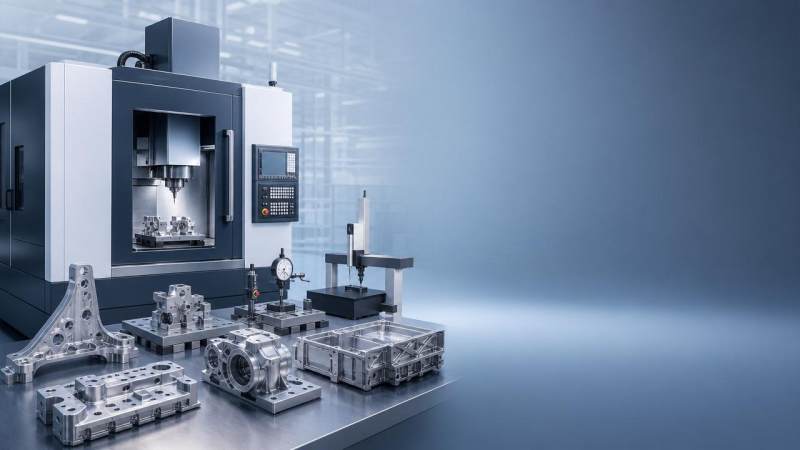
A reliable precision milling center factory is defined not only by machine capability, but by its control of tolerance, material consistency, process validation, and delivery stability. In complex industrial supply chains, the real value of a precision milling center factory appears when difficult drawings, strict standards, and repeat orders must be executed without quality drift.
Within the broader manufacturing landscape, selection standards vary by application. A medical part, an automation fixture, and an aerospace housing do not require the same validation depth. Understanding those differences helps identify whether a precision milling center factory can truly support long-term production performance.
Why application context changes how a precision milling center factory should be evaluated
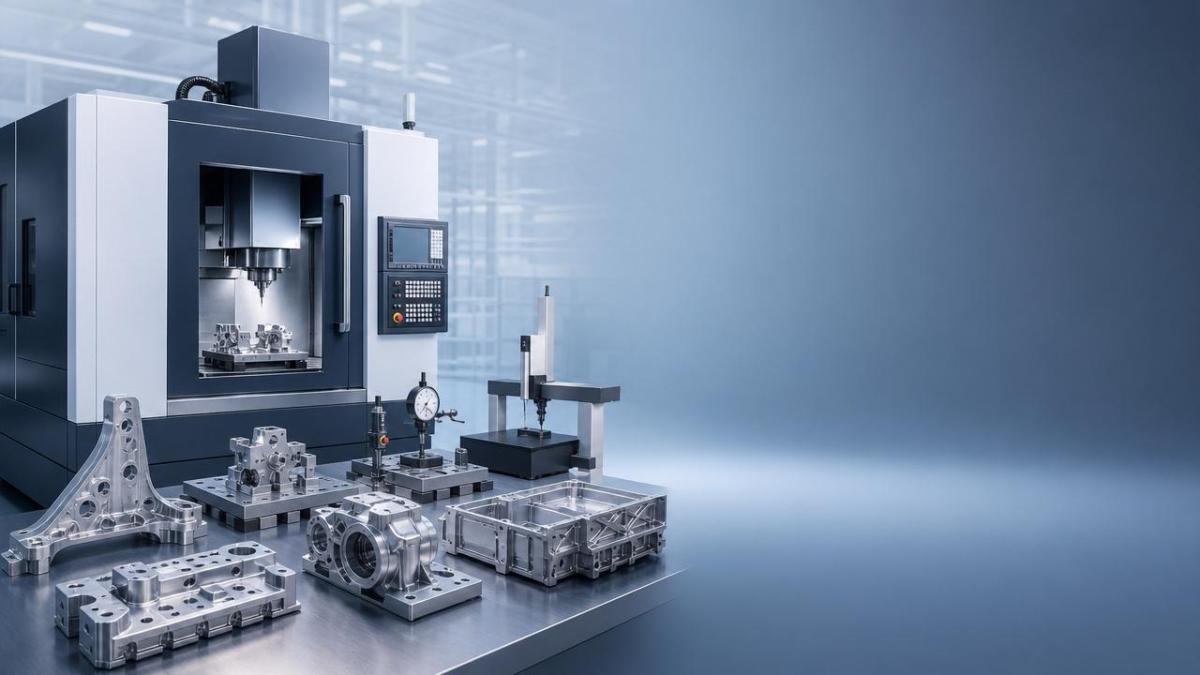
No single checklist fits every project. A reliable precision milling center factory must match process capability with actual service conditions, tolerance stack-up, material behavior, and downstream assembly risks.
This is especially true in the comprehensive industrial sector, where parts move across robotics, energy systems, transport equipment, electronics, and process machinery. Each scenario changes what “reliable” really means.
For example, one project may prioritize micron-level consistency. Another may value corrosion resistance, machining of difficult alloys, or rapid engineering feedback. A strong precision milling center factory can explain these tradeoffs with evidence.
Scenario 1: Tight-tolerance assemblies demand verified process control
In precision assemblies, dimensional error rarely stays isolated. It multiplies through mating parts, bearing fits, sealing faces, and alignment features. Here, a precision milling center factory must prove repeatability, not just one-time accuracy.
Key judgment points include machine thermal stability, tool wear compensation, fixture rigidity, in-process measurement, and final inspection traceability. Without those controls, high nominal capability can still produce unstable output.
What to confirm in this scenario
- Documented tolerance capability for critical features
- CMM reports linked to drawing revision and batch records
- Process FAI, control plans, and measurement system verification
- Stable SPC methods for repetitive production runs
A reliable precision milling center factory should also identify which dimensions are function-critical. That engineering awareness separates true manufacturing control from simple print-following execution.
Scenario 2: Difficult materials require more than advanced milling equipment
Many buyers assume machine count equals capability. In reality, machining titanium, stainless steel, hardened tool steel, or high-performance aluminum depends equally on tooling strategy, cooling methods, feed optimization, and metallurgical understanding.
A qualified precision milling center factory should understand burr control, heat input, residual stress, and surface integrity. These issues directly affect fatigue life, coating adhesion, sealing performance, and post-machining stability.
Reliable signs in difficult-material projects
- Material certificates and positive batch traceability
- Controlled cutting data for each material family
- Experience with distortion-sensitive geometries
- Defined deburring, cleaning, and finishing protocols
The best precision milling center factory will discuss why one setup route protects geometry better than another. Technical reasoning matters more than broad claims about “high precision.”
Scenario 3: Prototype-to-production programs need engineering responsiveness
Early-stage parts often change quickly. Drawings evolve, tolerances tighten, and hidden manufacturability issues emerge after first article review. In this environment, a precision milling center factory must offer practical DFM feedback.
Reliable support includes fixture suggestions, corner radius adjustments, tool access review, datum strategy improvement, and cost-risk balancing. Fast replies matter, but informed replies matter more.
A responsive precision milling center factory reduces launch delays by preventing revision loops. That is especially valuable for industrial equipment programs where one delayed component can affect a larger assembly timeline.
Questions that reveal engineering strength
- Can the team identify nonfunctional tight tolerances?
- Can they recommend setup changes to reduce risk?
- Can they explain cost impact by feature type?
- Can they support revision-controlled documentation?
Scenario 4: Repeat production depends on delivery discipline and quality consistency
For recurring orders, reliability means sustained output under schedule pressure. A precision milling center factory must show capacity planning, preventive maintenance, operator discipline, and supplier control for raw materials and outside processes.
Late deliveries, mixed documentation, or inconsistent finishing can disrupt assembly lines just as much as dimensional defects. Therefore, operational stability is a core part of factory reliability.
Operational indicators worth checking
- On-time delivery history across similar batch sizes
- Backup equipment for critical machining operations
- Supplier qualification for heat treatment or coating partners
- Lot control, packaging standards, and shipping protection
How needs differ across common industrial scenarios
Different applications place different pressure on a precision milling center factory. The comparison below helps align evaluation criteria with actual project conditions.
Practical ways to match a precision milling center factory to the right scenario
A reliable decision process should test claims against evidence. Marketing language has limited value unless it connects to measurable performance.
- Request sample inspection records for comparable parts
- Review material and process traceability workflows
- Check how engineering questions are handled before quoting
- Verify standards familiarity, including ISO, DIN, ASME, or JIS
- Confirm whether external finishing suppliers are controlled
- Assess response plans for nonconformance and corrective action
In broader engineering ecosystems, institutions such as G-PME highlight why cross-functional verification matters. Precision machining quality influences fastening fit, fluid sealing, mold geometry, and overall equipment uptime.
Common mistakes when judging a precision milling center factory
A frequent mistake is focusing only on machine brand or spindle count. Equipment matters, but process discipline, people, and documentation often determine final reliability.
Another mistake is treating prototype success as proof of mass-production readiness. A precision milling center factory may produce excellent samples, yet struggle with repeatability, scheduling, or lot-level traceability.
It is also risky to ignore finishing and post-processing. Heat treatment, anodizing, plating, passivation, and cleaning can alter dimensions, surfaces, or corrosion resistance. Reliable factories control these interfaces carefully.
Finally, some evaluations overlook communication quality. If technical clarifications are vague during quotation, future issue resolution may become slower and more expensive.
What ultimately defines a reliable precision milling center factory
A reliable precision milling center factory combines machining capability with system-level control. That includes validated processes, traceable quality data, material discipline, engineering responsiveness, and stable delivery performance.
The right factory is not simply the one with advanced equipment. It is the one that fits the scenario, understands functional risk, and consistently converts design intent into repeatable manufactured reality.
To move forward, compare potential partners using one real part family, one critical tolerance set, and one documented quality workflow. That direct evaluation will reveal whether a precision milling center factory can support both current production and future industrial scaling.
Recommended News
 What to verify before using supplier sourcing solutions in EuropeSupplier sourcing solutions Europe: verify capabilities, compliance, traceability, total cost, and supply resilience before choosing reliable industrial partners.
 When smart fabrics are reliable enough for industrial wearablesSmart fabrics for industrial wearables: learn how to validate durability, signal quality, cleaning resilience, and safe failure performance before deployment.
 How supply chain management for exporters reduces customs delaysSupply chain management for exporters helps prevent customs delays with accurate data, origin checks, importer readiness, and proactive shipment controls. Explore practical strategies now.
 What to verify before approving an OEM electronics supplierOEM electronics supplier approval checklist: verify BOM control, traceability, testing, sourcing risk, capacity, and commercial terms before committing to volume production.
 When do CNC-machined precision components require five-axis milling?Precision components CNC machined with five-axis milling deliver better access, tighter datum control, and lower setup risk. Learn when five-axis machining is the smart choice.
 What should a restaurant POS system handle during a lunch rush?restaurantPOSsystems keep lunch rushes moving with fast ordering, smart kitchen routing, flexible payments, live inventory, and reliable service controls.
 How CNC controller cycle time speed affects machining throughputCNC controller cycle time speed can raise machining throughput by sustaining feed rates on complex toolpaths. Learn how to optimize CAM, look-ahead, and machine dynamics.
 When a 4 axis vertical machining center is the better fit than 3-axisDiscover when a 4 axis vertical machining center outperforms 3-axis machining—reduce setups, improve datum control, and boost efficiency for complex multi-face parts.
 When industrial fasteners bolts need traceable material certificationIndustrial fasteners bolts need traceable material certification for critical applications. Learn what QA teams should verify to reduce risk and ensure compliance.
 How to size pump systems for cooling circuits for stable flow ratesPump systems for cooling circuits: learn how to match flow, total dynamic head, NPSH, and controls for reliable, energy-efficient cooling performance.
 When does software as a service reduce CNC data management costs?Software as a service can lower CNC data management costs by reducing IT overhead, manual reporting, and disconnected records. Discover when SaaS delivers measurable savings.
 CNC investment trends 2026: are automation upgrades taking priority?CNC investment trends 2026 reveal why automation upgrades are reshaping capacity plans. Compare robots, pallet systems, and new machines for smarter CNC growth.
 How to size high pressure pumps for stable chemical injection ratesHigh pressure pumps sizing guide for stable chemical injection rates—learn how to balance flow range, pressure, suction conditions, materials, and controls for reliable dosing.
 When organic chemicals are suitable feedstocks for synthetic lubricantsOrganic chemicals can unlock high-performance synthetic lubricants. Learn how purity, stability, compatibility, and supply control shape reliable industrial formulations.
 What machine tool market size reveals about capital spending cyclesMachine tool market size reveals capital spending cycles through order mix, automation, replacement demand, and capacity signals. Discover what drives smarter investment decisions.
 What causes solar inverters to trip repeatedly after installationSolar inverters tripping repeatedly? Discover key causes, from grid voltage and DC faults to wiring, settings, heat, and practical troubleshooting steps.
 How a tool life calculation chart improves cutting parameter decisionsTool life calculation chart insights help optimize cutting speed, feed, and depth for predictable tool changes, better part quality, and lower machining costs.
 What to check before choosing an industrial lubricating oils factoryIndustrial lubricating oils factory selection guide: compare quality control, formulation fit, traceability, technical support, and total cost to reduce downtime risks.
 Where machine shop digital transformation delivers the fastest paybackMachine shop digital transformation delivers faster payback by reducing downtime, setup delays, quality risks, and capacity constraints with focused, measurable workflows.
 When a semiconductor manufacturing solutions provider can shorten process ramp-upA semiconductor manufacturing solutions provider can shorten ramp-up through validated hardware, change control, field support, and resilient supply chains.
 How to evaluate CNC tooling suppliers in Europe for repeatable precisionCNC tooling Europe: learn how to evaluate suppliers for repeatable precision, stable tool life, application support, traceability, and resilient delivery.







Search News
Popular Tags