
CNC cutting tools wholesale mistakes that raise tool costs

In cnc cutting tools wholesale, the biggest cost hikes often come from avoidable buying mistakes rather than tool prices alone. Many operators focus only on unit cost, while overlooking tool life, material match, coating selection, and supplier consistency. This article highlights the wholesale errors that quietly increase machining costs and shows how smarter sourcing decisions can protect performance, uptime, and long-term value.
For machine operators, line supervisors, and workshop users, tool purchasing is not just a procurement issue. It directly affects spindle load, surface finish, cycle time, tool change frequency, scrap rate, and machine availability over every 8-hour, 12-hour, or 24-hour production window.
In many factories, a low quoted price per insert or end mill looks attractive at order stage, yet total machining cost rises within 2 to 6 weeks. The reason is simple: poor wholesale decisions multiply hidden losses across materials, setups, and batch consistency.
From the perspective of G-PME, where machining intelligence is linked with standards, uptime, and supply resilience, cnc cutting tools wholesale should be evaluated as a performance system. The right choice must balance geometry, substrate, coating, batch traceability, delivery stability, and application fit.
Why Tool Costs Rise Even When the Wholesale Price Looks Low

The first major mistake in cnc cutting tools wholesale is treating purchase price as the main cost indicator. In real machining, the cost per finished part matters more than the cost per tool. A tool that is 12% cheaper but lasts 35% less can quickly become the more expensive option.
Operators usually feel this problem before procurement teams do. They see unstable chip control, edge chipping after 20 to 30 parts, rising vibration at higher feed rates, and frequent tool offsets. These are not minor shop-floor inconveniences; they are cost signals.
Mistake 1: Buying by unit price instead of cost per part
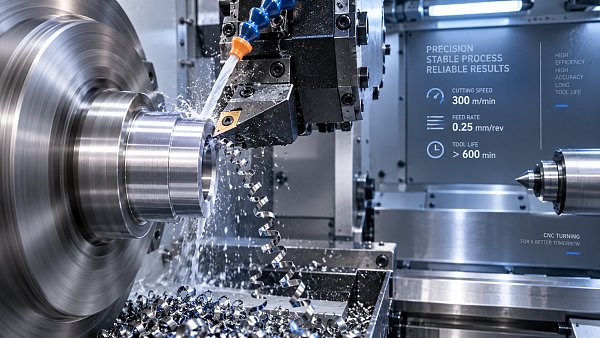
A carbide insert priced lower by a small margin may seem efficient in bulk buying. However, if tool life drops from 60 minutes to 40 minutes, or if the insert requires 2 extra stoppages per shift, the operator loses productive cutting time and increases machine idle minutes.
For medium-volume production, even a 5-minute unplanned stoppage repeated 4 times per day adds up to 20 minutes lost daily. Over 22 working days, that becomes 440 minutes, or more than 7 hours of machine time sacrificed because of a poor wholesale choice.
Mistake 2: Ignoring workpiece material compatibility
Not all cutting tools perform equally across P, M, K, N, S, and H material groups. A wholesale order that mixes general-purpose tools into stainless steel, hardened steel, cast iron, and aluminum applications often creates premature wear, built-up edge, or thermal cracking.
For example, operators machining 304 stainless steel often need tougher edge preparation and heat-resistant coating behavior than those running 6061 aluminum. Using one “universal” solution for both may look efficient in stock control, but it typically reduces process reliability.
Mistake 3: Overlooking coating and substrate selection
In cnc cutting tools wholesale, coating mistakes are common because the visual difference between tools is small while performance differences are large. TiN, TiAlN, AlTiN, and uncoated grades behave differently under dry cutting, wet machining, and high-temperature conditions.
If an operator runs hardened components at elevated cutting speeds, an unsuitable coating can lead to crater wear and edge breakdown much earlier than expected. The resulting scrap, rework, and setup correction often cost far more than the initial discount gained at buying stage.
The table below shows how seemingly small wholesale decisions can create larger operational costs on the shop floor.
The key takeaway is clear: in cnc cutting tools wholesale, visible savings often sit in the 5% to 15% range, while hidden losses can reach 20% to 40% once machining performance is measured by actual output.
The Most Common Wholesale Mistakes Operators Should Watch For
Operators are usually the first to detect whether wholesale tool decisions are helping or hurting production. They notice excessive burrs, noisy cuts, offset drift, and inconsistent wear patterns long before monthly cost reports are reviewed. That is why user feedback should be part of every wholesale evaluation cycle.
Mistake 4: Ordering bulk volumes without batch validation
Large-volume buying can reduce freight cost per unit, but bulk ordering without a trial batch is risky. A practical validation run of 20 to 50 pieces, or 1 to 2 weeks of live production testing, helps confirm actual wear behavior before committing to a larger order.
When batch consistency is poor, operators often compensate manually by lowering speed, reducing feed, or increasing coolant use. Those adjustments may protect parts temporarily, but they reduce throughput and erase the original wholesale saving.
Mistake 5: Neglecting holder, machine, and setup compatibility
Even the right insert grade can underperform if the holder system, runout control, or machine rigidity is ignored. For end milling, runout beyond 0.01 mm to 0.02 mm can overload one flute. In turning, poor clamping can accelerate edge fracture during interrupted cuts.
In cnc cutting tools wholesale, buying tools without checking the full application chain creates mismatch costs. Operators then face tool pullout, chatter, heat concentration, or poor chip evacuation, especially on deep cavities, thin-wall parts, or unstable fixturing.
Checklist before approving a wholesale tool batch
- Confirm workpiece group: carbon steel, stainless, cast iron, aluminum, superalloy, or hardened steel.
- Verify spindle speed range, coolant method, and toolholder interface.
- Check nose radius, edge geometry, flute design, and chipbreaker suitability.
- Review expected life target, such as 45, 60, or 90 cutting minutes.
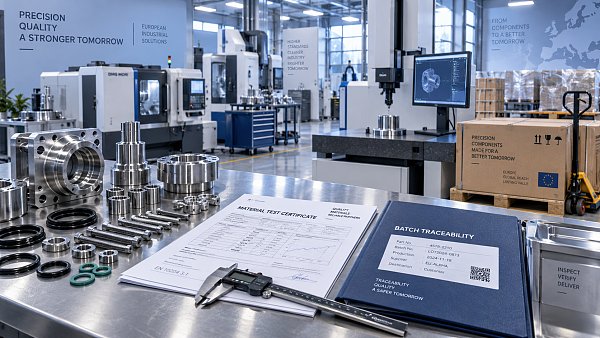
- Request traceability by lot, especially for repeat orders across 3 to 6 months.
Mistake 6: Choosing suppliers with unstable delivery and weak technical support
A supplier is not only a source of tools. In B2B machining, the supplier also influences lead time, replacement speed, technical troubleshooting, and consistency of future lots. A delayed shipment of 7 to 10 days can interrupt planned output even if the tool itself is acceptable.
Technical support matters just as much. When wear patterns shift from flank wear to notch wear, operators need a response that goes beyond “reduce speed.” Good support should review material hardness, DOC, feed per tooth, coolant condition, and machine stability.
The following table helps operators compare supplier quality factors beyond price alone.
A reliable cnc cutting tools wholesale partner reduces more than purchase risk. It also lowers downtime exposure, protects scheduling accuracy, and gives operators a faster route to process correction when problems appear.
How to Source CNC Cutting Tools Wholesale Without Inflating Total Machining Cost
A smarter sourcing method starts with application mapping, not catalog browsing. Operators and purchasing teams should identify the top 3 to 5 machining jobs by volume, material, and tolerance demand. This usually reveals where tool optimization can save the most time and money.
Build purchasing around machining conditions
Separate tools by operation type: roughing, semi-finishing, finishing, drilling, threading, and grooving. A wholesale package that combines all of them under one generic specification often fails. Each process has different chip load, edge preparation, and thermal resistance requirements.
For example, roughing may prioritize toughness and edge strength, while finishing may need sharper geometry and tighter dimensional repeatability. The best cnc cutting tools wholesale strategy is therefore segmented, not one-size-fits-all.
Use a 4-step validation process
- Define target metrics: tool life, surface finish, part count, and cycle time.
- Run side-by-side trials on 2 or 3 candidate tools under the same setup.
- Record wear mode after a fixed number of parts or cutting minutes.
- Approve bulk purchase only after repeatability is confirmed across at least 2 production runs.
This simple 4-step method protects users from buying based on assumptions. It also gives procurement teams evidence for selecting the right supplier, grade, and order volume instead of chasing the lowest quotation.
Track the numbers that actually matter
To control cost, monitor at least 6 indicators: cost per part, tool life, number of tool changes per shift, machine stoppage time, scrap percentage, and lead time reliability. These metrics create a clearer picture than price per box alone.
Where practical, operators should log these figures weekly for 4 to 8 weeks after a new wholesale order is introduced. That period is long enough to reveal whether the tools are stable across normal variation in material lots and machine loading.
A practical sourcing model for users and purchasing teams
G-PME recommends aligning shop-floor feedback with sourcing decisions. Operators should report wear patterns and cutting behavior, while buyers compare delivery performance, replacement support, and lot traceability. This reduces the disconnect between ordering logic and machining reality.
In high-precision production, especially where tolerance drift, finish quality, and machine uptime are tightly controlled, cnc cutting tools wholesale should be managed as a technical and commercial system at the same time.
Frequently Overlooked Questions in CNC Cutting Tools Wholesale
Many factories ask the wrong question first. Instead of asking “What is the cheapest insert?” they should ask “What tool delivers stable output across the next 1,000 to 10,000 parts?” That shift in thinking changes sourcing quality immediately.
Should small workshops also buy wholesale?
Yes, but with control. Small workshops should avoid overstocking. A better approach is to standardize high-use tools, validate 2 or 3 key sizes, and order in moderate quantities that match 30 to 60 days of production demand.
Is a premium tool always the better choice?
Not always. Premium tools only justify their price when the application uses their performance potential. On low-speed, low-volume work, a mid-range tool with consistent quality may produce a better cost-per-part result than an expensive option designed for aggressive cutting.
How often should wholesale tool performance be reviewed?
A practical review cycle is every 1 to 3 months, depending on production intensity. Review sooner if material type changes, if tool wear shifts unexpectedly, or if scrap and tool change frequency increase over 10% from the normal baseline.
The most expensive mistakes in cnc cutting tools wholesale rarely come from the tool catalog alone. They come from poor application matching, untested bulk orders, unstable supplier performance, and weak coordination between operators and buyers.
When wholesale sourcing is tied to material class, machine condition, tool life targets, and delivery reliability, operators gain more stable cutting, fewer interruptions, and better cost control over time. That is where real value is created in modern machining environments.
If you want a more structured way to evaluate cnc cutting tools wholesale for your production needs, G-PME can help you compare technical fit, sourcing risk, and operational impact. Contact us today to discuss your application, request a tailored recommendation, or learn more solutions for precision machining performance.
Recommended News
 What to verify before using supplier sourcing solutions in EuropeSupplier sourcing solutions Europe: verify capabilities, compliance, traceability, total cost, and supply resilience before choosing reliable industrial partners.
 When smart fabrics are reliable enough for industrial wearablesSmart fabrics for industrial wearables: learn how to validate durability, signal quality, cleaning resilience, and safe failure performance before deployment.
 How supply chain management for exporters reduces customs delaysSupply chain management for exporters helps prevent customs delays with accurate data, origin checks, importer readiness, and proactive shipment controls. Explore practical strategies now.
 What to verify before approving an OEM electronics supplierOEM electronics supplier approval checklist: verify BOM control, traceability, testing, sourcing risk, capacity, and commercial terms before committing to volume production.
 When do CNC-machined precision components require five-axis milling?Precision components CNC machined with five-axis milling deliver better access, tighter datum control, and lower setup risk. Learn when five-axis machining is the smart choice.
 What should a restaurant POS system handle during a lunch rush?restaurantPOSsystems keep lunch rushes moving with fast ordering, smart kitchen routing, flexible payments, live inventory, and reliable service controls.
 How CNC controller cycle time speed affects machining throughputCNC controller cycle time speed can raise machining throughput by sustaining feed rates on complex toolpaths. Learn how to optimize CAM, look-ahead, and machine dynamics.
 When a 4 axis vertical machining center is the better fit than 3-axisDiscover when a 4 axis vertical machining center outperforms 3-axis machining—reduce setups, improve datum control, and boost efficiency for complex multi-face parts.
 When industrial fasteners bolts need traceable material certificationIndustrial fasteners bolts need traceable material certification for critical applications. Learn what QA teams should verify to reduce risk and ensure compliance.
 How to size pump systems for cooling circuits for stable flow ratesPump systems for cooling circuits: learn how to match flow, total dynamic head, NPSH, and controls for reliable, energy-efficient cooling performance.
 When does software as a service reduce CNC data management costs?Software as a service can lower CNC data management costs by reducing IT overhead, manual reporting, and disconnected records. Discover when SaaS delivers measurable savings.
 CNC investment trends 2026: are automation upgrades taking priority?CNC investment trends 2026 reveal why automation upgrades are reshaping capacity plans. Compare robots, pallet systems, and new machines for smarter CNC growth.
 How to size high pressure pumps for stable chemical injection ratesHigh pressure pumps sizing guide for stable chemical injection rates—learn how to balance flow range, pressure, suction conditions, materials, and controls for reliable dosing.
 When organic chemicals are suitable feedstocks for synthetic lubricantsOrganic chemicals can unlock high-performance synthetic lubricants. Learn how purity, stability, compatibility, and supply control shape reliable industrial formulations.
 What machine tool market size reveals about capital spending cyclesMachine tool market size reveals capital spending cycles through order mix, automation, replacement demand, and capacity signals. Discover what drives smarter investment decisions.
 What causes solar inverters to trip repeatedly after installationSolar inverters tripping repeatedly? Discover key causes, from grid voltage and DC faults to wiring, settings, heat, and practical troubleshooting steps.
 How a tool life calculation chart improves cutting parameter decisionsTool life calculation chart insights help optimize cutting speed, feed, and depth for predictable tool changes, better part quality, and lower machining costs.
 What to check before choosing an industrial lubricating oils factoryIndustrial lubricating oils factory selection guide: compare quality control, formulation fit, traceability, technical support, and total cost to reduce downtime risks.
 Where machine shop digital transformation delivers the fastest paybackMachine shop digital transformation delivers faster payback by reducing downtime, setup delays, quality risks, and capacity constraints with focused, measurable workflows.
 When a semiconductor manufacturing solutions provider can shorten process ramp-upA semiconductor manufacturing solutions provider can shorten ramp-up through validated hardware, change control, field support, and resilient supply chains.
 How to evaluate CNC tooling suppliers in Europe for repeatable precisionCNC tooling Europe: learn how to evaluate suppliers for repeatable precision, stable tool life, application support, traceability, and resilient delivery.

















Search News
Popular Tags