
Carbide inserts wholesale mistakes that raise tooling waste

Buying carbide inserts wholesale can cut unit costs, but the wrong sourcing habits often drive hidden tooling waste on the shop floor. For operators and production users, small mistakes in grade selection, coating choice, batch consistency, and supplier evaluation can quickly lead to chipping, unstable cutting performance, and higher replacement rates. This article highlights the most common wholesale purchasing errors and how to avoid them.
In real machining environments, tooling waste rarely comes from one dramatic failure. More often, it builds through 5% shorter insert life, 0.2 mm extra wear on the cutting edge, repeated offset corrections, and unplanned insert changes across every shift.
For operators, the practical issue is simple: a low unit price on carbide inserts wholesale does not help if the inserts break early, cut inconsistently, or create scrap. The right wholesale decision must connect procurement, process stability, material application, and traceable quality control.
Why Wholesale Buying Often Increases Tooling Waste Instead of Reducing Cost

When shops move from small-lot purchasing to carbide inserts wholesale, they usually expect 8%–20% savings on piece price. Yet many production teams discover that total tooling cost per finished part actually rises within 30–90 days.
The reason is not wholesale itself. The waste comes from buying too much of the wrong insert geometry, choosing an unsuitable grade for the actual workpiece, or accepting unstable batches that perform differently from one carton to the next.
The shop-floor cost drivers operators notice first
Operators usually see the problem before procurement does. A batch that looks acceptable on paper may show edge chipping after 12 minutes instead of the expected 20–25 minutes. Feed rates then drop, machine alarms increase, and more inserts are indexed per shift.
- Shortened tool life by 10%–30%
- Higher insert indexing frequency within 1–2 shifts
- Poor repeatability between corners or batches
- Surface finish drift beyond Ra targets
- More rework, deburring, and dimensional correction
Hidden waste is broader than insert consumption
Tooling waste should be measured beyond the number of inserts used. It also includes spindle downtime, setup interruption, operator intervention, rejected parts, and coolant contamination from unstable cutting behavior.
In high-mix CNC environments, even a 3-minute insert change repeated 15 times per shift can consume 45 minutes of available machine time. That is often more expensive than the initial discount secured through bulk purchasing.
A practical comparison of visible and hidden losses
The table below shows how common carbide inserts wholesale mistakes affect cost in ways that operators can measure directly during production.
The key takeaway is that a 10% purchase saving can disappear quickly if batch inconsistency adds only a few extra insert changes or causes one rejected production run. Operators should therefore evaluate wholesale decisions by cost per machined part, not by carton price alone.
The Most Common Carbide Inserts Wholesale Mistakes
Most waste patterns in carbide inserts wholesale sourcing can be traced to 4 recurring errors. These mistakes are common in general machining, automotive supply, mold work, energy equipment, and contract CNC production.
Mistake 1: Buying by insert code without matching the real cutting condition
An insert code alone does not confirm application suitability. Two shops may use the same CNMG or VNMG style, yet one turns forged alloy steel at interrupted cuts while the other finishes stainless shafts under stable conditions. The required toughness and wear resistance are not the same.
Operators should check at least 4 variables before approving a wholesale order: workpiece material, hardness range, coolant condition, and cut continuity. Ignoring any of these can shorten life by 20% or more.
Mistake 2: Treating coating choice as a minor detail
Coating affects heat resistance, friction behavior, and edge protection. In practice, selecting TiN, TiCN, AlTiN, or CVD/PVD combinations without regard to speed and material often causes built-up edge, crater wear, or thermal cracking.
For example, stainless steel and heat-resistant alloys often react poorly when the edge preparation and coating combination are too aggressive for light finishing passes. On the other hand, cast iron roughing may need stronger hot-hardness performance at higher surface speeds.
Mistake 3: Assuming every batch performs the same
Even when the grade name and insert size remain unchanged, operators can see differences in edge preparation, coating adhesion, chipbreaker precision, or substrate consistency from one batch to the next. This matters most in unattended runs and repeat production cells.
If one batch averages 18 minutes of tool life and the next averages 13 minutes, the issue may not be visible in receiving inspection alone. It appears only during cutting, which is why trial validation on 20–50 parts is worth doing before full release.
Mistake 4: Choosing a supplier with weak technical support
A wholesale supplier should do more than quote a low price and short lead time. For production users, technical support is part of product quality. If a vendor cannot clarify grade logic, application limits, or recommended cutting parameters, risk stays on the shop floor.
A reliable supplier should support at least 3 operational needs: application cross-reference, batch traceability, and response to wear or breakage issues within 24–72 hours. Without that, every problem becomes an internal troubleshooting burden.
How to identify the mistake before it reaches production
The following checklist helps operators and line supervisors screen carbide inserts wholesale orders before they create avoidable waste.
This type of pre-check is especially useful when changing vendors, shifting from retail to wholesale cartons, or consolidating insert purchases across several machines. It reduces the chance of spreading one wrong specification across multiple production lines.
How Operators Can Evaluate Wholesale Inserts More Effectively
The best control method is a simple, repeatable evaluation process that connects purchasing with machine-side evidence. Operators do not need a complex lab system, but they do need consistent testing and recording.
Use a 5-step validation process before large-volume approval
- Define the job family: material, hardness, tolerance, and finish requirement.
- Confirm baseline performance from the current insert in minutes or parts per edge.
- Run the wholesale sample on 20–50 parts under the same cutting parameters.
- Record wear mode, chip shape, vibration, and dimension stability.
- Approve bulk purchase only if performance is equal or better in at least 3 metrics.
These 5 steps help prevent a common mistake: scaling up an insert order after a short demonstration cut that does not reflect real cycle time or true wear progression.
Track the right metrics, not just insert price
If the only tracked figure is price per insert, wholesale decisions will stay incomplete. Operators and production leads should monitor at least 6 shop-floor indicators over 2–4 weeks.
- Parts per cutting edge
- Minutes of stable cutting time
- Number of insert changes per shift
- Scrap or rework rate linked to tool wear
- Average surface finish stability
- Downtime caused by edge failure or setup correction
A slightly higher-priced insert that delivers 18% longer life and 1 fewer tool stop per shift is usually the better wholesale choice. This is where total production economics become clearer than carton pricing.
Recommended evaluation ranges for general machining
The table below presents common evaluation ranges that many machining teams use when qualifying carbide inserts wholesale for recurring production work.
These ranges are not fixed rules for every plant, but they offer a practical starting framework. The main objective is to replace assumption with controlled comparison.
Supplier Selection Standards That Reduce Waste Over Time
The right carbide inserts wholesale partner helps reduce tooling waste long after the first order is delivered. This is particularly important for users running mixed materials, multiple spindles, and changing order volumes.
Look for technical transparency, not just product availability
A supplier should clearly explain what each grade is designed for, where it may fail, and what cutting window is realistic. Useful guidance includes speed range, feed behavior, recommended application class, and whether the insert favors toughness or wear resistance.
This matters because operators often run close to process limits. If the insert works only in a narrow band, such as light finishing at stable engagement, that should be stated before the wholesale order is placed.
Check whether the supplier can support standardization
Many shops use too many insert variants for similar jobs. A capable supplier can help reduce 12–15 cutting insert types down to 6–8 rationalized options without sacrificing performance. That simplifies stocking, training, and replacement control.
Standardization is one of the least discussed benefits of carbide inserts wholesale. It lowers purchasing complexity and also helps operators avoid wrong insert installation during busy shifts.
Demand traceability and complaint handling discipline
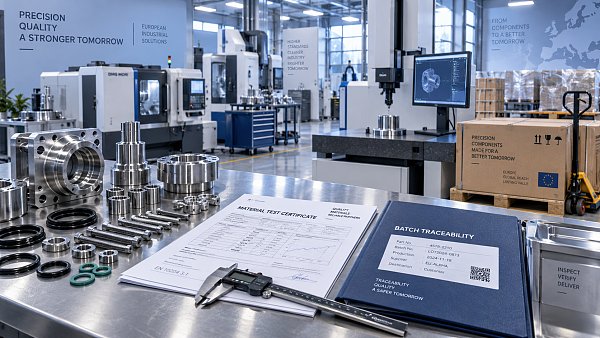
If a performance issue appears, the supplier should be able to identify lot data, compare batch records, and support corrective action. Without traceability, recurring problems remain anecdotal and waste repeats.
A disciplined complaint process usually includes 3 elements: retained packaging data, wear photographs or samples, and cutting condition records. This turns supplier communication into root-cause analysis rather than guesswork.
Questions operators and buyers should ask before reordering
- Is this grade optimized for steel, stainless, cast iron, or mixed applications?
- What is the expected wear mode under interrupted cuts?
- Can the same insert support roughing and semi-finishing, or only one duty?
- What batch identification is provided on each box?
- What is the normal lead time: 7–15 days, 2–4 weeks, or longer?
- What support is available if tool life drops after a new lot arrives?
These questions help shift the conversation away from price alone. For most production users, that is the fastest way to reduce long-term tooling waste and improve confidence in carbide inserts wholesale decisions.
Turning Wholesale Purchasing into a Stable Production Advantage
Wholesale buying works best when it is tied to application logic, controlled testing, and supplier accountability. Operators should not have to absorb the risk of uncertain grade selection, unstable coating behavior, or batch variation after the material reaches the machine.
For industrial users working across CNC turning, milling, mold machining, and general production engineering, the smartest carbide inserts wholesale strategy is to buy fewer wrong inserts, validate more carefully, and standardize where performance is repeatable.
At G-PME, the focus is on technically grounded sourcing decisions that connect tooling performance, procurement discipline, and production reliability. If you need support comparing insert options, reviewing supplier suitability, or building a lower-waste wholesale tooling plan, contact us to get a tailored solution and discuss your machining requirements in detail.
Recommended News
 What to verify before using supplier sourcing solutions in EuropeSupplier sourcing solutions Europe: verify capabilities, compliance, traceability, total cost, and supply resilience before choosing reliable industrial partners.
 When smart fabrics are reliable enough for industrial wearablesSmart fabrics for industrial wearables: learn how to validate durability, signal quality, cleaning resilience, and safe failure performance before deployment.
 How supply chain management for exporters reduces customs delaysSupply chain management for exporters helps prevent customs delays with accurate data, origin checks, importer readiness, and proactive shipment controls. Explore practical strategies now.
 What to verify before approving an OEM electronics supplierOEM electronics supplier approval checklist: verify BOM control, traceability, testing, sourcing risk, capacity, and commercial terms before committing to volume production.
 When do CNC-machined precision components require five-axis milling?Precision components CNC machined with five-axis milling deliver better access, tighter datum control, and lower setup risk. Learn when five-axis machining is the smart choice.
 What should a restaurant POS system handle during a lunch rush?restaurantPOSsystems keep lunch rushes moving with fast ordering, smart kitchen routing, flexible payments, live inventory, and reliable service controls.
 How CNC controller cycle time speed affects machining throughputCNC controller cycle time speed can raise machining throughput by sustaining feed rates on complex toolpaths. Learn how to optimize CAM, look-ahead, and machine dynamics.
 When a 4 axis vertical machining center is the better fit than 3-axisDiscover when a 4 axis vertical machining center outperforms 3-axis machining—reduce setups, improve datum control, and boost efficiency for complex multi-face parts.
 When industrial fasteners bolts need traceable material certificationIndustrial fasteners bolts need traceable material certification for critical applications. Learn what QA teams should verify to reduce risk and ensure compliance.
 How to size pump systems for cooling circuits for stable flow ratesPump systems for cooling circuits: learn how to match flow, total dynamic head, NPSH, and controls for reliable, energy-efficient cooling performance.
 When does software as a service reduce CNC data management costs?Software as a service can lower CNC data management costs by reducing IT overhead, manual reporting, and disconnected records. Discover when SaaS delivers measurable savings.
 CNC investment trends 2026: are automation upgrades taking priority?CNC investment trends 2026 reveal why automation upgrades are reshaping capacity plans. Compare robots, pallet systems, and new machines for smarter CNC growth.
 How to size high pressure pumps for stable chemical injection ratesHigh pressure pumps sizing guide for stable chemical injection rates—learn how to balance flow range, pressure, suction conditions, materials, and controls for reliable dosing.
 When organic chemicals are suitable feedstocks for synthetic lubricantsOrganic chemicals can unlock high-performance synthetic lubricants. Learn how purity, stability, compatibility, and supply control shape reliable industrial formulations.
 What machine tool market size reveals about capital spending cyclesMachine tool market size reveals capital spending cycles through order mix, automation, replacement demand, and capacity signals. Discover what drives smarter investment decisions.
 What causes solar inverters to trip repeatedly after installationSolar inverters tripping repeatedly? Discover key causes, from grid voltage and DC faults to wiring, settings, heat, and practical troubleshooting steps.
 How a tool life calculation chart improves cutting parameter decisionsTool life calculation chart insights help optimize cutting speed, feed, and depth for predictable tool changes, better part quality, and lower machining costs.
 What to check before choosing an industrial lubricating oils factoryIndustrial lubricating oils factory selection guide: compare quality control, formulation fit, traceability, technical support, and total cost to reduce downtime risks.
 Where machine shop digital transformation delivers the fastest paybackMachine shop digital transformation delivers faster payback by reducing downtime, setup delays, quality risks, and capacity constraints with focused, measurable workflows.
 When a semiconductor manufacturing solutions provider can shorten process ramp-upA semiconductor manufacturing solutions provider can shorten ramp-up through validated hardware, change control, field support, and resilient supply chains.
 How to evaluate CNC tooling suppliers in Europe for repeatable precisionCNC tooling Europe: learn how to evaluate suppliers for repeatable precision, stable tool life, application support, traceability, and resilient delivery.


















Search News
Popular Tags