
What makes a precision milling center factory reliable
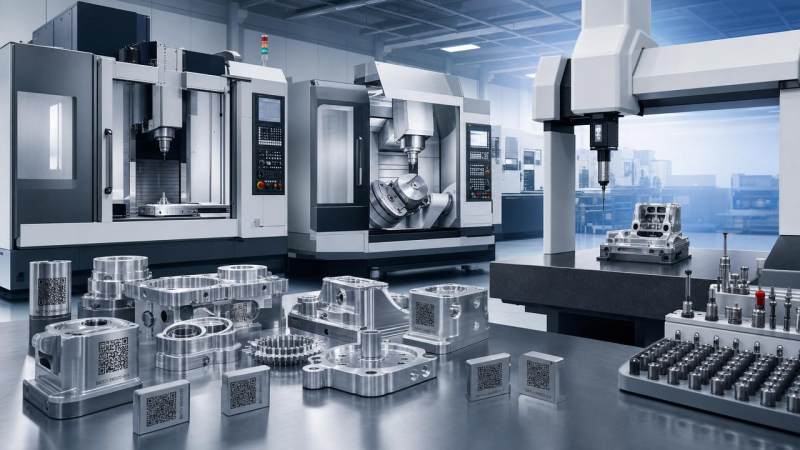
For technical evaluators, choosing a reliable precision milling center factory means looking beyond quoted tolerances and machine counts. The real benchmark lies in process stability, material traceability, quality certification, and the ability to deliver consistent precision under demanding production conditions. This article outlines the core indicators that separate dependable manufacturing partners from high-risk suppliers.
In B2B manufacturing, the consequences of a weak supplier choice are rarely limited to one delayed batch. A poor-fit precision machining partner can trigger dimensional drift, assembly mismatch, higher scrap rates, and costly field failures across aerospace, energy, tooling, automation, and industrial equipment projects.
For organizations that source high-value components, a reliable precision milling center factory must demonstrate stable process control, transparent documentation, and responsive engineering support. Technical evaluators usually need evidence across 4 layers: machine capability, quality systems, material control, and delivery performance under real production loads.
Core signs of a reliable precision milling center factory
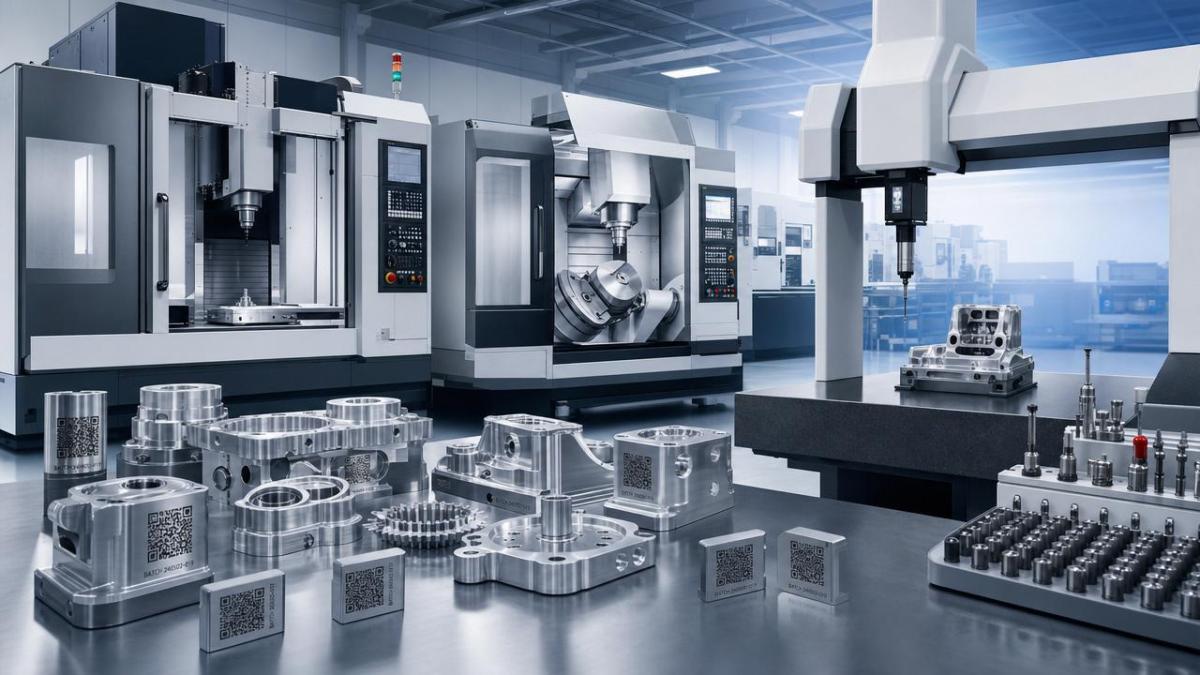
A dependable precision milling center factory is not defined by marketing claims alone. Reliability comes from repeatability over hundreds or thousands of machining cycles, not from a single sample part that passes inspection once. Evaluators should verify whether the factory can hold target tolerances over 3 shifts, multiple fixtures, and different material lots.
In practical terms, many buyers start with tolerance capability such as ±0.01 mm, ±0.005 mm, or tighter ranges for critical features. Yet tolerance alone is incomplete. A technically credible supplier should also explain how it controls thermal variation, spindle wear, cutting tool life, and first-article approval before large-batch production begins.
Machine capability is only the starting point
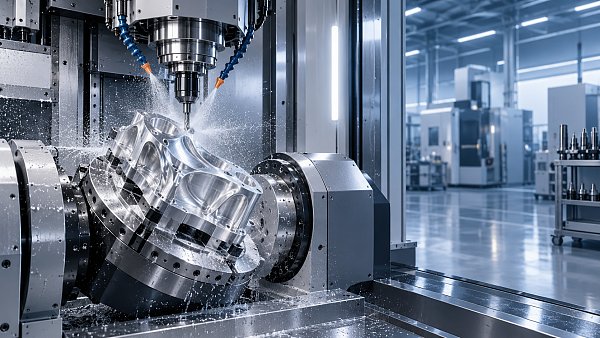
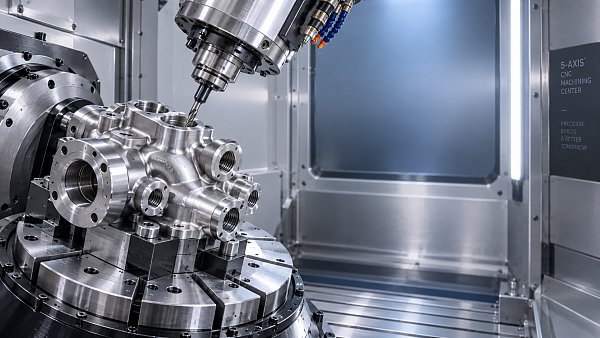
A modern precision milling center factory may operate 3-axis, 4-axis, and 5-axis CNC platforms, but machine count should never be confused with usable capacity. Technical evaluators should ask how many machines are reserved for tight-tolerance work, what spindle speed ranges are available, and how often geometric calibration is performed.
For example, a factory serving complex housings, impellers, or mold inserts should be able to explain fixture strategy, probing routines, and machine-to-machine consistency. A strong supplier often has scheduled verification intervals every 3 months, 6 months, or based on spindle-hour thresholds rather than waiting for defects to appear.
Questions that reveal true process maturity
- How is machine accuracy checked after maintenance, relocation, or collision events?
- What percentage of jobs require in-process probing or tool offset correction?
- Can the factory hold repeatability across low-volume prototypes and 500+ piece production runs?
- What is the standard response time if Cp or Cpk trends begin to drop?
Quality systems must be visible, not assumed
A reliable precision milling center factory should provide a documented quality workflow from contract review to final release. This normally includes drawing review, process routing, first-article inspection, in-process checks, final dimensional verification, and shipment records. If documentation is incomplete, repeatability risk rises significantly.
Relevant certifications such as ISO 9001 may indicate baseline system discipline, but evaluators should go further. Ask whether gauge calibration is traceable, whether measurement uncertainty is reviewed, and whether nonconformance reports are closed with root-cause analysis within 24 to 72 hours for critical deviations.
The table below highlights the difference between surface-level claims and evaluation points that more accurately reflect factory reliability in precision milling operations.
The main takeaway is simple: trustworthy suppliers provide process evidence. A reliable precision milling center factory should make it easy for evaluators to connect machine capability with documented quality and actual production planning.
Material traceability protects downstream performance
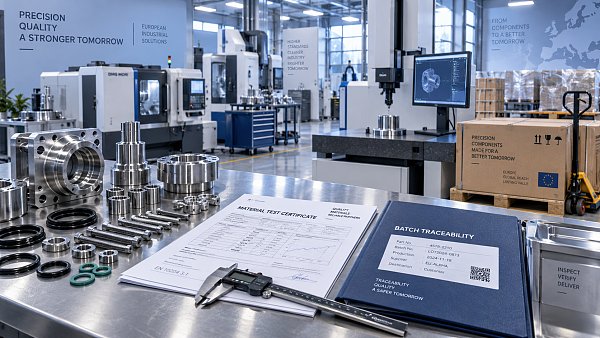
Material integrity is critical when machined parts must withstand pressure, fatigue, corrosion, or thermal cycling. A precision milling center factory that handles aluminum, stainless steel, titanium, engineering plastics, or tool steels should track each lot from incoming receipt to final shipment.
At minimum, evaluators should confirm heat numbers, supplier certificates, and segregation methods for different grades. This matters when parts move into regulated or mission-critical assemblies, where one mixed material batch can compromise months of testing or trigger total lot rejection.
How technical evaluators should audit supplier risk before purchase
A supplier review should be structured and repeatable. Instead of relying on a sales presentation, technical evaluators can use a 5-step audit model covering engineering review, process verification, quality records, production readiness, and post-delivery support. This approach helps compare suppliers on measurable grounds.
For most industrial projects, the audit should examine at least 6 checkpoints: drawing comprehension, tolerancing strategy, fixture design, inspection capability, lot traceability, and corrective action discipline. If 2 or more of these areas remain unclear, supplier risk usually increases sharply.
Step-by-step evaluation framework
- Review sample drawings and confirm manufacturability feedback within 48–72 hours.
- Check whether the precision milling center factory can define critical dimensions and control plans.
- Request example FAI, in-process, and final inspection documentation from prior comparable work.
- Evaluate lead time logic for prototype, pilot batch, and recurring production orders.
- Confirm how nonconforming parts, rework, and urgent engineering changes are handled.
Lead time reliability matters as much as machining accuracy
In many sectors, a late component is functionally similar to a failed component. A precision milling center factory may quote 10 days, 15 days, or 4 weeks, but evaluators should ask what assumptions support those numbers. Does the lead time include raw material intake, programming, tooling procurement, inspection, and coating or heat-treatment coordination?
Factories with mature planning systems usually separate prototype lead times from production lead times. For example, a simple prototype may move in 7–12 working days, while a tight-tolerance batch with secondary finishing may require 3–5 weeks. Honest scheduling is a sign of operational discipline, not weakness.
The following table can help evaluators compare common supplier risk points before approving a precision milling center factory for long-term sourcing.
This comparison shows that supplier reliability depends on systems, not slogans. The best precision milling center factory candidates are usually the ones willing to expose process details, planning assumptions, and quality evidence before a purchase order is released.
Engineering communication is a measurable capability
Communication quality often predicts production quality. If a factory responds with vague answers, delayed clarifications, or missing revision tracking, technical risk rises quickly. A reliable precision milling center factory should return DFM feedback, tolerance concerns, and machining recommendations in a structured format rather than in casual email fragments.
Strong engineering communication typically includes 3 practical outputs: manufacturability comments, risk flags on critical features, and proposed process changes that reduce cost or lead time. This is especially valuable when parts involve thin walls, deep pockets, tight flatness, or multiple secondary operations.
Common warning signs during evaluation
- No clear answer on how critical dimensions are measured or recorded.
- Material certificates are promised later but not linked to lot control.
- Lead times are unusually short without explaining fixture, tooling, or finishing steps.
- Corrective action methods are generic and do not include containment or recurrence prevention.
Long-term value: service, consistency, and manufacturing resilience
For high-value industrial sourcing, the best precision milling center factory is often not the one with the lowest initial quote. Long-term value comes from stable yield, fewer engineering disputes, lower incoming inspection burden, and better continuity during demand swings or raw material volatility.
Technical evaluators should look at the supplier relationship over 12 to 24 months. Can the factory support design iteration, pilot ramp-up, batch scaling, and documentation updates without major disruption? Can it maintain quality when order volumes shift from 20 pieces to 2,000 pieces per quarter?
After-sales support and corrective action speed
No factory is immune to issues, but response discipline separates dependable partners from risky ones. A reliable precision milling center factory should define containment timing, root-cause closure expectations, and replacement or remake procedures. For urgent projects, a 24-hour containment response and 3–5 working day action plan is often a practical benchmark.
Support also includes revision management, document reissue control, and transparent communication when a process change affects finish, tolerance, or lead time. That level of visibility helps procurement, quality, and engineering teams act quickly without creating cross-functional confusion.
What strong manufacturing partners usually provide
- Defined onboarding steps for prototype, pilot batch, and production release
- Inspection documentation aligned with drawing-critical features
- Material and process traceability suitable for regulated or performance-critical applications
- Realistic planning for machining, finishing, packaging, and export coordination
- Responsive technical contact points for engineering and quality escalation
For organizations that evaluate suppliers through a technical and commercial lens, reliability is a composite result. A precision milling center factory becomes trustworthy when machining capability, quality discipline, traceability, and delivery control are all visible in day-to-day operations, not just in a quotation sheet.
G-PME supports industrial decision-makers with a technical intelligence perspective that connects machining performance, standards alignment, and sourcing risk control. If you need a more structured benchmark for supplier qualification, component review, or manufacturing comparison, contact us to get a tailored evaluation framework, discuss product details, or explore more precision machining solutions.
Recommended News
 When does 5-axis machining make sense for furniture manufacturing?Furniture manufacturing leaders: discover when 5-axis machining delivers real value through complex geometry, fewer setups, better joinery, and premium finishes.
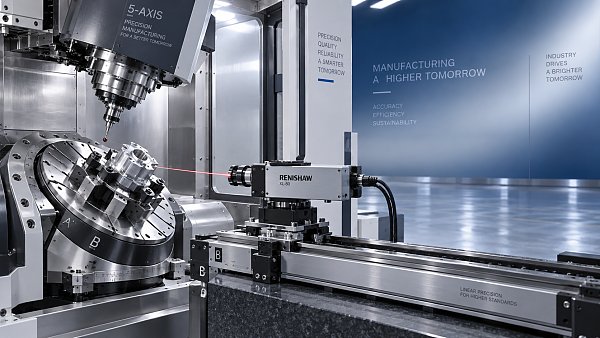
 How to read a 5-axis positioning accuracy chart before machine acceptance5 axis positioning accuracy chart guide for machine acceptance: learn to assess error, repeatability, backlash, and rotary-axis risks before production sign-off.
 When do sludge dewatering machines lower hauling costs?Sludge dewatering machines cut hauling costs when higher cake solids reduce loads, weight, and collection frequency. Explore thresholds, savings, and selection factors.
 How to verify CE certification for industrial pumps before installationIndustrial pumps CE certified? Learn how to verify declarations, documentation, hazardous-area suitability, and installation compliance before commissioning.
 How to compare a plasma cutting machine supplier before placing an orderCompare a plasma cutting machine supplier with confidence—evaluate cut quality, total cost, consumables, and after-sales support before you order.
 Which factory upgrade projects benefit most from industrial technology solutions?Industrial technology solutions factory upgrade projects deliver the most value when they remove bottlenecks, cut downtime, improve quality, and strengthen resilience. Explore high-impact priorities.
 When a high precision CNC grinding machine justifies its costDiscover when a high precision CNC grinding machine delivers real ROI through repeatable quality, lower scrap, faster verification, and controlled production.
 When do industrial lubricants for compressors need oil analysis?Industrial lubricants for compressors need oil analysis at baseline, under harsh operating conditions, and after warning signs. Learn how testing prevents downtime and protects equipment.
 How CNC controller processing speed affects cycle times in EuropeCNC controller processing speed Europe: discover how look-ahead, interpolation and CAM optimisation can cut cycle times while protecting precision and surface quality.
 What to verify before using supplier sourcing solutions in EuropeSupplier sourcing solutions Europe: verify capabilities, compliance, traceability, total cost, and supply resilience before choosing reliable industrial partners.
 When smart fabrics are reliable enough for industrial wearablesSmart fabrics for industrial wearables: learn how to validate durability, signal quality, cleaning resilience, and safe failure performance before deployment.
 How supply chain management for exporters reduces customs delaysSupply chain management for exporters helps prevent customs delays with accurate data, origin checks, importer readiness, and proactive shipment controls. Explore practical strategies now.
 What to verify before approving an OEM electronics supplierOEM electronics supplier approval checklist: verify BOM control, traceability, testing, sourcing risk, capacity, and commercial terms before committing to volume production.
 When do CNC-machined precision components require five-axis milling?Precision components CNC machined with five-axis milling deliver better access, tighter datum control, and lower setup risk. Learn when five-axis machining is the smart choice.
 What should a restaurant POS system handle during a lunch rush?restaurantPOSsystems keep lunch rushes moving with fast ordering, smart kitchen routing, flexible payments, live inventory, and reliable service controls.
 How CNC controller cycle time speed affects machining throughputCNC controller cycle time speed can raise machining throughput by sustaining feed rates on complex toolpaths. Learn how to optimize CAM, look-ahead, and machine dynamics.
 When a 4 axis vertical machining center is the better fit than 3-axisDiscover when a 4 axis vertical machining center outperforms 3-axis machining—reduce setups, improve datum control, and boost efficiency for complex multi-face parts.
 When industrial fasteners bolts need traceable material certificationIndustrial fasteners bolts need traceable material certification for critical applications. Learn what QA teams should verify to reduce risk and ensure compliance.
 How to size pump systems for cooling circuits for stable flow ratesPump systems for cooling circuits: learn how to match flow, total dynamic head, NPSH, and controls for reliable, energy-efficient cooling performance.
 When does software as a service reduce CNC data management costs?Software as a service can lower CNC data management costs by reducing IT overhead, manual reporting, and disconnected records. Discover when SaaS delivers measurable savings.
 CNC investment trends 2026: are automation upgrades taking priority?CNC investment trends 2026 reveal why automation upgrades are reshaping capacity plans. Compare robots, pallet systems, and new machines for smarter CNC growth.









Search News
Popular Tags