
Common mistakes when sourcing an automatic tool changer OEM
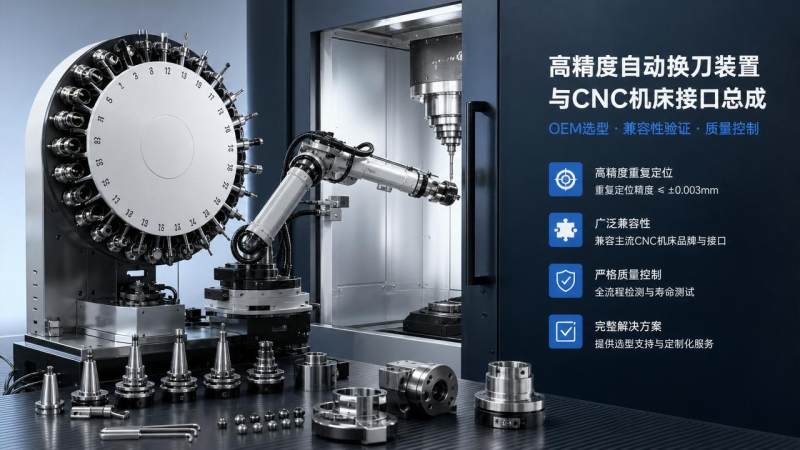
Choosing the right automatic tool changer OEM can directly affect machine uptime, precision, lifecycle cost, and supply-chain stability. Yet many buyers still overlook critical factors such as engineering validation, customization limits, quality consistency, and after-sales support. This article outlines the most common sourcing mistakes and shows information-driven decision-makers how to evaluate OEM partners with greater confidence.
Why does sourcing an automatic tool changer OEM go wrong so often?
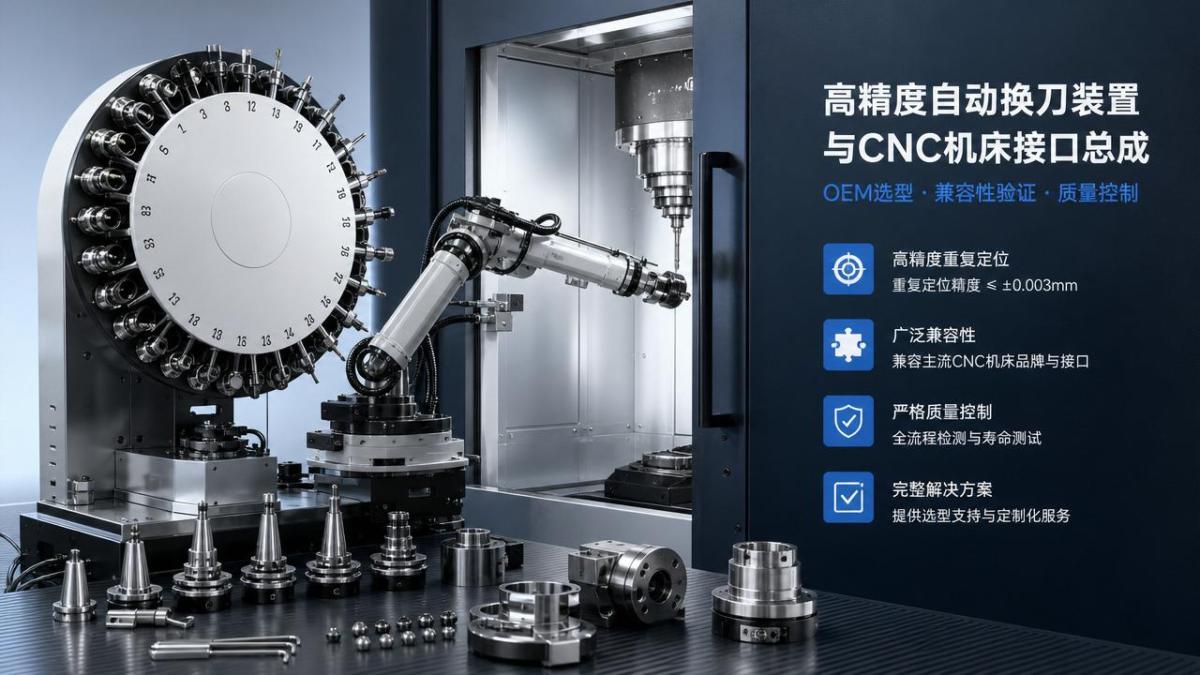
An automatic tool changer OEM sits at the intersection of machine design, spindle performance, control integration, tooling accuracy, and service support. That makes sourcing decisions more complex than comparing unit prices or catalog specifications.
In the broader industrial market, buyers often work under tight launch schedules, incomplete technical data, and pressure to secure dual-source options. Those conditions make common mistakes more likely, especially when the sourcing process is driven by purchasing speed rather than engineering evidence.
For information researchers, the real challenge is not finding suppliers. It is separating capable OEM partners from assemblers that cannot maintain repeatability, documentation discipline, or long-term parts support.
- Many supplier lists combine true manufacturers, component integrators, and trading entities, which can blur accountability for design changes and warranty response.
- Technical brochures may emphasize tool capacity or cycle time while omitting interface tolerances, fatigue testing, lubrication requirements, and controller compatibility.
- Low-visibility risks, such as steel grade consistency, spindle-toolholder interaction, or spare-part continuity, often emerge only after installation.
This is where a data-led platform such as G-PME adds value. By aligning machining hardware evaluation with standards, supply-chain signals, and engineering review logic, buyers can investigate an automatic tool changer OEM in a more structured way.
The most common mistakes when selecting an automatic tool changer OEM
The following mistakes appear repeatedly across CNC machining, mold engineering, precision fabrication, and production-line retrofits. They are especially costly when the automatic tool changer is part of a high-mix or uptime-sensitive process.
1. Treating the ATC as a commodity part
An automatic tool changer is not just a magazine plus an arm. It is a precision subsystem tied to spindle taper standards, tool retention, servo motion, sensors, PLC logic, and mechanical repeatability. Buyers who treat it like a generic accessory often underestimate integration risk.
2. Comparing quotations without matching the same technical baseline
Two quotes may look similar but cover very different scopes. One OEM may include validation drawings, FAT support, balancing guidance, and spare grippers. Another may only quote the base changer assembly. Without a normalized RFQ matrix, price comparisons become misleading.
3. Ignoring interface and control compatibility
A technically sound automatic tool changer OEM can still be the wrong choice if the design does not fit spindle nose dimensions, toolholder standard, drawbar force window, PLC protocol, or enclosure layout. Integration failures often come from these overlooked interfaces rather than from the changer mechanism itself.
4. Focusing only on speed, not repeatability and lifecycle stability
Fast tool change time matters, but cycle speed alone does not protect production. In many plants, the bigger cost comes from missed position accuracy, pocket wear, arm misalignment, sensor drift, or recurring downtime after several hundred thousand cycles.
5. Underestimating material and manufacturing quality control
An automatic tool changer OEM should be able to explain how critical parts are machined, heat-treated, inspected, assembled, and traced. If the supplier cannot define tolerance control, wear-part replacement intervals, or inspection methods, quality consistency may be weak.
6. Overlooking service readiness and spare-part continuity
Buyers often ask about lead time for the first shipment but not for replacement arms, sensors, pocket assemblies, lubrication units, or control components. In practice, service delays can erase any initial cost savings.
What should information-driven buyers verify before shortlisting an OEM?
Before moving an automatic tool changer OEM into formal quotation or sample review, buyers should check a defined set of engineering and commercial criteria. This reduces rework in later procurement stages.
The table below provides a practical pre-qualification framework for industrial sourcing teams evaluating automatic tool changer OEM candidates across different machine platforms.
A structured pre-qualification table helps buyers avoid false equivalence between suppliers. It also creates a common language for procurement, design, maintenance, and quality teams during supplier review.
- Ask for dimensioned interface drawings before asking for price optimization.
- Request a spare-parts recommendation for one year and three years of operation.
- Confirm who owns design responsibility if adaptation is required for a special machine layout.
Automatic tool changer OEM comparison: low price versus lower total risk
Cost pressure is real, especially in multi-machine projects. However, the cheapest automatic tool changer OEM is not always the lowest-cost option over the asset lifecycle. Buyers need a broader commercial lens.
The table below compares typical sourcing outcomes when supplier selection is driven mainly by purchase price versus technical and operational risk control.
For production environments where uptime and repeatability drive profitability, total risk often matters more than nominal purchase savings. This is especially true for aerospace-related machining, mold bases, automotive fixtures, and high-mix subcontract manufacturing.
Which technical signals reveal a capable automatic tool changer OEM?
A capable supplier does not only answer questions. It provides evidence. Information researchers should look for signals that connect design theory, manufacturing practice, and field support.
Engineering transparency
Strong OEMs can explain pocket structure, arm motion sequence, positional reference logic, and sensor redundancy without relying on vague claims. They usually provide revision-controlled drawings and interface checklists early.
Process control on critical parts
Key wear and positioning parts should be linked to defined machining and inspection methods. In the context of precision engineering, this often includes dimensional verification, fit control, and traceable material handling.
Reasonable customization boundaries
A reliable automatic tool changer OEM supports customization, but it also states limits. If a supplier accepts every request without discussing performance impact, maintainability, or timing risk, the proposal may not be mature.
Documentation that supports deployment
Useful support documents include installation references, I/O signal lists, preventive maintenance guidance, alarm descriptions, and spare-part coding. Good documentation reduces dependence on one engineer or one shift team.
- Check whether manuals are suitable for both commissioning engineers and maintenance technicians.
- Confirm whether revision changes are communicated formally across repeat orders.
- Ask if the supplier can align documentation with your plant validation workflow.
G-PME’s cross-sector perspective is useful here because automatic tool changer sourcing rarely exists in isolation. Tooling, spindle systems, lubrication, seals, and machine frame accuracy all influence practical results on the shop floor.
How should buyers build a smarter sourcing workflow?
A strong sourcing workflow reduces confusion before RFQ, during technical review, and after supplier nomination. It also helps information researchers present decision-ready findings to procurement leaders and engineering managers.
- Define the actual operating scenario, including tool count, tool mass range, change frequency, contamination exposure, and controller type.
- Prepare a technical baseline with interface drawings, motion requirements, maintenance expectations, and compliance needs.
- Shortlist automatic tool changer OEM candidates based on manufacturing capability, not only search visibility or distributor reach.
- Run a normalized quotation review that separates base assembly cost, documentation, validation support, and spare-parts package.
- Review supply continuity risks, especially for purchased sensors, actuators, bearings, and specialty materials.
- Confirm post-order communication rules, drawing revision control, and escalation channels for commissioning issues.
This workflow aligns well with G-PME’s data-driven model. Instead of making sourcing a one-dimensional price exercise, it brings together engineering verification, standards awareness, and supply-chain resilience analysis.
FAQ: what do buyers often ask about an automatic tool changer OEM?
How do I know whether an automatic tool changer OEM is a true manufacturer?
Look for evidence of design ownership, machining and assembly capability, inspection routines, and document control. A true manufacturer should be able to discuss critical dimensions, testing logic, and change management in detail.
What matters more: tool capacity or tool change speed?
Neither should be evaluated alone. Capacity and speed must be balanced with tool mass, pocket rigidity, repeatability, maintenance access, and machine duty cycle. For many users, stable long-term performance matters more than the fastest quoted cycle.
Which documents should I request before placing an order?
Request interface drawings, electrical or I/O definitions, maintenance guidelines, spare-part lists, recommended consumables, and any available validation information. These documents reduce ambiguity and support internal review.
How important is standards awareness when sourcing an automatic tool changer OEM?
It is very important, particularly when the changer must align with machine tool interfaces, safety logic, or customer-specific documentation expectations. Standards awareness also signals discipline in engineering and quality communication.
Why choose us for automatic tool changer OEM research and supplier evaluation?
G-PME supports buyers who need more than a supplier directory. We help information-driven teams assess an automatic tool changer OEM through technical benchmarking, sourcing comparison, standards-based review, and wider industrial context.
Because our platform connects precision machining, tooling systems, mold engineering, fluid control, fastening, sealing, and industrial lubricant intelligence, we can frame ATC sourcing decisions around the full production environment rather than a single component quote.
- Need help confirming interface parameters, toolholder assumptions, or integration boundaries? We can help structure the review points.
- Need support comparing automatic tool changer OEM quotations on an equal technical basis? We can help build a normalized evaluation checklist.
- Need guidance on delivery risk, spare-part planning, customization scope, or documentation requirements? We can help define what to ask before commitment.
- Need a more reliable conversation with shortlisted suppliers? We can help prepare questions around validation, maintenance, and compliance expectations.
If your team is researching automatic tool changer OEM options for a new machine build, retrofit, or strategic supplier shortlist, contact us with your application details, expected delivery window, customization needs, and quotation scope. That allows a faster discussion around parameter confirmation, supplier comparison, sample support, certification expectations, and practical sourcing risk.
Recommended News
 How to verify CE certification for industrial pumps before installationIndustrial pumps CE certified? Learn how to verify declarations, documentation, hazardous-area suitability, and installation compliance before commissioning.
 How to compare a plasma cutting machine supplier before placing an orderCompare a plasma cutting machine supplier with confidence—evaluate cut quality, total cost, consumables, and after-sales support before you order.
 Which factory upgrade projects benefit most from industrial technology solutions?Industrial technology solutions factory upgrade projects deliver the most value when they remove bottlenecks, cut downtime, improve quality, and strengthen resilience. Explore high-impact priorities.
 When a high precision CNC grinding machine justifies its costDiscover when a high precision CNC grinding machine delivers real ROI through repeatable quality, lower scrap, faster verification, and controlled production.
 When do industrial lubricants for compressors need oil analysis?Industrial lubricants for compressors need oil analysis at baseline, under harsh operating conditions, and after warning signs. Learn how testing prevents downtime and protects equipment.
 How CNC controller processing speed affects cycle times in EuropeCNC controller processing speed Europe: discover how look-ahead, interpolation and CAM optimisation can cut cycle times while protecting precision and surface quality.
 What to verify before using supplier sourcing solutions in EuropeSupplier sourcing solutions Europe: verify capabilities, compliance, traceability, total cost, and supply resilience before choosing reliable industrial partners.
 When smart fabrics are reliable enough for industrial wearablesSmart fabrics for industrial wearables: learn how to validate durability, signal quality, cleaning resilience, and safe failure performance before deployment.
 How supply chain management for exporters reduces customs delaysSupply chain management for exporters helps prevent customs delays with accurate data, origin checks, importer readiness, and proactive shipment controls. Explore practical strategies now.
 What to verify before approving an OEM electronics supplierOEM electronics supplier approval checklist: verify BOM control, traceability, testing, sourcing risk, capacity, and commercial terms before committing to volume production.
 When do CNC-machined precision components require five-axis milling?Precision components CNC machined with five-axis milling deliver better access, tighter datum control, and lower setup risk. Learn when five-axis machining is the smart choice.
 What should a restaurant POS system handle during a lunch rush?restaurantPOSsystems keep lunch rushes moving with fast ordering, smart kitchen routing, flexible payments, live inventory, and reliable service controls.
 How CNC controller cycle time speed affects machining throughputCNC controller cycle time speed can raise machining throughput by sustaining feed rates on complex toolpaths. Learn how to optimize CAM, look-ahead, and machine dynamics.
 When a 4 axis vertical machining center is the better fit than 3-axisDiscover when a 4 axis vertical machining center outperforms 3-axis machining—reduce setups, improve datum control, and boost efficiency for complex multi-face parts.
 When industrial fasteners bolts need traceable material certificationIndustrial fasteners bolts need traceable material certification for critical applications. Learn what QA teams should verify to reduce risk and ensure compliance.
 How to size pump systems for cooling circuits for stable flow ratesPump systems for cooling circuits: learn how to match flow, total dynamic head, NPSH, and controls for reliable, energy-efficient cooling performance.
 When does software as a service reduce CNC data management costs?Software as a service can lower CNC data management costs by reducing IT overhead, manual reporting, and disconnected records. Discover when SaaS delivers measurable savings.
 CNC investment trends 2026: are automation upgrades taking priority?CNC investment trends 2026 reveal why automation upgrades are reshaping capacity plans. Compare robots, pallet systems, and new machines for smarter CNC growth.
 How to size high pressure pumps for stable chemical injection ratesHigh pressure pumps sizing guide for stable chemical injection rates—learn how to balance flow range, pressure, suction conditions, materials, and controls for reliable dosing.
 When organic chemicals are suitable feedstocks for synthetic lubricantsOrganic chemicals can unlock high-performance synthetic lubricants. Learn how purity, stability, compatibility, and supply control shape reliable industrial formulations.
 What machine tool market size reveals about capital spending cyclesMachine tool market size reveals capital spending cycles through order mix, automation, replacement demand, and capacity signals. Discover what drives smarter investment decisions.



Search News
Popular Tags