
Why CNC lathe manufacturer support matters after delivery
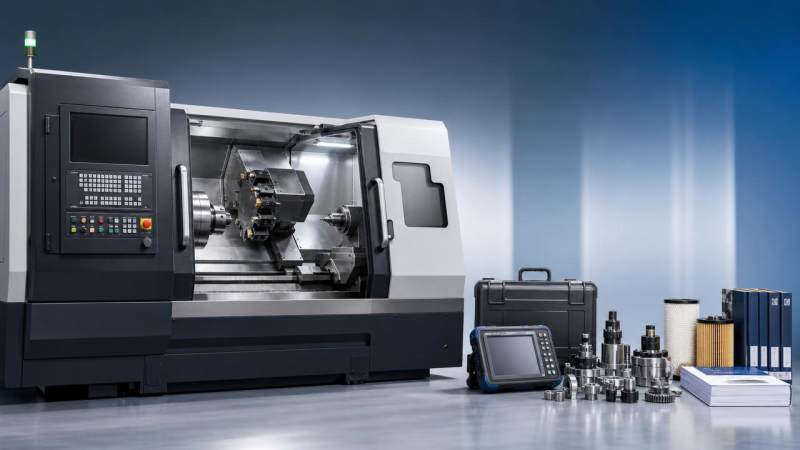
Choosing a cnc lathe manufacturer is only the first decision. Machine value is proven after installation, during setup changes, fault recovery, and years of continuous production. When post-delivery support is weak, even a capable lathe can become a bottleneck.
For maintenance planning, uptime control, and lifecycle cost management, after-sales service matters as much as spindle speed or axis accuracy. A reliable cnc lathe manufacturer supports troubleshooting, parts supply, software updates, and service documentation that keeps production stable.
Why post-delivery support deserves a checklist
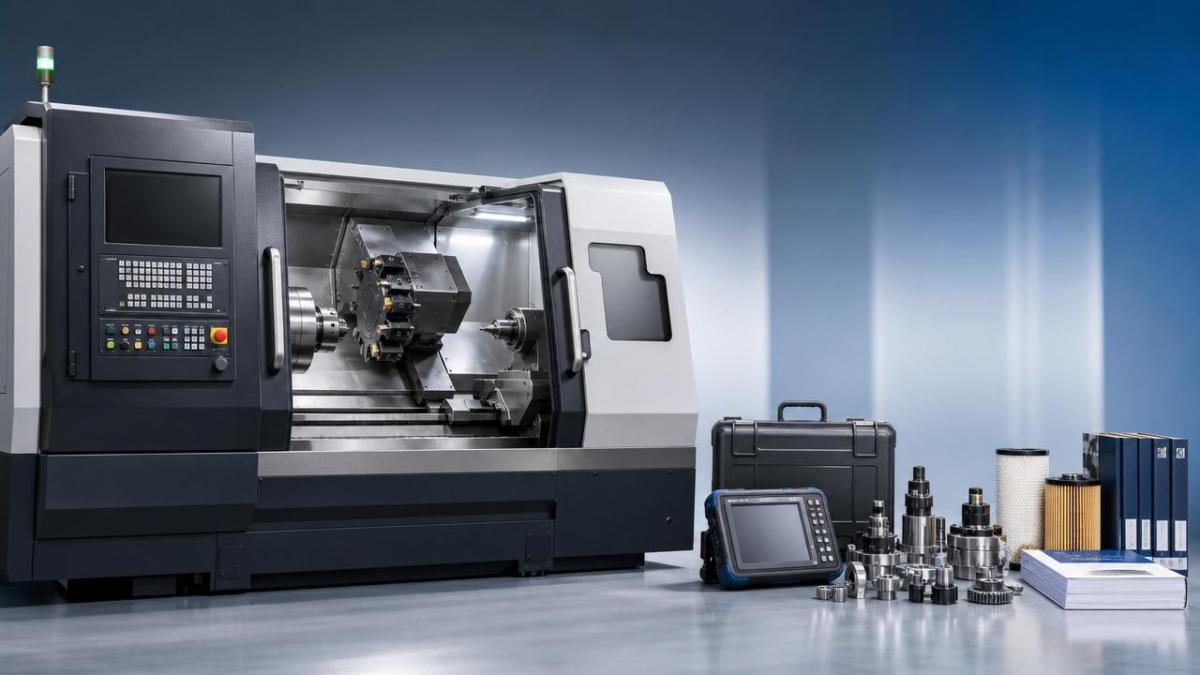
Support quality is often judged too late, usually after an alarm, crash, or urgent restart need. A checklist prevents assumptions and turns service promises into verifiable operating criteria.
In a mixed industrial environment, machine tools must align with maintenance routines, operator capability, spare inventory rules, and quality traceability. That is why evaluating a cnc lathe manufacturer should include support depth, not only machine specifications.
Core checklist for evaluating cnc lathe manufacturer support
- Confirm response time commitments for phone, email, and remote diagnostics, and check whether support is available across shifts, weekends, and urgent shutdown periods.
- Verify spare parts stocking strategy, including lead times for drives, sensors, boards, lubrication units, chucks, and other failure-prone machine subsystems.
- Request service manuals, electrical drawings, PLC logic references, and maintenance schedules that allow safe fault isolation without unnecessary trial-and-error repairs.
- Check whether the cnc lathe manufacturer provides remote access support, alarm history review, parameter backup guidance, and software recovery procedures.
- Review field service coverage and ask how quickly a technician can reach the site when remote support cannot restore spindle or axis function.
- Examine training scope for setup, preventive maintenance, daily inspection, lubrication control, and alarm response so routine issues are resolved correctly.
- Assess warranty terms in detail, especially exclusions related to consumables, alignment, coolant contamination, power quality, and unauthorized parameter changes.
- Ask for upgrade pathways covering control software, tool monitoring, automation interfaces, and safety improvements that extend machine relevance over time.
- Measure documentation quality by checking parts lists, serial mapping, calibration records, and change history for each delivered machine configuration.
- Compare actual support references from installed machines in similar duty cycles, material types, and precision requirements before final approval.
How support affects real operating performance
Uptime and restart speed
A machine stoppage is rarely just a repair event. It affects work-in-progress, inspection flow, tool scheduling, and delivery timing. A responsive cnc lathe manufacturer shortens mean time to repair by guiding fault isolation quickly.
Clear escalation paths matter. If the first support contact cannot resolve a servo alarm or turret indexing issue, the handoff to controls or mechanical specialists must be immediate.
Part quality and machine life
Not all replacement parts are equal. Correct bearings, seals, encoder components, and lubrication parts protect axis repeatability and spindle condition. Weak parts support can slowly degrade machine capability.
A strong cnc lathe manufacturer also helps define which parts should be site-stocked, which can remain centrally sourced, and which require preventive replacement based on operating hours.
Application scenarios where support matters most
High-mix, low-volume machining
Frequent setup changes increase the chance of parameter mistakes, tooling offsets, and program verification delays. Here, post-delivery support must include setup coaching and fast alarm interpretation.
If the cnc lathe manufacturer offers weak documentation, every nonstandard job takes longer. Good support reduces changeover risk and helps maintain dimensional confidence.
Continuous production lines
In continuous or near-continuous schedules, downtime spreads through upstream and downstream processes. Remote diagnostics, stocked parts, and on-call service become operational requirements, not optional extras.
For this scenario, a cnc lathe manufacturer should provide preventive inspection intervals, vibration or lubrication checkpoints, and clear wear-part replacement thresholds.
Tight-tolerance components
Precision turning depends on thermal behavior, alignment stability, and repeatable control settings. Small support gaps can become quality escapes, scrap, or rework when tolerances are narrow.
In these cases, the best cnc lathe manufacturer does more than repair faults. It supports calibration, parameter integrity, and documented recovery steps after maintenance intervention.
Commonly overlooked risks
Incomplete machine records
If serial numbers, option codes, and control revisions are not recorded at handover, future troubleshooting becomes slower. Mismatched parts and outdated parameters create avoidable service delays.
Support limited to installation only
Some suppliers perform strong commissioning but provide weak long-term follow-up. Evaluate whether support remains effective after warranty, software changes, or component obsolescence.
No local parts strategy
A capable cnc lathe manufacturer should identify critical spares before failure happens. Waiting until a board, pump, or proximity switch fails increases downtime and emergency freight cost.
Weak training transfer
Support loses value when knowledge stays with visiting technicians. Training should leave behind checklists, alarm trees, lubrication routines, and recovery steps that internal teams can use repeatedly.
Practical execution steps
- Map the top ten failure points for each lathe model and match them with parts availability, technician access, and internal repair capability.
- Create a support acceptance sheet before purchase, covering response times, manuals, training hours, warranty boundaries, and remote diagnostics access.
- Store parameter backups, ladder files, drawings, and maintenance logs in a controlled digital location with revision history.
- Run a quarterly review with the cnc lathe manufacturer to check recurring alarms, consumable wear, and upgrade opportunities.
- Build a minimum spare stock for high-risk items such as sensors, lubrication parts, filters, relays, belts, and control accessories.
Conclusion: support is part of machine value
A cnc lathe manufacturer should be evaluated by what happens after delivery, not just by the machine on the quotation sheet. Service response, documentation quality, spare parts readiness, and training discipline all shape real production performance.
Use a checklist before purchase, confirm support obligations during commissioning, and review service results during operation. That approach protects uptime, controls lifecycle cost, and turns a machine purchase into a stable manufacturing asset.
Recommended News
 What to verify before using supplier sourcing solutions in EuropeSupplier sourcing solutions Europe: verify capabilities, compliance, traceability, total cost, and supply resilience before choosing reliable industrial partners.
 When smart fabrics are reliable enough for industrial wearablesSmart fabrics for industrial wearables: learn how to validate durability, signal quality, cleaning resilience, and safe failure performance before deployment.
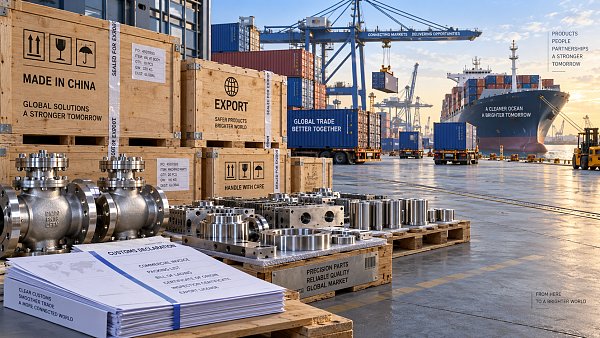
 How supply chain management for exporters reduces customs delaysSupply chain management for exporters helps prevent customs delays with accurate data, origin checks, importer readiness, and proactive shipment controls. Explore practical strategies now.
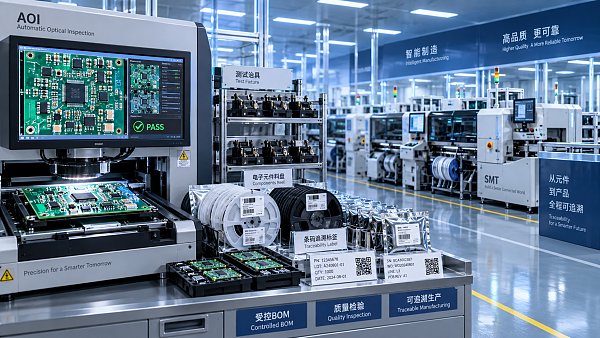
 What to verify before approving an OEM electronics supplierOEM electronics supplier approval checklist: verify BOM control, traceability, testing, sourcing risk, capacity, and commercial terms before committing to volume production.
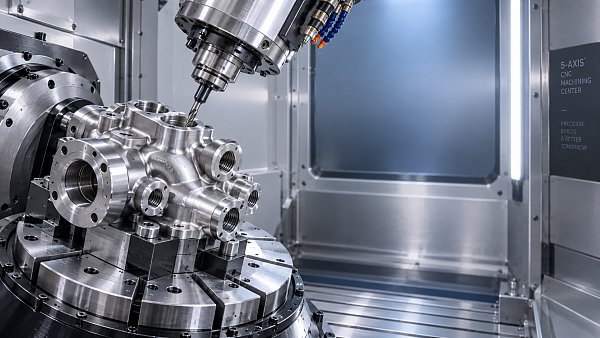
 When do CNC-machined precision components require five-axis milling?Precision components CNC machined with five-axis milling deliver better access, tighter datum control, and lower setup risk. Learn when five-axis machining is the smart choice.
 What should a restaurant POS system handle during a lunch rush?restaurantPOSsystems keep lunch rushes moving with fast ordering, smart kitchen routing, flexible payments, live inventory, and reliable service controls.
 How CNC controller cycle time speed affects machining throughputCNC controller cycle time speed can raise machining throughput by sustaining feed rates on complex toolpaths. Learn how to optimize CAM, look-ahead, and machine dynamics.
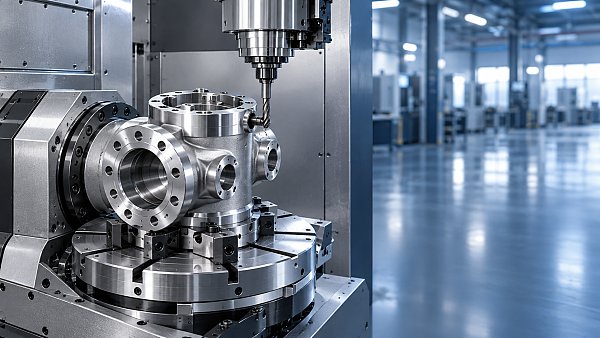
 When a 4 axis vertical machining center is the better fit than 3-axisDiscover when a 4 axis vertical machining center outperforms 3-axis machining—reduce setups, improve datum control, and boost efficiency for complex multi-face parts.
 When industrial fasteners bolts need traceable material certificationIndustrial fasteners bolts need traceable material certification for critical applications. Learn what QA teams should verify to reduce risk and ensure compliance.
 How to size pump systems for cooling circuits for stable flow ratesPump systems for cooling circuits: learn how to match flow, total dynamic head, NPSH, and controls for reliable, energy-efficient cooling performance.
 When does software as a service reduce CNC data management costs?Software as a service can lower CNC data management costs by reducing IT overhead, manual reporting, and disconnected records. Discover when SaaS delivers measurable savings.
 CNC investment trends 2026: are automation upgrades taking priority?CNC investment trends 2026 reveal why automation upgrades are reshaping capacity plans. Compare robots, pallet systems, and new machines for smarter CNC growth.
 How to size high pressure pumps for stable chemical injection ratesHigh pressure pumps sizing guide for stable chemical injection rates—learn how to balance flow range, pressure, suction conditions, materials, and controls for reliable dosing.
 When organic chemicals are suitable feedstocks for synthetic lubricantsOrganic chemicals can unlock high-performance synthetic lubricants. Learn how purity, stability, compatibility, and supply control shape reliable industrial formulations.
 What machine tool market size reveals about capital spending cyclesMachine tool market size reveals capital spending cycles through order mix, automation, replacement demand, and capacity signals. Discover what drives smarter investment decisions.
 What causes solar inverters to trip repeatedly after installationSolar inverters tripping repeatedly? Discover key causes, from grid voltage and DC faults to wiring, settings, heat, and practical troubleshooting steps.
 How a tool life calculation chart improves cutting parameter decisionsTool life calculation chart insights help optimize cutting speed, feed, and depth for predictable tool changes, better part quality, and lower machining costs.
 What to check before choosing an industrial lubricating oils factoryIndustrial lubricating oils factory selection guide: compare quality control, formulation fit, traceability, technical support, and total cost to reduce downtime risks.
 Where machine shop digital transformation delivers the fastest paybackMachine shop digital transformation delivers faster payback by reducing downtime, setup delays, quality risks, and capacity constraints with focused, measurable workflows.
 When a semiconductor manufacturing solutions provider can shorten process ramp-upA semiconductor manufacturing solutions provider can shorten ramp-up through validated hardware, change control, field support, and resilient supply chains.
 How to evaluate CNC tooling suppliers in Europe for repeatable precisionCNC tooling Europe: learn how to evaluate suppliers for repeatable precision, stable tool life, application support, traceability, and resilient delivery.











Search News
Popular Tags